What MBR Design Criteria Actually Cover
PD CEN/TR 15897 is the European technical report that organises the design vocabulary and the general principles for submerged membrane bioreactors used on municipal wastewater (S1, BSI British Standards). The standard's explicit thresholds are 500 population equivalents (PT) and 10,000 m³/d: above 500 PT it deals with custom-designed MBR systems, and large MBRs above 10,000 m³/d are described as tending to use separated membrane tanks rather than an integrated reactor (S1).
Inside that envelope, the report fixes a biological baseline of carbon removal as a requirement and complete nitrification as a recommendation, and it flags short circuits, elevated extracellular polymeric substances (EPS), and incomplete biodegradation as the filterability risks the design must mitigate (S1). The S2 pharmaceutical study (Springer, Anal. Bioanal. Chem.) reports that MBR biomass can be raised to about 20 mg L⁻¹, which is the lever that drives the membrane tank sizing and the SRT/HRT balance downstream. Because the MBR completely retains that biomass, the secondary clarifier is removed, and the S4 source (PCI Membranes) states that the resulting footprint can be up to 50% smaller than a conventional activated sludge (CAS) plant — a downstream consequence of the upstream biological criteria, not an input in itself.
At the datasheet level, a complete MBR criteria package stacks six buckets that a specifier works through in order: influent characterisation, biological envelope (MLSS, SRT, HRT), membrane selection (geometry, pore size, flux), hydraulics (peak factor, equalisation, backwash flows), aeration (process air plus membrane scour), and pretreatment (screening, grit, FOG). The rest of this article works through those buckets and ends with a scale-driven configuration decision and the validation criteria a regulator will look for.
Influent and Pretreatment Criteria
PD CEN/TR 15897 fixes the front-end of the criteria package with two biological requirements: carbon removal is mandatory, and complete nitrification is recommended (S1). That means the design must characterise influent C/N ratio, ammonia load, and the biodegradable fraction before the aerobic volume is sized, because both targets are met in the same tank at MBR solids concentrations. The S3 process description (Seven Seas Water) is explicit that pretreatment is the first step of an MBR and is required to minimise membrane fouling; a coarse screen upstream of the biological stage is therefore part of the criteria, not an option. For industrial streams carrying recalcitrant compounds such as pesticides, herbicides, or landfill leachate, the S4 source notes that MBRs completely retain biomass, which sustains a higher microbial biodiversity than CAS and favours biodegradation of slowly degraded organics — but the higher biodiversity does not replace the need to define the influent envelope before sizing. Temperature, pH, salinity, and FOG must be called out as project-specific inputs in the datasheet; the scraped sources do not give default numeric ranges, so the engineer should obtain these from the client or from a pilot, not from a generic table. Two pieces of equipment that the influent criteria typically drive are a rotary mechanical bar screen for fine screening and a dissolved air flotation unit for FOG and suspended solids reduction ahead of the membrane tank.
Biological Criteria: MLSS, SRT and HRT

The S2 study reports that an MBR can sustain microorganism concentrations up to about 20 mg L⁻¹, an order of magnitude beyond the typical mixed-liquor envelope of CAS, and this single fact is the lever for almost every downstream MBR design parameter. Higher MLSS cuts the aerobic volume for a given food-to-microorganism ratio, increases the solids inventory the membrane must hold, and forces the designer to set a solids retention time (SRT) that nitrifies without starving the biology. PD CEN/TR 15897 (S1) treats the SRT/HRT window as a key design lever because long SRTs support nitrification and the biodegradation of slowly degraded compounds — a benefit confirmed in the S2 study, where most of the monitored pharmaceuticals were removed to greater than 80% during MBR treatment. The S3 source states that retention time in an MBR tank — SRT and HRT — typically ranges from days to weeks, well above CAS, which is the reason the bioreactor volume can shrink. Filterability is the failure mode the designer has to defend against: PD CEN/TR 15897 specifically lists short circuits, elevated EPS, and incomplete biodegradation as causes of fouling (S1), so the biological criteria have to be specified with those risks in mind — not just as a target MLSS and SRT, but as a fouling-control envelope.
Membrane Criteria: Geometry, Pore Size and Flux
The S4 source is direct on the membrane class: ultrafiltration (UF) is the preferred choice over microfiltration (MF) in MBR applications because UF removes some colloids and viruses and has a lower fouling tendency due to its smaller pore size. Three membrane geometries are used in MBRs — flat sheet, hollow fibre, and tubular (S4) — while spiral-wound is explicitly called out as not suitable for MBR duty because of its sensitivity to suspended solids. The S2 study gives a reference operating geometry: a submerged plate-and-frame module with Kubota flat-sheet membranes, A4 panel area of 0.106 m² per panel, 0.4 μm pore size, and about 21 L of active bioreactor volume, operated in intermittent permeation mode at 8 minutes on / 2 minutes relaxation. As a commercial reference, the HydropureWater DF series flat-sheet module uses 0.1 μm PVDF with an integrated aeration box, available in 80–225 m² per module and producing 32–135 m³/d per module. Net flux, recovery, and backwash interval are project-specific inputs; the scraped sources do not give a default flux range, so the writer treats net flux as a value set against the supplier's published curve and the influent fouling index. A consolidated view of the membrane-side criteria is given below.
| Parameter | Reference value | Source |
|---|---|---|
| Membrane class | UF preferred over MF | S4 (PCI Membranes) |
| Pore size (reference) | 0.4 μm (Kubota flat sheet, lab) | S2 (Springer) |
| Pore size (commercial) | 0.1 μm PVDF (DF series) | HydropureWater catalog |
| Geometry options | Flat sheet, hollow fibre, tubular; spiral-wound not suitable | S4 |
| Reference panel area | 0.106 m² per A4 panel | S2 |
| Module area (commercial) | 80–225 m² per DF module | HydropureWater catalog |
| Permeation cycle (reference) | 8 min on / 2 min relaxation | S2 |
| Net flux, recovery, backwash interval | Project-specific; not given in scraped sources | — |
The membrane module selection is anchored to an MBR flat-sheet module from the DF series when the design calls for submerged flat-sheet operation with an integrated aeration box.
Hydraulic and Aeration Criteria
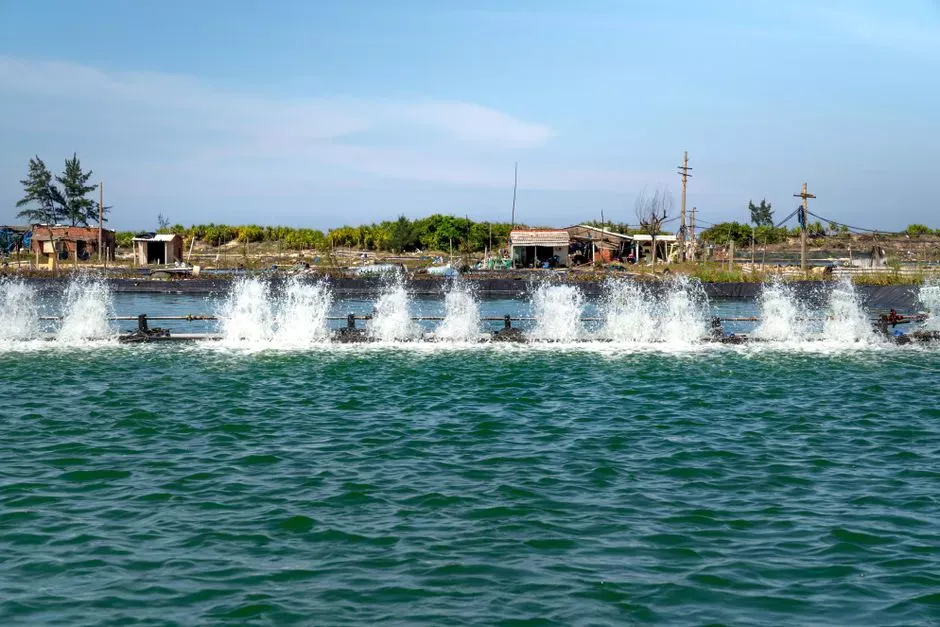
Intermittent permeation is a documented design lever rather than an operating detail: the S2 pilot ran 8 minutes of permeation interrupted by 2 minutes of relaxation to control fouling in a submerged flat-sheet module, and that cycle feeds directly into the hydraulic envelope the designer has to size. Aeration serves two roles — oxygen supply to the biomass and continuous scouring of the membrane surface — so the air system must be sized for the higher of the two demands (S3, S4). Scour air, not process air, usually governs the blower at high MLSS, because the air demand for membrane scouring scales with membrane area and is independent of the biological loading. The S4 source (PCI Membranes) gives a concrete example: its second-generation cassette, launched in 2022, achieved +10% membrane packing density and −5% scouring energy versus the prior generation, demonstrating that aeration energy is a tunable design parameter rather than a fixed value. Hydraulic design must also cover peak factor, equalisation volume, and the permeate/backwash flow split, including a backwash recovery loop so that cleaning water is not lost to drain. Pressure-driven sidestream loops are described in S4 as appropriate for small or hard-to-treat industrial streams; submerged configurations suit medium-to-large flows, which sets the default when flows exceed the practical sidestream envelope.
Submerged vs Sidestream and Plant Scale
PD CEN/TR 15897 (S1) organises the configuration decision around two thresholds: 500 PT, above which it deals with custom-designed MBR systems, and 10,000 m³/d, above which large MBRs are described as tending to use separated membrane tanks. The S4 source gives the matching geometry rule: pressure-driven sidestream membranes suit smaller installations and tough-to-treat industrial wastewaters, while submerged membranes suit medium-to-large installations. PD CEN/TR 15897 also makes the system-level point that membrane interchangeability between manufacturers is not possible at the module level without considering the full system (S1), so a design that promises drop-in cassette swaps between suppliers is a design risk. A scale-driven configuration rule that combines both sources is given below.
| Scale / stream | Default configuration | Tank layout | Source |
|---|---|---|---|
| < 500 PT (off-the-shelf range) | Submerged or sidestream per supplier | Integrated or separate | S1 |
| 500 PT to 10,000 m³/d (custom MBR) | Submerged for municipal; sidestream for tough industrial streams | Integrated or separate | S1, S4 |
| > 10,000 m³/d (large MBR) | Submerged preferred | Separate membrane tanks per S1 | S1, S4 |
| Tough industrial / small flow | Sidestream pressure-driven | Per supplier | S4 |
For a packaged plant in the small-to-medium municipal range, the integrated MBR system matches the standard's lower-scale envelope; above 10,000 m³/d, separate membrane tanks become the default and the design should be evaluated at the full system level, not at the cassette level.
Effluent Quality Targets and Reuse Criteria
The 2022 study summarised in S3 (J. Env. Management) sets a benchmark envelope for MBR effluent quality: greater than 99% total suspended solids removal, greater than 91% chemical oxygen demand removal, and 68.3–99.7% removal across a range of microcontaminants. The S2 study (Springer) reported 98.7% TSS and 90.4% total COD removal on a laboratory-scale MBR; the same study showed most monitored pharmaceuticals removed at greater than 80%, with carbamazepine as the persistent outlier at less than 20%. The S4 source notes that the MBR effluent is essentially free of suspended solids with reduced bacterial and viral content, so minimum disinfection is required and the permeate is suitable as feed to a downstream reverse osmosis train for water reuse, or for discharge to sensitive receiving bodies. Field evidence from the S5 source (Water Environment Research, 2026) documents that MBR-treated wastewater has been used successfully for safflower irrigation under Mediterranean conditions, with MBR-irrigated yield statistically equivalent to freshwater irrigation, subject to salinity and sodicity monitoring. Where trace organics or salts are a concern, an industrial RO polishing train downstream of the MBR is the standard route to a reuse-grade permeate.
Validation, Monitoring and Compliance Criteria
PD CEN/TR 15897 treats the membrane system as a whole rather than only the modules (S1), and the validation plan should mirror that: pilot trials, full-system acceptance, and O&M handover, not cassette-level tests in isolation. The S3 source describes real-time sensors and a control loop that adjust operating settings in response to effluent parameters, which is the practical implementation of the filterability watch list that PD CEN/TR 15897 sets out — short circuits, EPS spikes, and incomplete biodegradation must be detectable in the control loop, not only at the laboratory bench. Chemical cleaning and backwash are part of the design (S3); the cleaning chemistry, frequency, and the backwash recovery loop are part of the criteria, not an afterthought, and the datasheet should specify whether recovery is to a holding tank with recirculation or to waste. Compliance criteria for trace organics should be set against the receiving environment or downstream polishing, not against the MBR alone: the S2 study is explicit that even a well-run MBR will not fully eliminate persistent micropollutants such as carbamazepine, so a polishing step such as RO or an advanced oxidation process is the defensible answer to a regulator. An AOP design guide for persistent micropollutants covers the sizing logic when AOP is selected as the polishing step.
Frequently Asked Questions
What does an MBR cost in 2026, and what drives the price?
The scraped sources do not provide a 2026 unit CAPEX or OPEX figure for an MBR package. The defensible answer is to break the cost into its drivers and request quotes against each: membrane area (set by net flux and MLSS), aeration energy (set by scour demand and biological loading), cleaning chemicals and backwash recovery, sludge handling, and the pretreatment train. Reference projects for budget envelopes are available in the 2026 MBR cost, compliance and supplier guide and in the Norway MBR cost and compliance reference, which together give the regional benchmarks a buyer should ask a supplier to match.
How do I size an MBR and check it against PD CEN/TR 15897?
Size from the consolidated criteria in the tables above: influent load, MLSS target, SRT/HRT, net flux, and membrane geometry. Then check the result against PD CEN/TR 15897's two thresholds (S1): above 500 PT the design is treated as a custom MBR, and above 10,000 m³/d the design should use separate membrane tanks. Membrane interchangeability is not possible at the module level without considering the full system (S1), so the sizing should be locked to a single supplier's cassette geometry and aeration box rather than mixed across vendors.
How should I evaluate MBR suppliers?
Evaluate on full-system performance rather than datasheet parity: references at the target scale (>500 PT and, if relevant, >10,000 m³/d), documented effluent quality against the 2022 J. Env. Management envelope in S3, after-sales membrane supply and replacement lead time, and the supplier's own aeration energy data — the S4 example of a second-generation cassette with +10% packing density and −5% scouring energy shows the kind of evidence to ask for.
What compliance risk should I plan for at the design stage?
Set the compliance floor at greater than 99% TSS and greater than 91% COD from the 2022 envelope in S3, and add downstream polishing (RO or AOP) for persistent compounds such as carbamazepine that the S2 study shows MBR alone does not remove. The S5 field study on safflower irrigation shows reuse is feasible subject to salinity and sodicity monitoring, so the compliance criteria should include a salinity envelope and a monitoring plan, not only a pollutant list.