An industrial waste discharge permit south africa limits decision follows the stricter of the National Water Act General Authorisation and the municipal sewage by-law. Typical inland design bands are TSS 30–100 mg/L, COD 75–400 mg/L, and NH₃-N 10–30 mg/L.
Faecal coliforms must stay below 1,000 cfu/100 ml on the same files. A DAF then MBR train is sized to hold those bands at 30–35 kWh per kg of COD removed (HydropureWater field data, 2025). GN 665 in Government Gazette 36820 of 6 September 2013 remains the general-authorisation text for discharge to a water resource.
What an industrial waste discharge permit south africa limits file must prove
The file must name the outfall and the stricter of the GN 665 Table 2.1 column and the municipal by-law. The gazette requires that suspended solids be removed from any wastewater in Table 2.1, which may be amended from time to time. Where the general authorisation applies, it replaces the need for a water user to apply for a licence; outside its conditions, a water use licence is the path.
South African industrial effluent permits authorise discharge to a sewer or a water resource, and the stricter of the General Authorisation and the municipal by-law governs. Limits cover TSS, COD, ammonia, pathogens, metals, and pH for the receiving catchment. Coastal outfalls sit under the Integrated Coastal Management Act, which often relaxes selected parameters where dilution is high. On most inland factories we size, the municipal permission is the number that ends up on the P&ID.
Which South African discharge limits actually apply to your plant?
The National Water Act 36 of 1998 sets the licence framework, and GN 665 supplies the general authorisation limits for a release to a water resource. Municipal sewer discharges often face a tighter local by-law, and the stricter figure governs. Some General Authorisation notes still cite TSS up to 1,000 mg/L to sewer, yet design files for eThekwini often still write 30 mg/L, while Cape Town allows higher TSS only under defined conditions.
The Department of Water and Sanitation (DWS) Green Drop 2023 report signals ammonia-nitrogen tightening to 10 mg/L in sensitive catchments or upstream of potable abstraction. Even if a General Authorisation allows 30 mg/L NH₃-N, a by-law or receiving-water sensitivity can override it. EHS managers must read both national guidelines and the plant municipal by-laws before locking design targets. Food plants we review in those catchments are held at the 10 mg/L end of the band.
Plants that also carry an overseas corporate standard should treat industrial waste water discharge requirements as a separate jurisdiction checklist, not as a substitute for DWS or a metro by-law. Gulf schedules are a different legal system; see how effluent disposal standards in sa are framed for Saudi sites, then return to the South African number on the licence.
According to GN 665 (Government Gazette 36820, 6 September 2013), the Table 2.1 general limits include faecal coliforms of 1,000 per 100 ml and COD of 75 mg/L. The same general column sets ammonia as nitrogen at 6 mg/L, nitrate/nitrite as nitrogen at 15 mg/L, suspended solids at 25 mg/L, and pH at 5.5–9.5. General-limit electrical conductivity must stay within 70 mS/m above intake to a maximum of 150 mS/m, and listed water resources attract a stricter special column, including 50 mS/m above intake. Water Research Commission guidance notes the General Authorisation limits apply to works of 2 Mℓ/d and less, and larger works require a licence.
When we set a river outfall, we open Table 2.1 only after the resource is confirmed as listed or not. Some listed rivers also carry a special ortho-phosphate limit, so a generic phosphorus cell is not enough. The wastewater effluent discharge standards that bind the plant are still the stricter of that column and the municipal permission.
How do general limits and sewer limits compare?
Table 2.1 general limits and a metro sewer schedule answer different outfalls, and the plant must meet the stricter number for the route it uses.
- Name the outfall first: municipal sewer, a water resource, or a coastal discharge.
- For a small river discharge within the authorisation conditions, test Table 2.1 general limits.
- For a listed water resource, use the special column, including the stricter conductivity line.
- For sewer, use the municipal schedule or the written permission, and design to the tighter of the two.
- If a spill can reach both sewer and a river, design to the stricter route.
| Parameter | General Authorisation (NWA) | Typical Municipal By-Law (e.g., eThekwini) | Green Drop 2023 Impact (Sensitive Catchments) | Primary Trigger |
|---|---|---|---|---|
| TSS | 25 mg/L (to water resource) / 1,000 mg/L (to sewer) | 30 mg/L (to sewer) | No direct impact | Receiving water body / Municipal by-law |
| COD | 75 mg/L (to water resource) / 400 mg/L (to sewer) | 75 mg/L – 400 mg/L (to sewer, varies by industry) | No direct impact | Industry type / Municipal by-law / Surcharge trigger |
| NH₃-N | 6 mg/L (to water resource) / 30 mg/L (to sewer) | 10 mg/L (to sewer) | Tightening to 10 mg/L or lower | Receiving water sensitivity / Municipal by-law |
| Faecal Coliforms | 1,000 cfu/100 ml (to water resource) | 1,000 cfu/100 ml (to sewer) | No direct impact | Public health / Receiving water use |
| pH | 5.5 – 9.5 | 5.5 – 9.5 | No direct impact | Universal standard |
| Phenols | 0.05 mg/L | 0.05 mg/L | No direct impact | Toxicity / Human health |
What do ethekwini municipal by-law industrial effluent limits require for trade effluent?
The eThekwini Sewage Disposal By-law, 2016 requires permission before any trade effluent enters the municipal sewage disposal system, and that permission ties to Schedules A and B. Section 25(1) states a person may not discharge trade effluent into the municipal sewage disposal system except in terms of permission granted, and section 25(4) ties compliance to the standards in those schedules. No trade effluent may be allowed to enter a septic tank or a French drain. A non-compliant discharger must within 12 hours advise an authorised official of the details of the contravention, which is separate from the 2-hour notice some DWS incident conditions still require.
Schedule A of that 2016 by-law sets suspended solids at 2,000 mg/L where the catchment leads to a sewage works above 25 Mℓ/d, and at 1,000 mg/L for smaller works. Temperature must stay below 44°C. Large-works pH must sit above 6 and below 10, and small-works pH above 6.5 and below 10. Phenols (as phenol) are listed at 10 mg/L for large works and 5 mg/L for small works.
Mineral oils, greases and waxes are listed at 50 mg/L. COD in that schedule is marked as a charge, not as a fixed ceiling of 75 mg/L or 400 mg/L. Copper, nickel, zinc and iron are listed at 50 mg/L for large works and 5 mg/L for small works. On Durban files we check, the written permission is often tighter than Schedule A, so the design follows the permission.
The 30 mg/L TSS cell in the comparison table remains a tight design target some inland files still write, and it is not the Schedule A ceiling. An authorised official may relax a Schedule A number only where that change is the best practicable environmental option. The same official may demand pretreatment, a separate trade-effluent drain, and analysis returns.
Hospital and clinic wastewater that is not standard domestic effluent is trade effluent under this by-law. A packaged Medical & Hospital Wastewater Treatment System is the skid used when the site cannot host a civil plant and the permission still requires pretreatment before the sewer tie-in.
What does the DWS General Authorisation wastewater effluent limits table require in 2025–2026?
For 2025, inland industrial effluent limits remain the practical design envelope for most factories. Values shift with receiving-water sensitivity and industry category. Food and textile plants often see municipal surcharges when raw COD exceeds 3,000 mg/L, which can roughly double bills for non-compliant loads.
The consolidated table below merges typical municipal by-laws with DWS General Authorisation figures after Green Drop 2023 tightening. Use it as a design target set, then confirm the exact numbers written into your licence. Procedural detail for an industrial waste discharge permit in south africa belongs on the dedicated regulations guide.
Teams that look up the dws general authorisation wastewater effluent limits table south africa 2025 2026 should treat GN 665 Table 2.1 as the text still in force. Any cell the signed licence changes then replaces the generic table before design freezes. For a direct river outfall, effluent water river disposal chemical limits are the general or special column of Table 2.1, read with any resource quality objective cited on the licence.
Which inland numbers should the design lock?
The inland design table below is a starting envelope, and the signed licence number still overrides every cell.
| Parameter | Typical Inland Limit (mg/L unless stated) | Specific Conditions / Notes |
|---|---|---|
| Chemical Oxygen Demand (COD) | 75 – 400 mg/L | Lower limit (75 mg/L) for discharge to sensitive water resources or where dilution factor is <5x. Higher limits (up to 400 mg/L) for discharge to municipal sewer, dependent on industry category and receiving WWTW capacity. Municipal surcharges apply for values >3,000 mg/L in raw effluent. |
| Total Suspended Solids (TSS) | 30 – 100 mg/L | Lower limit (30 mg/L) for discharge to sensitive water resources or where receiving water has <5x dilution. Up to 100 mg/L for discharge to municipal sewer in some areas. |
| Ammonia-Nitrogen (NH₃-N) | 10 – 30 mg/L | Tightening to 10 mg/L in sensitive catchments or upstream of potable abstraction points (Green Drop 2023). Higher limits (up to 30 mg/L) may apply for discharge to less sensitive municipal sewers. |
| Nitrate-Nitrogen (NO₃-N) | 15 mg/L | Specific limit applied to discharges upstream of dams used for potable abstraction. |
| Total Nitrogen (TN) | 30 mg/L | Often a combined limit in sensitive areas, including NH₃-N, NO₃-N, and organic nitrogen. |
| Total Phosphorus (TP) | 1 – 2 mg/L | Strict limits in eutrophication-sensitive catchments. |
| Phenols | 0.05 mg/L | Strict limit due to toxicity and taste/odor issues. |
| Chromium (VI) [Cr(VI)] | 0.05 mg/L | Highly toxic, strict limit for heavy metals. |
| Heavy Metals (e.g., Pb, Cd, Hg, Ni, Cu, Zn) | 0.01 – 1.0 mg/L (each) | Limits vary significantly per metal and receiving environment. Always check specific by-laws. |
| Faecal Coliforms | < 1,000 cfu/100 ml | Standard for public health protection. |
| pH | 5.5 – 9.5 | Standard range. |
| Temperature | < 40 °C | Measured at the edge of the mixing zone or point of discharge. |
| Oil & Grease | 20 mg/L | For free and emulsified oils. |
Technology matrix: proven treatment trains to hit each limit
Unit selection follows inlet solids, FOG, COD, and nutrient pressure rather than a single product list. High TSS and FOG need strong primary separation. Tight ammonia or phosphorus limits push the design toward nitrifying biology or chemical polishing.
For TSS at 30 mg/L, pair primary clarification with secondary polishing. A dissolved air flotation unit can remove 90–95% of TSS and FOG; a dual-media filter then cuts roughly 80% more and holds the 30 mg/L line. For COD at 75 mg/L, a submerged MBR commonly delivers permeate at 45–60 mg/L. Stricter organic targets may add advanced oxidation after the membrane.
When NH₃-N must stay at 10 mg/L after Green Drop 2023, use a nitrification-denitrification MBR or an external nitrifying biofilter for polish. For phenols at 0.05 mg/L, pulsed PAC at 20 mg/L upstream of DAF can cut phenols by about 70% (HydropureWater field data, 2025), with MBR providing further biological and adsorptive removal.
What outlet and energy does each train show?
Each row below pairs an inlet band with an outlet target, a removal range, and energy in kWh per m³ treated.
| Parameter to Target | Inlet Range (mg/L) | Specified Outlet (mg/L) | Key Treatment Step(s) | Typical Removal (%) | Energy Use (kWh/m³ treated) |
|---|---|---|---|---|---|
| TSS (30 mg/L) | 100 – 1,000 | < 30 | DAF + Dual-Media Filter | 90 – 98 | 0.15 – 0.35 |
| COD (75 mg/L) | 500 – 5,000 | < 75 | MBR System | 85 – 95 | 0.50 – 1.20 (for biological + membrane) |
| NH₃-N (10 mg/L) | 20 – 150 | < 10 | Nitrification-Denitrification MBR or External Biofilter | 90 – 98 | 0.60 – 1.30 (integrated with MBR) |
| Total Phosphorus (1 mg/L) | 5 – 20 | < 1 | Chemical Precipitation (e.g., Alum/Ferric) + DAF/Filtration | 90 – 99 | 0.10 – 0.25 (for chemical dosing/separation) |
| Phenols (0.05 mg/L) | 0.5 – 5 | < 0.05 | PAC Dosing (upstream DAF) + MBR / AOP | 70 – 95 | 0.05 – 0.15 (PAC dosing) + MBR energy |
| Heavy Metals (e.g., Cr(VI) 0.05 mg/L) | 0.1 – 5 | < 0.05 | pH Adjustment + Chemical Precipitation + Filtration | 95 – 99 | 0.08 – 0.20 (for chemical dosing/separation) |
| Faecal Coliforms (<1,000 cfu/100 ml) | 10^4 – 10^7 | < 1,000 | UV Disinfection / Chlorination | 99.9 – 99.999 | 0.02 – 0.10 |
CAPEX vs OPEX comparison: DAF+MBR versus chemical precipitation + sand filter
Train selection for South African limits turns on ten-year cost, not only installed price. Chemical precipitation plus sand filtration can look cheaper at purchase, yet chemical use and sludge haulage often erase that gap as 2025 tariffs rise.
Take a food plant treating about 500 m³/day of high COD, TSS, and modest nutrients.
Option 1: DAF + MBR train. CAPEX (2025 estimate) runs R10 million – R18 million for a dissolved air flotation unit plus a submerged MBR system. OPEX sits near R8 – R15 per m³. Energy is the largest line at about 30–35 kWh/kg COD removed. Membranes last 5–10 years. Chemical use stays limited to pH trim and membrane cleans.
Biological sludge volume is lower than conventional activated sludge, yet disposal still matters; see sludge dewatering system costs for CAPEX and OPEX ranges.
Option 2: Chemical precipitation + sand filter. CAPEX (2025 estimate) is R6 million – R12 million for dosing, clarification, and multi-media filters. OPEX climbs to R12 – R25 per m³ because coagulants, flocculants, and dense chemical sludge dominate. Energy is lower than an MBR on the primary side, but labour for chemical handling rises.
Over a 10-year life, Option 2 chemical and sludge OPEX often yields a higher total cost of ownership. High COD sites also avoid municipal surcharges more reliably with DAF+MBR performance. On a 500 m³/day food plant, sludge haulage is the line that usually overtakes the cheaper installed price.
For cost context outside South Africa, compare Dubai industrial treatment costs and the Saudi effluent limits table, then price the South African train on local tariffs and the local limit.
Australian metro planning notes in the Sydney industrial wastewater compliance guide show a similar surcharge-driven OPEX pattern, and they do not set a South African limit.
Licence submission checklist: what data DWS wants to see
Incomplete water use licence packs are a common rejection cause at DWS. The file must prove characterisation, treatability, design integrity, and emergency control before approval moves. The industrial waste discharge process in south africa still starts with route selection, then the 30-day composite, then the stricter numeric limit. Packs we see sent back usually fail that composite, not the process drawing.
- Effluent Characterisation Report: Analyse raw and treated effluent in detail. Include 24-hour composites for at least 30 consecutive days covering COD, TSS, NH₃-N, metals, pH, and temperature. Show load variability and peak-handling capacity against General Authorisation and municipal by-laws.
- Treatability Study Report: Provide pilot or bench evidence that the train treats at least 90% of design load. Confirm the study method, results, and conclusions support the licensed effluent quality standards.
- Process Design Report: Submit PFDs, P&IDs, mass balances, equipment lists, and hydraulic profiles for the proposed plant.
- Contingency Plan for Power Outage: State how discharge is controlled during outages. Use an on-site generator for critical units or at least 24 hours of retention pond capacity, with clear operating steps.
- Emergency Shutdown Protocol: Document containment, remediation, and communication for failures, spills, or non-compliant discharge. Include 2-hour notification to the DWS inspector for significant incidents.
- Environmental Impact Assessment (EIA) / Basic Assessment Report: Provide an EIA or Basic Assessment under NEMA when scale or discharge nature triggers that path.
- Proof of Land Ownership/Lease and Zoning: Confirm legal site access for the treatment plant.
- Public Participation Process Report: Record stakeholder engagement and how affected-party concerns were addressed.
How do CPCB effluent discharge standards differ from South African by-laws?
CPCB effluent discharge standards are not a South African limit and cannot be copied into a design brief. Local metro by-laws and the General Authorisation set the enforceable numbers for each plant. Use a foreign schedule only as a corporate cross-check when one group standard spans several countries. We keep that foreign schedule out of the South African mass balance.
Who this is for / Who should look elsewhere / Next step
EHS managers, process engineers, and consultants sizing an inland South African plant are the readers who should use these sewer and water-resource limits. Food and textile sites that face COD surcharges above 3,000 mg/L are the usual case.
Who should look elsewhere. Teams that need only Australian metro rules, Gulf disposal schedules, or semiconductor ZLD reclaim scaling should use those country guides. Enforcement practice and none compliance of wastewater treatment in south africa sit on the regulations guide, not on this limits page.
Next step. Match the catchment and the metro permission to the inland table, then short-list a DAF plus MBR train or a chemical train from the matrix. Assemble the characterisation and treatability pack before filing. Share the influent composites and the draft industrial waste discharge permit south africa limits through the equipment sizing request if the P&ID is still open.
Frequently Asked Questions
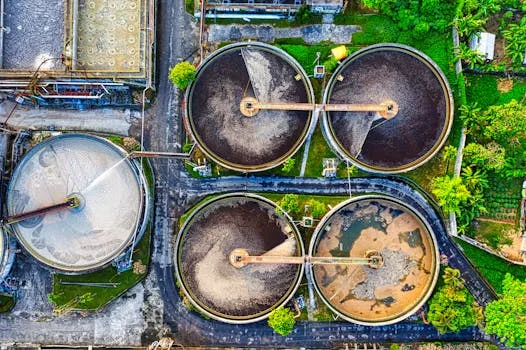
South African industrial discharge permits reject dilution, set sampling on the licence, and close the general authorisation path when the works is too large for it.
What if my COD is 500 mg/L but the limit is 75 mg/L—can I dilute?
No. Dilution is not treatment under a South African industrial discharge permit. The plant must cut COD from 500 mg/L to the licensed 75 mg/L by physical, chemical, or biological means. Added clean water does not count as removal and is a common reason for a rejected water use licence. Keep raw and treated composites separate so the inspector sees removal, not a blend.
Do I need continuous monitoring for TSS or is daily grab sample enough?
Most sewer and river permits expect a daily 24-hour composite for TSS and COD, not a single grab. Large, variable, or sensitive discharges may also require continuous online pH, temperature, and flow, and sometimes TSS or COD. The licence monitoring table is the binding document, so read it before you buy analysers. Where the general authorisation applies, its own monitoring conditions still sit under the licence framework.
Which municipalities still allow TSS 1,000 mg/L discharge to sewer?
Older General Authorisation text may still cite 1,000 mg/L TSS to sewer, but that figure is not a municipal permission. eThekwini comparison notes of 30 mg/L are a tight design target some files use. Schedule A of the 2016 Sewage Disposal By-law instead lists 2,000 mg/L suspended solids for large works above 25 Mℓ/d and 1,000 mg/L for smaller works. The permit can be tighter than Schedule A, so read the permission before you lock a filter specification.
Does my plant qualify for the General Authorisation instead of a licence?
Only within its conditions. Water Research Commission guidance states the General Authorisation limits apply to works of 2 Mℓ/d and less, and larger works require a licence. Where the conditions are met, the authorisation replaces the need to apply for a licence. Outside them, DWS expects a water use licence, and a municipal sewer permission never replaces the river authorisation where flow can reach a water resource.