A factory preparing a bangladesh doe schedule-10 effluent compliance permit 2026 may discharge only after the effluent meets the Department of Environment limit for its outfall. Textile and dyeing units must keep BOD at or below 30 mg/L, while most other industries have long used a 100 mg/L BOD cap. COD in those plant notes must stay under 250 mg/L, and discharge pH must remain between 6.0 and 9.0.
bangladesh doe schedule-10 effluent compliance permit 2026
The Department of Environment authorizes discharge through an Environmental Clearance Certificate. The 14 January 2024 DoE order, aligned with ECR 2023, sets inland BOD5 at 30 mg/L at 20°C and inland COD at 200 mg/L. Coastal limits in that order are BOD5 100 mg/L and COD 250 mg/L. Discharge pH stays between 6 and 9.
Keep the bangladesh doe schedule-10 effluent compliance permit 2026 packet with the clearance renewal and the latest Department of Environment laboratory sheet. An industrial waste discharge permit in bangladesh is that Environmental Clearance Certificate, and production without a current renewal is an enforcement offense.
The industrial waste discharge permit in bangladesh states the outfall, so the inland, sewer, and coastal columns are not interchangeable. The industrial waste discharge permit number in bangladesh to copy onto drawings is the reference and expiry printed on that certificate and on the latest renewal. Site clearance comes before construction. Environmental clearance comes before production.
The industrial waste discharge services sector in bangladesh supplies ETP operation, sludge haulage, and sample delivery to the Department of Environment laboratory. Engineers who also read industrial waste water discharge requirements still start the Bangladesh calculation from Schedule-10 and the 2023 category tables.
Self-monitoring habits used for industrial wastewater discharge can set sampling frequency, but approval still hinges on the local limit and a DoE laboratory result.
A published translation of Schedule-10, Rule 13, Environment Conservation Rules, 1997, cites the Bangladesh Gazette of 28 August 1997. Inland surface water in that schedule was BOD 50 mg/L and COD 200 mg/L. Suspended solids were 150 mg/L, free ammonia 5 mg/L, and hexavalent chromium 0.1 mg/L. Lead was 0.1 mg/L, oil and grease 10 mg/L, and pH 6-9.
Irrigable land in that same schedule was BOD 100 mg/L and free ammonia 15 mg/L. Public-sewer BOD was 250 mg/L and public-sewer COD was 400 mg/L. The 15 mg/L ammonia figure in many plant notes matches that irrigable-land column, not the inland free-ammonia cap of 5 mg/L.
Earlier plant notes used one BOD cap of 100 mg/L and one COD cap of 250 mg/L. The Department of Environment Enforcement Guidelines (December 2023) include Appendix 11. That appendix is office order Memo No. 22.02.0000.111.58.001.2019-11(1) of 14 January 2024, written to follow the Environment Conservation Rules, 2023.
That order sets inland BOD5 at 30 mg/L at 20°C and inland COD at 200 mg/L. Coastal discharge in the same order is BOD5 100 mg/L and COD 250 mg/L. Public-sewer discharge into secondary treatment is BOD5 250 mg/L and COD 400 mg/L. The 2023 discussion of river stress named the Meghna and Shitalakshya basins.
Inland free ammonia stays 5 mg/L, and inland ammoniacal nitrogen stays 50 mg/L. Inland suspended solids move from 150 mg/L in the 1997 schedule to 100 mg/L in the 2024 order. Inland hexavalent chromium stays 0.1 mg/L. Inland lead stays 0.1 mg/L, so a 0.05 mg/L lead note is tighter than both columns.
Temperature in the 2024 order must not exceed 5°C above the receiving water. If both COD and BOD exceed the limit, the order says compensation is calculated on COD only. Dissolved phosphorus on the inland row of that order is 5.0 mg/L.
| Parameter | Schedule-10 1997 inland | DoE order 14 Jan 2024 inland | Same order, coastal | Textile washing, dyeing, printing |
|---|---|---|---|---|
| BOD5 | 50 mg/L | 30 mg/L at 20°C | 100 mg/L | 30 mg/L at 20°C |
| COD | 200 mg/L | 200 mg/L | 250 mg/L | 200 mg/L |
| Suspended solids | 150 mg/L | 100 mg/L | 100 mg/L | 100 mg/L |
| Oil and grease | 10 mg/L | 10 mg/L | 20 mg/L | 10 mg/L |
| pH | 6-9 | 6-9 | 6-9 | 6-9 |
| Lead | 0.1 mg/L | 0.1 mg/L | 2 mg/L | 0.1 mg/L |
| Color | Not listed | Not listed on the general inland row | Not listed | 150 Hazen (Pt-Co) |
The standards are reviewed with industry associations, NGOs, and academic groups, on a cycle described as every five years. These limits protect rivers that supply irrigation and drinking water. Renew the industrial waste discharge permit in bangladesh before the expiry on the certificate. Sector rows are set out in Industrial Effluent Limits Bangladesh 2026: Full Compliance Guide.
What Does an Industrial Waste Discharge Permit in Bangladesh Require?
An industrial waste discharge permit in bangladesh requires site clearance before construction and environmental clearance before production. The Bangladesh Environment Conservation Act, 1995, as excerpted in the December 2023 Enforcement Guidelines, sets the penalty for ignoring a section 4 direction. That penalty is imprisonment not exceeding 10 years, or a fine not exceeding 10 lac taka, or both.
Rule 3(2) of ECR 2023, cited in those guidelines, sets 30 days to dispose of a complaint, with one extension of up to 15 days. An appeal under section 14 must be filed within 30 days, extendable by 30 days, and is to be disposed of within 3 months.
Design files still carry the working table below for discharges to surface water or municipal sewerage. Use it as the plant record, then apply the outfall column from the 14 January 2024 order when the two differ. Most dyeing files we open still show the single 250 mg/L COD line even when the outfall is inland water.
| Parameter | Maximum Limit | Typical Raw Influent Range* (mg/L) | Notes / Sector Exceptions |
|---|---|---|---|
| BOD5 | 30 (textile & dyeing) / 100 (general industry) | 10 – 786 | Reduced from 100 mg/L for textiles in 2023 update. |
| COD | 250 | 41 – 2 430 | High-strength streams (pharma, tannery) may require pre-treatment. |
| pH (discharge point) | 6.0 – 9.0 | 3.9 – 14.0 (raw) | Neutralisation required for acidic or alkaline streams. |
| TSS | 100 | 50 – 1 200 | Measured after filtration. |
| Oil & Grease (FOG) | 10 | 5 – 250 | Critical for food-processing effluents. |
| Total Nitrogen (TN) | 50 | 10 – 120 | Ammonia portion limited separately (see sector table). |
| Ammonia-N | 15 | 5 – 80 | Strict for tannery and pharmaceutical units. |
| Chromium (VI) | 0.1 | 0 – 5 | Applicable to leather processing. |
| Lead (Pb) | 0.05 | 0 – 0.4 | Relevant for metal-finishing shops. |
*Values represent typical ranges reported in field surveys across Bangladesh industrial zones (HydropureWater field data, 2025).
Sector-Specific Effluent Limits and Compliance Challenges
Each sector faces distinct numeric thresholds that match its process pollutant profile. Textile wet processing sends hot, alkaline wastewater loaded with reactive dyes and auxiliaries. Pharmaceutical plants release API residues that stay biologically active at trace levels. Leather tanneries in Dhaka’s Hazaribagh and Savar areas must control chromium toxicity and sulfide odor.
Food processors face seasonal peaks—mango canning in May–July and dairy surges during Eid—that can upset biological systems. Mapping those loads against the sector table helps engineers rank control priorities. Broader context on Bangladesh Compliance Regulations Standards: 2026 Guide helps teams align plant design with national enforcement practice. Most mango-canning plants we size run at the lower end of the FOG range until the May–July peak.
| Sector | Key Parameter Limits | Common Non-Compliance Issues | Typical Influent Strength |
|---|---|---|---|
| Textile & Dyeing | BOD ≤ 30 mg/L; COD ≤ 250 mg/L; Color removal ≥ 90 % | High dye load, alkaline pH (10-12), residual surfactants | COD 1 200-2 400 mg/L; BOD 150-600 mg/L |
| Pharmaceutical | COD ≤ 250 mg/L; NH₃-N ≤ 15 mg/L; Heavy metals per Schedule-11 | Organic solvents, API residues, variable flow | COD 1 000-2 430 mg/L; BOD 300-900 mg/L |
| Food Processing (including dairy & canning) | FOG ≤ 10 mg/L; TSS ≤ 100 mg/L; BOD ≤ 30 mg/L | Seasonal spikes in FOG, pH swings (3.9-11), high suspended solids | FOG 30-250 mg/L; BOD 50-400 mg/L |
| Leather & Tanneries | Cr(VI) ≤ 0.1 mg/L; COD ≤ 250 mg/L; NH₃-N ≤ 15 mg/L | Chromium precipitation, high alkalinity, intermittent batch discharges | Cr(VI) 0.5-5 mg/L; COD 800-1 500 mg/L |
| Sugar & Agro-based Mills | BOD ≤ 30 mg/L; COD ≤ 250 mg/L; TSS ≤ 100 mg/L | Large volume, high-strength BOD (up to 800 mg/L), seasonal load variation | BOD 200-800 mg/L; COD 600-1 200 mg/L |
| General Manufacturing (metal-finishing, plastics) | BOD ≤ 100 mg/L; COD ≤ 250 mg/L; Pb ≤ 0.05 mg/L | Metal leachates, low biodegradability, occasional pH excursions | COD 300-1 200 mg/L; BOD 50-250 mg/L |
The 14 January 2024 textile category covers washing, dyeing, and printing. It sets BOD5 at 30 mg/L at 20°C and COD at 200 mg/L. Suspended solids are 100 mg/L and oil and grease is 10 mg/L. Total chromium is 0.5 mg/L, lead is 0.1 mg/L, TDS is 2,100 mg/L, and color is 150 Hazen.
The working table above still shows textile COD at 250 mg/L and color removal at or above 90 %. Keep both notes. The 250 mg/L line is the older single-column target, and 200 mg/L is the textile cap in the 2024 order.
Food processing, fish processing, dairy, and starch in that order stay at BOD5 30 mg/L and suspended solids 100 mg/L. Dairy flow is listed at 3 m3 per ton of milk, and starch at 8 m3 per ton of raw material.
Sugar BOD5 is 50 mg/L at 20°C in the category table. Wastewater flow there is 0.5 m3 per ton of crushed sugarcane, while the working table still shows sugar BOD at 30 mg/L. Ask which row the clearance uses before the reactor volume is frozen.
Tannery BOD5 in the category table is 30 mg/L, total chromium is 2 mg/L, sulfide is 1 mg/L, chloride is 2,000 mg/L, and wastewater flow is 30 m3 per ton of processed leather. Inland hexavalent chromium remains 0.1 mg/L on the general row. The working table’s Cr(VI) cap of 0.1 mg/L and the tannery total-chromium cap of 2 mg/L answer different tests. Report both.
Essential Wastewater Treatment Technologies for Compliance
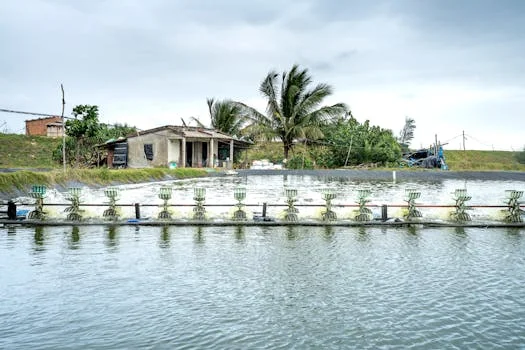
Primary, secondary, and tertiary modules close the gap between raw influent and DoE limits. Sequence choice depends on land, capital, and whether effluent will be reused. Textile units in Narayanganj have adopted MBR plus ozone polishing for color removal. Khulna’s shrimp processors rely on DAF plus anaerobic lagoons for high-protein wastewater.
Energy cost now shapes many upgrades. Industrial electricity tariffs rose 8 % in 2024, so plants added variable-frequency drives on aeration blowers and recovered biogas from anaerobic reactors for boiler feed. Teams that already manage industrial waste discharge elsewhere still need Bangladesh-specific sizing for monsoon flow and coastal corrosion.
Below is a performance-focused matrix that links the dominant pollutant type to the most proven technology, together with typical removal efficiencies observed in Bangladeshi installations.
| Technology | Target Pollutants | Typical Removal Efficiency | Typical Application Scale | Recommended Product (if any) |
|---|---|---|---|---|
| Dissolved Air Flotation (DAF) | FOG, oil, coarse suspended solids | 85–95 % FOG, 70–90 % TSS | 10-200 m³/h (food, textile primary pretreatment) | high-efficiency DAF system for FOG and suspended solids removal |
| Anoxic/Aerobic (A/O) Activated Sludge | BOD, COD (biodegradable fraction) | 90–95 % BOD, 70–80 % COD | 50-500 m³/h (mid-size industrial parks) | – |
| Chemical Coagulation/Dosing (PAC, FeCl₃) | High-color COD, colloidal metals | 60–80 % COD reduction, 70–85 % color removal | Variable; often upstream of DAF or MBR | – |
| Membrane Bioreactor (MBR) | Residual BOD, COD, TSS, pathogens | <10 mg/L BOD, <1 NTU turbidity, >99 % pathogen removal | 5-150 m³/h; ideal for space-constrained sites | compact MBR system for high-quality effluent and space-constrained sites |
| Reverse Osmosis (RO) + Evaporation (ZLD) | Salts, refractory COD, heavy metals | 95–98 % salt rejection, >90 % COD removal | 2-30 m³/h; used when water reuse or zero-liquid-discharge is mandated | – |
| Constructed Wetlands (Passive) | Ammonia, low-strength BOD, nutrients | 60–80 % NH₃-N, 40–60 % BOD | Large land footprint; supplemental to mechanical treatment | – |
Performance data are drawn from pilot studies and full-scale plants operated by HydropureWater across Dhaka, Chattogram and Khulna industrial zones (2024-2025).
Which treatment level meets final discharge standards?
Primary screening and equalization alone rarely meet BOD of 30–100 mg/L or COD of 250 mg/L. Secondary A/O activated sludge typically delivers 90–95 % BOD removal when aeration holds about 2 mg/L dissolved oxygen. Tertiary MBR, filtration, UV, or RO-ZLD is required when color, pathogens, salts, or reuse targets remain after biological treatment. On Khulna shrimp lines, DAF ahead of the anaerobic lagoon is the step that keeps protein solids out of the biology.
ETP and ZLD System Design for Bangladesh Conditions
Effective ETP design mixes locally fabricated equipment with automation for variable loads and tight sites. Winter lows near 12 °C and summer highs near 35 °C change biological kinetics, so reactors are often over-designed by 15 % to hold nitrification. Humid coastal air near Chattogram drives FRP tanks and 316-L stainless fasteners. Monsoon rain can triple open-yard hydraulic flow, so equalization tanks keep 25 % extra freeboard and emergency overflow to storm drains.
- Primary Stage: Coarse screening (mesh ≤ 6 mm) followed by equalization tanks sized at 1.5-2× peak hourly flow to dampen batch-type discharges common in textile dyeing.
- Secondary Stage: Anoxic/aerobic activated-sludge reactors equipped with fine-bubble diffusers; dissolved oxygen setpoint 2 mg/L to meet the 30 mg/L BOD limit while keeping energy consumption <0.4 kWh/m³.
- Tertiary Stage: Choice driven by effluent destination:
- For municipal sewer connection – rapid sand filtration + UV disinfection.
- For direct river discharge in sensitive zones – MBR followed by chlorine contact.
- For water-stress districts – RO + multi-effect evaporators to achieve zero-liquid-discharge (ZLD).
- ZLD Configuration: After RO, concentrate is routed to a low-temperature evaporator; crystallized salts are collected for sale or safe landfill. This train reduces freshwater intake by up to 85 % and eliminates liquid effluent.
- Automation & Control: PLC-based SCADA systems with real-time sensors (pH, ORP, turbidity, flow) enable automatic chemical dosing and alarm management, reducing operator error—a proven advantage in plants with rotating shift crews.
- Underground Package Plants: The WSZ series offers a fully enclosed, underground footprint (1-80 m³/h) that complies with urban zoning rules while protecting equipment from monsoon flooding.
Modular units that expand in 50 % increments avoid early over-design and keep capital aligned with production growth. Local fabrication of tanks and access bridges shortens delivery to 8–10 weeks and cuts import duties by 12 % versus fully foreign-built trains. Coastal sites we detail after the first monsoon specify 316-L fasteners once ordinary bolts have already rusted.
bangladesh zld system for water-stressed industrial zones
A bangladesh zld system for water-stressed industrial zones is a clearance condition, not a nationwide order that every factory must install an evaporator. Zero liquid discharge is not a blanket requirement. It becomes compulsory for industries located in ecologically critical zones or where the receiving water body is classified as no-discharge by the DoE.
According to The Business Standard (30 August 2026), Environment Minister Abdul Awal Mintoo told parliament the Buriganga and Shitalakkhya counts that day. Of 196 industries there that generate liquid waste, 54 still had no ETP and 142 had one. The same reply said 27 industries had been shut by disconnecting utilities for operating without environmental clearance and ETPs. Compensation of nearly Tk3 crore had been imposed, of which around Tk1.32 crore had been recovered.
That 30 August 2026 reply also said a zero liquid discharge plan was being implemented at 46 industries along those two rivers, and that monitoring cameras were already installed at 34 establishments. The 14 January 2024 DoE order doubles compensation when hazardous waste is released into an ecologically critical area. A camera on the outfall does not itself meet a 30 mg/L BOD5 limit.
RO plus evaporation in the technology table is the train used when reuse or zero liquid discharge is mandated, at about 2-30 m³/h, with 95–98 % salt rejection. The ZLD configuration above cuts freshwater intake by up to 85 %. On Narayanganj dyeing retrofits that already use MBR and ozone, the evaporator is the step that slips when steam is short. Most reuse trains we size there run RO recovery at the lower end until the crystallizer is actually staffed.
Who This Is For / Who Should Look Elsewhere / Next Step
This guide is for process engineers, EHS managers, and owners sizing ETP or ZLD trains against Bangladesh DoE limits. Buyers seeking only municipal drinking-water rules, or non-industrial septic design, should look elsewhere. Lock the outfall column before you lock the equipment list.
- Confirm the outfall: inland surface water, public sewer with secondary treatment, or coastal water.
- Pull the sector row: textile, tannery, food, sugar, or the general industrial column.
- Write the clearance reference and renewal expiry on the P&ID.
- Size equalization at 1.5-2× peak hourly flow, with 25 % extra freeboard where the yard is open to monsoon rain.
- Hold aeration near 2 mg/L dissolved oxygen when the BOD cap is 30 mg/L, and keep energy under 0.4 kWh/m³.
- Add RO and evaporation only if reuse or a no-discharge condition is written into the clearance.
- Budget DoE laboratory samples, not only in-house meters, because those results are the enforcement record.
If your influent, land area, and reuse target are known, request a site-specific process train review before locking equipment layouts.
Frequently Asked Questions
Plant engineers raise the same compliance questions during design reviews and DoE inspections. The answers below stay tied to Schedule-10 history, the 14 January 2024 order, and field practice in Bangladesh industrial zones.
What is the acceptable pH range for industrial wastewater discharge in Bangladesh?
The acceptable pH for industrial discharge in Bangladesh is 6.0 to 9.0. The 14 January 2024 DoE order uses the band 6-9 for inland water, public sewers, coastal outfalls, and textile washing, dyeing, and printing. Compensation in that order starts when pH is below 6 or above 9. Acidic fruit waste and alkaline dye baths need neutralization before biological treatment, because a tank sample can pass and the outfall can still fail after a chemical slug.
How can textile units reduce COD from 2 000 mg/L to the 250 mg/L limit?
A staged train of PAC coagulation, high-efficiency DAF, and a downstream MBR delivers >90 % COD removal and is the practical path from about 2 000 mg/L toward 250 mg/L. Earlier guidance used 250 mg/L COD. The 14 January 2024 DoE order sets textile COD at 200 mg/L for washing, dyeing, and printing. Design the final MBR for 200 mg/L at the outfall, and treat 250 mg/L as the older note rather than the current textile cap.
Is zero liquid discharge mandatory for every factory in Bangladesh?
Zero liquid discharge is not mandatory for every factory in Bangladesh. It becomes compulsory in ecologically critical zones or where the DoE classifies the receiving water as no-discharge. On 30 August 2026 the environment minister told parliament that a zero liquid discharge plan was underway at 46 industries on the Buriganga and Shitalakkhya. The same reply said 54 of 196 liquid-waste industries on those rivers still had no ETP, and it did not describe a national evaporator mandate.
What is the BOD limit for industrial effluent in Bangladesh?
Textile and dyeing units are quoted at 30 mg/L BOD, and general industry at 100 mg/L in the 2023 notes. Schedule-10 in 1997 set inland BOD at 50 mg/L and irrigable-land BOD at 100 mg/L. The 14 January 2024 DoE order sets inland BOD5 at 30 mg/L at 20°C, coastal BOD5 at 100 mg/L, and public-sewer BOD5 at 250 mg/L. Sugar in that category table is BOD5 50 mg/L, while textile washing, dyeing, and printing stay at 30 mg/L.
Which treatment system fits small-scale industries?
Packaged underground plants in the 1–80 m³/h band fit small factories that lack yard space and must stay above monsoon flood level. The WSZ series is the enclosed option named for that duty, with automated control for rotating crews. A package plant does not replace the sector limit check. A 30 mg/L BOD5 inland cap still needs aeration, and a color or salt limit still needs tertiary polishing after the biological step.