Introduction to Industrial Effluent Limits in China
Industrial effluent limits in China are primarily governed by the Integrated Wastewater Discharge Standard (GB 8978-1996). This foundational regulation sets maximum allowable discharge concentrations for 69 key pollutants, including critical parameters like Chemical Oxygen Demand (COD), Biochemical Oxygen Demand (BOD), and Total Suspended Solids (TSS). These limits are not uniform; they are differentiated based on specific industrial sectors and geographical regions, reflecting varying environmental sensitivities and treatment capacities. The standard also stipulates total allowed water discharge volumes for certain industries, emphasizing water conservation alongside pollution control. Environmental protection policies are continuously evolving, meaning these standards are subject to updates and amendments, necessitating ongoing vigilance from industrial operators.
Treatment Technologies for Industrial Effluent
Effective management of industrial effluent requires a multi-faceted approach, employing a range of treatment technologies tailored to the specific characteristics of the wastewater. These technologies can be broadly categorized into physical-chemical, biological, and advanced oxidation processes, each with distinct mechanisms and applications.
Physical-chemical treatment methods are often the first line of defense, utilizing physical and chemical principles to remove pollutants. These include screening, sedimentation, flotation, and adsorption. Coagulation and flocculation processes employ chemicals to destabilize suspended particles, facilitating their aggregation and subsequent removal through sedimentation or flotation. Activated carbon adsorption is highly effective for removing dissolved organic compounds and specific chemical contaminants. These methods are generally robust and can handle a wide range of influent concentrations, but may generate significant sludge requiring further management.
Biological treatment leverages the metabolic activity of microorganisms to break down organic pollutants. Aerobic processes, such as activated sludge and trickling filters, utilize oxygen to decompose organic matter into less harmful substances like carbon dioxide and water. Anaerobic digestion, conversely, operates in the absence of oxygen and is particularly effective for high-strength organic wastewater, producing biogas as a valuable byproduct. Biological treatment is often cost-effective for large volumes of wastewater with biodegradable organic content, but can be sensitive to toxic shock loads and temperature fluctuations. The development of specialized microbial consortia can enhance efficiency for specific industrial wastewaters.
Advanced Oxidation Processes (AOPs) represent a more potent set of technologies for tackling refractory organic pollutants and recalcitrant compounds that are resistant to conventional biological treatment. These processes generate highly reactive species, primarily hydroxyl radicals (•OH), which possess strong oxidative potential. Examples include ozonation, UV/H₂O₂ oxidation, and Fenton's reagent. These methods are capable of degrading complex organic molecules into simpler, biodegradable compounds or even mineralizing them to CO₂ and water. While highly effective, AOPs can be energy-intensive and may require careful optimization to manage operational costs and potential byproduct formation. For certain challenging industrial effluents, integrating these advanced methods with pre- or post-treatment steps is often necessary.
| Treatment Technology | Primary Mechanism | Typical Pollutants Removed | Advantages | Limitations | Example Application |
|---|---|---|---|---|---|
| Coagulation/Flocculation | Particle aggregation via chemical addition | Suspended solids, colloids, some dissolved organics | Effective for turbidity and color removal; relatively simple operation | Sludge generation; chemical costs; sensitive to pH | Pre-treatment for various industrial wastewaters |
| Activated Carbon Adsorption | Surface adsorption | Dissolved organics, color, specific chemicals (e.g., phenols, pesticides) | High removal efficiency for a broad range of contaminants; can be regenerated | High initial cost; limited capacity; requires regeneration or disposal | Polishing treatment for pharmaceutical and chemical industries |
| Activated Sludge Process | Microbial degradation of organic matter | BOD, COD, TSS (biodegradable) | Cost-effective for large volumes; high removal efficiency for biodegradable organics | Sensitive to shock loads and toxic substances; requires aeration; large footprint | Municipal and many industrial wastewaters (e.g., food processing, pulp and paper) |
| Anaerobic Digestion | Microbial degradation in the absence of oxygen | High-strength organic wastewater (COD, BOD) | Energy recovery (biogas); reduced sludge production compared to aerobic processes; efficient for high organic loads | Slow start-up; sensitive to temperature and toxic compounds; not effective for non-biodegradable organics | Wastewater from breweries, distilleries, and food processing |
| Ozonation (AOP) | Oxidation by ozone and hydroxyl radicals | Refractory organics, color, odor, disinfection | Powerful oxidant; effective for recalcitrant compounds; no harmful byproducts if controlled | High energy consumption; potential for bromate formation; requires specialized equipment | Advanced treatment for textile, pharmaceutical, and printing industries |
For facilities dealing with complex or high-strength wastewater, an Underground sewage treatment plant offers a space-saving and integrated solution, often incorporating multiple stages of physical, chemical, and biological treatment within a compact footprint.
Comparison of Treatment Options
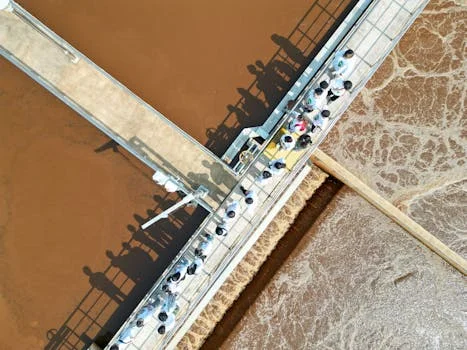
Selecting the optimal industrial effluent treatment strategy involves a careful consideration of multiple factors, including treatment efficacy, operational costs, capital investment, and the ability to meet stringent regulatory compliance. A comprehensive cost-benefit analysis, coupled with an understanding of regulatory frameworks, is essential for informed decision-making.
The cost-benefit analysis of different treatment options reveals a spectrum of investment and operational expenditures. Basic physical-chemical treatments like sedimentation and screening have relatively low capital costs but may incur ongoing expenses for chemical coagulants and sludge disposal. Biological treatment, while requiring a larger initial investment in tanks and aeration systems, often offers lower operational costs per unit of pollutant removed for large volumes of biodegradable wastewater. Advanced Oxidation Processes (AOPs) typically present the highest capital and operational costs due to specialized equipment and energy requirements, but they are indispensable for achieving very low discharge limits for recalcitrant compounds. The economic feasibility is also influenced by the potential for resource recovery, such as biogas generation from anaerobic digestion or the reuse of treated water.
Regulatory compliance is a non-negotiable aspect of industrial wastewater management in China. The Integrated Wastewater Discharge Standard, along with specific industry- or region-specific regulations, dictates the permissible discharge concentrations. Treatment systems must be designed and operated to consistently meet these limits. For example, industries discharging wastewater with high COD may require robust biological treatment coupled with tertiary polishing steps to meet stringent COD limits. Emerging regulations, such as the recent standards for Perfluorooctanoic Acid (PFOA) and Perfluorooctane Sulfonic Acid (PFOS) effective from July 1, 2025, necessitate the adoption of specialized treatment technologies like ion exchange or advanced membrane filtration for industries handling these persistent organic pollutants.
Case studies highlight the practical application and success of various treatment implementations. A textile dyeing facility, for example, might initially struggle with high color and COD levels. Implementing a multi-stage treatment process involving chemical coagulation, followed by an activated sludge system, and a final polishing step using ozonation has demonstrated significant success in reducing COD by over 90% and achieving near-complete color removal, thereby meeting national discharge standards. Similarly, a chemical manufacturing plant dealing with refractory organic compounds might invest in a Fenton process combined with activated carbon adsorption, achieving high removal rates for specific hazardous chemicals and ensuring compliance with strict limits for toxic substances. The choice between technologies like Chlorine dioxide vs ozone for industrial wastewater often depends on the specific contaminants, required treatment intensity, and cost considerations, with each offering distinct advantages in different scenarios.
| Treatment Approach | Typical Capital Cost | Typical Operational Cost | Regulatory Compliance Potential | Key Strengths | Key Weaknesses |
|---|---|---|---|---|---|
| Primary Physical-Chemical (e.g., sedimentation, filtration) | Low to Medium | Medium (chemicals, sludge disposal) | Moderate (for suspended solids, basic turbidity) | Simple operation, handles high flows | Limited removal of dissolved pollutants, significant sludge |
| Secondary Biological (e.g., activated sludge) | Medium to High | Low to Medium (energy for aeration, biomass management) | High (for biodegradable organics) | Cost-effective for large volumes, high removal of BOD/COD | Sensitive to shock loads, large footprint, requires stable conditions |
| Tertiary Advanced Treatment (e.g., AOPs, membrane filtration) | High | High (energy, specialized consumables) | Very High (for recalcitrant compounds, specific pollutants) | Effective for difficult-to-treat pollutants, high purity effluent | High cost, complex operation, potential byproducts |
| Integrated Systems (e.g., multi-stage processes) | Variable (depends on complexity) | Variable (optimized for overall efficiency) | Highest potential for comprehensive compliance | Synergistic benefits, tailored solutions | Requires careful design and integration, higher initial complexity |
Frequently Asked Questions
What are the industrial effluent limits in China?
Industrial effluent limits in China are primarily defined by the Integrated Wastewater Discharge Standard (GB 8978-1996), which covers 69 pollutants including COD, BOD, and TSS. Specific limits vary by industry and region, with some industries also subject to total water discharge limits. Recent regulations, such as those for PFOA and PFOS, are also introducing new, specific pollutant limits.
What are the different treatment technologies for industrial effluent?
The main categories of treatment technologies include physical-chemical methods (e.g., coagulation, adsorption), biological treatment (e.g., activated sludge, anaerobic digestion), and advanced oxidation processes (AOPs) (e.g., ozonation, UV/H₂O₂). A combination of these technologies is often used in a multi-stage treatment train to effectively address diverse pollutant profiles.
How do I ensure regulatory compliance for my treatment implementation?
Ensuring regulatory compliance involves a thorough understanding of the applicable national, provincial, and local discharge standards. This includes accurately characterizing your industrial wastewater to select appropriate treatment technologies that can consistently meet the specified pollutant limits. Regular monitoring, maintenance of treatment equipment, and detailed record-keeping of discharge data are essential. Consulting with experienced wastewater treatment engineers and equipment manufacturers can provide guidance on designing and operating compliant systems.
Related Equipment
The following HydropureWater products are engineered for the wastewater challenges discussed above:
- Underground sewage treatment plant — view specifications, capacity range, and technical data
Need a customized solution? Request a free quote with your specific flow rate and pollutant parameters.