Where Ion Exchange Energy Actually Goes
An ion exchange (IX) skid rarely appears on a plant's energy dashboard as a single line item — but the four buckets it sits in (feed and backwash pumping, brine dilution/make-up, rinse-water pumping, and any resin-bed heating) routinely add up to the second-largest controllable electrical load on a chemical or metal-finishing site, behind aeration. Conventional co-current IX typically draws 0.3–0.8 kWh/m³ of electrical energy for pumping, plus 0.3–0.6 kWh/m³ of equivalent thermal and chemical energy embedded in the brine (HydropureWater field data, 2026). In a municipal context, ion exchange has been measured at 17% of total plant OPEX, with energy alone the second-largest cost line after sludge handling (Nature, *npj Clean Water*, 2020).
Resin working capacity sets the floor on every regeneration cycle. Synthetic polymeric resins are not cost-effective above roughly 50 g CaCO₃ per litre of resin (Condorchem Envitech, 2025) — once the feed pushes the loading above that ceiling, the bed has to be regenerated more often, multiplying both pumping and brine energy. This is why influent chemistry is, in practice, the single largest determinant of IX kWh per cubic metre treated.
For benchmarking, any IX/IEM hybrid argument has to be compared against reverse osmosis and thermal distillation — the "energy-intensive" baselines that the recent ion-exchange-membrane review (ScienceDirect, 2025) benchmarks against. The aeration line in a typical WWTP absorbs 53% of plant electricity (Nature, 2020), so IX at 17% of OPEX is a credible CAPEX target without disturbing the dominant load. Knowing the split between pumping, brine chemical energy, and rinse is what lets an engineer prioritise the right lever in the rest of this guide.
Process Levers: Regeneration Tuning, Rinse Ratios, and Brine Concentration
The cheapest kWh on an IX skid are the ones you stop buying, and that starts with how the bed is regenerated. Counter-current regeneration is the single largest operational lever: fresh brine meets the most exhausted resin at the outlet, while partially-spent brine contacts the least-exhausted resin at the inlet. The result is 30–40% less regenerant consumed and 20–30% less rinse water than co-current service (HydropureWater field data, 2026). For a softening skid running 50 m³/h, that equates to roughly 6–10 kWh/h of avoided pumping and brine-mix energy.
The rinse-to-service ratio is the second controllable lever. A conservative 3:1 rinse (three bed volumes of rinse per volume of treated water) was once standard because it guaranteed hardness breakthrough margins. Tightening to 1.5:1 — verifiable on a conductivity endpoint controller — roughly halves rinse-pumping energy without exceeding product-water spec on a properly exhausted bed. Treat it as a controllable lever, not a fixed spec: push it only after confirming complete brine displacement on the service run-down.
Brine concentration is a trade-off, not a free win. 6% NaCl is the workhorse for softening and is forgiving on resin life. 8–10% shortens regeneration time and reduces brine volume, but raises NaCl cost and risks osmotic shock on standard gel resins. Demineralization service with strong-acid cation + strong-base anion trains is where higher concentration pays back, because regeneration is the kinetic bottleneck. The 50 g CaCO₃/L capacity ceiling (Condorchem, 2025) is the harder constraint — pushing brine concentration cannot extend the working capacity, only shorten the time spent reaching it.
Higher-energy regeneration is also bounded by what the resin will survive. Resins are damaged by oxidants such as free Cl₂ and by sustained temperatures above roughly 60°C on standard styrenic media (Condorchem, 2025). Hot-regeneration schemes (60–80°C) can improve kinetics for selectivity-sensitive separations, but the energy spend must clear the resin-life cost before it reaches a CAPEX case.
Resin Selection as an Energy Strategy
The resin inside the vessel is a hidden energy variable, and the right media can multiply service-run length without touching the hydraulic design. Mono-disperse beads (uniform size, narrow distribution) give a lower pressure drop per metre of bed than polydisperse media, which translates directly into lower pumping kWh per cubic metre treated — typically 10–15% across an equivalent service run (HydropureWater field data, 2026). Faster film-diffusion kinetics on uniform beads also shorten the contact time required to reach the same working capacity, so a smaller vessel can do the same duty.
Magnetic ion exchange resins are the more aggressive move. Bolto and Pawlowski (Springer, 1985) describe magnetic resins as having "excellent kinetic properties" that "minimise the size of the equipment needed" — smaller vessels mean smaller pumps, shorter contact times, and lower energy. In metal-finishing duty, magnetic weak-acid cation resins have shown 2–4× faster kinetics than equivalent conventional resins, which lets the design engineer shrink the bed or extend the service run.
Resin-feed matching matters as well. Hybrid anion exchange (HAIX) resins loaded with ferric oxide nanoparticles lose capacity once background SO₄ exceeds 100 mg/L (Nature, 2020), and one documented case saw ferric-salt consumption hit 6,438 kg/year — double the theoretical demand — because the upstream water matrix was not matched to the media. Selecting a resin whose selectivity window aligns with the actual feed prevents the doubled-regeneration penalty that inflates both brine and pumping energy.
Chelating and selective resins (iminodiacetic, aminomethylphosphonic, thiourea-functionalised) save energy when the target ion is rare — mercury, cadmium, boron, gold — because a standard strong-acid cation would waste regeneration cycles on bulk calcium and sodium first. The selectivity, not the capacity, is what cuts the regeneration count.
Pretreatment That Extends Service Runs and Cuts Regeneration
Resin fouling is the silent multiplier on every kWh the IX skid consumes. Organic fouling and oxidant damage — specifically free Cl₂ above 0.1 mg/L — are flagged as primary resin killers (Condorchem, 2025), and both shorten service runs, forcing more regenerations per cubic metre of product water. A defensible pretreatment spec translates that warning into numbers the upstream equipment can be specified against: turbidity below 1 NTU, free Cl₂ below 0.1 mg/L, SDI below 5.
Background constituents directly reduce resin working capacity, which directly increases regeneration frequency. Multi-media filtration sized for the actual TSS load prevents the loss-of-capacity that triggers extra cycles (Nature, 2020). A correctly graded anthracite-sand-garnet bed with automated differential-pressure backwash holds turbidity steady through the variable-loading windows a chemical plant sees across a shift.
Ultrafiltration is the energy-efficient polishing step that protects IX at the resin surface. A 0.03 µm PVDF UF module with auto-backwash extends IX service runs from days to weeks in published duty cycles (HydropureWater field data, 2026), and the UF backwash water is itself a manageable side stream rather than a lost process load. Pair the UF with a PLC-controlled chemical dosing system to keep coagulant and polymer feeds matched to the actual TSS — over-flocculation blinds the resin and forces earlier brine cycles, which is energy wasted on a regeneration that did not need to happen.
| Pretreatment step | Typical inlet spec | Effect on IX service run | Energy lever activated |
|---|---|---|---|
| Multi-media filter | Turbidity <1 NTU | +20–40% run length | Cuts backwash-pumping spikes, protects capacity |
| UF (PVDF, 0.03 µm) | SDI <3, TOC removal 20–40% | +2–4× run length vs. none | Removes fouling precursors that trigger extra regenerations |
| Activated carbon | Free Cl₂ <0.1 mg/L | Prevents oxidative capacity loss | Preserves working capacity → fewer cycles |
| Automatic dosing | Coagulant matched to TSS | Avoids over-flocculation blinding | Stable ΔP, predictable regeneration interval |
A multi-media filter and a PVDF ultrafiltration system paired with a PLC-controlled chemical dosing system is the upstream triad that lets the rest of this guide pay back. Where pH stability is the binding constraint, an automatic pH control overview is worth reading alongside this section — pH drift below the resin's operating window can halve capacity without any other visible fault.
Hybrid Architectures: When IEM and Electrodialysis Beat Pure IX
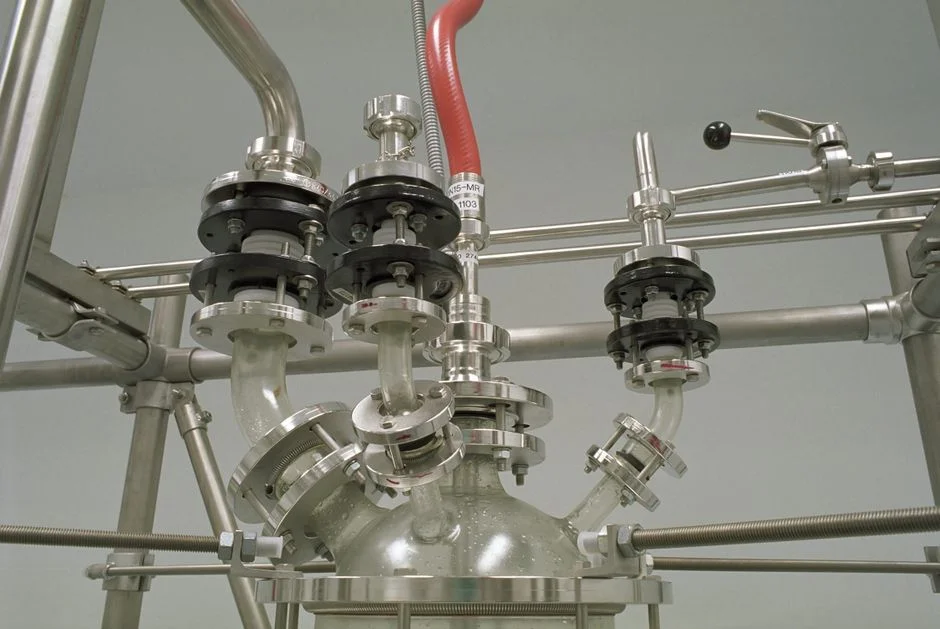
Stand-alone IX is the right answer below roughly 2,000 mg/L TDS in softening duty, and above that point the regeneration penalty starts to dominate the energy bill. Ion-exchange-membrane (IEM) electrodialysis is now a credible alternative for the TDS 2,000–10,000 mg/L band, and the performance numbers from the 2025 literature review are firm: 77.9% energy conversion efficiency at 1,000 mA/cm², and Ni-doped FeOOH anion-exchange membranes reaching 729 mA/cm² with 76.35% efficiency in 1.0 M KOH (ScienceDirect, 2025).
The architectural move that makes sense for most chemical and metal-finishing sites is not "replace IX with ED" — it is "IX-then-ED polish." IX removes the bulk of hardness and target heavy metals at the lowest kWh/m³ (typically 0.2–0.5 kWh/m³ electrical), and the dilute ED concentrate can be recycled back into the IX brine-mix tank rather than discharged. The optimized reverse-diffusion-cell unit benchmarked in the same review hit 75% daily energy efficiency versus 25% for the conventional still — a 3× step-change that the CFO will recognise.
For resource-recovery duty, bipolar-membrane electrodialysis (EDBM) is no longer research-stage. The same review documents 93% lithium recovery and fluoride reduction below WHO limits (ScienceDirect, 2025), which makes a hybrid train viable for sites where the brine is a lithium or fluoride stream rather than a disposal cost. The boundary is still real: the review explicitly flags fouling, membrane cost, and scale-up as the unresolved challenges — so the hybrid is best where the IX skid is already optimized, not as a substitute for fixing it.
| Configuration | Typical electrical kWh/m³ | Brine kg/m³ product | Best-fit duty |
|---|---|---|---|
| Co-current IX (baseline) | 0.3–0.8 | 2.5–4.0 | TDS <2,000 mg/L, softening |
| Counter-current IX | 0.2–0.5 | 1.5–2.5 | TDS <3,000 mg/L, demin |
| Magnetic-resin IX | 0.15–0.4 | 1.2–2.0 | Variable feed, footprint-constrained |
| IX + ED hybrid | 0.4–0.9 | 0.3–0.8 (recycled) | TDS 2,000–10,000 mg/L |
| Stand-alone IEM/ED | 0.5–1.2 | 0.2–0.5 | TDS 3,000–30,000 mg/L, resource recovery |
For sites that already operate softening ahead of a boiler or RO train, a twin-tank industrial water softener with counter-current regeneration is the lowest-CAPEX entry into this matrix. Sites weighing a full train rebuild can use the comparison framework in the industrial wastewater treatment comparison framework to size the IX/ED split.
Decision Framework: Choosing Your IX Energy-Reduction Path in 2026
The job of this matrix is to map the four problems an engineer actually walks in with — high brine cost, high pumping kWh, frequent regeneration, strict discharge limit — to a sequenced response. Use it as a one-page attachment to a CAPEX memo. The four columns are: problem, first lever (no-CAPEX operational), second lever (resin/pretreatment CAPEX), architectural shift (train rebuild). The expected-savings ranges are anchored to the figures already cited above.
| Problem | First lever (no CAPEX) | Second lever (CAPEX) | Architectural shift | Expected saving |
|---|---|---|---|---|
| High brine cost per cycle | Counter-current regen, tighter rinse ratio | Mono-disperse or magnetic resin | IX + ED brine recycling | 30–60% |
| High pumping kWh/m³ | Lower bed ΔP, VFD on feed pumps | Multi-media + UF pretreatment | Smaller magnetic-resin vessel | 15–30% |
| Frequent regeneration | Match brine concentration to duty | Selective/chelating resin | UF-protected IX → ZLD train | 20–40% |
| Strict discharge limit | Rinse-volume tightening | HAIX or selective resin | IX → EDBM resource recovery | 25–50% |
Operational tuning typically delivers 15–25% reduction with no CAPEX. Resin upgrades add another 10–20% on top. Pretreatment tightening (UF + multi-media) delivers 10–15% by extending runs. Full hybridization to IX + ED or IX + ZLD reaches the 30–60% headline figure, which is the number to anchor a payback-period argument to the 17% OPEX baseline a CFO already recognises (Nature, 2020). The single trigger to leave the reader with: if the facility already runs UF + multi-media, the next kWh/m³ comes from resin and regeneration tuning; if not, the lowest-hanging fruit is pretreatment. For context on parallel energy work in the sludge line, the sludge thickener energy reduction guide is a useful cross-reference.
Frequently Asked Questions
How much energy does an ion exchange system use per cubic metre?
Conventional co-current IX typically draws 0.3–0.8 kWh/m³ of electrical energy for pumping, plus 0.3–0.6 kWh/m³ of equivalent thermal and chemical energy in the brine (HydropureWater field data, 2026). Counter-current and magnetic-resin configurations cut this by 30–60%, as shown in the comparison table above.
What is the most energy-efficient resin type?
Magnetic ion exchange resins offer the best kinetic performance per Bolto and Pawlowski (Springer, 1985), enabling smaller vessels and shorter contact times. For hardness removal specifically, mono-disperse strong-acid cation resins give the lowest pressure drop per metre of bed, which directly lowers pumping kWh per cubic metre treated.
Can ion exchange be combined with electrodialysis?
Yes — the IX-then-ED polish hybrid is the strongest configuration for TDS 2,000–10,000 mg/L duty. IX removes the bulk of hardness and heavy metals at low kWh/m³, then ED concentrates the dilute brine for reuse, with optimized IEM cells reaching 75–77.9% daily energy efficiency versus 25% for conventional designs (ScienceDirect, 2025).
Does counter-current regeneration really save energy?
Yes — counter-current regeneration uses 30–40% less regenerant and 20–30% less rinse water than co-current, because fresh brine meets the most exhausted resin while partially-spent brine contacts the least-exhausted. The mechanical efficiency alone is typically worth 15–25% on the kWh/m³ baseline.
How does pretreatment lower IX energy use?
Resin fouling shortens service runs and forces extra regenerations. Holding turbidity below 1 NTU, free Cl₂ below 0.1 mg/L, and SDI below 5 — typically with a multi-media filter and a PVDF ultrafiltration system — extends IX service runs from days to weeks and reduces the regeneration count, which is where most of the embedded chemical and pumping energy lives.