Heavy Metal Wastewater Treatment by Ion Exchange: 2026 Engineering Specs, 99.9% Removal & Zero-Risk Compliance
Ion exchange removes heavy metals such as Pb²⁺, Cu²⁺, and Ni²⁺ from industrial wastewater at 99.9% under optimal conditions (pH 5.0–6.5, 5–15 BV/h). Strong acid cation resins such as Purolite® C100 exchange metal ions for H⁺ or Na⁺ on fixed beds. Effluent can meet EPA and EU discharge limits, often below 0.1 mg/L Pb when resin grade, pH, and pre-treatment are controlled. Regeneration by chemical elution or electro-deionization restores capacity and keeps resin life above 5,000 cycles in well-maintained plants.
Why Heavy Metal Wastewater Treatment by Ion Exchange Outperforms Alternatives
Ion exchange delivers higher heavy-metal removal and a smaller footprint than precipitation or electrocoagulation for many plating and finishing streams. Global regulators, including the U.S. EPA under 40 CFR Part 433 and the EU under Directive 2010/75/EU, set categorical heavy-metal limits. Earlier summaries often cited Pb below 0.1 mg/L, Cu below 1.3 mg/L, and Ni below 0.2 mg/L; 40 CFR 433 metal-finishing BPT/BAT monthly averages set Pb at 0.43 mg/L, Cu at 2.07 mg/L, and Ni at 2.38 mg/L (eCFR). Ion exchange routinely reaches 99.9% removal for Pb²⁺ and Cu²⁺, above the 90–95% typical of chemical precipitation and the 85–92% from electrocoagulation. Units need up to 60% less space than large precipitation tanks and 80% less than multi-cell electrocoagulation trains.
Chemical precipitation creates hazardous sludge and high disposal cost. Ion exchange yields a concentrated regenerate that plants can send to metal recovery or manage as a smaller waste stream. Membrane filtration removes dissolved ions well but fouls on solids and organics, which drives cleaning cycles and membrane swaps. Ion exchange avoids that path when pre-treatment holds solids and oil in check before the resin bed.
| Treatment Method | Typical Removal Efficiency (Pb²⁺, Cu²⁺) | Footprint (Relative to IE) | Sludge Production | Compliance Ease |
|---|---|---|---|---|
| Ion Exchange | 99.9% | 1x (Baseline) | Minimal (Concentrated regenerate) | High |
| Chemical Precipitation | 90–95% | 2.5x (Larger tanks) | High (Hazardous sludge) | Moderate |
| Electrocoagulation | 85–92% | 5x (Multiple units) | Moderate (Metal hydroxide flocs) | Moderate |
| Membrane Filtration (RO) | 99% (for dissolved ions) | 1.5x (Pre-treatment needed) | Brine concentrate, fouling | High (with pre-treatment) |
How Ion Exchange Removes Heavy Metals: Mechanisms and Resin Types
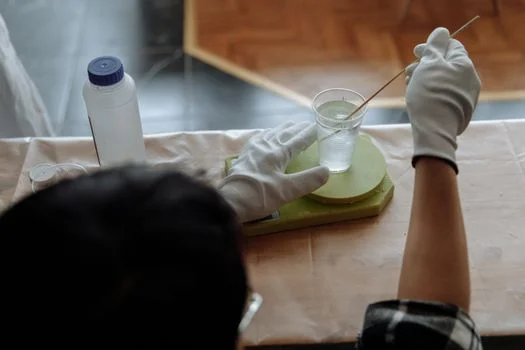
Ion exchange is a reversible chemical process that swaps ions between a solid resin matrix and the wastewater. Heavy metal ions (M²⁺) bind to the resin and displace an equal charge of H⁺ or Na⁺ from active sites: M²⁺ + 2R-H → R₂-M + 2H⁺. The exchange pulls dissolved metals out of the process stream in continuous service without forming bulk hydroxide sludge in the primary treatment step.
Resin choice drives removal. Strong Acid Cation (SAC) resins such as Purolite® C100 bind divalent metals like Pb²⁺ and Cu²⁺ well, with selectivity coefficients 2–5 times higher for Pb²⁺ than for Na⁺. They hold capacity across a wide pH band. Weak Acid Cation (WAC) resins suit Ni²⁺ and Zn²⁺ at slightly acidic to neutral pH and regenerate with less acid. Exchange capacity is typically 2–5 eq/L. Particle size is usually 0.3–1.2 mm, and moisture retention sits near 45–55%. For nickel streams, match those resin traits to load and cycle time (HydropureWater, see also nickel-specific ion exchange engineering specs).
Resin regeneration restores exchange capacity after exhaustion. Chemical elution with 2–5% HCl or with NaCl is the common regenerate path and flushes adsorbed metals into a small volume. Electro-deionization uses an electric field to move ions, cuts chemical waste, and supports continuous regeneration where the power and membrane budget allow.
Engineering Specifications for Heavy Metal Ion Exchange Systems
Influent quality sets whether a heavy metal ion exchange column stays in compliance. Target pH 5.0–6.5 for Pb²⁺ and Cu²⁺, and 4.0–5.0 for Ni²⁺. Keep temperature below 40°C to protect the resin matrix. Hold suspended solids below 10 mg/L to limit fouling and backwash. Plants often place an integrated water purification system upstream as pre-treatment.
Resin bed depth usually runs 0.5–2.0 m to balance contact time and pressure drop across the vessel. Design service flow at 5–15 BV/h to deliver 2–10 minutes of contact without channeling or excessive headloss on a clean bed.
Regenerate every 50–200 BV, set by metal load and effluent targets. Use 2–5% HCl or NaCl, then rinse with 2–4 BV to clear residual regenerant before return to service.
Under optimal conditions, Pb²⁺ removal reaches 99.9%, Cu²⁺ 99.5%, Ni²⁺ 98%, and Cr³⁺ 95% (HydropureWater field data, 2025). Those removal levels clear most categorical permit caps with operating margin when influent pH, solids, and flow stay inside the design envelope shown above.
| Parameter Category | Specific Parameter | Typical Range/Value |
|---|---|---|
| Influent Requirements | pH for Pb²⁺/Cu²⁺ | 5.0–6.5 |
| pH for Ni²⁺ | 4.0–5.0 | |
| Suspended Solids | <10 mg/L | |
| Resin Bed Parameters | Bed Depth | 0.5–2.0 m |
| Flow Rate | 5–15 BV/h | |
| Contact Time | 2–10 minutes | |
| Regeneration Cycle | Frequency | Every 50–200 BV |
| Chemical Consumption (HCl/NaCl) | 2–5% concentration | |
| Rinse Water Volume | 2–4 BV | |
| Removal Efficiencies (Optimal) | Pb²⁺ | 99.9% |
| Cu²⁺ | 99.5% | |
| Ni²⁺ | 98% | |
| Cr³⁺ | 95% |
Cost Breakdown: CAPEX, OPEX, and ROI for Ion Exchange Systems

Buyers need a clear CAPEX and OPEX split before they compare ion exchange to precipitation. CAPEX covers resin, vessels, and controls. Resin runs $200–$400 per cubic foot by type and grade. Vessels for 1–5 m³/h trains cost $10,000–$50,000, including tanks, piping, and valves. PLC automation for backwash and regeneration adds $5,000–$20,000 and cuts labor through PLC-controlled chemical dosing for ion exchange regeneration.
OPEX includes resin replacement, regenerant, and power. SAC resin life is typically 3–5 years or 5,000–10,000 cycles. Chemical cost for HCl or NaCl is usually $0.50–$2.00 per m³ treated, set by metal load and chemical price. Pump and control energy stays low at 0.1–0.3 kWh/m³.
Ion exchange OPEX often runs 30–50% below chemical precipitation because sludge disposal drops. It is also about 40% below electrocoagulation, which burns more energy. Plants treating 50–200 m³/day commonly see 2–4 year payback from avoided fines, lower disposal, and water reuse. For lower hardness loads that pair ion exchange with softening, an Industrial Water Softener System (KJ-WT Series) can sit upstream as a polishing step.
| Cost Category | Item | Typical Cost Range | Notes |
|---|---|---|---|
| CAPEX | Resin Cost | $200–$400/ft³ | Varies by resin type and quantity |
| Vessel Cost (1–5 m³ systems) | $10,000–$50,000 | Includes tanks, piping, valves | |
| Automation (PLC controls) | $5,000–$20,000 | For backwash, regeneration, monitoring | |
| OPEX (per m³ treated) | Resin Replacement | Periodic (every 3–5 years) | Based on resin lifespan and system size |
| Chemical Costs (HCl/NaCl) | $0.50–$2.00/m³ | Depends on influent concentration, regenerant price | |
| Energy Consumption | 0.1–0.3 kWh/m³ | For pumps and controls | |
| ROI | Payback Period | 2–4 years | For systems treating 50–200 m³/day |
| Savings Drivers | Avoided fines, water reuse, reduced disposal |
Ion Exchange vs. Alternative Methods: A Decision Matrix for Industrial Buyers
Selecting heavy-metal treatment requires more than a removal-percent comparison. Score options on flow, metal mix, sludge cost, energy, and permit stringency. Ion exchange, chemical precipitation, electrocoagulation, and membrane filtration each fit a different plant constraint set.
Ion exchange hits very low effluent metals on lower-flow, higher-concentration streams such as plating or electronics finishing. Sludge volume stays low and the skid stays compact. Chemical precipitation suits high-flow, mixed-metal loads when bulk removal is enough and sludge cost is acceptable (copper ion exchange process optimization). Electrocoagulation handles oily or solids-heavy wastewater with moderate sludge (nickel wastewater treatment by electrocoagulation). RO removes dissolved solids and metals at high rate but needs heavy pre-treatment and more energy.
If Pb²⁺ exceeds 100 mg/L and flow stays under 50 m³/h, ion exchange is usually the lowest-cost compliant path. Above 200 m³/h with mixed metals, precipitate first and polish with ion exchange. For high solids or oil, run electrocoagulation ahead of a final ion exchange stage.
| Criteria | Ion Exchange | Chemical Precipitation | Electrocoagulation | Membrane Filtration (RO) |
|---|---|---|---|---|
| Removal Efficiency (Heavy Metals) | Excellent (>99.5%) | Good (90-95%) | Moderate (85-92%) | Excellent (>99%) |
| Footprint | Compact | Large | Medium | Medium (pre-treatment needed) |
| OPEX | Moderate (chemicals) | High (sludge disposal) | Moderate (energy, electrodes) | High (energy, membrane replacement) |
| CAPEX | Moderate | Low-Moderate | Moderate | High |
| Sludge Production | Minimal (concentrated regenerate) | High | Moderate | Brine concentrate |
| Energy Use | Low | Low | High | High |
| Scalability | Good | Excellent | Good | Good |
| Compliance Ease | High (ultra-low limits) | Moderate | Moderate | High (with pre-treatment) |
Compliance Strategies: Meeting EPA, EU, and Local Heavy Metal Limits
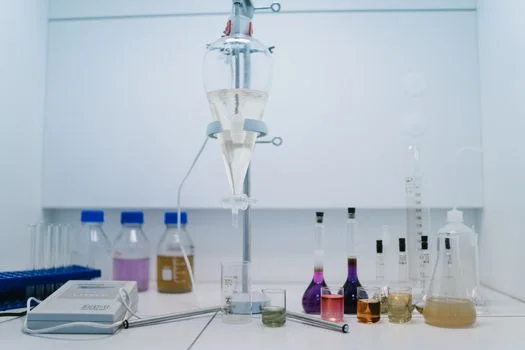
Missed heavy-metal limits bring fines, shutdown risk, and permit trouble. Ion exchange systems are sized to hold effluent under EPA and EU caps on a continuous basis. Earlier summaries often cited EPA industrial figures of Pb at 0.1 mg/L, Cu at 1.3 mg/L, Ni at 0.2 mg/L, and Cr at 0.1 mg/L. 40 CFR Part 433 metal-finishing BPT/BAT monthly averages set Pb at 0.43 mg/L, Cu at 2.07 mg/L, Ni at 2.38 mg/L, and Cr at 1.71 mg/L (eCFR). The EU's Industrial Emissions Directive (2010/75/EU) sets similar, though sometimes slightly different, limits, such as Pb at 0.5 mg/L, Cu at 2.0 mg/L, and Ni at 0.5 mg/L, with local jurisdictions often imposing even stricter requirements.
Effective monitoring keeps the system inside permit limits between lab events. Monitor effluent pH and conductivity continuously to catch breakthrough early. Run weekly or bi-weekly ICP-MS metal checks for the regulated metals. Log regeneration cycles, throughput volumes, and effluent trends so operators see exhaustion before a permit exceedance.
Compliance documentation matters as much as the hardware. Keep discharge permits current and match them to the metals you actually discharge. Specify NSF/ANSI 61-certified resins where material safety documentation is required. Third-party removal-efficiency reports give regulators independent proof of performance and support permit renewals.
Who This Is For and Next Step
This guide applies to plant engineers, EPC contractors, and procurement managers evaluating heavy metal ion exchange for plating shops, electronics finishing lines, and metal-finishing facilities treating 50–200 m³/day. It is less suited to high-flow (>500 m³/day) bulk metal removal where chemical precipitation dominates on cost. Most plants we size for industrial wastewater run at the lower end of the regeneration window, around 80–120 BV between cycles. Send your influent lab results and target effluent limits to request a sized ion exchange proposal.
Frequently Asked Questions
How often should ion exchange resin be replaced?
Strong acid cation resins typically last 5,000–10,000 cycles, or about 3–5 years on a 100 m³/day load. Life depends on regeneration quality, low solids and organics in the feed, and steady maintenance. Track capacity and effluent metals to set the replacement date from data, not from a calendar alone.
What causes resin fouling in heavy metal ion exchange systems?
Fouling comes mainly from suspended solids above 10 mg/L, organics, or oil in the influent. Those foulants block pores, cut exchange sites, and raise pressure drop. A 5 µm pre-filter plus weekly backwash cuts fouling and extends resin life. Organic fouling may still need periodic chemical cleaning.
Can ion exchange systems recover valuable heavy metals?
Yes. Ion exchange systems recover copper, nickel, and chromium when the regenerate is routed to electrowinning or another recovery step. Plants convert a waste stream into recoverable metal, cut disposal volume, and keep metals in productive use instead of landfilling hydroxide sludge.
What pH range is optimal for heavy metal removal by ion exchange?
Pb²⁺ and Cu²⁺ usually perform best at pH 5.0–6.5 on strong acid cation resin. Ni²⁺ prefers a more acidic 4.0–5.0 band for stable exchange. Outside those windows, removal efficiency drops or metal hydroxides precipitate on the beads and foul the bed. Lock pH control into the pre-treatment skid before the ion exchange vessels.
How does temperature affect ion exchange performance?
Higher temperature speeds ion diffusion into and out of the resin and can raise kinetics within the manufacturer’s rating. Keep continuous service below 40°C for standard SAC beads. Above that limit, the polymer matrix degrades, exchange capacity falls, and bead breakage risk rises over repeated cycles.