
Which Treatment Is Better for Petroleum Wastewater in Tyler?
For petroleum wastewater in Tyler, MBR is generally the stronger fit when flow or composition varies, saline or refractory refinery streams are present, solids must be tightly controlled, water reuse is required, or land is constrained. DigitalRefining reports that a 50,000 gal/d petroleum-terminal MBR achieved average removal above 99% for BOD, 95% for COD, and above 98% for BTEX. Conventional activated sludge remains credible when flow and loading are predictable, land is available, and simpler operation is preferred. Both options need effective oil, grease, solids, and toxicity control before biological treatment.
That decision rule is more useful than declaring MBR universally superior. Tyler-area selection still depends on the actual waste stream, receiving-sewer or discharge requirements, reuse destination, available footprint, and pretreatment performance. The petroleum case evidence discussed here comes from specific installations and should be treated as precedent, not guaranteed performance for a local project.
A refinery split in São José dos Campos, Brazil, illustrates the practical compromise. Most lower-salinity wastewater remained on the existing conventional activated sludge plant, while the more challenging desalter-derived saline stream received MBR treatment (DigitalRefining, “Membrane bioreactors for wastewater treatment”). For Tyler procurement, use that logic: evaluate each stream by variability and required effluent quality instead of treating the entire site as one uniform wastewater. See the MBR wastewater membrane bioreactor cost per m3 in 2026 for the variables that must enter the evaluation.
What Makes Petroleum Wastewater Different?
Petroleum wastewater must be characterized as several interacting contaminant streams, not as a generic COD load, because each fraction creates a different biological, membrane, and pretreatment risk.
At the Marine River Terminal in Catlettsburg, Kentucky, the wastewater contained solids, oil and grease, BTEX, metals, BOD, and occasionally arsenic (DigitalRefining, “Membrane bioreactors for wastewater treatment”). Free oil, emulsified oil, and soluble hydrocarbons therefore required different treatment responses. Salinity can inhibit biological activity, while metals, BTEX, and other toxic compounds can disrupt the organisms responsible for degradation.
Refinery crude-quality variation also propagates into wastewater variation. DigitalRefining explains that opportunity crudes can push salt, metals, solids, and tramp amines from the desalter into the desalter brine, producing substantial wastewater-treatment variability. A train sized around an average composition may not perform reliably across operating changes.
| Design question | Wastewater characteristic to establish | Why it affects selection |
|---|---|---|
| What must be removed physically? | Free oil, emulsified oil, and settleable solids | Controls the required oil-water separation, DAF, coalescing, or solids-removal train |
| What must be biodegraded? | COD, BOD, and soluble hydrocarbons including BTEX | Determines biological loading, recalcitrant-load risk, and whether MBR retention benefits are needed |
| What can inhibit biology? | Salinity, metals, and toxicity | Influences biological acclimation, equalization, feed segregation, and upset tolerance |
| What determines the footprint? | Flow, load variability, required solids separation, and site area | Separates conventional reactor-and-clarifier requirements from membrane solids separation |
| What governs discharge or reuse? | Permit, sewer, or reuse water-quality requirements | Sets the required treatment and any additional polishing or disinfection |
Before selecting a biological reactor, request representative characterization covering flow, COD/BOD, oil and grease, TSS, salinity, BTEX, metals, toxicity, and required discharge or reuse parameters. For the physical treatment stage, compare a DAF pretreatment for petroleum wastewater against the actual separation duty rather than treating equipment selection as a brand decision.
How the Two Treatment Trains Work
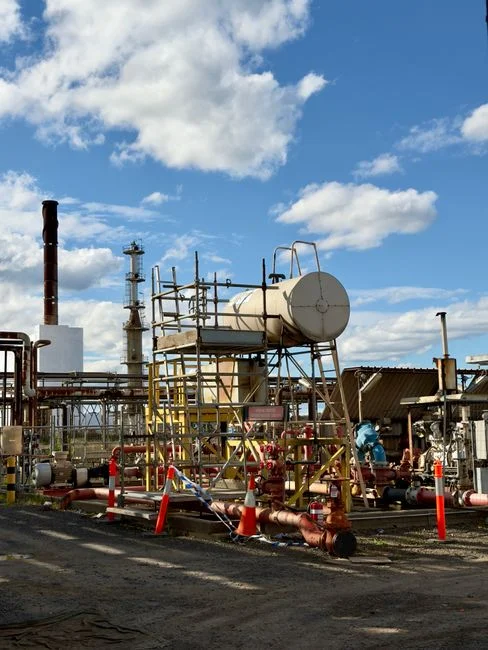
MBR and conventional activated sludge can share the same physical pretreatment, but they diverge in how biological solids are separated from the treated water.
The conventional train at the São Paulo refinery used API oil-water separation, constant-level equalization, DAF, parallel biological reactors, and final clarifiers. That arrangement remains straightforward when flow and loading are stable, the biology can be maintained within its operating envelope, and the clarifier has adequate settling performance. Its equipment and operating requirements are different from those of an MBR.
The MBR train combines biological treatment, clarification, and tertiary treatment in one process (DigitalRefining, “Membrane bioreactors for wastewater treatment”). Biological solids are retained within the membrane tank, and membrane solids separation removes the settling dependency of a conventional final clarifier. DigitalRefining describes the membrane as a barrier to solids and pathogens and links the technology to a smaller plant footprint.
| Stage or feature | Conventional activated sludge | MBR |
|---|---|---|
| Common upstream treatment | Oil-water separation, DAF or equivalent, and equalization | Oil-water separation, DAF or equivalent, and equalization |
| Biological stage | Activated-sludge reactor with mixed liquor leaving for clarification | Biological reactor with retained biomass and solids entering the membrane tank |
| Solids separation | Separate final clarifier depends on settling performance | Membrane solids separation independent of clarifier settling |
| Primary operating risks | Biological upset, sludge separation failure, sludge inventory control | Biological upset plus fouling, membrane cleaning, pumping, and module-performance risk |
| Site configuration | Reactors, clarifiers, recycle, aeration, and sludge handling | Bioreactor and membrane tank, membrane modules, air scour or pumping, controls, and cleaning provisions |
| Solids destination | Waste activated sludge requires thickening and disposal | Waste sludge also requires thickening and disposal |
Solids handling remains part of the treatment train, not an accessory. In the Marine River Terminal MBR, waste sludge was sent to a filter press for thickening and then hauled offsite (DigitalRefining, “Membrane bioreactors for wastewater treatment”). Buyers evaluating a plate-and-frame filter press should therefore compare the complete sludge path, including conditioning, filtrate handling, disposal logistics, and operator labor.
Performance Evidence from Refinery and Petroleum Applications
The strongest available petroleum evidence supports MBR as a strong performer on solids-sensitive applications, while also showing that upstream separation and the rest of the treatment train do essential work.
The Marine River Terminal case used a 50,000 gal/d (189 m³/day) full-scale MBR. DigitalRefining reported average BOD removal above 99%, average COD removal of 95%, and BTEX removal above 98%. Emulsified oils were degraded below detectable levels, while free oil was removed primarily in an upstream coalescer (DigitalRefining, “Membrane bioreactors for wastewater treatment”). The defensible conclusion is that the complete train achieved the reported results—not that the membrane alone removed every contaminant.
At the São Paulo refinery, lower-salinity wastewater remained on conventional activated sludge, while the difficult saline desalter stream entered a new MBR plant. That arrangement demonstrates that MBR can be targeted where variability and stringent discharge requirements create the greatest operational risk.
Independent technical evidence summarized by Seven Seas cites a 2022 Journal of Environmental Management study reporting MBR removal above 99% for TSS, above 91% for COD, and above 68.3–99.7% across a range of microcontaminants (Seven Seas Water Group, “Membrane Bioreactor (MBR) Wastewater Treatment”). Those results should retain the study’s broader MBR context and should not be transferred automatically to every refinery wastewater application.
| Evidence scope | Reported result | Proper interpretation |
|---|---|---|
| Marine River Terminal petroleum terminal, 50,000 gal/d (189 m³/day) | Average BOD removal above 99%; average COD removal 95%; BTEX removal above 98% | Full-scale petroleum-wastewater evidence with upstream oil-water separation and coalescing |
| São Paulo refinery split treatment | Conventional activated sludge for most lower-salinity wastewater; MBR for the challenging saline stream | Evidence for segregating treatment by wastewater difficulty |
| 2022 study summarized by Seven Seas | TSS removal above 99%; COD removal above 91%; microcontaminant removal above 68.3–99.7% | Broader MBR evidence; retain the original scope and contaminant range |
| Global installation base reported by DigitalRefining | More than 1,000 full-scale Zee-Weed MBRs, including more than 30 for refinery and petrochemical wastewater; several operating for more than five years | Vendor-reported installation evidence, not a performance guarantee for a Tyler project |
These cases provide design precedent, not procurement guarantees. The MBR wastewater membrane bioreactor cost and selection guide should be used to connect those precedents to the buyer’s own flow, load, pretreatment, and reuse assumptions.
Operating Complexity, Pretreatment, and Failure Prevention
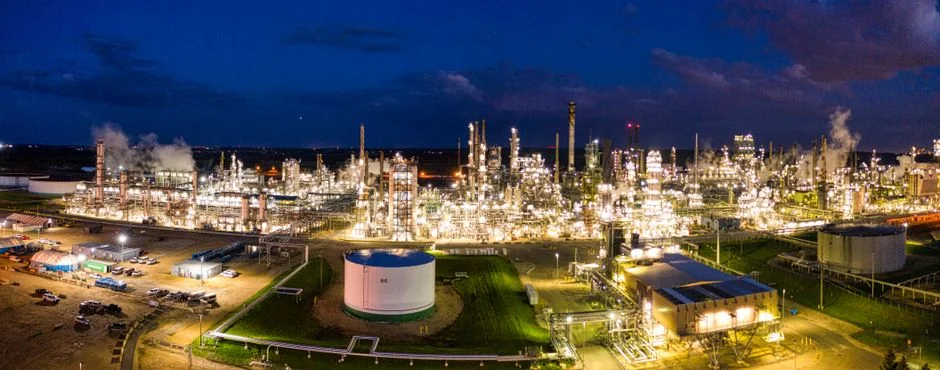
MBR protects solids separation from clarifier settling limitations, but it transfers risk to pretreatment quality, membrane hygiene, and operating discipline.
In the São Paulo design, Nutshell filters reduced oil and grease below 5 mg/L specifically to protect the MBR from oil carryover. The wastewater then entered constant-level equalization with a total hydraulic retention time of 12 hours, and the outlet did not cascade into the bioreactor to prevent excess oil from finding quiescent conditions in the equalization tank (DigitalRefining, “Membrane bioreactors for wastewater treatment”). That combination is a cited project example, not a universal Tyler design standard.
Seven Seas describes MBR as a sophisticated process requiring expertise and specialized resources at every stage. Required operating disciplines include aeration management, membrane scouring or pumping, sensor monitoring, chemical or backwash cleaning, and sludge handling. Conventional activated sludge depends on biological health and clarifier performance; MBR retains those dependencies and adds membrane fouling and cleaning-system exposure.
| Failure exposure | Conventional activated sludge | MBR | Procurement control |
|---|---|---|---|
| Oil carryover | Impairs biological treatment and settling | Can foul membranes and degrade biological performance | Set pretreatment limits, oil-and-grease alarms, and bypass interlocks |
| Excessive solids | Increases aeration demand and burdens clarifiers | Adds membrane fouling and solids-retention demand | Require solids monitoring, equalization, and documented cleaning response |
| Loss of biological health | Reduced organics removal and settling performance | Reduced organics removal and possible membrane fouling | Define toxicity alarms, recovery methods, and operator response time |
| Membrane or settler malfunction | Clarifier failure can compromise solids separation | Module, pump, or air-scour failure can reduce system output | Require critical spares, redundancy assumptions, and performance testing |
| Operator capability | Requires biological and sludge-management expertise | Adds membrane monitoring and cleaning expertise | Make training, manuals, and support obligations contractually explicit |
Do not remove upstream free-oil treatment merely because the biological stage can degrade emulsified oil. The Marine River Terminal design retained a coalescer for free oil upstream of the MBR. Contract language should also define influent limits, alarm setpoints, bypass prevention, cleaning acceptance criteria, spare-parts availability, response time, and operator training. Accessory planning should include the rotary mechanical bar screen for suitable screenings control and an automatic chemical dosing system where pretreatment chemistry must be controlled consistently.
Cost, Footprint, and Reuse Value in 2026
A defensible 2026 MBR versus activated-sludge budget requires site-specific flow, contaminant loading, pretreatment, footprint, effluent, reuse, staffing, and availability assumptions; the supplied research does not support a defensible unit-price range.
Capital comparisons should separate common and technology-specific systems. Both trains need characterization, equalization, oil and grease removal, biological treatment, aeration, controls, piping, sludge handling, electrical service, and installation. Conventional activated sludge additionally requires a separate final-clarifier system and associated recycle arrangement. MBR adds membrane modules, a membrane tank, permeate and recycle pumping or air-scour equipment, instrumentation, controls, and cleaning provisions, while incorporating solids separation into the membrane stage.
Operating costs should include biological air, chemicals, pumping energy, membrane cleaning, membrane replacement, sludge handling, labor, downtime, and disposal. These are inputs to a site model, not universal line items: a conventional system may incur substantial solids-handling and clarifier-related costs, while an MBR may incur cleaning and replacement costs that depend on feed protection and operating practice.
| Budget category | Inputs required from the Tyler site | Decision relevance |
|---|---|---|
| Influent basis | Flow, COD/BOD, oil and grease, TSS, salinity, BTEX, metals, and toxicity | Determines biological capacity, pretreatment, equalization, and membrane loading |
| Capital equipment | Reactor and membrane basis, pretreatment, aeration, controls, sludge handling, installation | Separates the MBR membrane package from common treatment infrastructure |
| Operating resources | Air, power, chemicals, cleaning frequency, labor, spare parts, and membrane replacement | Tests whether simpler conventional operation is worth the footprint difference |
| Residuals | Sludge volume, dewatering requirements, disposal route, and filtrate management | Prevents the MBR comparison from stopping at the effluent |
| Availability and compliance | Redundancy, bypass restrictions, guarantees, response time, and permit or sewer limits | Quantifies production interruption and compliance exposure |
| Reuse value | Water chemistry, end use, validation needs, and alternative water value | Tests whether recovered water has a specific operational value |
HydropureWater’s verified product catalog gives a vendor-specific example of an integrated MBR membrane bioreactor system using submerged PVDF membranes, filtration below 1 μm, a footprint stated as 60% smaller than conventional systems, and capacities from 10 to 2,000 m³/day (HydropureWater verified product catalog). These are catalog specifications, not field results from a Tyler refinery.
Reuse should also be treated as a specific project objective. DigitalRefining identifies improved MBR effluent quality as suitable for direct reuse applications including cooling-system make-up water, while the São Paulo refinery blended treated wastewater with fresh surface water before further water treatment. The receiving application, water chemistry, and required validation determine whether reuse is feasible.
A Tyler Decision Framework for MBR Procurement
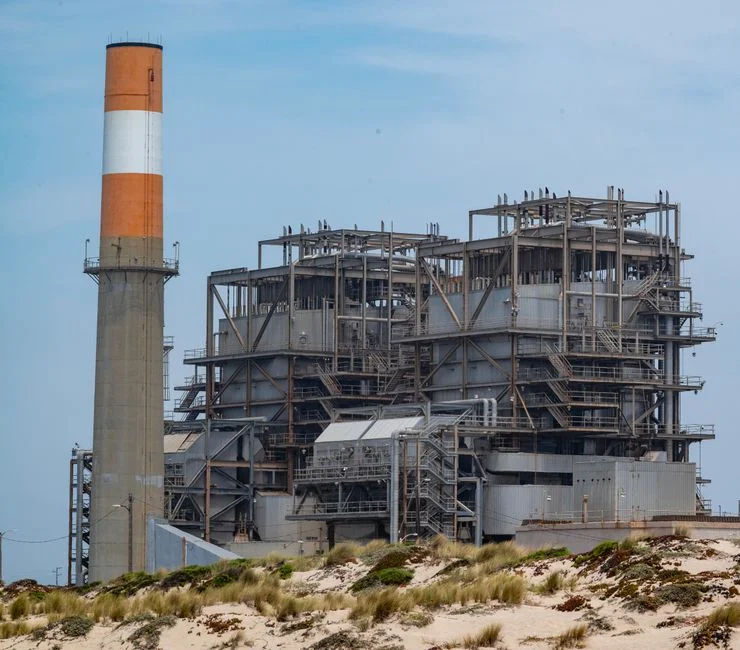
The defensible Tyler decision begins with the waste stream and ends with a procurement basis that both technologies must meet on the same site assumptions.
- Define the obligation. Obtain representative wastewater data and confirm the receiving-sewer, discharge, or reuse requirements before selecting a reactor.
- Protect the biology and membranes. Establish oil and grease, solids, toxicity, salinity, and hydrocarbon controls in pretreatment. Use the São Paulo design’s below-5-mg/L oil-and-grease result and 12-hour equalization HRT only as a cited precedent, not a general standard.
- Compare on one basis. Require MBR and conventional activated sludge proposals to use the same flow, load, footprint, effluent, reuse, staffing, and availability assumptions.
- Require technical specifics. Ask each supplier to identify membrane type, design flow, pretreatment limits, cleaning method, control philosophy, spare-parts plan, replacement approach, guarantees, and proposed performance testing. The DF membrane bioreactor module is a product reference, not proof of system suitability.
- Resolve site constraints. Include land, drainage, odor control, noise, power, access, and expansion needs in the Tyler-area evaluation.
Choose MBR when the treatment objective depends on solids separation, variable feed tolerance, reuse potential, or footprint control, and the site can support disciplined membrane operations. Choose conventional activated sludge when flows and loads are predictable, land is available, and the operator prefers a more established separation configuration. Where the waste streams differ materially, consider separate treatment instead of forcing one biological process across every stream.
For commercial evaluation, use the COD and BOD removal technologies for industrial wastewater to frame biological loading, then require each bidder to complete the same site-input and lifecycle-cost schedule.
Frequently Asked Questions
What is the best treatment for petroleum wastewater in Tyler?
The best fit depends on wastewater variability, salinity, toxicity, oil and grease, required solids removal, land availability, and reuse objectives. MBR generally has the stronger case when stringent solids control, difficult feeds, reuse, or constrained footprint dominate; conventional activated sludge remains defensible for predictable flows and loads where simpler operation and available land are priorities.
How should a 2026 MBR versus activated sludge budget be prepared?
Request a quote based on measured flow and loading, oil and grease and solids pretreatment, effluent and reuse requirements, footprint, electrical service, sludge handling, controls, installation, energy, chemicals, labor, membrane cleaning and replacement, disposal, and downtime. The supplied research does not establish a defensible unit-price range, so the buyer should require a transparent site-specific capital and lifecycle-cost schedule rather than use an unsupported generic price.
Should MBR capacity be based only on treated flow?
No. Treated flow is only one sizing input. The supplier should also establish contaminant loading, hydraulic response, equalization requirements, pretreatment limits, biological loading, membrane-area basis, cleaning assumptions, and redundancy. A comparison that sizes MBR only by gallons per day may miss the membrane and biology consequences of variable oil, solids, salinity, and toxicity.
What should be checked before selecting an MBR supplier?
Check demonstrated petroleum or refinery applications, membrane-system support, the proposed cleaning strategy, critical spare-parts availability, control philosophy, performance guarantees, proposed testing, and contractual support for operator training and membrane replacement. References should be checked against the actual wastewater, operating conditions, and guarantees being offered for the Tyler project.
What compliance risk remains when treating petroleum wastewater for reuse?
Treatment selection must follow the applicable permit, receiving-sewer requirements, and the water-quality needs of the specific reuse destination; no local limits should be assumed from the supplied research. MBR can support reuse applications, but the project still requires application-specific water-quality validation and any required additional treatment before discharge or reuse.