How BOD and COD Are Measured — and Why That Choice Drives Your Technology
Biochemical Oxygen Demand (BOD) is the amount of dissolved oxygen consumed by bacteria while they biologically oxidise the organic matter in a water sample over a standard period, most commonly five days (BOD₅). Chemical Oxygen Demand (COD) is the amount of oxygen consumed when the same sample is oxidised by a strong chemical reagent, typically dichromate, under acidic conditions (Clean TeQ Water, 2026). Both are expressed in mg/L, and both are described as "indirect" measures of carbon-based organic load because direct carbon measurement on a routine basis is impractical (MITA Water Technologies, "Removal of BOD and COD in Wastewater").
The ratio between the two numbers is one of the most useful single pieces of information on an influent report. A high BOD/COD ratio — generally above 0.5 — indicates that most of the organic carbon is readily biodegradable and is therefore a candidate for biological treatment. A low BOD/COD ratio, often below 0.3, indicates that a large fraction of the organics is refractory: it resists biological attack and is more likely to require chemical oxidation, adsorption, or both to meet a discharge or reuse limit. CRC Press (Price, "BOD or COD loading") frames BOD and COD as the loading variables that drive the applied mathematical design of biological reactors, which is why an influent report is the starting point for sizing rather than a finishing touch.
Untreated COD and BOD deplete dissolved oxygen in receiving waters and contribute to eutrophication and harm to aquatic life (Clean TeQ Water, 2026). That regulatory reality, not just the chemistry, is the reason every technology selection later in this article ends up being a discharge-limit decision as much as a process decision.
The Four Technology Families Used for COD and BOD Removal in 2026
Biological treatment, using aerobic or anaerobic bacteria to mineralise dissolved organics, is the workhorse for BOD and COD reduction across municipal and industrial plants. MITA Water Technologies positions aerobic and anaerobic bacterial systems as the primary route for lowering BOD and COD, with activated sludge as the canonical configuration and anaerobic options reserved for very high-strength streams where energy recovery matters. Pre-treatment unit operations such as dissolved air flotation (DAF) and biodisc oxidation systems sit upstream of biology to strip suspended and colloidal organics, reducing the load on the main reactor rather than acting as a stand-alone COD/BOD solution.
Membrane bioreactors (MBR) are listed by Clean TeQ Water (2026) alongside activated sludge as a common secondary method. An MBR adds a submerged membrane barrier to a conventional aeration tank, retaining biomass and suspended solids inside the reactor. The biological step is the same; the effluent is clearer and lower in residual COD/BOD because the membrane physically excludes solids that a clarifier would have allowed to leak. A plant selecting an MBR membrane bioreactor system is usually trading reactor volume and clarifier footprint for membrane aeration energy, and accepting that trade because reuse water or a tight discharge limit demands it.
Chemical oxidation is the third family and is used where biology runs out of headroom. Fenton oxidation — the Fe²⁺/H₂O₂ system — is documented for the removal of BOD, COD and colour from batik textile wastewater in Al-Biruni (Jurnal Ilmiah Pendidikan Fisika Al-Biruni, 2021), and is reinforced as a route for COD/BOD reduction in pulp and paper effluent by the Japan Technical Association of the Pulp and Paper Industry. A practical Fenton oxidation system design guide is useful here because Fenton carries a real chemical cost and is almost always placed downstream of a biological step, not in front of it.
Adsorption and polishing is the fourth family. Clean TeQ Water (2026) describes macroporous resin adsorption and BIOCLENS® encapsulated bacteria as ways to remove or destroy residual COD once the majority has already been stripped by secondary treatment, including in brines where biology and Fenton are no longer economical. The same logic underpins activated carbon adsorption for micropollutants and similar polishing media, although carbon and macroporous resin are not interchangeable and must be matched to the target organics.
Matching the Technology to the Influent: A Concentration-Banded Decision Framework

Influent COD range serves as the primary driver for technology selection rather than industry labels, as the same sector can produce very different streams from line to line. Pilot testing is recommended whenever site-specific confirmation matters (MITA Water Technologies). The bands below are qualitative ranges, not quoted numbers, and they are intended as a starting point for shortlisting rather than as a substitute for bench or pilot data.
| Influent profile | Primary step | Secondary step | Polishing / tertiary | Typical driver |
|---|---|---|---|---|
| Low-to-moderate COD, biodegradable (high BOD/COD) | Equalisation, screening, optional DAF for colloids | Activated sludge (aerobic) | Sand filtration or MBR upgrade if reuse needed | Cost-effective baseline; reuse upgrades the secondary step |
| High-strength COD, biodegradable | Equalisation, nutrient balancing | Anaerobic reactor (e.g. high-rate) followed by aerobic polishing | MBR or DAF for suspended-solid control | Energy recovery and footprint; matches S1 loading-parameter framing for biological sizing |
| Refractory organics (low BOD/COD, colour, textile or pulp/paper matrices) | Equalisation and biology as a load-leveller | Fenton oxidation downstream of biology | Macroporous resin adsorption or activated carbon | Fenton handles what biology cannot; polishing protects the discharge consent |
| Brines or concentrated streams with residual COD | Biology (if biodegradable fraction remains) | Not applicable — biology is exhausted | Macroporous resin adsorption or BIOCLENS encapsulated bacteria | Per Clean TeQ Water (2026): resin/BIOCLENS is positioned for residual COD in brines after the majority has been removed |
| Tight discharge or reuse consent (any influent band) | As above for the band | MBR in place of conventional activated sludge | Resin adsorption and/or activated carbon | MBR buys effluent clarity; polishing buys the last mg/L of COD |
Two cross-cutting rules apply to every band. Pre-treatment unit operations such as a DAF system are positioned upstream of biology to remove suspended and colloidal organics, never as a stand-alone COD/BOD solution. Polishing technologies only earn their cost when the secondary step has already done the bulk of the work — Clean TeQ Water (2026) explicitly states that its tertiary systems are designed for use "once the majority of COD and BOD has been removed," not as a replacement for secondary biology.
Side-by-Side Comparison: Biology vs MBR vs Fenton vs Adsorption
The four technology families are best compared on identical axes to allow procurement engineers to defend their choices to management. The table below is built directly from the supplied research; where numeric removal efficiencies are absent from the evidence base, they are deliberately not stated and are flagged as a pilot-test input the buyer must obtain from a vendor.
| Axis | Biological (activated sludge / anaerobic) | Membrane bioreactor (MBR) | Fenton chemical oxidation | Adsorption / resin polishing |
|---|---|---|---|---|
| Mechanism | Living biomass mineralises dissolved organics (MITA Water Technologies) | Biological step plus a submerged membrane barrier that retains biomass and solids (Clean TeQ Water, 2026) | Fe²⁺/H₂O₂ chemistry oxidises refractory organics (Al-Biruni, 2021) | Resin surface binds residual organics; BIOCLENS encapsulates bacteria for brine COD (Clean TeQ Water, 2026) |
| Target fraction of COD/BOD | Bulk biodegradable BOD and COD | Bulk biodegradable BOD/COD, with lower residual suspended solids | Refractory COD and colour, including textile and pulp/paper matrices | Residual COD polishing, including in brines after secondary treatment |
| Position in the train | Secondary | Secondary | Tertiary (after biology) | Tertiary or quaternary |
| Footprint and energy profile (qualitative) | Reactor volume dominates; energy mainly for aeration | Smaller reactor volume; higher membrane aeration energy | Low-volume, chemical-intensive; sludge handling burden | Resin columns with periodic regeneration; modest footprint, media cost |
| Key inputs the buyer must request | Reactor volume, MLSS range, F/M ratio, sludge yield | Membrane area, air-scour rate, membrane replacement interval | Fe²⁺ and H₂O₂ dose, reaction pH window, Fenton sludge yield | Resin volume, regeneration frequency, target effluent COD |
For high-flux reuse trains, a packaged DF series flat sheet MBR membrane module is often the unit operation that determines whether the secondary step alone can hit the consent, or whether polishing is also required. A textile-line influent with persistent colour is the canonical case for putting Fenton downstream of biology, never in front of it, because Fenton chemistry on a raw high-flow stream is uneconomic. An MBR design guide for textile wastewater is a useful reference for plants that sit on the boundary between biological and polishing decisions.
2026 Compliance Drivers That Change the Right Answer
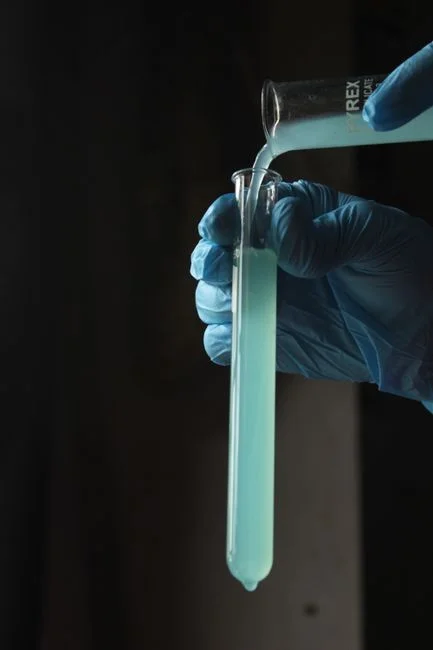
Municipal wastewater discharge and industrial processes create water high in COD/BOD, which requires treatment before discharge to preserve the health of waterways (Clean TeQ Water, 2026). This regulatory floor dictates every technology choice: a train that cannot meet a dissolved-oxygen or eutrophication constraint downstream is not a candidate, regardless of its design efficiency.
In 2026, an industrial buyer in the US will typically be defending the train against EPA categorical pretreatment standards for direct-discharge industries, while a European site will be working to limits set under, or analogous to, EU Urban Waste Water Directive 91/271/EEC, and a plant in a water-scarce region will additionally be judged against an internal reuse specification. Clean TeQ Water's (2026) positioning of its systems as a tertiary polisher "once the majority of COD and BOD has been removed" is a useful model: most current compliance regimes expect secondary biological removal plus tertiary polishing, not a single unit. The exact residual target must be confirmed with the local regulator before procurement, because the limit may be a daily maximum, a monthly average, or both.
CRC Press (Price) reminds the engineer that BOD and COD are the loading parameters used in the mathematical design of biological systems, which means a compliance demonstration in 2026 should include a calculated mass balance across the train, not only an influent/effluent pair. The mass balance is also the document that survives a regulator's audit when an end-of-pipe sample is challenged.
Pre-Procurement Checklist Before You Pick a Technology
Hand this list to a vendor before asking for a price to ensure the buying process starts from data rather than a sales pitch.
- Collect a representative influent profile: daily composite BOD₅, COD, TSS, pH, temperature, and any known inhibitors. MITA Water Technologies recommends pilot testing for site-specific confirmation because each sector and each process line has specific needs.
- Set the design effluent target in mg/L for both BOD and COD against the applicable 2026 discharge or reuse consent, and confirm whether the limit is a daily maximum, a monthly average, or both.
- Decide the effluent route: discharge, sewer under a pretreatment limit, or on-site reuse. Clean TeQ Water (2026) explicitly separates "majority removal" (secondary) from "tertiary polishing" (final), and the reuse case usually forces MBR plus an adsorption or BIOCLENS polishing step.
- Request vendor data on chemical consumption (Fe²⁺, H₂O₂, caustic, polymer), sludge yield, energy intensity, and resin or media replacement intervals. These are the operating-cost drivers that decide whether biology, MBR, Fenton or adsorption is the cheapest long-term option for a specific stream.
- Specify the instrumentation: Clean TeQ Water ties COD/BOD performance to dissolved-oxygen management, so a reliable DO probe and an online COD estimate should be specified alongside the technology, not added later.
Frequently Asked Questions
Is an MBR or activated sludge the better COD/BOD option in 2026?
For most sites, activated sludge remains the cost-effective baseline for bulk BOD and COD reduction. An MBR
Frequently Asked Questions
Which technology removes COD and BOD most effectively for industrial wastewater in 2026?
In 2026, the most effective integrated approach for industrial applications combines Membrane Bioreactor (MBR) technology with Advanced Oxidation Processes (AOPs) like photocatalytic ozonation. This combination can consistently achieve COD removal efficiencies exceeding 95% and BOD removal rates surpassing 99%, often reducing effluent COD to below 50 mg/L even in complex industrial streams.
Is an MBR system better than conventional activated sludge for COD and BOD removal?
MBR systems are significantly more effective than conventional activated sludge (CAS) because they decouple hydraulic retention time (HRT) from solids retention time (SRT), allowing for higher biomass concentrations (typically 8,000–15,000 mg/L MLSS). This enables MBRs to handle higher organic loading rates and produce a superior effluent quality, consistently meeting stringent regulatory standards that CAS systems struggle to achieve without extensive tertiary treatment.
Can Fenton oxidation replace biological treatment for COD and BOD removal?
Fenton oxidation is generally not a direct replacement for biological treatment but rather a critical pretreatment or polishing step. While it is highly effective at breaking down recalcitrant, non-biodegradable COD fractions, the high chemical costs associated with hydrogen peroxide and iron catalysts make it economically unsustainable for high-volume, high-BOD loads; it is best utilized for pre-treating toxic streams to improve the biodegradability (BOD/COD ratio) before biological processing.
How much does a COD and BOD removal system cost for an industrial plant in 2026?
Capital expenditure (CAPEX) for a mid-sized industrial wastewater system typically ranges from $500,000 to $5,000,000 depending on flow rate and influent characteristics. Operational expenditure (OPEX) in 2026 averages between $0.80 and $2.50 per cubic meter of treated water, accounting for electricity, membrane replacement cycles, and chemical reagents. Total costs are highly sensitive to the specific removal requirements mandated by local discharge permits.
What should I look for when selecting a supplier for an industrial COD and BOD treatment system?
When selecting a supplier, prioritize those who offer pilot-scale testing capabilities to validate removal kinetics for your specific waste stream composition. Ensure the supplier provides verified data on membrane fouling rates, energy consumption per kg of COD removed, and long-term technical support for automated control systems, as these factors dictate the life-cycle cost and reliability of the installation.