Why Textile Wastewater Needs a Fenton Stage
A dyehouse influent is one of the hardest streams a process engineer will ever balance on a PFD: COD commonly runs 800–3,000 mg/L, color from reactive, azo, disperse and vat dyes exceeds 2,000 Pt-Co on the inlet of the ETP, salinity from neutral salts and sodium sulfate pushes conductivity past 10 mS/cm, and pH swings between 5 and 12 across batch dumps (HydropureWater field data, 2026). The BOD₅/COD ratio of raw textile effluent is typically below 0.25, which is the diagnostic fingerprint of a stream that conventional activated sludge will struggle to biodegrade; in plain terms, the azo (–N=N–) bond, the sulfonate groups on reactive dyes, and the nitro- and anthraquinone chromophores on disperse dyes are all either too large, too polar, or too toxic for biomass to cleave at the residence times a textile aeration basin can offer.
That is the gap an advanced oxidation stage fills. A Fenton oxidation system for textile wastewater generates hydroxyl radicals strong enough (E° ≈ 2.80 V) to break those chromophores into smaller, more biodegradable fragments or full mineralization products. The 2025 SSRN review on Enhancing Textile Wastewater Reuse: Integrating Fenton Oxidation with Membrane Filtration confirms that the current academic-design direction is to position Fenton either as a pre-oxidation step before biology (to lift BOD/COD and detoxify the stream for biomass) or as a post-biology polishing step (to decolorize and trim residual COD) — both patterns are now standard in 2026 textile ETPs targeting reuse.
Fenton Chemistry in a Textile Plant: What the Reagents Are Doing
The core reaction — Fe²⁺ + H₂O₂ → Fe³⁺ + •OH + OH⁻ — produces the hydroxyl radical that does the actual dye-degradation work, while the Fenton-like follow-up (Fe³⁺ + H₂O₂ → Fe²⁺ + •OOH + H⁺) regenerates the iron catalyst and sustains the radical chain. The •OH species attacks the conjugated azo (–N=N–) and aromatic systems in dye chromophores through hydrogen abstraction, addition to C=C, and electron transfer, fragmenting the chromophores into smaller organics, CO₂, and inorganic salts over a 30–60 minute residence window.
The pH window of 2.5–3.5 is not a vendor preference — it is a thermodynamic boundary. Above roughly pH 4, Fe³⁺ precipitates as ferric hydroxide (Fe(OH)₃, Ksp ≈ 10⁻³⁸), which removes the catalyst from solution, drops color removal, and sends a fine iron-hydroxide floc downstream to blind any UF or RO membrane within hours. Below pH 2.5, the reaction rate slows substantially, H⁺ begins to scavenge •OH to form water, and reagent consumption rises without a corresponding gain in COD or color removal. Inside the 2.5–3.5 window the catalyst stays soluble, the radical yield is highest, and the iron stays in a form downstream neutralization can actually precipitate as a settleable sludge.
The H₂O₂/Fe²⁺ molar ratio is the dominant design lever. Too little H₂O₂ leaves residual color and unreacted Fe²⁺ that ends up in the iron sludge; too much H₂O₂ scavenges the •OH it has just produced and converts it into the much weaker peroxyl radical •OOH. In textile work the practical envelope sits between 5:1 and 20:1, with jar-test calibration on the actual dye mix as the only way to land the optimum. A Fenton reactor effluent is hot, acidic (pH 2.5–3.5), and iron-bearing, so it is virtually always followed by pH neutralization (typically NaOH to pH 7–8) and iron-sludge separation (lamella clarifier or DAF) before any downstream biological or membrane stage.
Core Design Parameters for a Textile Fenton Reactor
The table below is the parameter envelope a process engineer should take into a 2026 vendor RFQ. Every value is a textile-stream starting point; final numbers must come from a jar-test campaign on the specific dye mix and salinity, but the bands are defensible against the published literature.
| Parameter | Typical textile range | Design note |
|---|---|---|
| Reactor pH | 2.5–3.5 | Lower bound for Fe³⁺ solubility; raise with NaOH after the Fenton stage. |
| ORP window | +300 to +500 mV (vs Ag/AgCl) | Confirms excess H₂O₂; collapse in ORP indicates reaction completion. |
| Fe²⁺ dose (as Fe) | 50–200 mg/L | Usually supplied as FeSO₄·7H₂O; optimize by jar test for color vs sludge cost. |
| H₂O₂ dose | 200–1,000 mg/L (50% w/w) | Scale to inlet COD; ~0.5–2.0× stoichiometric H₂O₂:COD is the working band. |
| H₂O₂/Fe²⁺ molar ratio | 5:1 to 20:1 | Outside this range, scavenging or color carry-through dominates. |
| HRT | 30–60 min | 60 min for very high color (>2,500 Pt-Co); 30 min for moderate loads. |
| Temperature | Ambient to 40 °C | Reaction rate roughly doubles every 10 °C; cap at 40 °C to control H₂O₂ decomposition. |
| Expected color removal | >90% | Confirmed across reactive, azo, and disperse dye feeds. |
| Expected COD reduction | 50–80% (post-biology); 30–60% (as pre-oxidation) | Pre-oxidation lifts biodegradability; post-biology polishes residual COD. |
Reactor configuration is a CSTR with a slow-speed (≤60 rpm) stirrer for most retrofit dyehouses, because mixing must be enough to keep Fe²⁺ in solution without shearing the iron-hydroxide flocs that will form downstream. For very high color loads, a plug-flow or compartmentalized reactor with two or three Fe²⁺/H₂O₂ injection points along the length reduces localized radical quenching and is the preferred 2026 configuration on new-build ETPs. Reagent storage is HDPE or FRP for 50% w/w H₂O₂ (kept cool and shaded to slow decomposition), FeSO₄·7H₂O delivered as powder or solution, and NaOH as 30–50% liquid for the neutralization step. All three reagents should be fed through PLC-controlled H₂O₂, Fe²⁺ and NaOH dosing skids with flow-paced control off the Fenton feed pump, not manual setpoints.
The under-estimated line item at RFQ stage is the iron-rich chemical sludge (Fe(OH)₃) generated by the Fenton stage. Every kilogram of Fe²⁺ dosed produces roughly 1.5 kg of dry iron-hydroxide sludge, and at 50–200 mg/L Fe²⁺ dose on a 1,000 m³/day stream that is 75–300 kg/day of dry solids that must be thickened, dewatered, and hauled.
Homogeneous vs Heterogeneous Fenton: Choosing the Catalyst Mode
Classic homogeneous Fenton uses dissolved Fe²⁺/Fe³⁺ salts (sulfate or chloride) and is the default on most 2026 textile ETPs because it is cheap, well-characterized, and easy to retrofit. Heterogeneous Fenton anchors the iron on a solid support — zeolite, pillared clay (PILC), Fe-MOF, Fe-OMS, or an iron-bearing industrial solid — so the catalyst can be recovered and reused, and so the iron never leaves the reactor to foul downstream UF/RO. The 2011 Desalination comparison of homogeneous and heterogeneous Fenton on textile effluent remains the canonical reference dataset on the trade-off, and 2024–2025 pilot work is pushing heterogeneous catalysts into reuse-grade textile plants where iron fouling of membranes is the controlling failure mode.
| Axis | Homogeneous (Fe²⁺ salts) | Heterogeneous (Fe on solid support) | Photo-Fenton (UV/H₂O₂/Fe²⁺) | Electro-Fenton (cathodic Fe²⁺ regeneration) |
|---|---|---|---|---|
| Color removal (typical textile) | 85–95% | 80–92% | 95–99% | 90–98% |
| Iron sludge generation | High (1.5 kg per kg Fe²⁺ dosed) | Negligible (catalyst recovered) | Moderate (Fe²⁺ in solution) | Low–moderate (in-situ generation) |
| Catalyst recovery | None — single use | Filtration/settling, multiple cycles | None — single use | None — continuous regeneration |
| Relative CAPEX | Low (skid + tanks) | Medium–high (catalyst beds, recovery loop) | High (UV reactor, lamps, shielding) | High (electrodes, rectifier, control) |
| OPEX drivers | H₂O₂, FeSO₄, NaOH, sludge hauling | Lower H₂O₂, no Fe salt, modest catalyst makeup | UV lamp replacement, lower H₂O₂ dose | Electrical power, electrode wear |
| Best fit | Retrofit, batch dyehouses, color + COD knockdown | New builds targeting reuse / ZLD, RO protection | Very hard effluent, low-flow polishing | Hard effluent where sludge must be minimized |
The working rule of thumb in 2026 is: choose homogeneous for retrofit dyehouses that just need color and COD knockdown before discharge; choose heterogeneous for new builds targeting reuse or ZLD where iron fouling of the UF/RO train is the controlling concern. Photo-Fenton and electro-Fenton sit further up the cost curve but cut H₂O₂ dose and (for electro-Fenton) reduce sludge, which matters on a very hard effluent with high COD and color but low biodegradability.
Integrating Fenton with MBR, UF and RO for Textile Water Reuse
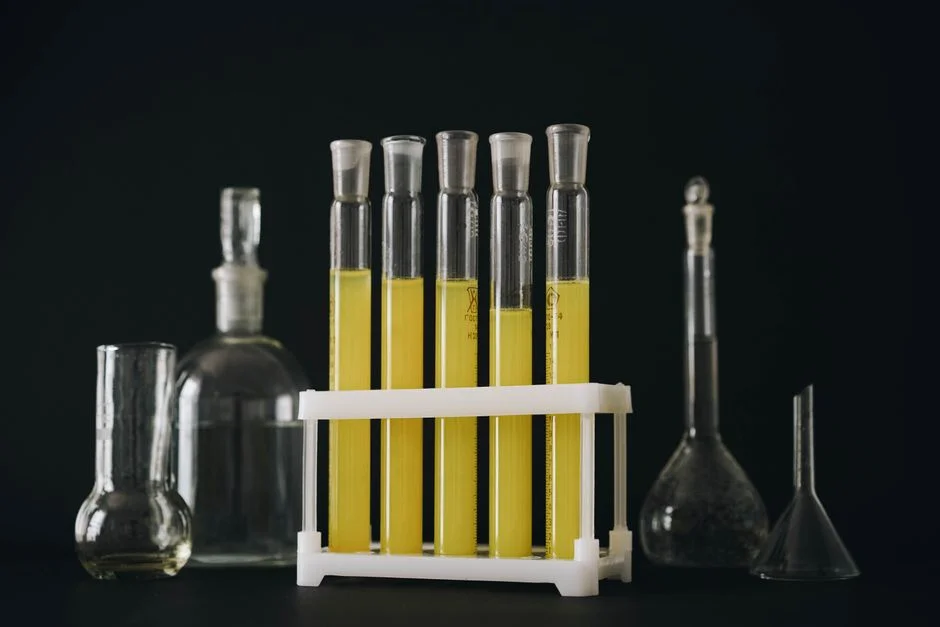
Fenton is rarely a standalone treatment in 2026; its real value is unlocked when it sits inside a reuse train. The dominant 2026 pattern for a dyehouse or denim mill is: equalization → primary clarification / DAF → biological (MBR or SBR) → Fenton post-biology for color and residual COD → pH neutralization to 7–8 → sand/UF pre-RO polishing → RO → reuse to dyeing or rinsing lines. The MBR stage protects the Fenton stage from suspended solids and biomass variability, the Fenton stage protects the MBR from color shock loads and refractory COD that would otherwise pass through, and the UF protects the RO from the residual iron and iron-hydroxide flocs that even a well-operated neutralization/clarifier will not fully remove.
The reason UF must physically sit between the Fenton stage and the RO is operational, not theoretical: residual Fe at even 1–2 mg/L passing to the RO will foul the polyamide membrane within hours, and a well-designed MBR biological polishing stage paired with a DAF for iron sludge and color removal still leaves enough particulate iron to require UF pre-RO polishing as a guard stage. The 2025 SSRN review on integrating Fenton oxidation with membrane filtration for textile water reuse confirms this train is the current academic-design direction and is the layout most 2026 RFPs are written against.
Quantitatively, a properly designed Fenton + UF/RO reuse train is reporting >70% process-water recycle and compliance with discharge consents of COD <250 mg/L and color <100 Pt-Co without a final tertiary biological stage, on reactive-dye and disperse-dye feeds. For plants chasing ZLD, the RO brine still goes to a brine concentrator or thermal evaporator; Fenton does not eliminate the brine stream, but it does drop the organic load on the brine loop, which is what determines whether the evaporator runs or fouls.
Cost, Sludge and Compliance: 2026 Buyer Considerations
CAPEX on a skid-mounted Fenton system scales roughly with flow: a small dyehouse at 10–50 m³/day sits in the mid-five-figure USD band, while an integrated mill at 5,000+ m³/day with full neutralization, lamella, sludge handling, and instrumentation is a seven-figure USD build. These are budgetary envelopes for RFQ purposes, not a price list — the final number depends on reactor material (CS rubber-lined vs GRP), dosing skid spec, and whether a building enclosure is in scope.
OPEX is dominated by H₂O₂, which is typically the largest single chemical line; the H₂O₂:COD stoichiometry is the single biggest lever the operator owns, and over-dosing by 20–30% is the most common waste of money in 2026 textile Fenton operations. The other OPEX lines, in descending order, are FeSO₄·7H₂O, NaOH for neutralization, electrical power for stirring, and sludge hauling. Every kg of Fe²⁺ dosed produces approximately 1.5 kg of iron-hydroxide dry solids, so a 100 mg/L Fe²⁺ dose on a 1,000 m³/day stream is ~150 kg/day of chemical sludge to thicken and dewater — a line item often missed at RFQ and very visible at 12 months of operation. The iron-bearing sludge is handled on a filter press for iron-bearing chemical sludge fed from a lamella clarifier; the pressate returns to the front of the ETP and the cake goes to hazardous-waste disposal under most jurisdictions because of the dye and metal co-contamination.
On compliance, a Fenton + UF/RO train supports 2026 textile discharge consents including India's textile effluent norms and EU BAT-AEL for textile finishing, which set color, refractory COD, and (with the RO) salinity-related parameters such as TDS in the reuse stream. The Fenton stage does the color and refractory COD lift; the RO does the salinity; together they close the loop on the dyehouse water balance, which is the actual 2026 procurement question. A comparable procurement lens for adjacent industries is laid out in the Fenton system design for pharmaceutical wastewater engineering guide, which shares the same Fenton + membrane architecture.
Frequently Asked Questions
What COD removal can Fenton realistically achieve on textile wastewater?
When the Fenton stage sits after biology as a polishing step, expect 50–80% COD reduction on the Fenton stage itself and decolorization consistently above 90%. When Fenton is positioned as a pre-oxidation step ahead of biology, COD reduction on the Fenton stage is lower (typically 30–60%) because the goal there is to break chromophores and lift BOD/COD so the downstream biomass can finish the job; the combined train removal is what matters.
Why can't a textile plant run Fenton at neutral pH?
Because Fe³⁺ precipitates as Fe(OH)₃ above roughly pH 4, which removes the catalyst from solution, drops color removal, and sends a fine iron floc downstream to blind UF and RO membranes within hours. Running Fenton at neutral pH is one of the most common causes of membrane-fouling callbacks on 2026 textile ETPs.
Should a reuse train use homogeneous or heterogeneous Fenton?
For a reuse train with downstream UF/RO, the iron-load argument points toward heterogeneous Fenton because the catalyst never leaves the reactor, which protects the RO from iron fouling. For a retrofit discharge-only plant without a reuse train, homogeneous Fenton is the cheaper and simpler choice and the iron sludge is just a dewatering OPEX line.
What H₂O₂:Fe²⁺ molar ratio should the jar test target?
Start the jar test at 10:1, which is the middle of the 5:1 to 20:1 textile working range, and bracket ±50% around it on at least three dye-loading conditions. The optimum on a real dye mix is rarely where the literature says it should be, and the cost of missing it is either residual color (under-dosing H₂O₂) or wasted reagent (over-dosing H₂O₂).
Is Fenton alone enough to take a textile plant to ZLD?
No. Fenton is one stage in a Fenton + MBR + UF/RO train; ZLD still requires a brine concentrator or thermal evaporator at the back end to handle the RO reject. Fenton's role in a ZLD scheme is to drop the organic load on the brine loop and protect the evaporator from fouling — it is necessary but not sufficient for zero liquid discharge.