MBR or activated sludge for Tucson petroleum wastewater?
For Tucson petroleum-refining wastewater, MBR is usually the stronger option when reuse, low suspended-solids carryover, limited footprint, or recurring oil and FOG separation problems are priorities. Conventional activated sludge can cost less for discharge-only service when stable influent and useful aeration and clarifier assets already exist. Supplied refinery planning references report MBR SRT of 20–60 days, HRT of 4–8 hours, COD below 50 mg/L, and TSS below 5 mg/L; CAS references give SRT of 5–15 days, HRT of 6–12 hours, COD of 60–100 mg/L, and TSS of 20–30 mg/L. Both require controlled oil, grease, suspended material, pH, and equalization. Final selection must use site data and current Tucson-area permit or reuse criteria.
The decision should follow the water destination and the condition of existing assets, not a presumption that membrane technology is automatically superior. Specify MBR when process reuse, constrained land, low solids carryover, or unreliable clarifier performance controls the business case. Retain CAS when discharge-only service is the firm destination, the loading is stable, and existing aeration and clarification assets have useful remaining life.
The 2023 Membranes review, as cited by HydropureWater, provides the screening ranges above; they are refinery planning references, not Tucson limits or guarantees. MBR retains biomass without relying on settleable floc and adds a physical solids barrier, but it does not remove every dissolved contaminant and cannot replace upstream oil-water separation, equalization, pH control, or biological pretreatment. The final decision depends on measured source data, intended reuse or discharge route, current permit terms, available footprint, electrical capacity, operator capability, and lifecycle cost. The MBR cost per m³ and lifecycle-cost guide provides a framework for developing that comparison.
What wastewater streams should be characterized before selecting equipment?
A defensible design basis requires a segregated 12-month dataset rather than a blended plant average, because average flows can conceal the contaminants and peak conditions that determine biological loading, pretreatment, equalization, and membrane area.
Maintain separate records for produced water, desalter brine, tank-bottom draws, spent caustic, wash water, and stormwater runoff. The dataset should capture peak and sustained flow, operating pattern, and temperature for each stream. Request analytical records for COD, BOD, TSS, free oil, emulsified oil, FOG, phenols, PAHs, sulfides, ammonia, pH, conductivity, and salinity. State the sampling method, averaging period, and detection limit for each parameter; a laboratory result without those qualifiers cannot support a performance guarantee.
HydropureWater's supplied 2026 petroleum comparison cites a London refinery planning profile with a temperature range of 30–70 °C, free or emulsified oil often at 50–500 mg/L, phenols at 10–100 mg/L, and ammonia at 20–80 mg/L. These values are screening references from another location, not a Tucson design basis. Transfer them into the project only as challenge cases against which Tucson measurements are compared.
Define the final destination before selecting treatment: surface-water discharge, groundwater injection, sanitary sewer discharge, process reuse, cooling-tower makeup, boiler feed, or pretreatment for zero-liquid discharge. Each destination changes the required solids separation, polishing, monitoring, and operating-reliability case.
- Identify each source and segregate its analytical and flow record.
- Establish peak, sustained, and slug-loading conditions.
- Confirm the authorized or intended water destination.
- Size equalization, cooling, biological loading, pretreatment, and reuse equipment from that basis.
Where the measured stream supports it, evaluate a DAF oil and FOG pretreatment system before the biological stage. Do not select it from plant-wide averages alone; confirm the performance basis against the characterized oil, grease, surfactant, and solids loads.
How the two biological systems differ
Both MBR and conventional activated sludge use an aerated biological basin for heterotrophic organic oxidation and nitrification; their decisive difference is how biomass is separated from treated water.
CAS depends on a secondary clarifier to settle biological floc before discharge or reuse polishing. Petroleum FOG or surfactant surges can impair settling, promote filamentous bulking, and wash solids from the clarifier. The consequence is not merely a higher TSS average: solids carryover can vary with wastewater composition and sludge condition, making downstream reuse equipment vulnerable to short-duration excursions.
MBR retains biomass inside the reactor and uses submerged membranes to provide a physical barrier for suspended solids. It does not depend on settleable floc for solids capture, which generally makes it more suitable where stable solids carryover is operationally important. An integrated submerged-PVDF MBR system combines biological treatment and membrane separation, while the DF Series module represents one membrane configuration to evaluate against the project basis.
That separation advantage does not extend to every contaminant. Biological degradation still performs most dissolved-organic and nitrogen removal, and low TSS alone does not establish suitability for cooling-tower or boiler-feed reuse. Conductivity, silica, hardness, residual oxidant, scaling, and the final reuse requirements remain separate checks.
Neither technology can compensate for uncontrolled free oil, grease, incompatible chemicals, excessive suspended material, unsuitable pH, or missing equalization. The membrane barrier improves solids separation; it does not make an unstable pretreatment train acceptable.
Performance and operating comparison
The available refinery planning ranges indicate lower suspended solids with MBR, but they do not replace project-specific design, performance testing, or a guarantee covering refinery oil and grease.
| Parameter | MBR planning reference | CAS planning reference |
|---|---|---|
| SRT | 20–60 days | 5–15 days |
| HRT | 4–8 hours | 6–12 hours |
| COD | Below 50 mg/L | 60–100 mg/L |
| TSS | Below 5 mg/L | 20–30 mg/L |
| Refinery effluent oil and grease | Not supplied for this comparison | Not supplied for this comparison |
Source for SRT, HRT, COD, and TSS: HydropureWater's supplied 2023 Membranes review, as cited in its 2026 petroleum comparison. These are non-local planning references, not final Tucson design values or guarantees. Require bidders to define the guaranteed oil and grease basis and sampling method rather than inserting an unsupported value.
The operating burden also changes. MBR requires reliable scour air, transmembrane-pressure monitoring, a clean-in-place procedure, and membrane-replacement planning. CAS requires controlled sludge wasting, scum removal, and active management of filamentous bulking. HydropureWater's supplied planning reference gives membrane CIP every 6–12 months and membrane life of 5–8 years; these are screening assumptions, not petroleum-duty guarantees.
Scour-air demand must be reconciled with the guaranteed flow and selected equipment. The supplied refinery references give two estimates: 0.7–1.4 kWh/m³ and 0.8–1.5 kWh/m³. Ask the bidder to state the design flow, aeration mode, blower redundancy, and calculation behind its energy model. The 2026 MBR cost and operating reference supports screening, but vendor data must replace it for the Tucson budget.
Which treatment route fits the operating scenario?
Select the treatment route from the required water destination, pretreatment findings, available assets, and reuse requirements rather than from a generic technology preference.
| Operating scenario | Defensible route | Required decision evidence |
|---|---|---|
| Firm process, cooling-tower, or boiler-feed reuse | MBR with reuse-specific polishing where required | Reuse criteria, site-water chemistry, downstream equipment limits, and validation plan |
| Discharge-only duty with stable influent and useful aeration and clarifier assets | Retain CAS | Current permit, remaining civil life, sludge route, clarifier condition, and lifecycle cost |
| Useful CAS assets but a reuse target requiring improved solids separation | Hybrid CAS biology with membrane separation or polishing | Hydraulic integration study, footprint, controls, redundancy, and bypass plan |
| Recurrent FOG or emulsified-oil surges | Enhanced pretreatment followed by MBR or CAS | Source characterization, equalization performance, oil-recovery data, and fouling or settling assessment |
| Groundwater injection or a sensitive receiving context | Defer the fixed selection | Authorized pathway, aquifer constraints, groundwater limits, and monitoring requirements |
MBR is the stronger candidate where low solids and oil carryover must be consistently achieved or where recurrent FOG makes clarifier operation unreliable. CAS remains credible when stable discharge-only duty, usable civil assets, and lower near-term cost dominate the decision. A hybrid is justified when biological capacity remains valuable but solids separation no longer satisfies the reuse destination.
For any route, enhanced pretreatment may be mandatory when characterization identifies recurring free oil, grease, surfactants, incompatible chemicals, or slug loads. Evaluate the DAF pretreatment option against measured performance needs and then evaluate the integrated MBR configuration; neither should be selected ahead of the pretreatment and equalization basis.
What will MBR and CAS cost in Tucson?
The supplied capital-cost ranges indicate a planning-level MBR premium, but neither range is a Tucson quotation and neither includes a defined site-specific scope.
| Cost item | MBR planning reference | CAS planning reference |
|---|---|---|
| New-system CAPEX range | $2.0 million–$8.5 million | $1.2 million–$4.5 million |
| Planning capacity | 50–500 m³/day | 50–500 m³/day |
| Indicative OPEX | $0.40–$0.75/m³ | Not supplied |
| Operating-cost comparison | Estimated 20–30% above CAS | Baseline for supplied comparison |
Source: HydropureWater's supplied 2026 petroleum planning reference. These values are directional, non-local screening allowances. Pretreatment, biological capacity, civil work, controls, electrical infrastructure, commissioning, and reuse polishing materially affect the result.
Build the lifecycle model using electricity price, chemical consumption, membrane replacement, labor, sludge disposal, water purchase, sewer charges, and the value of recovered water. Include the consequences of avoided clarifier upsets, reduced downstream polishing, operator capability, spare-parts strategy, and future reuse or tighter discharge requirements.
Do not transfer the supplied London scenario of $200,000–$400,000 in annual fresh-water and sewer savings to Tucson. Confirm local rates, sewer terms, and firm reuse demand first. For procurement, use the MBR cost per m³ and lifecycle-cost guide to structure the comparison, then replace its planning inputs with equal-scoped bids and verified site costs.
How Tucson-area reuse and compliance affect the decision
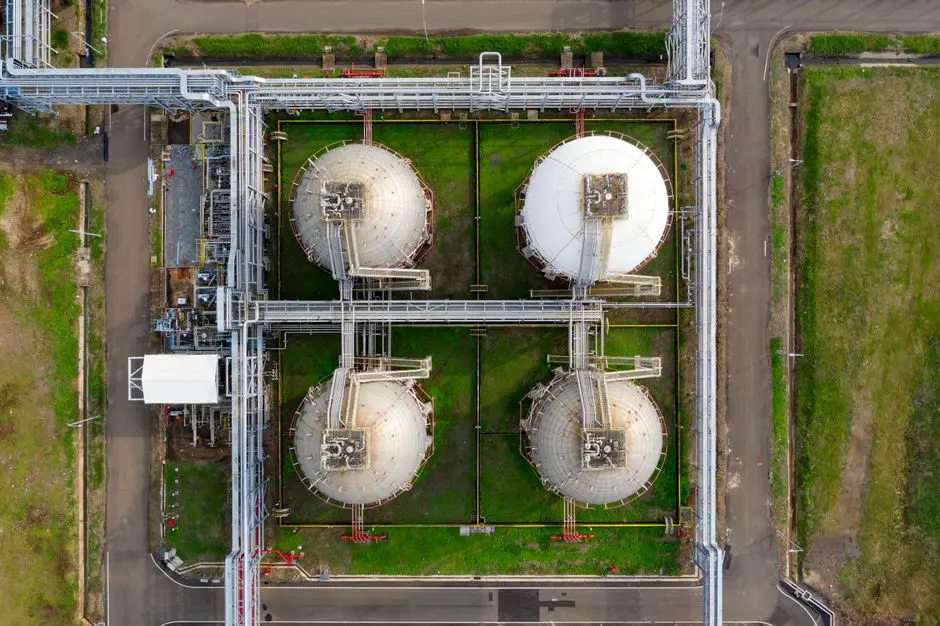
Neither an MBR nor a CAS configuration establishes compliance until its complete treatment train is matched to an authorized Tucson-area discharge or reuse pathway.
Before adopting an effluent target, obtain the current permit, applicable reuse criteria, sanitary-sewer limitations, groundwater limits, and receiving-water or aquifer constraints. The supplied research does not establish Tucson-specific limits, so regulatory requirements must be verified rather than inferred from another refinery or from generic technology descriptions.
For cooling-tower makeup, boiler feed, or process reuse, assess conductivity, silica, hardness, residual oxidant, and scaling using the actual site-water chemistry. Validate the proposed effluent with the intended downstream equipment. Any required polishing should be defined before final acceptance rather than treated as an optional future addition.
The relevant industrial reverse-osmosis treatment option may be relevant to the downstream train where the reuse assessment requires it, but it does not replace upstream oil control, biological treatment, or solids separation. Select the route from the signed design basis and the receiving or reuse requirements.
How to turn the comparison into a defensible procurement?
A defensible selection depends on one signed process basis, one complete scope, and equal guarantees; otherwise MBR and CAS bids will not be commercially or technically comparable.
- Issue the design basis. Identify sources, flow range, temperature, oil and grease, COD, BOD, TSS, phenols, PAHs, sulfides, ammonia, pH, conductivity, salinity, averaging periods, and the final water destination.
- Require stated design inputs. Ask each bidder to identify guaranteed design flow, influent limits, SRT, HRT, membrane material and pore size, design flux, scour-air demand, cleaning chemistry, redundancy, solids inventory, and expected replacement intervals.
- Demand the engineering documents. Request membrane drawings, hydraulic calculations, aeration and scour-air sizing, CIP strategy, control narratives, redundancy, maintenance schedules, and replacement pricing.
- Normalize the commercial scope. Confirm that quotations include pretreatment, equalization, biological tanks, blowers, pumps, controls, electrical and civil work, commissioning, operator training, performance testing, and membrane-replacement responsibility.
- Resolve capacity claims. Distinguish integrated-system capacity from module output and verify the proposal against the complete hydraulic and loading basis.
| Supplier submission | Required check |
|---|---|
| Integrated MBR configuration | Verify the biological design, pretreatment, equalization, blowers, controls, and reuse polishing within the quoted capacity. |
| DF Series module data | HydropureWater's verified product catalog lists 0.1 μm PVDF elements in 80–225 m² configurations producing 32–135 m³/day; reconcile this output with the complete plant design. |
| Catalog capacity range | The verified catalog lists integrated MBR configurations from 10–2,000 m³/day; confirm that the proposed configuration meets the signed design flow. |
| Footprint statement | The catalog states 60% smaller footprint than conventional systems; treat this as a supplier claim and require a scaled Tucson site plan including equalization, pretreatment, blowers, CIP equipment, maintenance access, and expansion space. |
The supplier should also disclose the membrane-replacement responsibility, spare-parts availability, blower redundancy, operating support, and performance-test acceptance criteria. Use the DF Series module information as an equipment-input check, not as proof of whole-plant capacity or permitted performance.
Frequently Asked Questions
Is MBR always more economical than conventional activated sludge for a Tucson refinery?
No. MBR is more likely to be economical when reuse, footprint, low solids carryover, or reliable separation after FOG surges has sufficient value. CAS can be more economical for stable discharge-only duty with usable aeration and clarifier assets. HydropureWater's supplied 2026 planning reference gives MBR CAPEX of $2.0 million–$8.5 million for 50–500 m³/day and CAS CAPEX of $1.2 million–$4.5 million; these are not Tucson bids. Request equal-scoped quotations with identical pretreatment, civil, controls, commissioning, and polishing scope.
Which supplier information is needed to prevent an undersized MBR?
Require the guaranteed design flow, influent basis, SRT, HRT, membrane material and pore size, design flux, scour-air demand, cleaning chemistry, redundancy, solids inventory, and replacement intervals. Also request hydraulic calculations, aeration and scour-air sizing, membrane drawings, and the CIP strategy. Verify that the quoted integrated-system capacity includes the proposed biological and pretreatment design rather than relying on the output of an individual module.
How should refinery oil and grease performance be specified?
State the guaranteed oil basis, sampling point, sampling method, frequency, and averaging period. The supplied research does not provide a refinery effluent oil and grease value for this comparison, so no defensible numeric guarantee can be entered from it. Tie any limit to the characterized feed, pretreatment performance, biological system, and final destination, then confirm it through site acceptance testing.
Does MBR effluent automatically qualify for cooling-tower or boiler-feed reuse?
No. Low TSS does not establish reuse suitability. Test the actual site-water chemistry and the intended downstream equipment for conductivity, silica, hardness, residual oxidant, and scaling. Obtain the current Tucson-area permit, sewer restrictions, groundwater limits, or reuse criteria before defining the performance target, and define any required polishing before final acceptance.