Wastewater treatment expert: +86-181-0655-2851 Get Expert Consultation
HYDROPUREWATER · Industry library

Food & beverage wastewater
A connected industry library.

Explore six food-processing branches, their wastewater challenges and source-linked treatment options. Start with a country library, then follow a production stream to the evidence.

Country coverage & industry connections

Country links count catalog associations, not verified plants or proof that every sub-industry operates there. The right-hand branches are industry references.

Explore the full database →
Country libraryProduction. Water. Treatment.Food & beverageUnited States · 242United States · 242India · 16India · 16Saudi Arabia · 7Saudi Arabia · 7Thailand · 7Thailand · 7Indonesia · 6Indonesia · 6Malaysia · 6Malaysia · 6DairyDairyMeat & poultryMeat & poultryBreweriesBreweriesFruit, vegetables & drinksFruit, vegetables &drinksEdible oil refiningEdible oil refiningPalm oil millsPalm oil mills
Country links count catalog associations, not verified plants or proof that every sub-industry operates there. The right-hand branches are industry references.
Browse all food country libraries
United States242India16Saudi Arabia7Thailand7Indonesia6Malaysia6Argentina5Canada5Uganda5Australia4Brazil4Iran4Nigeria4Panama4Peru4Tanzania4Algeria3Angola3Cameroon3Chile3Colombia3Ecuador3Ethiopia3France3Ghana3Iraq3Ireland3Kenya3Kuwait3Mexico3Morocco3Pakistan3Qatar3South Africa3Spain3United Arab Emirates3United Kingdom3Vietnam3Cambodia2Denmark2Dominican Republic2Egypt2Germany2Italy2Nepal2Netherlands2New Zealand2Oman2Philippines2Portugal2Russia2Rwanda2Sri Lanka2Turkey2Bahrain1Bangladesh1China1Costa Rica1Czech Republic1Finland1Greece1Hungary1Israel1Ivory Coast1Japan1Jordan1Kazakhstan1Mongolia1Montenegro1Mozambique1Myanmar1Norway1Poland1Romania1Senegal1Singapore1South Korea1Sweden1Turkmenistan1Uzbekistan1

Production. Water. Treatment.

Choose a branch, then select a connection. Read what supports it, when it applies and where it stops.

Milk losses, fat and cleaning streams.

Production streamWater challengeTreatment / controlMilk & whey lossesMilk & whey lossesBOD / CODBOD / CODRecover at sourceRecover at sourceFat-bearing washwaterFat-bearing washwaterFats, oils & greaseFats, oils & greaseFat separationFat separationCIP & cheese brineCIP & cheese brinepH & salinitypH & salinitySegregate & neutraliseSegregate & neutralise
All documented connections
Production streamWater challengeTreatment / controlWhen it applies
Dairy · Milk & whey lossesBOD / CODRecover at source

Recover product before it becomes effluent.

Separate recoverable product streams.

Remaining dissolved organics need treatment.

IFC / World Bank Group
Dairy · Fat-bearing washwaterFats, oils & greaseFat separation

Separate removable fat before biological treatment.

Check flotation and conditioning response.

Does not remove all dissolved COD.

IFC / World Bank Group European Commission; official text archived by legislation.gov.uk
Dairy · CIP & cheese brinepH & salinitySegregate & neutralise

Manage cleaning chemicals and saline streams separately.

Measure each stream before blending.

Neutralisation does not remove dissolved salts.

IFC / World Bank Group European Commission; official text archived by legislation.gov.uk
Meat & poultry · Blood collectionOrganic load & nitrogenRecover at source

Keep collected blood out of wastewater.

Provide dedicated collection and handling.

Residual wastewater still needs characterization.

IFC / World Bank Group IFC / World Bank Group
Meat & poultry · Processing & washdownCoarse & suspended solidsDry collection & screens

Intercept solids before drains and downstream treatment.

Match screen openings to actual solids.

Screening does not remove dissolved organics.

IFC / World Bank Group IFC / World Bank Group European Commission; official text archived by legislation.gov.uk
Meat & poultry · Pretreated effluentOrganics, nitrogen & phosphorusBiological treatment

Treat biodegradable organics; assess nutrient removal.

Check biodegradability and discharge requirements.

Pathogen control may need additional stages.

IFC / World Bank Group IFC / World Bank Group European Commission; official text archived by legislation.gov.uk
Breweries · Wort, beer & yeast lossesBOD / CODRecover at source

Recover product and yeast before drain disposal.

Check safe recovery and by-product outlets.

Recovery does not replace effluent treatment.

IFC / World Bank Group
Breweries · Production & CIP dischargesVariable load & pHEqualise & correct pH

Balance flow and load before biological treatment.

Measure production and cleaning cycles.

Equalisation redistributes load; it does not eliminate it.

IFC / World Bank Group European Commission; official text archived by legislation.gov.uk
Breweries · Balanced brewery effluentBiodegradable organicsAnaerobic / aerobic options

Assess anaerobic treatment followed by aerobic polishing.

Check load, operation and biogas handling.

Not a mandatory train for every brewery.

IFC / World Bank Group European Commission; official text archived by legislation.gov.uk
Fruit, vegetables & drinks · Washing & preparationCoarse & suspended solidsDry collection & screens

Keep soil, fibres and food residues out of drains.

Select separation for actual particles.

Dissolved product losses require further treatment.

IFC / World Bank Group European Commission; official text archived by legislation.gov.uk
Fruit, vegetables & drinks · Process-water reuseFood safety & reuseSegregate & validate use

Match recovered water quality to its intended use.

Verify food-safety and local reuse requirements.

A treatment unit alone does not certify reuse.

IFC / World Bank Group
Edible oil refining · Oil washingFats, oils & greaseFat separation

Separate oil-associated organic load using suitable flotation.

Test emulsion breaking and dosing.

Not complete dissolved-COD removal.

IFC / World Bank Group European Commission; official text archived by legislation.gov.uk
Edible oil refining · Cleaning solutionsOil, acids & alkalisSegregate & neutralise

Separate oils and fatty acids from cleaning solutions.

Assess soap splitting where relevant.

Chemistry depends on the actual stream.

IFC / World Bank Group
Edible oil refining · Separated effluentBiodegradable organicsBiological treatment

Biological treatment targets remaining biodegradable matter.

Check pretreatment and biological compatibility.

Select technology after wastewater testing.

European Commission; official text archived by legislation.gov.uk
Palm oil mills · Sterilising, pressing & clarificationDistinct mill streamsMap & characterise streams

Distinguish mill operations before choosing treatment.

Confirm the actual mill process.

Refinery data do not describe every mill.

IFC / World Bank Group
Palm oil mills · Organic mill effluentOrganics & methaneAnaerobic treatment & gas capture

Evaluate digestion with methane capture.

Assess feasibility and safe gas handling.

Further treatment depends on the outlet.

IFC / World Bank Group

Equipment in context

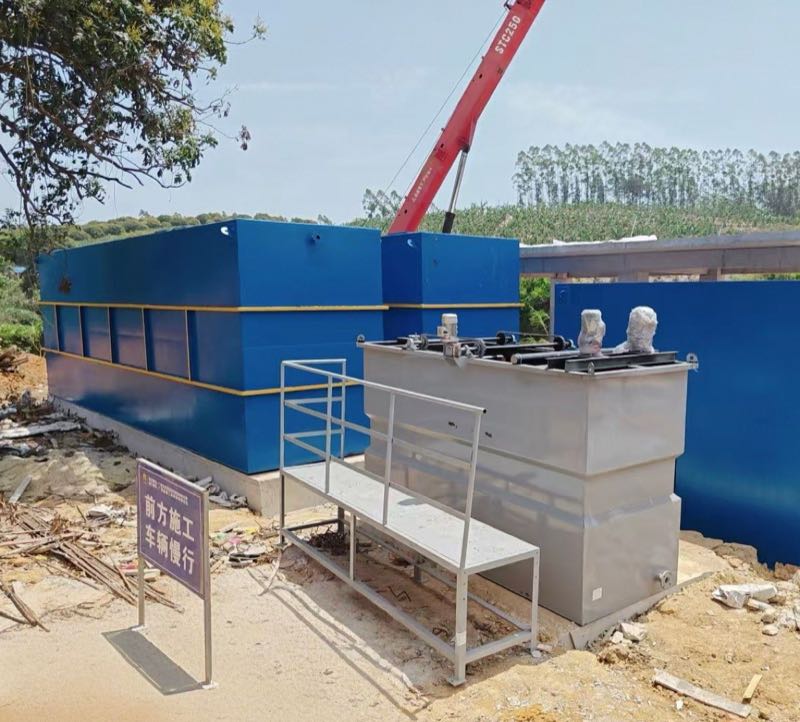
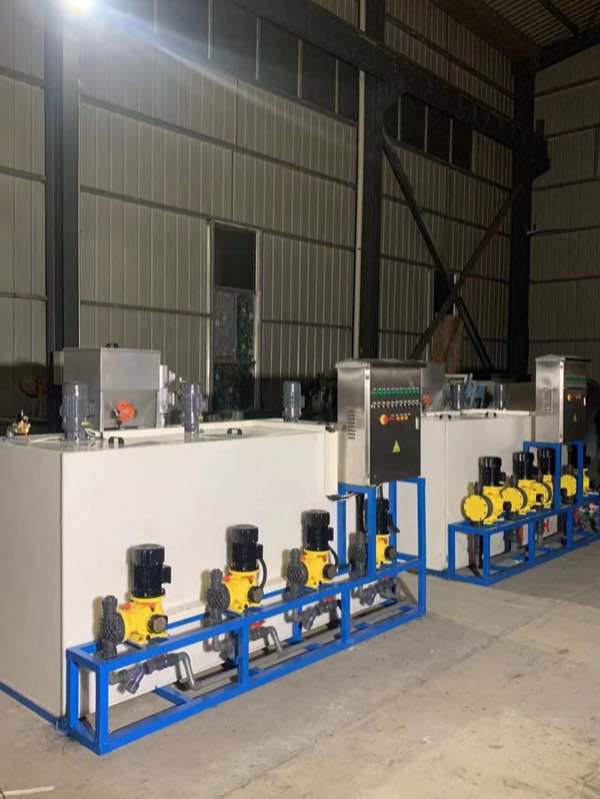
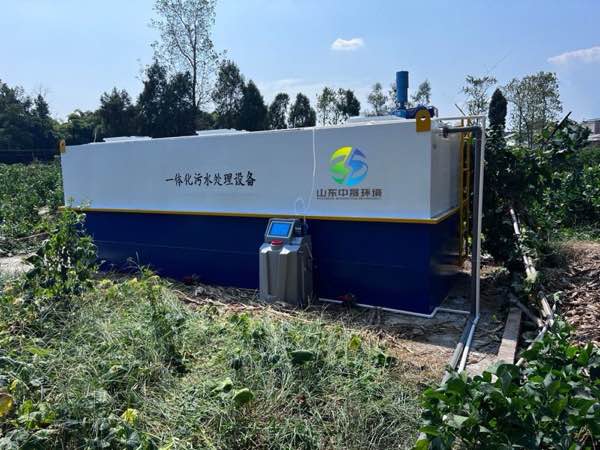
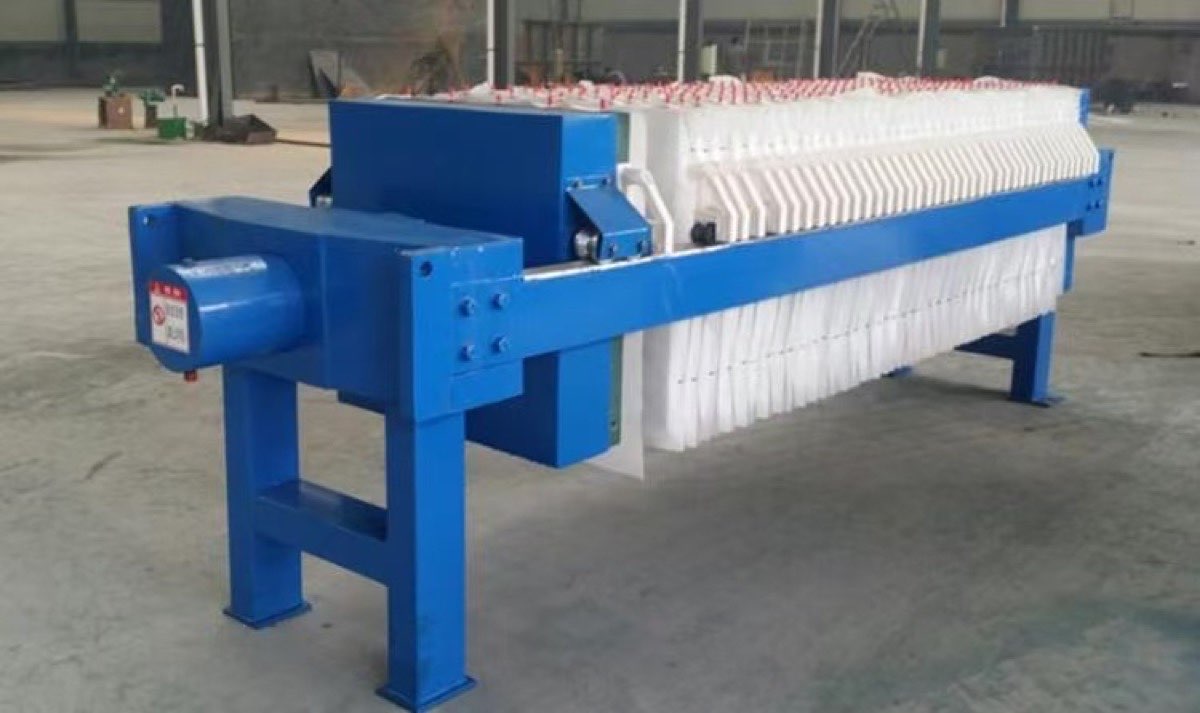
Equipment follows the treatment duty. Flow, solids, fats, biodegradability and the receiving route still require a site assessment.

Original references

Industry reference: explore how production streams, pollutants and treatment choices connect. These references are not local measurements, country discharge limits or project guarantees. Confirm the site, discharge route and permit before design.

Technical references reviewed

Environmental, Health, and Safety Guidelines for Dairy Processing

IFC / World Bank Group · 1.1 Environment — Industrial Process Wastewater; Process Wastewater Treatment · Printed page 2–3

GIIP reference for industrial milk and dairy processing; excludes dairy farming. Apply with site assessment and host-country requirements.

protein, fat, carbohydrates, and lactose
Read original source ↗
Environmental, Health, and Safety Guidelines for Meat Processing

IFC / World Bank Group · 1.1 Environment — Wastewater; Process Wastewater Treatment · Printed page 4–5

GIIP reference for mammalian meat processing; not a universal discharge permit or poultry-specific rule.

presence of blood, tallow, and mucosa
Read original source ↗
Environmental, Health, and Safety Guidelines for Poultry Processing

IFC / World Bank Group · 1.1 Environment — Industrial Process Wastewater; Process Wastewater Treatment · Printed page 3–4

GIIP reference for poultry processing, including slaughter and evisceration; apply with site and discharge assessment.

blood, fat, flesh, and excreta
Read original source ↗
Environmental, Health, and Safety Guidelines for Breweries

IFC / World Bank Group · 1.1 Environment — Wastewater; Process Wastewater Treatment; Solid Wastes and By-products · Printed page 4–6

GIIP reference for beer production; not a substitute for distillery or non-fermented beverage characterization.

flow and load equalization, pH correction
Read original source ↗
Environmental, Health, and Safety Guidelines for Food and Beverage Processing

IFC / World Bank Group · 1.1 Environment — Industrial Process Wastewater; Process Wastewater Treatment; Water Consumption · Printed page 3–4

GIIP reference covering value-added food and non-fermented beverages; separate guidelines cover slaughter and breweries.

avoiding water contamination or compromising food safety
Read original source ↗
Environmental, Health, and Safety Guidelines for Vegetable Oil Production and Processing

IFC / World Bank Group · 1.1.2 Water Consumption and Management; 1.1.5 Greenhouse Gas Emissions; Annex A — Palm Oil Extraction · Printed page 4–5, 7, 20–22

GIIP reference for vegetable oil extraction and refining, including palm and palm-kernel oil; excludes biofuel production and crop cultivation.

segregate high BOD and COD oils from wastewater
Read original source ↗
Food, Drink and Milk BAT Conclusions — BAT 12

European Commission; official text archived by legislation.gov.uk · Commission Implementing Decision (EU) 2019/2031, Annex 1.7.2, BAT 12 · Printed page BAT 12 technique table

Official archived EU BAT technique reference for covered food, drink and milk installations. No emission-limit values are reproduced here; applicability and local permits require separate checks.

an appropriate combination of the techniques
Read original source ↗

Questions before selecting a treatment

Does every food factory need the same treatment train?

No. Choose a combination for the actual streams, biodegradable load and discharge route. A brewery, dairy and oil mill need different checks.

Can DAF replace biological treatment?

DAF separates suitable fats and particles. Remaining dissolved biodegradable matter may require biological treatment; verify each fraction and test the wastewater.

Are these sources the discharge limits for my country?

No. These are industry references. Confirm the country, receiving sewer or water body, local permit and applicable requirements before setting a compliance target.

What should be tested before equipment selection?

Characterise production and cleaning streams separately: flow, pH, solids, oil and organics. Check nutrients or salinity where relevant; validate the selected separation and biological steps.

Can treated water be reused in food production?

Assess the intended use first. Reuse must protect food safety and meet applicable local requirements. Installing a membrane unit alone does not establish approval.

Bring your process into the picture.

Share your country, production stream and available water analysis to assess a suitable treatment train.

Discuss your wastewater →

Food & Beverage — water evidence database

Public guides, reported developments and reviewed evidence. Counts describe this library’s coverage.

Explore relationships
Partial: confirmed material onlyPartial coveragePublic snapshot · UTC+8

Related guides
879
Reported events
1
Reviewed facts
0
Published dossiers
0
Independent sources
1

Guides are article candidates, events are source-supported reports, and facts are reviewed records. Countries and industries overlap; grouped counts cannot be added into a global total.

Country × industry coverage

Select a cell to inspect its records. Coverage measures published material, never market size, factories or local project volume.

Related guides · more published material
Select a cell to inspect its records. Coverage measures published material, never market size, factories or local project volume.
CountryTextileFood & BeverageChemical ManufacturingPharmaceutical ManufacturingOil & GasMunicipal Wastewater
Algeria13—116
Angola33—115
Argentina1511—1
Australia24—1121
Azerbaijan———1——
Bahrain1111—6
Bangladesh81—2—1
Bolivia1—————
Brazil141119
Cambodia22—1—2
Cameroon23—1—4
Canada252——26
Chile13—1—1
China5111—1
Colombia13———1
Costa Rica—1———1
Cyprus—————1
Czech Republic—1———2
Denmark—2—1—1
Dominican Republic121——1
Ecuador1321—1
Egypt42—1—8
Ethiopia23—1—1
Fiji—————1
Finland—1———1
France131——4
Germany12—2—1
Ghana23—1—6
Greece—1———1
Hungary—1————
India341645—50
Indonesia11631—15
Iran645118
Iraq131128
Ireland—3———2
Israel11———5
Italy12—1—3
Ivory Coast11—1—4
Japan1111—1
Jordan21—1—6
Kazakhstan11—115
Kenya43—113
Kuwait133—27
Malaysia16—3—6
Mexico3312—7
Mongolia11———1
Montenegro—1————
Morocco6311—9
Mozambique31—1—6
Myanmar1111—1
Namibia—————1
Nepal32—1—1
Netherlands12———2
New Zealand—2———2
Nigeria543117
Norway11———2
Oman223136
Pakistan1133——6
Panama242——2
Peru44—1—1
Philippines322——5
Poland11—1—3
Portugal12———1
Qatar2321—6
Romania—1———2
Russia—211—1
Rwanda2211—3
Saudi Arabia1741215
Senegal2111—4
Singapore11—1—1
South Africa23—1—13
South Korea21———4
Spain13—1—2
Sri Lanka321——1
Sweden11—1—1
Syria—————1
Tajikistan—————1
Tanzania14—1—1
Thailand37—1—1
Turkey4211—1
Turkmenistan21—1—1
Uganda55—1—5
Ukraine—————1
United Arab Emirates232119
United Kingdom1311—20
United States192423723220964
Uzbekistan41—1—3
Vietnam5313—9

A dash means coverage is unknown or unconnected. A verified zero is shown only when the metric scope is known.

Daily public additions

First verified public appearance in this library, by UTC+8 day. Source publication dates do not create historical growth.

Reported eventsReviewed factsPublished dossiersRelated guides
—
—
—
—
—
—
—
—
—
—
—
—

History is accumulating. Missing or failed days remain gaps; a single snapshot cannot establish a trend. Historical baseline and backfill are labelled separately.

Inspect recorded days and changes
Day (UTC+8)Coverage statusnew recordsHistorical backfillRevisedWithdrawnRestored
2026-10-15Partial: confirmed material only—0000
2026-10-16Partial: confirmed material only60000
2026-10-17Partial: confirmed material only110000
2026-10-18Partial: confirmed material only30000
2026-10-19Partial: confirmed material only10000
2026-10-20Partial: confirmed material only80000
2026-10-21Partial: confirmed material only100000
2026-10-22Partial: confirmed material only81000
2026-10-23Partial: confirmed material only60000
2026-10-24Partial: confirmed material only110000
2026-10-25Partial: confirmed material only90000
2026-10-26Partial: confirmed material only80900
2026-10-27Partial: confirmed material only61000
2026-10-28Partial: confirmed material only80000
2026-10-29Partial: confirmed material only60000
2026-10-30Partial: confirmed material only130000
2026-10-31Partial: confirmed material only60000
2026-11-01Partial: confirmed material only80000
2026-11-02Partial: confirmed material only110000
2026-11-03Partial: confirmed material only—0000

Current sources and reviewed facts

Two separate stocks at the published watermark. No historical stock line is reconstructed from article dates.

Current snapshot only
Independent sources1
Reviewed facts0

Record explorer

Inspect the records behind the selected coverage or day. Source links open the original publisher.

Record typeRecordCountryFirst public verificationEvidence
Guide candidateWhat Wastewater Requirements Apply When PepsiCo Acquires an Arizona Plant?English source titleUnited States2026-11-02 14:40Open the record for its evidence
Guide candidateHow Food & Bev Plants Near Wausau Meet Sewer Limits in 2026English source titleUnited States2026-11-02 14:40Open the record for its evidence
Guide candidateHow Food & Beverage Plants Near Jerome Meet Pretreatment LimitsEnglish source titleUnited States2026-11-02 14:40Open the record for its evidence
Guide candidateAB InBev Hungary Plant Acquisition: Wastewater Guide 2026English source titleHungary2026-11-02 14:40Open the record for its evidence
Guide candidateDAF vs Clarifier for Food & Bev Wastewater in Wrangell, 2026English source titleUnited States2026-11-02 14:40Open the record for its evidence
Guide candidateIFAS for Food Processing Wastewater: 2026 Design GuideEnglish source titleCountry scope not reported2026-11-02 14:40Open the record for its evidence
Guide candidateAB InBev Vietnam Plant Acquisition: Wastewater Requirements 2026English source titleVietnam2026-11-02 14:40Open the record for its evidence
Guide candidateIFAS for Meat Processing Wastewater: 2026 Engineering GuideEnglish source titleCountry scope not reported2026-11-02 14:40Open the record for its evidence
Guide candidateIFAS for Poultry Processing Wastewater: 2026 Design GuideEnglish source titleCountry scope not reported2026-11-02 14:40Open the record for its evidence
Guide candidateAB InBev India Plant Acquisition: Wastewater Guide 2026English source titleIndia2026-11-02 14:40Open the record for its evidence
Guide candidateIFAS for Fish Processing Wastewater: 2026 Design GuideEnglish source titleCountry scope not reported2026-11-02 14:40Open the record for its evidence
Guide candidateMABR for Meat Processing Wastewater: 2026 Design GuideEnglish source titleCountry scope not reported2026-11-01 17:33Open the record for its evidence

Related guides

Technical and news articles provide reading paths and candidate associations; they do not prove a local project or reviewed fact.

More country-specific reading is available through the country links in the coverage table.

Recent reported developments

Source publication and first public verification are separate dates. Reported developments remain observations.

Source published

Canadian study evaluates winery wastewater co-treatment at municipal plants in the Niagara Region, highlighting substantial grey water footprint and treatment performance.

Inspect original excerpt
This work presents a comprehensive assessment of the environmental impact of winery wastewater (WWW) and methods to optimize its co-treatment at municipal wastewater treatment plants (WWTPs). A comprehensive review of full-scale treatment at 53 wineries in Niagara Region, Canada finds constructed wetlands are the most common type of on-site treatment. On-site systems do not address all treatment needs, requiring a portion of the WWW to be co-treated at WWTPs. From freshwater resource impact perspective, the grey water footprint (WF) associated with treated WWW effluents is often neglected from wine-making WF assessments. However, co-treated WWW effluents from WWTPs in Niagara Region are found to exert a substantial grey WF equivalent to over 960 times their volume.
Original source

First public verification: 2026-10-22 16:41

Comparable water samples

Compare only matching parameter, unit, water stage and scope. Individual facility samples never represent a national average or a continuous water-quality trend.

No group of at least two comparable, reviewed samples is available. Read individual evidence in the published dossiers.

Move from evidence to a treatment discussion

Carry the selected country and industry into your enquiry. Confirm influent conditions, discharge destination and operating scope with the engineering team.

Snapshot scope and provenance
Version
c8d9d51316f8d88595a00699c6aeacf1a06aa59c4f0819d2cf5d536d0d48125d
Industry classification version
2026-10-15.1
Reviewed foundation version
20261015T105811-e19facf957c3
Observation version
069adfb40390e0bde3e7e0a165f78e84e98e57b60318e1d8990ca50d9f19d111
Public coverage watermark
e668875d4255475d74843eb61044af9c1ca8f6e5f3f9edb8174f96d6eac04315
Historical baseline cutoff
Not reported

Only caller-frozen public records are counted. Language versions and revisions share a record identity; source versions share the independent source identity.

AI Growth
Contact
Contact Us
Call Us
+86-181-0655-2851
Email Us Get a Quote Contact Us