What MABR Changes in a Poultry Wastewater Treatment Train
MABR for poultry processing wastewater should be evaluated as one biological stage in an integrated treatment train, not as a stand-alone permitting or performance guarantee. A 2024 Environmental Technology paper examined a single-stage moving bed biofilm reactor (MBBR) for nitrogen removal and microbial-community performance in poultry-slaughterhouse post-treatment. Earlier poultry MBBR research reported as high as 80% filtered COD removal over one reactor and 90–95% across two reactors at 250 m²/m³ and 30–45 kg COD/m³·d on MBBR1, but that installation had no solids separation or sludge handling. A defensible MABR proposal therefore requires measured flow, equalized COD, nutrients, FOG, suspended solids, pilot results, and a defined downstream solids route.
MABR uses suspended carrier media to support an attached microbial population. It is neither an MBBR nor a membrane bioreactor: the poultry MBBR studies cited here used moving-bed carriers without membranes, while an MBR adds membrane solids separation. MABR may provide biological pretreatment or polishing, depending on the selected carrier, aeration regime, loading, and treatment objective.
Its position in the train should follow the contaminants and operating risks:
- Segregate and recover source streams where practical.
- Remove coarse solids with a GX rotary bar screen for fibrous poultry solids.
- Equalize flow and organic load before biological treatment.
- Remove FOG and suspended solids where required, potentially through a DAF system for poultry FOG and solids pretreatment.
- Apply MABR for the defined biological duty.
- Provide solids separation, nutrient treatment, or reuse treatment where required.
MABR cannot, by itself, define final effluent quality, authorize a discharge route, or solve the fate of solids removed upstream and generated biologically. Its performance remains conditional on wastewater characteristics, hydraulic and organic loading, carrier behavior, aeration, and downstream treatment. The broader MABR design guide for food-processing wastewater provides useful process context, but poultry-specific site data remain the controlling basis.
What the Poultry-Specific Research Actually Proves
The strongest poultry-specific biological evidence in the supplied research concerns MBBR pretreatment, not full-scale MABR performance. Rusten et al. (1998) evaluated an aerated equalization tank followed by two high-rate MBBRs in series, without solids separation or sludge handling. The study reported filtered COD removal as high as 80% over MBBR1 and 90–95% over MBBR1 plus MBBR2, using 250 m²/m³ specific biofilm surface area and 30–45 kg COD/m³·d volumetric organic loading on MBBR1.
That result proves a defined pretreatment arrangement could perform well under the study conditions. It does not establish total COD removal, final permit compliance, or MABR sizing criteria. Filtered COD excludes suspended material in the filtrate, while the project’s applicable limits may address total COD, suspended solids, FOG, nutrients, or other parameters.
Del Nery et al. (2007) evaluated a different full-scale scope: rotary and static screens, equalization, DAF, and two UASB reactors. Over four years of operation, the reported removals were 67% total COD and 85% soluble COD. The DAF operated at 1.6±0.4 m³/m²·h surface loading, with 51±16% oil-and-grease removal and 37±16% suspended-solids removal. The treated nutrient concentrations still indicated a need for advanced treatment.
| Evidence | Process scope and conditions | Reported result | Engineering boundary |
|---|---|---|---|
| Rusten et al. (1998), Water Science and Technology | Aerated equalization; two MBBRs; 250 m²/m³; 30–45 kg COD/m³·d on MBBR1 | Up to 80% filtered COD removal over MBBR1; 90–95% across both | No solids separation or sludge handling; pretreatment evidence |
| Del Nery et al. (2007), Resources, Conservation and Recycling | Screens, equalization, DAF, two UASBs; four-year operation | 67% total COD; 85% soluble COD removal | Nutrient concentrations indicated a need for advanced treatment |
| Environmental Technology paper (2024) | Single-stage MABR in poultry-slaughterhouse post-treatment | Study scope includes nitrogen removal and microbial-community performance | Full technical findings must be reviewed; local performance still requires representative testing |
The 2024 paper is the most directly relevant recent MABR evidence, but its title alone does not supply reactor volume, loading, carrier fill, aeration conditions, or transferable removal guarantees. Engineers should obtain the full technical findings and then compare them with site data. The MBBR poultry pretreatment design reference provides useful context, but the MBBR and MABR evidence must not be merged.
Build the Treatment Sequence Around Poultry Wastewater Risks
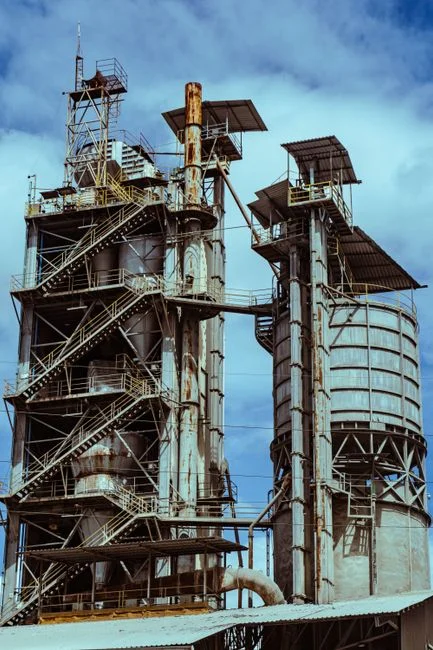
Poultry slaughterhouse wastewater can carry feathers, meat particles, offal, tissue, grit, blood, proteins, FOG, cleaning chemicals, nutrients, and biological material, as identified in the supplied poultry-treatment research. These fractions affect equipment fouling, biological treatability, gas production, sludge quantity, and the treatment required before discharge.
Screening is the first protection for pumps, aerators, carrier-retention screens, and downstream solids equipment. Coarse meat and offal should not be allowed to enter the biological stage, while fibrous feathers require an appropriate removal approach. A GX rotary bar screen for fibrous poultry solids should be selected from measured debris and solids characteristics rather than by nominal plant flow alone.
Equalization is an active process unit because production-day and batch-discharge peaks can pass directly into the biological reactor. Rusten et al. (1998) placed aerated equalization before both MBBRs. A mass balance should therefore span production days, night shifts, cleaning operations, and batch releases, including flow, equalized COD, ammonia, TSS, FOG, pH, temperature, and conductivity.
| Treatment decision | Required evidence | Design consequence |
|---|---|---|
| Source segregation and recovery | Stream-by-stream flow and COD inventory; recoverable-material observations | Exclude clean or recoverable streams where practical; assign remaining duties to treatment |
| Screening | Debris observations, TSS profile, screen capacity basis | Protect pumps, carriers, aerators, and downstream solids equipment |
| Equalization | Continuous flow and COD records plus batch and peak-hour profiles | Damp hydraulic and organic peaks before MABR |
| DAF | FOG, TSS, floatability, recoverability, and pH data | Remove FOG and solids where justified; define float and sludge destinations |
| MABR | Equalized mass balance and pilot response | Separate organic-load removal from nitrogen-removal duties |
| Downstream treatment | Permit basis, reuse requirements, final solids route | Select clarification, nutrient treatment, reuse treatment, or sewer discharge as applicable |
DAF should be evaluated where the wastewater contains recoverable floatable material. Del Nery et al. (2007) provides direct poultry operating evidence, but its reported removals must not be generalized to another plant without matching FOG, TSS, and hydraulic conditions. A high-efficiency sedimentation tank or other solids-separation stage may then be needed. If residuals require dewatering, the plate-frame filter press for downstream solids handling can be evaluated against the characteristics and authorized destination of the generated solids.
Size the MABR from an Equalized COD Mass Balance
MABR reactor volume must follow a traceable COD mass balance; it cannot be selected from a published removal percentage. Required inputs include average and peak flow, equalized COD concentration, selected volumetric organic loading rate, hydraulic retention time, reactor volume, wastewater temperature, pH, nutrient balances, and the treatment objective.
The calculation path is:
- Calculate daily COD mass as flow multiplied by COD concentration.
- Apply the selected volumetric organic loading rate to derive reactor volume.
- Check the resulting HRT against the selected process objective.
- Test peak-hour and batch conditions independently after equalization.
Rusten et al. (1998) reported 30–45 kg COD/m³·d on MBBR1 at 250 m²/m³ in poultry processing. Use that as a documented poultry comparison point, not as a default MABR loading rate or evidence that MBBR performance transfers directly to MABR.
| Calculation or design item | Supplier disclosure required | Buyer audit check |
|---|---|---|
| Daily COD mass | Average flow, equalized COD concentration, calculation period | Confirm measured inputs and consistent units |
| Reactor volume | Selected volumetric loading rate and derivation | Do not accept an unexplained removal percentage |
| HRT | Active reactor volume and hydraulic calculation | Separate active volume from total tank volume |
| Carrier basis | Type, nominal specific area, fill fraction, active carrier volume, geometry | Identify how the area and fill assumptions enter the calculation |
| Aeration and retention | Mixing method, expected air demand, retention-screen design | Check service access and removal provisions |
| Nutrient objective | Ammonia, nitrogen, alkalinity, and pH basis | Do not infer nutrient removal from COD-removal capacity |
Organic-matter removal and nitrogen removal are different design objectives. The 2024 MABR paper addresses nitrogen removal in poultry-slaughterhouse post-treatment, but the supplied research does not provide enough detail to transfer its reactor conditions to another site. Require pilot evidence using the selected wastewater, temperature, carrier configuration, aeration arrangement, and intended loading range.
Peak behavior must also be explicit. An acceptable daily average does not establish that a concentrated batch will remain within the biological and aeration envelope after equalization. The supplier should present average, peak-hour, batch, temperature, pH, and nutrient conditions rather than relying on one annual COD average.
Select Carriers, Aeration and Redundancy for Continuous Operation

Carrier selection is a process decision, not a catalog comparison. For MABR used with poultry wastewater, evaluate specific surface area, mixing behavior, abrasion resistance, biofilm retention, cleanability, and compatibility with the site’s solids, FOG, temperature, and pH. The supplier must identify how nominal area relates to the area actually available under the proposed fill fraction and reactor configuration.
Do not adopt a fill fraction from an unrelated industry. The poultry MBBR study cited in the research provides specific surface area and organic-loading data, but it does not establish a universal MABR carrier media fill fraction. Because carrier fill can affect mixing, aeration, biofilm development, and solids capture, require a pilot comparison when organic removal and nutrient removal are both objectives.
Aeration must be demonstrated under the expected organic load. The review should state how carrier distribution, dead zones, biofilm condition, foaming, odor, and solids carryover will be observed during startup and normal operation. Tank geometry alone is not evidence of adequate mixing. The supplier should demonstrate the arrangement with the selected carrier and operating range.
Continuous operation also requires maintainability. Assess redundancy for blowers, pumps, controls, carrier-retention screens, equalization aeration, and essential pretreatment equipment. Isolation or bypass provisions should allow a stage to be serviced without redesigning the headworks or transferring an uncontrolled load to the remaining biological stage.
Where chemical conditioning is considered, the automatic chemical dosing system should be evaluated as part of the complete process. Its need, dose control, containment, and downstream effect on biological treatment and residuals must be established through plant data rather than assumed from pretreatment selection.
Prove Performance Before the Full-Scale Commitment
A pilot converts generic MABR claims into project-specific evidence. Use representative poultry wastewater rather than synthetic feed alone, with the proposed carrier, fill fraction, aeration arrangement, operating loads, and representative equalized wastewater characteristics.
Acceptance coverage should include filtered and total COD, ammonia and nutrient removal where applicable, biofilm stability, carrier movement, dissolved-oxygen response, foaming, odor, solids carryover, and response to load changes. Numerical acceptance targets must follow from the client’s required effluent, test methods, sampling frequency, and acceptance load; the supplied research does not establish universal MABR acceptance values for poultry plants.
| Commissioning stage | Evidence to collect | Transition requirement |
|---|---|---|
| Startup and carrier wetting | Equipment checks, carrier distribution, screen and blower operation | Correct mechanical and hydraulic defects before biological startup |
| Biofilm seeding | Attachment observations and startup sampling | Confirm establishment on the selected carrier |
| Aeration ramp-up | Air-flow, dissolved oxygen, mixing, foaming, and odor observations | Reach the defined biological operating condition |
| Performance stabilization | Repeatable COD, nutrient, solids, and solids-carryover results | Meet the agreed acceptance load and test protocol |
| Permit and sewer acceptance | Approved discharge route, monitoring, reporting, and solids destination | Do not place equipment in service based solely on biological performance |
The commissioning plan should define monitoring locations, sample types, frequencies, test methods, alarm responses, load-reduction actions, and the transition into normal operation. The industrial ETP and DAF selection guide provides useful context for evaluating integrated industrial treatment, while site acceptance criteria must remain project-specific.
Treatment performance and discharge authorization are separate. The supplied research identifies 40 CFR Part 432 and NPDES requirements for covered direct dischargers, but it provides no universal site limits. Confirm the current discharge route, applicable permit conditions, monitoring requirements, and authorized solids destination rather than assuming that historical precedent permits current operation.
Write a Supplier Proposal That Can Be Audited
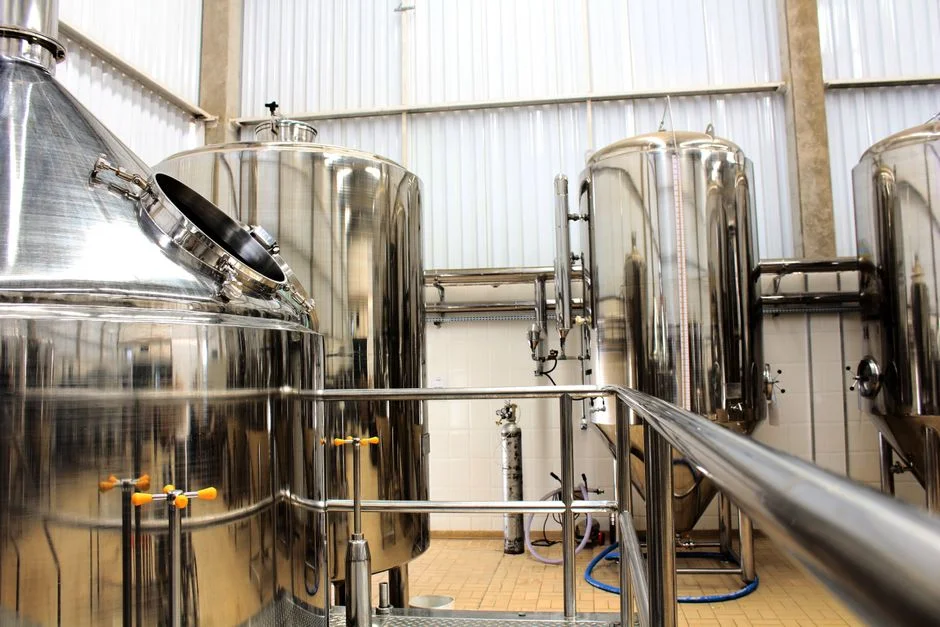
A comparable MABR proposal must expose its design basis before price is considered. Each bidder should disclose design flow, wastewater-characterization method, equalized COD basis, selected loading rate, HRT, carrier type, nominal specific biofilm surface area, fill fraction, reactor volume, and aeration arrangement. Without those inputs, a headline removal percentage cannot be audited.
Ask for references in poultry, slaughterhouse, food processing, or genuinely comparable high-strength organic wastewater. For every reference, require the inlet condition, process scope, operating load, measured result, and relevance to the proposed MABR duty. A historical poultry installation provides context; it does not replace project-specific verification.
| Proposal item | Required disclosure | Commercial comparison question |
|---|---|---|
| Design basis | Flow, equalized COD, loading rate, HRT, reactor volume | Can the calculation be reproduced independently? |
| Carrier and aeration | Carrier type, area basis, fill fraction, mixing, retention screens | Is the stated operating envelope tied to the selected equipment? |
| Performance guarantee | Defined influent and effluent parameters, methods, frequency, remedies | What exactly is guaranteed, and under which load? |
| Complete scope | Screening, equalization, DAF, aeration, blowers, controls, sampling, solids handling, commissioning | Which exclusions create plant cost or performance risk? |
| O&M | Carrier inspection, biofilm, foaming, odor, fouling, access, solids removal | Are responsibilities and maintenance access clearly assigned? |
| Compliance | Permit matrix and authorized solids route | Does the supplied process align with the actual authorization? |
Require a parameter-specific guarantee tied to defined influent and effluent conditions, test methods, sampling frequency, and remedy provisions. Clarify whether screening, equalization, DAF, aeration, blowers, controls, carrier-retention screens, sampling points, downstream solids handling, and commissioning are included. The O&M submission should address carrier movement, biofilm condition, foaming, odor, aerator fouling, maintenance access, and downstream solids removal.
Compare proposals by complete treatment scope, operating envelope, evidence quality, and lifecycle responsibility—not reactor price or percentage removal alone. The buyer should also request the inputs required for a defensible cost comparison: site flow and load basis, treatment scope, civil and equipment boundaries, utility requirements, solids route, commissioning obligations, and guarantee remedies. Without those inputs, no reliable price or cost-per-treated-load can be stated.
Frequently Asked Questions
How should MABR reactor volume be sized for poultry processing wastewater?
Calculate daily COD mass from measured flow and equalized COD concentration, then derive reactor volume from a selected volumetric loading rate and verify the resulting HRT. Rusten et al. (1998) used 30–45 kg COD/m³·d on MBBR1 in poultry processing, but that MBBR study condition is not an MABR default. Peak-hour and batch releases require separate checks.
What should a buyer check when selecting an MABR supplier?
Request the complete design basis, carrier and aeration data, pilot evidence under representative wastewater, downstream treatment scope, parameter-specific guarantee, and comparable references with inlet conditions and measured results. Also require a clear O&M allocation and remedy provisions if guaranteed performance is not achieved.
Should MABR or MBBR be selected for biological pretreatment?
The supplied poultry-specific MBBR evidence is broader but addresses a different reactor system, while the 2024 MABR study directly addresses poultry post-treatment and nitrogen removal. Do not transfer MBBR loading or removal results to MABR. Use the available full papers to define a pilot comparison with the same wastewater, objectives, and acceptance protocol.
Does treatment performance establish discharge compliance?
No. Treatment performance and discharge authorization are separate. The supplied research identifies 40 CFR Part 432 and NPDES requirements for covered direct dischargers but provides no universal site limits. Obtain the current permit, sewer acceptance conditions, applicable monitoring requirements, and authorized solids destination before selecting the final treatment train.