What MBBR Can Achieve in Poultry Processing Wastewater
MBBR for poultry processing wastewater is a biological pretreatment option in which carrier media remain suspended in motion and support an attached microbial population. In the poultry-specific study by Rusten et al., published in Water Science and Technology in 1998, an aerated equalization tank was followed by two high-rate moving bed biofilm reactors in series. At 250 m²/m³ of specific biofilm surface area and 30–45 kg COD/m³·d volumetric organic loading on MBBR1, filtered COD removal reached as high as 80% over MBBR1 and 90–95% across both reactors. The installation had no solids separation or sludge handling, so the result cannot be treated as a complete poultry-plant effluent guarantee.
That boundary matters because “filtered COD” excludes suspended material measured in the filtrate. The cited study used this metric in a pretreatment arrangement, whereas final permit compliance may also depend on total COD, suspended solids, oil and grease, nutrients, and the authorized solids-disposal route. The larger MBBR design for food processing wastewater should therefore be developed around a complete treatment train, not around the headline removal percentage alone.
Results from laundry, textile, tannery, and other wastewaters are supporting context, not poultry performance guarantees. For example, the Applied Water Science review reports high removals for several non-poultry applications and emphasizes that reactor performance depends on wastewater characteristics, carrier properties, fill fraction, loading, and hydraulic retention time. Likewise, the 2019 laundry study by Kusuma et al. used Kaldnes K1 media at 20% fill, a 15-day seeding period, and treatment periods of 6, 8, and 10 days. Those conditions cannot be transferred directly to a poultry slaughterhouse.
| Evidence scope | Documented result | Design interpretation |
|---|---|---|
| Poultry processing, Rusten et al., 1998 | Up to 80% filtered COD removal over MBBR1; 90–95% across two reactors | Direct poultry pretreatment evidence at 250 m²/m³ and 30–45 kg COD/m³·d on MBBR1 |
| Poultry slaughterhouse, del Nery et al., 2007 | 67% total COD and 85% soluble COD removal after DAF and two UASB reactors | Alternative full-scale route; treated nutrients still indicated a need for advanced treatment |
| Cross-industry review, Applied Water Science, 2022 | Reported maximum BOD, COD, total phosphorus, and total nitrogen removals of 97%, 96%, 99%, and 99% at 2–6 h HRT | Context for comparing technologies, not expected poultry effluent |
Build the Treatment Train from the Wastewater Source
A defensible sequence starts with source segregation and recovery, then screening, equalization, FOG and suspended-solids treatment, MBBR biological pretreatment, solids separation where required, and final treatment. MBBR should receive a controlled, biologically treatable load; it should not be used to compensate for unchecked batch discharges or a headworks that passes rags and free oil into the reactor.
- Source segregation: recover blood, feathers, viscera, and process-water streams where practical, then characterize what remains in the wastewater stream.
- Screening: remove feathers, fibrous material, plastics, and other solids before pumps and biological equipment.
- Equalization: damp flow and organic-load peaks, including batch releases from clean-in-place and wash-water operations.
- FOG and solids control: recover free oil and remove settleable or floatable material that could interfere with aeration and carrier movement.
- MBBR pretreatment: remove biodegradable organics before downstream clarification, polishing, or reuse treatment.
- Solids separation and final treatment: match the route to permit objectives and reuse requirements.
Do not assume a published poultry profile applies to a specific plant. Blood, feather, viscera, wash-water production, and process-water reuse can change the load materially. Require sampling across production days and night shifts, including batch-discharge peaks. The minimum analytical request should cover flow, pH, temperature, soluble COD, ammonia, total suspended solids, FOG, and conductivity, with enough sampling frequency to establish averages and peaks.
The full-scale poultry slaughterhouse evidence in del Nery et al. (2007) supports including FOG and solids control before anaerobic biological treatment: DAF removed 51±16% of oil and grease and 37±16% of suspended solids, while the downstream UASB route left nutrient concentrations that pointed to a need for advanced wastewater treatment. For an MBBR train, DAF pretreatment for poultry wastewater can be evaluated for recoverable oil and solids, while rotary screening for poultry processing wastewater addresses fibrous debris that could foul downstream equipment.
| Stage | Primary design question | Required evidence |
|---|---|---|
| Source control | Which streams can be recovered or segregated? | Flow and COD inventory by production stream |
| Screening | What solids could reach pumps or carriers? | Debris observations, TSS profile, screen duty |
| Equalization | How large are batch and peak-hour loads? | Continuous flow and COD record |
| DAF/FOG control | What oil and floatable solids must be removed? | FOG, TSS, and recoverable-solids analysis |
| MBBR | What loading and HRT can be sustained? | Equalized COD, pilot response, oxygen and mixing data |
| Downstream | Which solids and pollutants remain? | Permit basis and solids-management route |
Select Carrier Media, Fill Fraction, and Oxygen Supply

Carrier selection is a process decision, not a catalog comparison. Evaluate available specific biofilm surface area, mixing behavior, abrasion resistance, biofilm retention, cleanability, and compatibility with the wastewater’s solids, FOG, temperature, and pH. The poultry study’s 250 m²/m³ provides a documented benchmark for proposal comparison; it does not establish that one carrier type is universally correct.
The Applied Water Science review reports a 30–70% carrier-filling range and states that MBBR efficacy generally relies on filling around 60–70% of the reactor’s empty volume. It also distinguishes objectives: organic-matter removal can improve at 50–60% filling, while nutrient removal can be more effective at 30–40%. If the duty includes COD plus nitrogen or phosphorus removal, require a pilot comparison rather than applying a single fill fraction.
Kusuma et al. (2019) provide a media-filling example, not direct poultry evidence. Their laundry study used Kaldnes K1 at 20% fill, seeded the media for 15 days, and evaluated treatment at 6, 8, and 10 days. It therefore supports testing fill fraction and biofilm establishment, but not predicting poultry COD removal. The broader IFAS media sizing and process parameters provides useful comparison context for suspended-media systems.
Aeration must maintain carrier movement, aerobic conditions, and effective mass transfer at the selected load. Tank geometry alone is not proof of mixing performance. Require the supplier to demonstrate the arrangement under the expected organic load, and define acceptance observations for carrier distribution, dead zones, biofilm condition, foaming, and solids carryover. The additional pretreatment requirements before MBBR should be reviewed together with the selected media.
| Selection item | Evidence-based reference point | Bidder must state |
|---|---|---|
| Specific biofilm surface area | 250 m²/m³ in Rusten et al., 1998 poultry study | Carrier type, nominal area, and calculation basis |
| Fill fraction | 30–70% reported by Applied Water Science, 2022 review; efficacy often associated with 60–70% | Actual carrier volume, empty reactor volume, and selected fraction |
| Objective-specific filling | Review notes stronger organic-matter removal at 50–60% and nutrient removal at 30–40% | Separate treatment objectives and pilot basis |
| Mixing and aeration | Not quantified in the poultry study abstract | Air demand, mixing method, and expected carrier movement |
Size the Reactor from Site Data and Pilot Evidence
Reactor sizing begins with a mass-load calculation, not a generic COD-removal percentage. Establish average and peak flow, equalized COD concentration, selected volumetric organic loading rate, and resulting reactor volume. Rusten et al. (1998) documented 30–45 kg COD/m³·d on MBBR1 at 250 m²/m³ in poultry processing. Use that as a documented study condition and comparison point, not a default design load for every plant.
The Applied Water Science review reports maximum BOD, COD, total phosphorus, and total nitrogen removal efficiencies of 97%, 96%, 99%, and 99% for municipal and industrial wastewater at a 2–6 h hydraulic retention time. These are cross-industry review results, not expected poultry outlet values. The supplier should show the calculation path from site COD and flow to volume, HRT, and loading; a single HRT or efficiency claim is insufficient.
Build the daily and peak-hour COD mass balance after equalization. Check whether batch discharges remain concentrated after mixing and whether the equalization system can damp them sufficiently. A reactor sized from an average flow may fail when a large batch is released, even if daily mass loading appears acceptable.
Pilot testing should verify performance under representative wastewater rather than synthetic feed alone. Acceptance criteria should cover filtered COD removal, total COD, biofilm stability, carrier movement, foaming, odor, solids carryover, and response to loading changes. Set the numerical performance target only after the client defines the required effluent, test methods, and acceptance load.
Include expansion and isolation criteria in the brief. If a two-stage arrangement is proposed, define how stages can be expanded, bypassed, or isolated for maintenance without redesigning the complete headworks. Clarify redundancy for blowers, pumps, recirculation, control, and essential pretreatment equipment.
| Sizing step | Required site input | Output |
|---|---|---|
| Characterization | Continuous flow; COD, TSS, FOG, ammonia, pH, temperature, conductivity | Average and peak mass load |
| Equalization check | Batch-discharge and peak-hour profiles | Damped design influent |
| Reactor calculation | Selected loading rate and HRT | Stage volumes and surface area |
| Verification | Representative pilot operation and sampling plan | Acceptable load, performance, and operating envelope |
| Future growth | Expansion trigger and load forecast | Isolation, redundancy, and expansion provisions |
Compare MBBR with Competing Treatment Routes
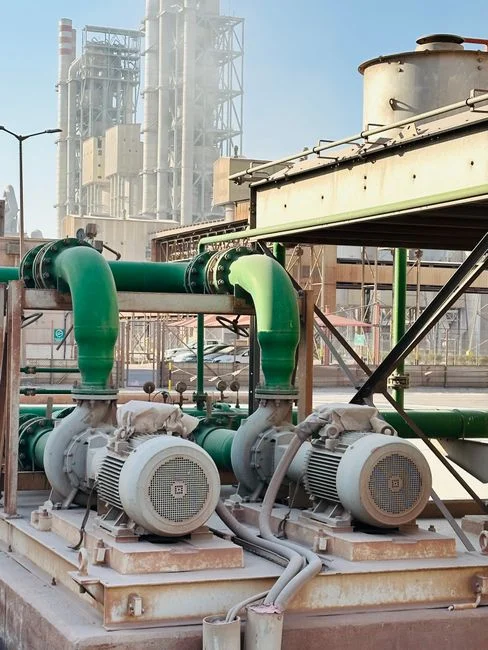
MBBR is most defensible when the objective is high-rate biological pretreatment and the downstream solids route is already defined. The alternative biological process, solids inventory, footprint, reuse requirements, and operating burden determine which route fits—not a single removal percentage.
In the full-scale poultry slaughterhouse plant evaluated by del Nery et al. (2007), DAF followed by two UASB reactors achieved 67% total COD removal and 85% soluble COD removal. The treated nutrient concentrations still indicated a need for advanced wastewater treatment. By contrast, Rusten et al. (1998) reported 90–95% filtered COD removal across two MBBRs, but the poultry installation did not include solids separation or sludge handling. The two studies therefore describe different process scopes and cannot be compared without normalizing the inlet, metric, and treatment train.
MBBR and membrane bioreactors are not direct substitutes. MBBR uses suspended carrier media with attached biomass; an MBR combines biological treatment with membrane filtration. For projects requiring a defined solids stream and membrane-level separation, the integrated MBR treatment system provides a different process architecture. Where clarification is sufficient, the lamella clarifier can be evaluated for solids separation using sludge recirculation, flocculation, and inclined plates, with stated surface-loading rates of 20–40 m/h.
| Route | Organic-load role | Solids separation | Key selection issue |
|---|---|---|---|
| MBBR | High-rate biological pretreatment | Not inherently provided | Define downstream solids and final-treatment route |
| UASB | Anaerobic organic-load removal | Requires downstream solids management | Assess nutrient-bearing effluent and advanced-treatment need |
| Activated sludge | Biological treatment | Requires secondary clarification | Compare biomass handling, footprint, and operating control |
| MBR | Biological treatment with membrane filtration | Integrated membrane separation | Select where filtration and a concentrated solids stream are required |
Specify Controls, Maintenance, and Downstream Solids Handling
An MBBR train is operable only when upstream equipment, biological conditions, and downstream residuals are managed as one system. Agree monitoring locations, frequencies, alarm responses, and sampling methods during commissioning. The core measurements are flow, pH, dissolved oxygen, temperature, COD, ammonia, and indicators of biomass condition. Define what triggers load reduction, increased aeration, carrier inspection, or shutdown.
The maintenance plan should cover screening, equalization aeration, DAF skimming, carrier inspection, pumps, blowers, controls, and downstream solids handling. Assign responsibility for each task and state the required frequency. In Rusten et al. (1998), equalization preceded the two MBBRs, supporting the use of load damping before biological treatment. Equalization should therefore be treated as an active process asset, not simply an empty storage tank.
If a dewaterable sludge cake is required, the plate-and-frame filter press can be evaluated for downstream solids dewatering; stated filtration areas range from 1 m² to 500 m², with manual, hydraulic, and fully automatic PLC-controlled operation. The final selection must follow from the solids characteristics generated by screening, DAF, and biological separation.
Commissioning should distinguish startup, carrier wetting, biofilm seeding, aeration ramp-up, and performance stabilization. Each stage needs acceptance observations and a defined transition to normal operation. The poultry MBBR study discharged solids to the municipal sewer with the pretreated wastewater, but a new project must verify current authorization for that route rather than assume historical precedent permits current discharge.
| Commissioning stage | Main verification | Required record |
|---|---|---|
| Startup and wetting | Carrier distribution, retention screens, pump and blower operation | Equipment checks and operating trends |
| Seeding | Biofilm attachment and initial growth | Biomass observations and sampling results |
| Aeration ramp-up | Carrier movement and dissolved-oxygen response | Air-flow, DO, and loading records |
| Stabilization | Repeatable COD removal and solids handling | Composite and grab-sample results |
| Authorization | Permit and sewer acceptance for final discharge and solids | Approved route and operating conditions |
A Practical Equipment-Selection and Compliance Checklist
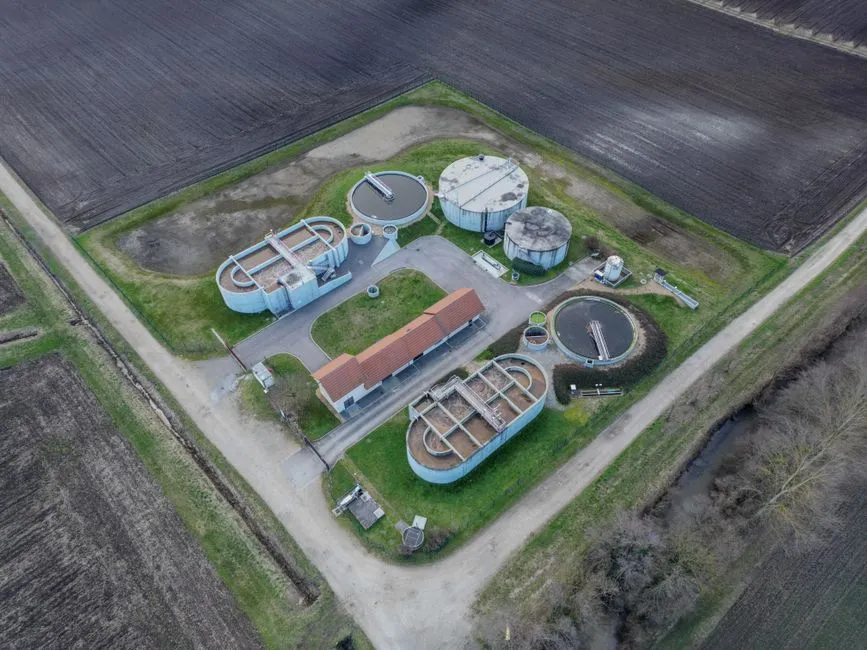
A technical proposal should expose its design basis before comparing price. Require the bidder to state design flow, wastewater-characterization method, equalized COD basis, target volumetric organic loading rate, HRT, carrier type, specific biofilm surface area, fill fraction, and reactor volume. If values are not supplied, the proposal is not auditable.
Ask for references in poultry, slaughterhouse, food processing, or genuinely comparable high-strength organic wastewater. Separate relevant projects from unrelated MBBR installations, and ask for the inlet condition, process scope, operating load, and measured result behind each reference. The 1998 poultry study is useful technical context because it identifies the reactor arrangement, surface area, loading, and filtered-COD result, but a historical installation does not replace project-specific verification.
Require a process guarantee tied to defined influent and effluent parameters, test methods, sampling frequency, and remedy provisions. A generic removal percentage is not a guarantee. Also verify whether screening, equalization, DAF, aeration, blowers, controls, carrier-retention screens, sampling points, downstream solids handling, and commissioning are included in the supply scope.
The O&M submission should address carrier movement, biofilm condition, foaming, odor, clogging, aerator fouling, maintenance access, and downstream solids removal. Identify which tasks remain with the plant operator and which require specialist service. The food and beverage plant sewer-limit approach illustrates the broader need to verify acceptance conditions rather than assume a generic treatment target.
Finally, treat permit and sewer acceptance as project-specific checks. The supplied research provides no universal discharge limits, so require a permit matrix covering the proposed flow, pollutants, sampling points, discharge route, solids destination, monitoring, and reporting conditions. A compliant process design still cannot authorize an unauthorized discharge.
| Bid review item | Minimum response | Reason it matters |
|---|---|---|
| Design basis | Flow, COD, equalization, loading, HRT, volume | Allows independent calculation review |
| Media and mixing | Carrier, area, fill, retention, aeration arrangement | Defines the biological operating envelope |
| Performance | Parameter-specific guarantee and test method | Prevents ambiguous removal claims |
| Equipment scope | Included train, controls, blowers, screens, solids handling | Excludes the downstream treatment scope|
| References | Comparable wastewater, load, and result | Tests transferability of experience |
| Compliance | Permit matrix and solids route | Separates treatment performance from discharge authorization |
Frequently Asked Questions
What loading rate and reactor area should be used for MBBR sizing at a poultry processing facility?
Do not size directly from the published poultry result. Rusten et al. (1998) used 30–45 kg COD/m³·d on MBBR1 and 250 m²/m³ of specific biofilm surface area. Use those values as a comparison point, then calculate the project load from measured flow and equalized COD. Pilot testing should establish the acceptable load and operating envelope for the actual wastewater and pretreatment train.
How should an MBBR supplier be selected for a poultry slaughterhouse project?
Require a documented process basis, carrier and fill details, mixing and aeration design, parameter-specific performance criteria, controls scope, comparable references, and commissioning provisions. Check whether references involve poultry or comparable high-strength food-processing wastewater, and ask for their inlet load, process scope, and test method. Do not treat an unrelated laundry, textile, or municipal MBBR reference as a poultry guarantee.
What information is needed for a defensible MBBR cost and lead-time quotation?
The supplied research contains no cost or lead-time figures, so a numerical price or delivery date would be unsupported. Request design flow, wastewater analysis, production and batch-discharge profile, pretreatment scope, biological and downstream-treatment requirements, solids-disposal route, and required redundancy. Without those inputs, compare scope and exclusions rather than rank offers by headline price.
Does high filtered COD removal demonstrate that the MBBR effluent is authorized for discharge?
No. Treatment performance and discharge authorization are separate decisions. The poultry MBBR study reported up to 90–95% filtered COD removal across two reactors, but it had no solids separation or sludge handling. Require a project-specific permit review covering the final effluent parameters, solids destination, sewer acceptance, monitoring, and reporting conditions.