What MBBR Brings to a Food Processing Wastewater Plant
MBBR is a biological treatment process that retains microorganisms on moving carrier media while aeration keeps the carriers in suspension. For food processing wastewater, it can suit biodegradable organic loads, including dairy and cleaning-water streams, provided the wastewater is characterized and variable loads are controlled. In a 2019 laundry study, MBBR with Kaldnes K1 media at 20% fill reduced COD from 910 mg/L to 56.3 mg/L and BOD from 441 mg/L to 39.67 mg/L after 10 days. Dairy research also supports MBBR applicability, but MBBR generally needs pretreatment, downstream solids separation, and a site-specific design.
The moving bed biofilm reactor combines suspended biomass with biomass attached to moving carriers. The carriers improve biomass retention and distribute microbial activity through the reactor, giving the biological process more operating flexibility than a purely suspended-growth system. According to the 2020 Energy Reports study Moving bed biofilm reactor (MBBR) for dairy wastewater treatment, MBBR can require less space than conventional activated sludge for the same treatment capacity and may be adapted to an existing activated-sludge structure.
For a food plant, MBBR is a credible biological core where the objective is removal of biodegradable organics, with nutrient removal considered when the waste stream, reactor zoning, and operating controls support it. Dairy transformation and cleaning water are directly covered by the Energy Reports study. More broadly, the 2022 review Recent advances in application of moving bed biofilm reactor for wastewater treatment identifies MBBR applications for industrial wastewater containing biodegradable organics and nutrients under suitable operating conditions.
The boundary is equally important. MBBR does not replace screening, equalization, FOG removal, pH control, or wastewater solids separation. The 2022 review reports that MBBR can require more energy than sequencing batch reactor for carrier suspension, performs less effectively at high organic flux, and may develop stagnant zones. It also identifies an additional suspended-solids separation requirement. A study showing BOD or COD removal establishes biological performance within that study; it does not establish that the final effluent meets a food plant’s discharge permit or reuse specification.
For a broader process comparison, see MBR process design for pet food wastewater and process design for animal feed wastewater.
Food Processing Effluent: What Must Be Characterized First
A representative wastewater profile is the first gate for MBBR procurement, because concentration data alone cannot define reactor loading or required pretreatment. Build sampling around production, cleaning, product changeover, and discharge cycles rather than relying on one grab sample. Request flow, COD, BOD, TSS, pH, temperature, FOG, nutrients, and constituent data relevant to the products, cleaners, and operating schedule.
Cleaning chemistry must be separated from ordinary production wastewater. The 2019 Tanjungpura University laundry study identifies surfactants, carboxymethyl cellulose, calcium, phosphate, silicate, and bleach-related inputs in the tested stream. Those constituents explain why a general “industrial wastewater” label is inadequate: each may affect biodegradability, precipitation, solids loading, or the biological process differently.
Dairy wastewater is also not a universal proxy for other food-processing plants. The 2020 Energy Reports study characterizes wastewater from milk transformation and cleaning as containing high organic matter and hydrocarbon compounds and describes it as normally biodegradable. A dry or low-water-use food plant may instead produce intermittent washdown streams with concentrations that differ sharply from dairy effluent.
Require the supplier to classify constituents as readily biodegradable, potentially inhibitory, or requiring removal or a different treatment route. Then require a wastewater mass and load balance covering hydraulic peaks, production schedules, cleaning events, and discharge routing. Concentration ranges alone will not establish the required reactor volume.
| Design input | What to request | Decision supported |
|---|---|---|
| Flow and timing | Production, washdown, changeover, and discharge flow records with sampling duration | Equalization and hydraulic peak treatment |
| Organic load | COD and BOD concentrations and mass per production cycle | Organic loading and reactor sizing |
| Solids and FOG | TSS, settleable solids, FOG, and material excluded from or recovered to the biological reactor | DAF, screening, separation, and sludge handling |
| Cleaning chemistry | Surfactant, disinfectant, sanitizer, pH, and product-changeover information | Equalization, inhibition risk, and biological compatibility |
| Treatment objective | Discharge permit, reuse specification, constituent limits, and required sampling points | Final treatment, polishing, and acceptance criteria |
For physical removal steps, evaluate DAF pretreatment for food processing wastewater and rotary mechanical bar screening as separate duties rather than assuming either belongs inside the MBBR.
The Treatment Train That Makes MBBR Work
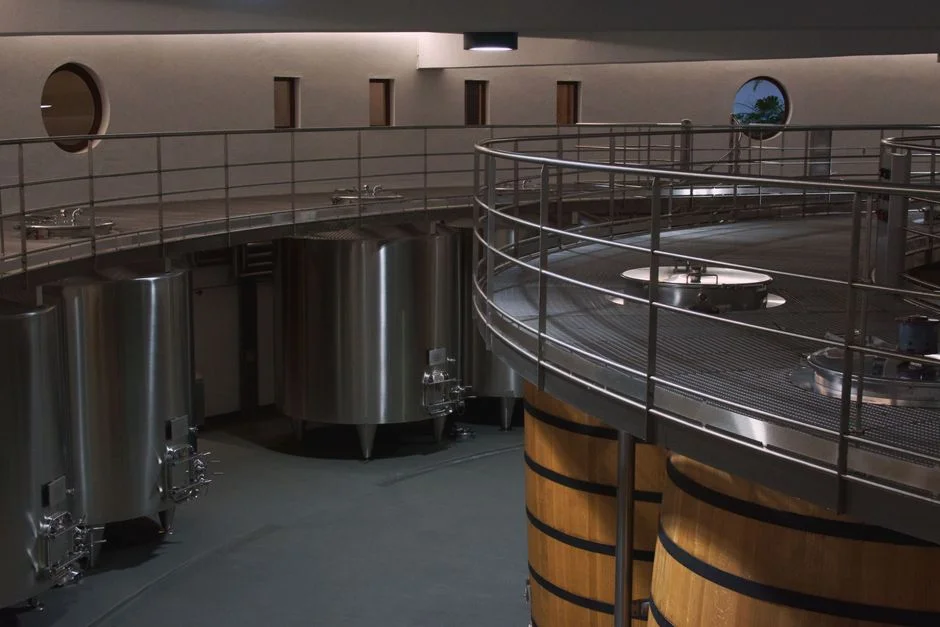
The MBBR should sit inside a controlled biological treatment train, not at the head of an untreated and highly variable waste stream. A practical sequence is:
- Collect and segregate production, washdown, and cleaning streams where practical.
- Screen out rags, plastics, packaging fragments, and fibrous debris.
- Equalize flow, concentration, temperature, and pH; apply chemical dosing where required.
- Remove FOG, oil and grease, colloids, or excessive suspended solids where they could impair the biological process.
- Treat biodegradable organics in the MBBR, with additional anoxic or aerobic zones if required for the treatment objective.
- Separate biological solids downstream.
- Apply final polishing or disinfection where the permit or reuse specification requires it.
DAF has a specific pretreatment role: removing suspended solids, FOG, oil and grease, and colloidal matter that could otherwise increase biological loading or interfere with carrier movement. The DAF system for food processing wastewater should therefore be evaluated as part of the liquid and solids treatment train. It does not replace the MBBR.
Screening has a different function. The rotary mechanical bar screen protects downstream pumps, aeration equipment, and biological media from gross solids. Equalization then controls hydraulic shock and the load presented to the reactor. These units reduce equipment-protection and load-control risks; they do not guarantee biological performance.
Some contaminants require a physicochemical barrier rather than relying on biological degradation. The 2022 review explains that complex industrial wastewater can contain toxic, persistent, or non-biodegradable constituents, so biological and physicochemical stages may need to be combined. For pH correction or other chemical demands, define the automatic chemical dosing system duty and its control interlocks with the supplier.
MBBR Design Parameters for Variable Food Plant Loads
Reactor design should be based on a wastewater load balance and the vendor’s calculation for each operating case, not on a generic tank-volume rule. The 2022 review identifies the principal design variables as hydraulic loading rate, organic loading rate, hydraulic retention time, sludge retention time, pH, temperature, carrier type, filling ratio, reactor configuration, microbial population, biofilm thickness, attached and suspended biomass, and aeration extent.
| Parameter | Evidence or design requirement | Buyer’s verification |
|---|---|---|
| Biocarrier filling ratio | The 2022 Applied Water Science review describes 60–70% as the general efficacy range and 30–70% as an operating range, while reporting study-specific fractions from 20% through 70%. | Require the proposed fraction, reactor basis, carrier type, mixing calculation, and operating envelope. |
| Carrier and biofilm | The 2019 Tanjungpura University study used Kaldnes K1 at 20% fill; the authors identified fill volume, treatment duration, and media type as variables requiring further research. | Do not transfer the laundry result directly to a food plant. |
| Loading and residence time | HLR, OLR, HRT, and SRT are identified as performance controls in the 2022 review. | Require peak and average cases linked to the production and cleaning mass balance. |
| Reactor environment | pH and temperature affect biological activity; the 2022 review also identifies reactor configuration and microbial population as design variables. | Define adjustment duty, zoning, seasonal conditions, and the intended microbial process. |
| Aeration and mixing | Aerators provide oxygen and carrier movement; the review notes that MBBR may require more energy than SBR for suspension and may develop stagnant zones. | Review DO, airflow, circulation, energy demand, and dead-zone controls. |
| Attached and suspended solids | Biofilm thickness, attached biomass, and suspended biomass influence treatment; downstream solids separation remains necessary. | Define biomass control, excess-biofilm removal, and solids handling. |
The Applied Water Science review reports polypropylene MBBR tanks with filling ratios of 30–50% as successful for organic-matter removal from dairy wastewater. That is a dairy-specific observation, not a universal optimum for every food-processing effluent.
Controls should cover equalization level, feed pumping, dissolved oxygen, airflow, pH, temperature, and carrier movement. The maintenance plan should also address biofilm excess, carrier fouling, downstream solids accumulation, and access to submerged components. Relevant replacement items and filtration components should be defined in the commercial scope; the treatment parts, valves, and filter media scope should not be left as an undefined allowance.
What the Published Performance Data Actually Shows
Published MBBR results are useful for identifying plausible performance and test variables, but each result remains bounded by its wastewater, reactor, media, and operating conditions. Published removal percentages cannot be converted into a food plant guarantee without representative testing.
| Source | Wastewater scope | Media and condition | Reported result | Buyer must still verify |
|---|---|---|---|---|
| Tanjungpura University, 2019-01-10 | FRESCO laundry wastewater | Kaldnes K1, 20% fill, 15-day seeding, 10-day treatment | COD: 910 to 56.3 mg/L; reported effectiveness 93.81% | Biodegradability of plant cleaners, actual load, carrier movement, and final solids removal |
| Tanjungpura University, 2019-01-10 | FRESCO laundry wastewater | Same study conditions | BOD: 441 to 39.67 mg/L, 91%; phosphate: 38.24 to 5.31 mg/L, 86.10%; surfactant: 47.8 to 5.62 mg/L, 88.22% | Relevant surfactant and nutrient inputs, permit limits, and whether the food-plant stream is comparable |
| ScienceDirect review, 2022 | Commercial laundry wastewater reviewed as a field application | Review-level field evidence | BOD5 removal of 95–98% and COD removal of 89–94% | Applicability to food-processing effluent and separate downstream solids performance |
| Applied Water Science review, 2022 | Municipal and industrial wastewater | HRT of 2–6 h in the cited review results | Maximum reported efficiencies of 97% BOD, 96% COD, 99% total phosphorus, and 99% total nitrogen | Feed composition, carrier filling, reactor scale, biomass condition, and site-specific treatment objective |
The two laundry datasets must not be conflated. The 2019 study reports exact concentrations for FRESCO laundry wastewater under its stated Kaldnes K1 conditions, while the 2022 review presents broader commercial-laundry field ranges. The Applied Water Science figures likewise describe maximum reported efficiencies across municipal and industrial contexts, not guaranteed performance for food processing.
The procurement conclusion is direct: use these studies to frame hypotheses, not to set guarantees. A site trial using representative production and cleaning wastewater is the appropriate basis for design confidence. For projects that also require a solids-tight biological outlet, compare the MBBR route with MBR process design for pet food wastewater.
MBBR or MBR for Food Processing Wastewater
The MBBR-versus-MBR decision is principally a solids-separation and operating-priority decision, not simply a comparison of biological removal mechanisms. MBBR retains biomass on carriers but normally sends mixed liquor to a separate clarifier or solids filter. MBR combines biological treatment with submerged membrane filtration, adding solids separation to the reactor package.
| Decision factor | MBBR | MBR |
|---|---|---|
| Biological treatment | Suspended and carrier-attached biomass | Activated-sludge treatment with submerged PVDF membrane filtration |
| Solids separation | Separate clarifier, filter, or other downstream solids unit | Integrated membrane solids separation |
| Physical footprint | Uses a usable tank footprint and separate solids-separation space | Product specification states a footprint 60% smaller than conventional systems |
| Equipment capacity | Requires site-specific hydraulic and organic loading calculations | Product capacity range stated as 10–2,000 m³/day |
| Filtration characteristic | Not applicable as an MBBR feature; downstream solids equipment determines final TSS | Filtration below 1 μm |
| Best fit | Usable tanks, biological treatment flexibility, and willingness to provide separate solids removal | Compact equipment, very low suspended solids, or reuse preparation where membrane solids separation justifies the capital and operating burden |
MBBR is generally easier to discuss when an existing treatment structure can be adapted and the buyer accepts a separate solids-separation unit. MBR becomes more relevant when low suspended solids, compactness, and reuse preparation outweigh membrane capital, maintenance, energy, and operational demands. The MBR alternative with integrated membrane solids separation provides the basis for that comparison.
DAF is not a substitute for either biological process. It normally performs front-end solids, FOG, oil and grease, or colloidal removal. DAF pretreatment for food processing wastewater can protect an MBBR, while MBR provides a different route to integrated biological treatment and solids separation.
Pilot Testing, Commissioning, and Performance Acceptance
A useful pilot tests the actual production and cleaning sequence rather than a homogenized laboratory bottle. The influent should cover production wastewater, washdown, product changeover, and the most demanding cleaning cycle. Require the supplier to state the sampling method, composite or grab-sample basis, sampling duration, and analytical methods; the supplied research does not establish a universal pilot duration.
Set acceptance criteria from the facility’s discharge permit or reuse objective, not from a published removal percentage. The test program should address BOD, COD, TSS, nutrients, FOG, pH, and any regulated constituent relevant to the site. Define when samples are collected, whether they are flow-weighted, and how startup and stabilized operation are separated.
Commissioning should include carrier wetting, biofilm seeding, airflow adjustment, carrier circulation checks, gradual loading, and evidence of biological stabilization before the formal acceptance test. Verify that carriers remain distributed without accumulation, stagnant zones, excessive biofilm shear, or repeated loss from the reactor.
Record aeration demand and downstream solids consequences during variable-load operation. Confirm the final solids-removal step before promising a discharge-quality or reuse-grade result. Depending on the solids stream, evaluate a plate-and-frame filter press or a high-efficiency sedimentation tank as part of the complete solids-handling scope. A successful biological stage is not a complete plant acceptance test if solids handling or final effluent quality remains unresolved.
Questions to Ask Before Ordering an MBBR System
The commercial offer should contain enough evidence for an engineer to audit the design, not only a tank, blower, and media price. Ask for a wastewater characterization report with production-flow ranges, concentration ranges, sampling records, and the client’s permit or reuse criteria.
Require a process and mass-balance drawing covering equalization, pretreatment, MBBR zones, solids separation, sludge handling, controls, and bypass provisions. The drawing should identify flow and load assumptions for every unit.
Request carrier specifications, the proposed biocarrier filling ratio, mixing and aeration calculations, DO control strategy, expected energy demand, maintenance intervals, and biofilm-control provisions. For replacement items, define the scope of the treatment parts, valves, and filter media supply.
Ask for reference installations with comparable wastewater constituents, operating variability, and treatment objectives. Generic dairy or laundry performance is not a substitute for a site-specific pilot or engineering justification. Clarify commissioning obligations, performance guarantees, operator training, spare-parts availability, permit-acceptance responsibility, and exclusions between the equipment supplier and civil contractor.
Frequently Asked Questions
What flow and reactor volume are needed for an MBBR serving a food-processing plant?
No defensible flow or reactor-volume figure can be given without representative flow, COD/BOD, treatment objectives, and site constraints. The design must establish the hydraulic loading rate, organic loading rate, hydraulic retention time, sludge retention time, pH, temperature, carrier type, filling ratio, reactor configuration, and aeration demand identified in the 2022 review. The supplier should show peak and average calculations tied to the plant’s actual production and cleaning schedule.
How should the budget for an MBBR system be evaluated?
Request separate pricing for the MBBR equipment and the complete plant, because equalization, pretreatment, aeration, solids separation, sludge handling, controls, commissioning, and site works may fall outside the reactor package. Ask for capital cost, installation inputs, expected energy demand, media replacement provisions, maintenance responsibilities, operator-training costs, and a priced list of exclusions. No defensible price can be stated without the wastewater characterization, flow and load data, treatment objective, site constraints, and supplier quotation.
What evidence is needed before claiming discharge or reuse compliance?
Require representative production and cleaning wastewater to be tested, with acceptance criteria taken from the site permit or reuse specification. Test BOD, COD, TSS, nutrients, FOG, pH, and applicable regulated constituents. Verify the downstream solids-removal stage separately, because biological BOD or COD removal does not establish final effluent compliance. Published study percentages are evidence for process selection, not a substitute for site acceptance testing.
How should an MBBR supplier be selected?
Require site-specific process design, carrier and aeration substantiation, commissioning support, maintenance documentation, and clear scope boundaries. Evaluate comparable reference installations using the same contaminant and loading basis, and require a pilot plan using representative plant wastewater. Also clarify guarantees, permit-acceptance responsibility, operator training, spare-parts availability, and whether pretreatment and downstream solids separation are included.
Related Equipment
- DAF pretreatment for food processing wastewater — specifications, capacity range, and technical data