Is MBR Suitable for Animal Feed Wastewater?
An MBR can treat animal feed wastewater, but suitability depends on the source stream and pretreatment needs. MBRs combine biological treatment with membrane separation, and can operate under aerobic, anoxic, or anaerobic conditions. Aerobic systems are generally more familiar in industrial wastewater treatment, while anaerobic membrane bioreactors can recover biogas but require tighter feed and fouling control. Solids, fats and oils, high-strength wash water, and variable composition must be characterized before selecting a membrane system.
The 2023 An overview of anaerobic membrane bioreactors defines an MBR as the combination of a membrane component and biological reactor. It reports that this combination improves treated-water quality and is used in domestic, urban, and industrial wastewater treatment. That establishes MBR applicability, but it does not establish compliance with an animal-feed discharge permit. The 2026 EPA membrane bioreactor fact sheet provides the applicable framework for advantages, design features, and design considerations.
Do not characterize the site as one uniform wastewater. Assess process wash water, cleaning wastewater, floor and equipment washdown, urine or manure runoff, and laboratory or off-spec streams separately. Their biodegradable organic load, suspended solids, FOG content, flow variability, and potential chemical inhibition will determine whether they can share a treatment train.
| Plant stream | Primary suitability concern | MBR decision |
|---|---|---|
| Feed processing wash water | Variable biodegradable organics and wash chemicals | Evaluate after sampling across production and cleaning cycles |
| Cleaning wastewater | Detergents, sanitizers, and concentration peaks | Test for biological inhibition; segregate if necessary |
| Floor and equipment washdown | Suspended solids and settled feed residues | Provide solids removal before biological treatment |
| Urine or manure runoff | High solids, nutrients, and variable organic loading | Determine whether dedicated treatment is more appropriate |
| Laboratory or off-spec streams | Possible toxic or inhibitory constituents | Do not combine without a compatibility assessment |
MBR is most compelling where the outcome requires solids separation, compact equipment, high-quality effluent, or reuse. It is not automatically the lowest-cost option for dilute, easily treated discharge. An integrated submerged PVDF MBR system is one equipment route, but the appropriate scope starts at the stream level.
Characterize the Wastewater Before Choosing a Membrane
Representative sampling must cover normal production, cleaning cycles, peak discharge, and shutdown periods before biological loading or membrane area is selected. The 2023 An overview of anaerobic membrane bioreactors specifically warns that waste type and characteristics have a considerable influence on AnMBR performance, so a short campaign limited to clean production water will not provide a defensible design basis.
Build the sampling request around COD, BOD5, suspended solids, fats and oils, pH, temperature, and nutrients. Also test for detergents, sanitizers, pigments, and veterinary compounds that could inhibit biology or foul the membrane. Record flow concurrently with each sample; concentration data without a verified flow profile cannot support hydraulic or membrane sizing.
| Characterization item | Why it affects the MBR decision | Information to obtain before selection |
|---|---|---|
| COD and BOD5 | Defines biodegradable organic loading | Representative concentrations and flow-weighted variation |
| Suspended solids | Influences separation demand, mixing, and fouling | Particle distribution and settleability where relevant |
| Fats and oils | Can obstruct mass transfer and adhere to membranes | FOG concentration and whether recovery or removal is required |
| pH and temperature | Affect biological activity and membrane operation | Operating range and duration of excursions |
| Nutrients | Influence biological treatment balance | Nutrient concentrations and required nutrient addition |
| Detergents, sanitizers, pigments, and veterinary compounds | May inhibit biology or foul membrane material | Specific compounds, concentrations, and discharge frequency |
Distinguish high-solids manure or feed waste from soluble process wash water. Their hydraulic loading, separation requirements, and biological responses differ enough that combining them can distort both the reactor and membrane design. A manure-rich stream may need dedicated solids handling or a separate biological process.
Define the receiving destination before selecting technology: direct discharge, sewer discharge, pretreatment at a receiving plant, or reuse. The 2026 EPA fact sheet identifies reuse and discharge considerations as part of MBR design, but a supplier still needs the applicable receiving-water or sewer requirement to establish a valid effluent basis. Where solids or FOG removal is necessary, evaluate an appropriately sized dissolved air flotation unit rather than transferring that burden to the membrane.
Build the Pretreatment and Biological Treatment Train

A defensible animal-feed treatment train normally follows this sequence: source control, equalization and screening, solids or FOG removal where needed, biological treatment, MBR separation, and optional disinfection or polishing.
- Control the source by segregating clean process water, concentrated cleaning solutions, solids-rich washdown, manure runoff, and off-spec streams.
- Equalize hydraulic and compositional variation, then screen or remove material that could damage downstream equipment.
- Remove suspended solids, feed residues, and FOG where testing shows they threaten biology or membrane operation.
- Select aerobic, anoxic, or anaerobic biological treatment according to the treatment objective and feed characteristics.
- Use the MBR for biological treatment and liquid-solid separation, then add validated disinfection or reverse-osmosis polishing if required.
FOG is a specific anaerobic-process risk. The 2023 An overview of anaerobic membrane bioreactors states that fats and oils can form a layer around microbial cell walls and obstruct mass transfer. It identifies prior oil-and-fat separation by physical or chemical treatment as the approach for resolving this issue. That finding is directly relevant to feed-mill and livestock wash-water evaluation, but it does not mean every site requires the same pretreatment unit.
| Route | Where it fits | Principal engineering concern |
|---|---|---|
| Aerobic MBR | Biodegradable organics requiring straightforward operation and solids separation | Aeration demand, sludge handling, and membrane fouling |
| Anoxic MBR | Treatment objectives involving denitrification or a defined biological sequence | Carbon availability, mixing, and operating control |
| Anaerobic membrane bioreactor | Biodegradable feeds where energy recovery, high-rate organic removal, or minimal residual sludge is important | FOG control, feed stability, methane handling, and stricter membrane management |
The 2023 review reports that early external-crossflow AnMBR work on septic-tank effluent achieved BOD5 reduction of 85–95% and 72% nitrate removal. These are historical study results, not performance guarantees for animal-feed wastewater. The same review describes reverse osmosis after AnMBR as an optional route to enhanced effluent quality and water reuse.
Use a mechanical bar screen where a solids-bearing stream requires screening, and use DAF pretreatment only after the influent testing establishes the relevant solids or FOG load. For industrial wastewater fouling control, the objective is to prevent the membrane from becoming the first device tasked with removing material that upstream equipment should capture.
Select a Membrane Configuration That Fits the Plant
MBR membranes can be metallic, ceramic, or polymeric, and the 2023 An overview of anaerobic membrane bioreactors notes that metallic and ceramic membranes are expensive and difficult to use, leaving polymeric membranes with substantial scope in membrane treatment operations.
Submerged and external-crossflow arrangements should be compared against plant constraints rather than treated as universally superior. Submerged systems can reduce external pumping and skid complexity; external systems can provide easier access to modules and cleaning paths but add mechanical arrangement and pumping. The final comparison should consider footprint, required flux, cleaning access, installation constraints, and operator capability.
| Catalog option | Stated configuration | Stated capacity or physical characteristic |
|---|---|---|
| Integrated submerged PVDF MBR system | Activated-sludge treatment combined with submerged PVDF filtration | Filtration below 1 μm; 60% smaller footprint than conventional systems; 10–2,000 m³/day |
| DF Series flat-sheet MBR modules | PVDF flat-sheet elements with integrated aeration-box scouring; individually replaceable elements | 0.1 μm elements; 80–225 m² configurations; 32–135 m³/day output |
These are catalog values, not universal sizing rules. Actual flux, module count, and train size require verified feed characteristics, hydraulic loading, temperature, membrane area, cleaning-cycle assumptions, and the required operating redundancy.
For a feed mill with variable wash water, do not select a module from nominal throughput alone. First establish the maximum simultaneous flow, sustained treatment requirement, and acceptable downtime arrangement. Then map those conditions to biological loading and membrane area. The flat-sheet option may be attractive where individual element replacement and accessible scouring are important; the submerged integrated package may suit installations where compactness and reduced external handling are priorities.
Material selection must also be checked against the actual cleaning chemicals and waste constituents. A membrane described as PVDF does not remove the need to verify chemical compatibility, operating temperature, and the effect of feed-specific contaminants.
Control Fouling Instead of Assuming Membrane Performance

Industrial wastewater fouling is the accumulation of unwanted material on a membrane surface or within its pores, progressively reducing separation performance and efficiency. The 2020 A Review on the Mechanism, Impacts and Control Methods of Membrane Fouling in MBR System identifies membrane fouling as the biggest obstacle to wider MBR application and links it to membrane replacement, maintenance, and chemical-cleaning expense.
| Control layer | Supplier information to obtain | Procurement relevance |
|---|---|---|
| Source control | Excluded or segregated stream list | Reduces entry of solids, FOG, and incompatible chemicals |
| Pretreatment | Equipment scope and performance basis | Defines what the membrane is expected to handle |
| Scouring and aeration | Air demand, arrangement, and control method | Supports sustainable operation and limits deposit buildup |
| Cleaning strategy | Backwash, recovery, chemical-cleaning, and rinse requirements | Determines downtime, chemical demand, and operating labor |
| Operating flux | Permitted operating range and control limits | Links membrane area to hydraulic design |
| Monitoring | Trend parameters and normalized-performance method | Identifies deterioration before plant performance is lost |
| Cleaning-response plan | Trigger conditions and escalation procedure | Assigns responsibility and limits uncontrolled fouling |
Require the supplier to state how the system responds to each influent excursion. A proposal that provides nominal output and scouring but no cleaning philosophy is incomplete. Include membrane material, replacement-cycle basis, spare-element availability, chemical compatibility, and expected cleaning downtime in the technical schedule.
Application-specific evidence matters. A 2025 RSC Advances algal-MBR review found that fouling behavior depends on membrane chemistry, surface modification, and pollutant-membrane interactions. Although algal wastewater is not animal-feed wastewater, the result supports a general qualification principle: membrane performance cannot be transferred from one feed chemistry to another without justification.
Where replacement elements or compatible filter media may be required, include availability and lead time in the commercial offer. Review available RO and UF membrane filter elements as a procurement reference for material compatibility and replacement planning, without assuming that polishing elements substitute for MBR modules.
Size, Cost, and Qualify the MBR Package
An MBR package should be sized from verified peak and average flow, wastewater variability, required solids removal, biological loading, hydraulic retention needs, membrane area, redundancy philosophy, and permitted operating flux. A product name or catalog flow range cannot replace those inputs.
| Cost or technical item | Information the supplier must state |
|---|---|
| Design basis | Verified average and peak flow; influent characterization; treatment objective |
| Equipment | Reactor, membrane configuration, membrane area, pretreatment, pumps, aeration, controls, and redundancy |
| Installation | Civil works, utilities, access, installation requirements, and commissioning boundaries |
| Operating resources | Aeration or pumping energy, chemicals, cleaning frequency, and operator labor |
| Lifecycle items | Membrane replacement, routine cleaning, downtime, spare parts, and sludge handling |
| Performance basis | Permit or reuse target, test method, acceptance criteria, and demonstrated operating range |
The 2023 An overview of anaerobic membrane bioreactors cautions that membrane fouling is the main challenge to large-scale application, with implications for membrane replacement, maintenance, and expensive chemical cleaning. It also notes that much published AnMBR research remains laboratory-scale, with limited large-scale evidence. A quotation based only on a small trial or literature removal percentages should therefore receive extra scrutiny.
Use the 2026 MBR cost per m³ guide as a purchasing framework, not as a substitute for a project quotation. The supplier should price the complete train and explain which costs correspond to the quoted scope.
Before award, require a written design basis covering design flow, membrane configuration and area, permeate-quality basis, pretreatment scope, cleaning method, controls, spare-parts strategy, installation requirements, and acceptance criteria. If those items remain generic, the equipment cannot yet be compared on technical or commercial merit.
Choose the MBR Route with a Decision Framework
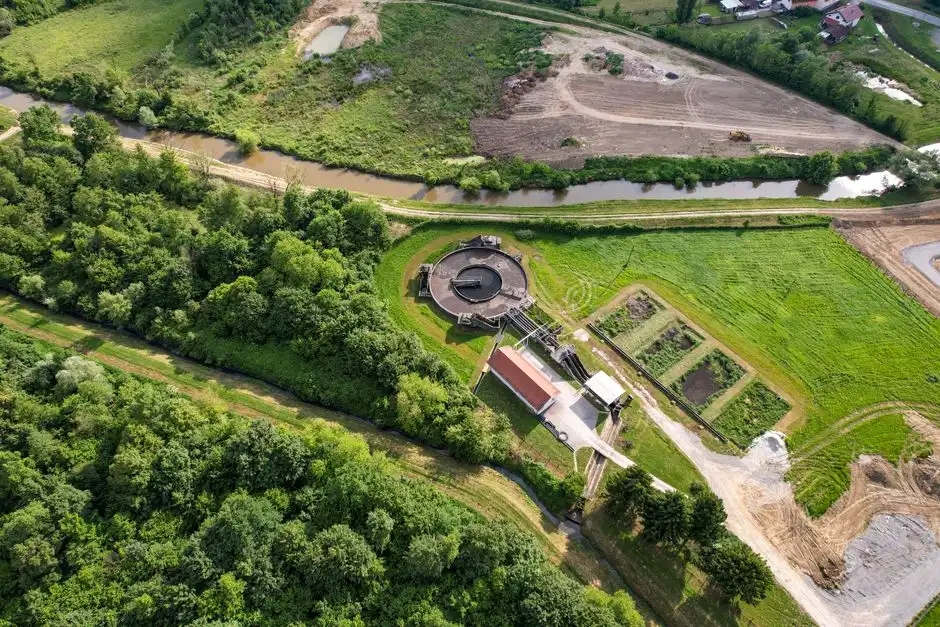
The MBR scope should follow a conditional sequence rather than begin with a preferred reactor. Start with the stream, then confirm that biological treatment is appropriate, and only then compare membrane formats.
| Condition | Recommended decision | Required next check |
|---|---|---|
| Biodegradable organics and low suspended solids | Evaluate an aerobic MBR first | Confirm hydraulic and biological loading, solids target, and reuse or discharge basis |
| Energy recovery, minimal residual sludge, or high-rate organic removal is central | Evaluate an anaerobic membrane bioreactor | Confirm feed suitability, FOG control, feed stability, methane handling, and fouling controls |
| Variable, solids-rich, surfactant-affected, or biologically incompatible stream | Resolve upstream separation or segregation before increasing MBR capacity | Obtain stream-specific sampling and treat the high-risk stream separately |
| Required output exceeds biological treatment and MBR separation | Add validated disinfection or reverse-osmosis polishing | Define the final quality specification and validate the complete treatment train |
| Dilute stream with a low solids-removal requirement and an available receiving route | Compare MBR with conventional treatment | Review the MBR versus conventional activated sludge for food wastewater and total lifecycle requirements |
If reuse requires a tighter final specification, evaluate an industrial reverse-osmosis system as a downstream polishing step. The 2023 AnMBR review identifies RO after AnMBR as a route to enhanced effluent quality and water reuse, but the polishing train must follow a defined product-quality requirement rather than a generic claim of near-reuse water.
For chemical wastewater or other streams with uncertain biological compatibility, a separate selection check may be necessary; the supplier should not extrapolate an animal-feed treatment result to incompatible chemistry without validation.
Frequently Asked Questions
When is an MBR appropriate for animal feed wastewater?
An MBR is appropriate when the stream is biologically treatable and pretreatment can control suspended solids, FOG, and incompatible chemicals. Follow the sequence in this guide: segregate streams, characterize representative wastewater, remove materials that threaten biology or the membrane, select aerobic or anaerobic treatment against the project objective, and then size the membrane from verified flow and loading data.
How much does an MBR for animal feed wastewater cost?
MBR cost cannot be derived from flow alone. Request a quotation that separates pretreatment, reactor and membrane equipment, installation, aeration or pumping energy, chemicals, routine cleaning, membrane replacement, downtime, sludge handling, operator labor, and redundancy. Use the linked 2026 cost guide as a comparison framework, but require a project-specific price because wastewater chemistry and operating conditions control fouling and lifecycle cost.
How should the MBR system be sized?
Size the system from verified peak and average flows, wastewater characterization, treatment objectives, required membrane area, and operating redundancy. The integrated catalog range of 10–2,000 m³/day and the DF Series range of 32–135 m³/day are catalog ranges, not universal sizing rules. Require the supplier to state the design flow, biological loading basis, membrane area, permitted operating conditions, and train arrangement.
How can membrane fouling be managed?
Manage fouling through source control, suitable pretreatment, scouring, controlled operating flux, monitoring, and a defined cleaning response. The 2020 MBR fouling review identifies fouling as the biggest obstacle to broader MBR application. For feed wastewater, include soluble organics, FOG, suspended solids, cleaning chemicals, and any biological inhibitors in the operating risk assessment.
What should an MBR supplier provide in the proposal?
Require the membrane configuration and area, complete design basis, pretreatment requirements, controls, cleaning protocol, spare-parts plan, installation requirements, acceptance criteria, and lifecycle-cost assumptions. These checks reveal whether suppliers are pricing a complete treatment train or only the membrane package. They also establish a defensible basis for technical and commercial comparison.