
How to Choose Between MBR and Conventional Activated Sludge
MBR is usually the stronger option for chemical wastewater when a plant needs compact treatment, reliable solids separation, and an effluent suitable for reuse, provided the wastewater is biologically compatible and the process includes adequate pretreatment. Conventional activated sludge remains attractive when flows are stable, land is available, biological treatment is well established, and lower membrane-related capital and maintenance burdens are priorities. The decision should be based on a complete wastewater analysis, discharge requirements, reuse targets, chemical toxicity, solids, pH, temperature, and membrane-fouling risk—not on MBR versus CAS alone. In West Bend, local discharge or pretreatment conditions should be confirmed with the receiving authority before selecting equipment.
Conventional activated sludge uses a biological reactor followed by conventional solids separation. A membrane bioreactor couples biological treatment with membrane filtration, retaining biomass within a controlled reactor and separating solids through the membrane module. MBR does not replace the biological step; it changes how solids are retained and separated.
Five site-specific drivers should control the comparison:
- Wastewater biodegradability: determine whether the relevant organic compounds can sustain the treatment culture without unacceptable inhibition.
- Required effluent quality: distinguish a basic discharge specification from a permit requirement or internal reuse specification.
- Water-reuse potential: identify whether clarified MBR effluent can be reused directly, sent for polishing, or must meet a more demanding process-water specification.
- Available footprint: include tanks, pretreatment, aeration, solids handling, access, and maintenance clearances—not just the membrane skid.
- Expected operating complexity: evaluate membrane cleaning, replacement, controls, labor, energy, and downtime provisions.
The supplied research does not establish a universal MBR advantage for every chemical-manufacturing discharge. Academic work supports MBR as an industrial-wastewater technology, while case-specific evidence remains necessary for chemical streams. The 2026 MBR cost and selection guide provides a general reference, but the West Bend decision should be grounded in the receiving sewer’s rules, the planned reuse destination, and the plant’s actual flow and footprint constraints.
Chemical Wastewater Characterization Before Technology Selection
A stream-specific wastewater analysis is the required first step in deciding whether a membrane bioreactor is technically suitable for a West Bend chemical plant. The analysis must distinguish biodegradable load from refractory, toxic, or inhibitory material and identify whether treatment will discharge to a sewer, undergo further treatment, or support reuse.
| Site input | Why it affects technology selection | Information needed before MBR selection |
|---|---|---|
| Flow | Sets the hydraulic basis and influences tankage, membrane area, and equalization. | Current flow profile, peak flow, minimum flow, and future production changes. |
| pH and temperature | Affect biological activity, chemical speciation, and membrane operating conditions. | Time-varying measurements across representative operating periods. |
| COD and BOD | Distinguish potentially biodegradable organic load from other material requiring physical or chemical removal. | Representative concentrations and the relationship between COD and BOD. |
| Suspended solids | Influence solids loading, sludge handling, and membrane-fouling risk. | Character, size distribution, settleability, and sources of solids. |
| Specific chemical constituents | Identify toxicity, inhibition, refractory behavior, membrane interactions, and treatment targets. | Product-linked stream inventory and analytical results for relevant constituents. |
| Treated-water destination | Defines the applicable discharge, polishing, and reuse criteria. | Permit, sewer acceptance conditions, and intended end use. |
Biodegradability should be evaluated for the actual mixture rather than inferred from a general COD value. Sustained biological treatment should not be assumed for constituents that inhibit or destroy the microbial population. Conversely, identifying the specific compounds and their concentrations allows the team to determine whether equalization, neutralization, segregation, source control, or another pretreatment step is necessary before comparing MBR and conventional activated sludge.
Membrane-fouling screening should identify constituent groups that may deposit on or interact with the membrane, but the characterization should not be converted into unsupported universal removal claims. A supplier should explain how its proposed membrane and operating envelope respond to the measured wastewater.
The 2023 review The Advancement in Membrane Bioreactor Technology toward Sustainable Industrial Wastewater Management, published through PubMed Central, supports considering MBR as an industrial-wastewater technology. It does not demonstrate that one configuration will treat every West Bend chemical stream without project-specific testing. Where chemical identification is incomplete, an automatic chemical dosing system should be considered only against a documented neutralization, coagulation, or other pretreatment objective; dosing equipment cannot correct an undefined biological incompatibility.
How Each Treatment Train Works
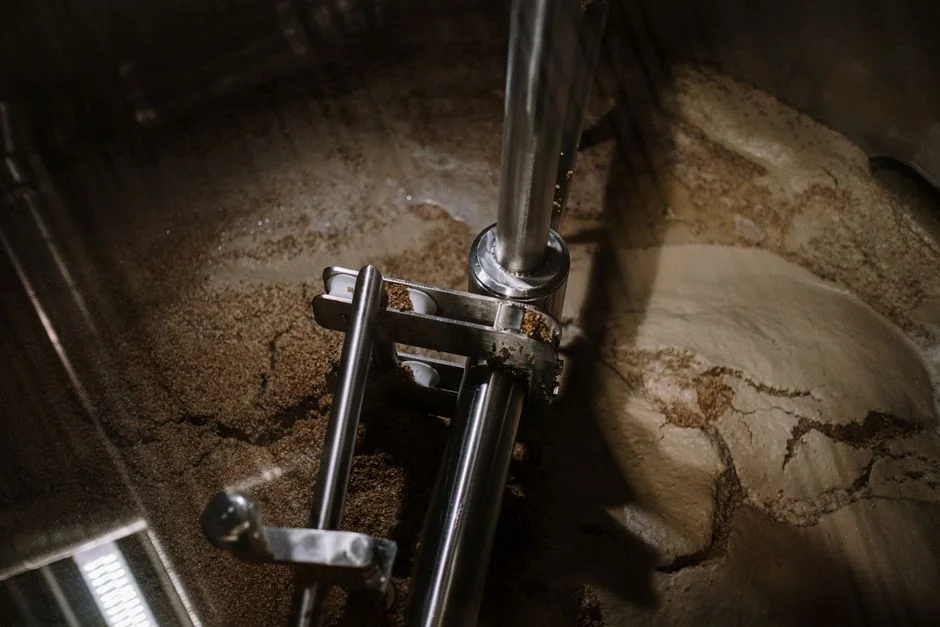
Conventional activated sludge and MBR both depend on biological treatment, but they separate solids in different ways. The process boundary and the consequences of chemical variation determine which arrangement is more resilient.
A conventional treatment train typically follows this sequence:
- Equalization and required pretreatment.
- Biological reactor for organic-matter treatment.
- Clarifier or another conventional solids-separation stage.
- Polishing and disinfection where required by the discharge or reuse specification.
An MBR train replaces the separate settling stage with membrane modules:
- Equalization and required pretreatment.
- Biological reactor.
- Submerged membrane module for solids separation.
- Polishing or disinfection as required.
Membrane retention allows a high concentration of biomass to be maintained in the reactor, while solids separation occurs within the membrane module. This arrangement can reduce reliance on gravity settling and improve the clarity of the resulting effluent, but it transfers separation performance and maintenance burden to the membrane system.
Membrane material is part of the process design, not a late accessory selection. The 2014 Chalmers Research thesis Functionalization of Synthetic Polymers for Membrane Bioreactors identifies porosity, hydrophilicity, and polarity as characteristics affecting nutrient and metabolite permeation through MBR membranes. It also reports that enhanced hydrophilicity reduced biofouling in its experimental work and that a hydroxylated membrane remained comparable to PVDF after 18 days without regeneration in the reported test. Those findings support evaluating material properties, but they do not guarantee the performance of a different membrane or a full-scale chemical plant.
For a West Bend process designer, the practical question is therefore not “MBR or biology?” It is whether the proposed biological and membrane sequence can treat the characterized stream, retain solids reliably, meet the applicable effluent specification, and be cleaned and maintained under the expected chemical exposure. The integrated MBR membrane bioreactor should be evaluated as a combined treatment train, not as a stand-alone clarification device.
MBR and Activated Sludge Compared for Chemical Wastewater
MBR changes the solids-separation method and plant configuration, but the selected process must still satisfy the wastewater characteristics, permit, reuse target, and available site.
| Decision factor | Conventional activated sludge | MBR | Chemical-plant implication |
|---|---|---|---|
| Biological treatment | Uses an activated culture in a reactor. | Uses biological treatment with membrane retention. | Biodegradability and inhibition remain fundamental for both options. |
| Solids separation | Separate clarifier or other settling stage. | Submerged membrane module replaces the separate settling stage. | MBR changes separation performance and maintenance requirements. |
| Footprint | Requires reactor and settling area. | Combines biological and membrane functions in an integrated arrangement. | Compare the complete layout, including pretreatment, aeration, sludge handling, and access. |
| Effluent clarity | Dependent on settling performance and downstream polishing. | Fine membrane separation can produce low-solids effluent. | Reuse suitability still depends on the target and remaining contaminants. |
| Reuse readiness | May require additional solids separation and polishing. | More readily supports reuse-oriented treatment trains. | Define the end use before assigning reuse value. |
| Pretreatment sensitivity | Excessive solids can burden settling and sludge handling. | Excessive solids and chemical carryover can increase membrane fouling or inhibit biology. | Equalization and source control are central design inputs. |
| Maintenance and control | Includes pumps, aeration, sludge handling, and clarifier operation. | Adds membrane inspection, cleaning, and replacement provisions. | Compare labor, cleaning chemicals, spare parts, and downtime exposure. |
| Expansion constraints | May require additional reactor and settling capacity. | May require additional membrane modules, tanks, and treatment capacity. | Evaluate the future production and flow basis with the supplier. |
Academic evidence supports MBR for sites with stricter discharge requirements, sensitive receiving environments, and reuse objectives. The source Study of activated sludge viability and reactivity in membrane bioreactor, published by the Agence Bibliographique de l’Enseignement Supérieur, frames MBR as an approach for improved hygienic effluent quality, sensitive sites, and reuse. It does not establish that an MBR alone will satisfy a particular West Bend permit.
The HydropureWater verified product catalog describes its integrated MBR as combining activated-sludge treatment with submerged PVDF membrane filtration. It states near-reuse-quality effluent with filtration below 1 μm, a 60% smaller footprint than conventional systems, and a capacity range of 10 to 2,000 m³/day. These are manufacturer-specific product attributes, not universal MBR guarantees. The 60% footprint statement should be treated as an initial screening claim until translated into a site-specific layout.
Conventional activated sludge remains appropriate where flow and loading are stable, land is available, the biological process is proven, and membrane cleaning or replacement is not justified. The decision should reflect actual site constraints rather than treating membrane separation as inherently preferable.
Pretreatment and Membrane-Fouling Risk
Membrane-fouling risk must be evaluated from the characterized wastewater and the proposed operating envelope, not from average effluent values alone. Supplier review should cover pH, temperature, suspended solids, biological solids loading, relevant chemical constituents, and the expected production and discharge profile.
| Risk or control area | Engineering question | Evidence to request |
|---|---|---|
| Equalization | Does the system dampen hydraulic, concentration, and pH variation? | Flow and concentration ranges, available equalization volume, and control sequence. |
| Excessive solids | Are solids removed or managed before membrane loading? | Suspended-solids data, solids source inventory, and pretreatment performance criteria. |
| Chemical carryover | Could production chemicals inhibit biomass or damage membrane surfaces? | Stream-specific constituent analysis and documented segregation or neutralization requirements. |
| Membrane properties | How do material and surface characteristics affect fouling and cleaning response? | Membrane material, pore characteristics, hydrophilicity, polarity, and operating limits. |
| Aeration and mixing | Is the supplied air designed for both biology and the proposed membrane configuration? | Aeration method, design basis, fouling-control strategy, and air-demand assumptions. |
| Cleaning and recovery | What cleaning method is allowed, and how is membrane performance restored? | Cleaning protocol, chemical compatibility, recovery criteria, and consumable requirements. |
| Solids removal | How are retained solids withdrawn and conditioned? | Sludge-generation basis, withdrawal method, handling route, and operating controls. |
The 2014 Chalmers Research thesis reports diminished biofouling after enhancing the hydrophilicity of the tested membrane and notes that synthetic-polymer properties affect MBR performance. These results support membrane material and surface chemistry as engineering considerations. They do not support a blanket statement that hydrophilic membranes eliminate fouling or that any polymer will tolerate a West Bend chemical stream.
Equalization, solids management, and chemical segregation can reduce process variability, but each must follow a documented design basis. A dissolved air flotation machine may be relevant where flotation removes target solids, while an automatic chemical dosing system may support a defined neutralization, coagulation, or pH-control objective. Neither should be specified as mandatory MBR pretreatment without site evidence.
Cost, Footprint, and Lifecycle Decision for a West Bend Plant
The relevant cost comparison is lifecycle cost against the site’s chosen treatment objective, not the lowest equipment quotation. The supplied research provides no universal MBR price range or payback period for West Bend chemical wastewater.
| Cost or value element | Items to define in the supplier comparison | Decision relevance |
|---|---|---|
| Equipment and civil works | Tanks, membranes, pumps, aeration, controls, buildings, installation, and site works. | Establishes complete capital cost for each train. |
| Pretreatment | Equalization, solids removal, segregation, neutralization, and other demonstrated requirements. | Protects biology and membrane performance. |
| Operation | Energy, aeration, chemicals, labor, monitoring, and sludge handling. | Shows whether the apparent process advantage survives operating costs. |
| Membrane lifecycle | Inspection, cleaning, restoration, and scheduled replacement. | Quantifies an MBR-specific maintenance commitment. |
| Reuse and compliance value | Water recovered, avoided discharge, floor space, and permit-related risk. | These values are project-specific and require a defined destination. |
| Existing-system alternative | Repair, expansion, and lifecycle cost of conventional activated sludge. | Provides a relevant benchmark for plants with installed treatment capacity. |
The catalog’s stated 60% footprint reduction is useful for initial screening of the specified integrated MBR, but a procurement drawing must reflect actual flow, tankage, pretreatment, access, aeration, and solids handling. The stated 10 to 2,000 m³/day equipment range can screen whether the product family spans the plant’s hydraulic basis, but it does not replace an engineered duty calculation using the characterized wastewater.
Obtain comparable proposals on the same scope. MBR proposals should separately state membrane replacement and cleaning assumptions. Conventional proposals should include any clarifier upgrades, additional reactors, polishing, and revised sludge handling. The team should also assess the cost of maintaining or upgrading an existing activated-sludge system rather than comparing only two new-build purchase prices.
Reuse value, floor space, discharge risk, and sludge handling may change the economic result, but none supports a universal payback claim. Those benefits need a defined quantity, destination, and treatment obligation.
West Bend Decision Framework and Supplier Questions
A defensible West Bend selection follows a fixed sequence: confirm the permit destination, characterize the wastewater, establish biological compatibility, select pretreatment, define effluent and reuse criteria, size the process, compare lifecycle costs, and validate guarantees.
- Confirm the destination: document sewer, direct-discharge, further-treatment, or reuse requirements with the receiving authority.
- Characterize the stream: assemble flow, pH, temperature, COD, BOD, suspended solids, and constituent-specific data.
- Test biological compatibility: determine whether the proposed biological treatment can handle the relevant compounds and loading profile.
- Select pretreatment: assign equalization, solids management, segregation, neutralization, or other controls to a documented failure mechanism.
- Define performance: translate the permit and reuse plan into measurable solids, constituent, and operating criteria.
- Size the process: use hydraulic and organic loading, membrane area, temperature, and expected operating profile rather than catalog flow alone.
- Compare lifecycle requirements: include civil works, pretreatment, aeration, energy, chemicals, labor, sludge, cleaning, and membrane replacement.
- Validate guarantees: require evidence tied to the actual wastewater and proposed operating envelope.
Each supplier should state its design flow, hydraulic and organic loading basis, membrane configuration, membrane area, aeration approach, cleaning method, controls, and treatment guarantees. It should also explain how the process handles chemical variation, fouling, membrane replacement, downtime, and solids withdrawal. Equipment capacity and product claims must be tied to the actual chemical wastewater rather than municipal or generic industrial examples.
For a MBR membrane bioreactor module proposal, require the supplier to identify the intended operating envelope and the consequences of departing from it. Final selection should use the West Bend permit basis and the receiving authority’s written requirements, not an assumed generic reuse specification.
Frequently Asked Questions
What does an MBR cost compared with conventional activated sludge for chemical wastewater?
There is no defensible generic price range from the supplied research. Request comparable lifecycle proposals covering equipment, civil works, pretreatment, aeration, energy, chemicals, labor, sludge handling, membrane cleaning, and scheduled replacement. For an existing plant, include repair and expansion costs for the conventional alternative. See the 2026 MBR cost and selection guide for the cost categories that require quotation.
How should an MBR be sized for a West Bend chemical plant?
Hydraulic capacity is only the starting point. Require the supplier to assess the wastewater characterization, hydraulic and organic loading, membrane area, temperature, chemical exposure, and operating profile. The catalog’s 10 to 2,000 m³/day range can screen product coverage, but an engineered duty calculation must establish the selected configuration.
Which evidence should a buyer request when selecting an MBR supplier?
Require evidence tied to the actual chemical wastewater, treatment guarantees, membrane-maintenance provisions, operating limits, cleaning methods, replacement terms, and controls. Ask for comparable treatment-performance evidence under relevant stream conditions and a clear statement of what the guarantee does not cover.
Will an MBR eliminate West Bend discharge-compliance risk?
No. MBR can improve solids separation and support reuse, but it does not replace permit-specific treatment design or receiving-authority approval. Confirm applicable sewer pretreatment or discharge requirements with the local authority, define measurable effluent criteria, and verify that the complete treatment train—including pretreatment and any required polishing—meets those conditions.