Why Food Processing Wastewater Requires a Tailored MABR Design
MABR—membrane aerated biofilm reactor—is a biological treatment technology in which oxygen passes through gas-permeable membranes into an attached biofilm rather than through conventional bubble aeration. For food-processing plants, the membrane aerated biofilm reactor can be useful for high BOD high COD wastewater and for ammonia-bearing streams, but FOG, suspended solids, cleaning chemicals, variable pH, and shock loads must be evaluated before selection. Genesis Water Technologies identifies organic matter, oils, chemicals, nutrients, suspended contaminants, and possible disease-bearing contaminants as relevant food-processing wastewater variables, with high BOD and COD commonly presenting treatment challenges (2026). MABR is one biological stage in the train, not a substitute for required pretreatment or solids control.
The procurement mistake is treating all plant wastewater as one stable stream. Production shifts, washdown, product changes, and sanitizer or cleaning-chemical discharges can change flow and composition independently. Characterize each production area and waste stream before combining them, including representative production periods and identified discharge events. A generic biological loading calculation cannot compensate for an unmeasured FOG peak, cleaning event, or loss of equalization capacity.
Before comparing MABR configurations, request four things: current permit conditions, sewer-pretreatment limits, reuse goals, and representative sampling data. The data request should cover flow, BOD, COD, ammonia, total nitrogen, phosphorus, TSS, FOG, pH, temperature, alkalinity, conductivity, and evidence of toxicity. A reactor that handles a stable average may still fail when concentrated food oils or sanitizer residues reach the biological stage.
Related process-design material for SBR design for vegetable processing wastewater, SBR design for snack food wastewater, and SBR design for frozen food wastewater can support stream-specific investigation, but those SBR configurations are not interchangeable with an MABR design basis.
Map the Complete Food Processing Treatment Train
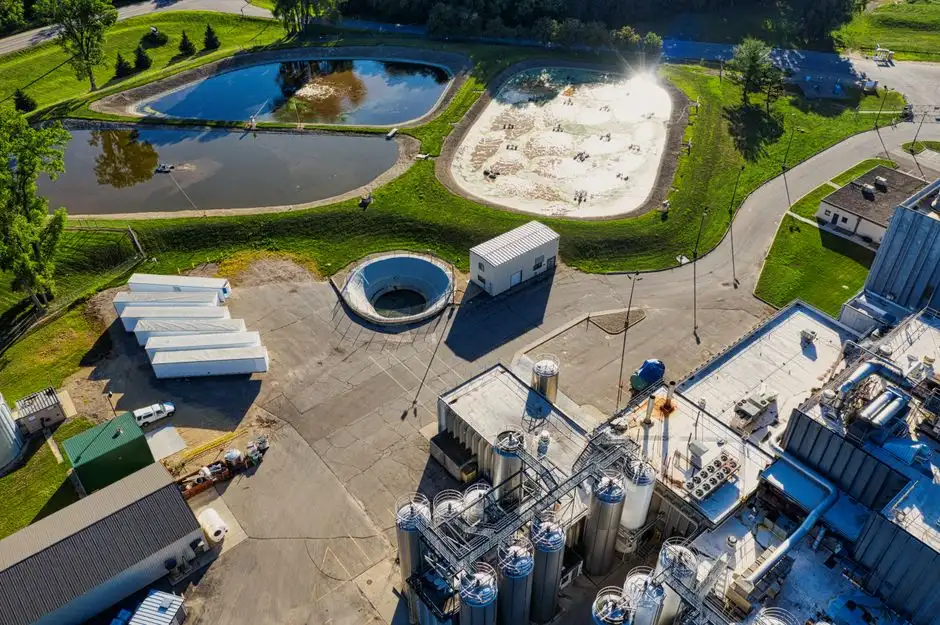
A defensible MABR design starts upstream of the reactor because biological performance depends on receiving a controlled feed. The normal sequence is equalization and screening, FOG and solids control, flow and load equalization, pH or chemical adjustment where required, MABR biological treatment, solids separation, filtration or membrane polishing if required, disinfection where required, and reuse or discharge.
| Process stage | Primary function | Procurement check |
|---|---|---|
| Screening and equalization | Removes coarse material and buffers flow and load variation. | Confirm event storage, mixing, access, and peak-flow behavior. |
| FOG and solids control | Removes oils, grease, suspended solids, and colloidal material before biological treatment. | Require test results for the actual food-plant waste, not only clean-water capacity. |
| pH or chemical adjustment | Protects biological organisms where cleaning chemicals or acidic or alkaline process water create excursions. | Define reagents, interlocks, dosing range, and discharge consequences. |
| MABR biological treatment | Provides aerobic treatment and can support simultaneous nitrification and denitrification within the biofilm structure. | Require a site-specific design basis, loading calculation, and performance conditions. |
| Solids separation and polishing | Removes biological solids and residual contaminants where required. | Specify required TSS and filtration performance; MABR alone is not a solids filter. |
| Disinfection and reuse or discharge | Controls microbiological risk and prepares water for its intended use. | Tie final quality to permit, reuse, and validation requirements. |
An industrial DAF pretreatment system can protect downstream biological equipment by removing suspended solids, FOG, oil and grease, and colloidal matter. HydropureWater’s DAF catalog covers 4–300 m³/h across 13 standard models; that is an equipment-selection range, not an MABR sizing specification. The supplied product specification also identifies a plate-frame filter press for solids dewatering, but its selection must follow the characteristics and volume of the waste sludge produced.
When very low solids separation, near-reuse-quality treatment, or a package scope of 10–2,000 m³/day is central, consider the cataloged integrated MBR wastewater treatment system. Its supplied specification identifies submerged PVDF filtration below 1 μm and a 60% smaller footprint than conventional systems. These are product attributes, not a statement that MBR is automatically preferable or that the package can meet a food plant’s reuse objective without the complete train.
Any potable or reuse claim requires project-specific treatment, applicable regulatory validation, and confirmation of the final-use quality specification. Biological treatment, filtration, and disinfection serve different purposes; none should be omitted simply because the upstream process is MABR.
How MABR Treatment Works in a Food Plant
Gas-permeable membranes supply oxygen directly to the attached biofilm base, while outer layers can remain anoxic or anaerobic. Mejec describes this counter-diffusional structure as aerobic near the membrane and anoxic or anaerobic in the outer biofilm (2026). The resulting stratification can support simultaneous nitrification and denitrification in one reactor, potentially reducing the number of separate reaction zones.
For food-processing wastewater, that mechanism is useful only within the biological envelope established by the influent. Nitrification depends on available ammonia, sufficient alkalinity, suitable pH and temperature, and acceptable toxicity; organic removal depends on the biodegradable fraction and process loading. Neither simultaneous nitrification and denitrification nor a high-rate biological reaction compensates for excessive FOG, solids, or cleaning chemicals entering the reactor.
Mejec reports nitrification rates exceeding 2 g N/m²/day and biofilm densities reaching three times those of conventional plastic media (2026). These are commercial-source performance claims, not guaranteed food-processing results or universal sizing constants. They should be checked against the proposed membrane geometry, influent composition, operating temperature, and selected supplier’s calculation method.
Retrofit logic is credible when the existing basin, airflow arrangement, solids inventory, hydraulic profile, and control system can be adapted without creating untreated bypasses or access problems. Fluence’s SUBRE concept uses towers of MABR modules in existing basins, and Fluence gives a product design range of 2,000–100,000 m³/d, or 0.5–25 MGD (2026). That range belongs to SUBRE; it is not a universal MABR operating range and cannot be used without the site-specific design basis.
The operating risks remain conventional engineering concerns: membrane fouling, biofilm sloughing, uneven air distribution, inadequate mixing, odor control, low-temperature performance, and restricted inspection access. Specify membrane inspection and cleaning access, air-system redundancy, odor controls, alarm responses, and safe removal or replacement procedures. A biological treatment retrofit is not complete if maintenance requires draining or dismantling unrelated plant infrastructure.
Compare MABR, MBR, SBR, and Conventional Activated Sludge
MABR, MBR, SBR, and activated sludge differ most clearly in how they transfer oxygen, retain biomass, and separate solids. The food plant’s FOG load, effluent solids requirement, footprint, staffing model, redundancy, and capital constraints can reverse the preferred architecture; there is no defensible universal winner.
| Architecture | Oxygen and biomass arrangement | Solids separation | Relevant decision condition |
|---|---|---|---|
| MABR | Attached biofilm receives oxygen through gas-permeable membranes. | Requires downstream separation unless integrated into another system. | Consider for compact biological treatment, retrofit potential, passive oxygen transfer, and nitrogen management. |
| MBR | Combines biological treatment with submerged membrane filtration. | Integrated membrane separation; the supplied specification identifies PVDF filtration below 1 μm. | Consider when stringent solids separation is central or near-reuse-quality treatment is required. |
| SBR | Suspended biomass is treated through a time-based fill, react, settle, and discharge cycle. | Solids separation occurs within the cycle. | Consider when the receiving sewer, reuse objective, or operating pattern supports cycle-based treatment. |
| Conventional activated sludge | Suspended biomass is aerated in a continuously operated basin. | Requires a separate clarifier or other solids-separation stage. | Consider for established layouts, available expertise, and operating conditions compatible with the existing system. |
HydropureWater’s cataloged MBR facts provide a concrete comparison point: submerged PVDF filtration below 1 μm, near-reuse-quality effluent, a footprint stated as 60% smaller than conventional systems, and package availability from 10 to 2,000 m³/day. Those attributes make MBR worth evaluating where solids separation and packaged reuse treatment are priorities. They do not eliminate the need for FOG control, equalization, biological design, disinfection, or site validation.
Make the selection as an if–then decision. If compact biological treatment and retrofit potential dominate, evaluate MABR. If very low solids separation is central, evaluate MBR. If cycle-based operation and established solids settling suit the discharge or reuse objective, evaluate SBR. If the plant already has reliable activated-sludge infrastructure, personnel, and hydraulic capacity, a retrofit or operating comparison may be more defensible than a technology switch.
For MABR alternatives, require side-by-side submittals covering pretreatment, biological capacity, solids handling, aeration, controls, redundancy, footprint, labor, maintenance, and disposal. The MBR membrane bioreactor module and underground integrated wastewater treatment package can frame package and footprint alternatives, but their supplied scopes do not establish suitability for a specific food-processing stream without design-basis review.
Size the MABR Reactor from Site Data
MABR sizing must begin with plant data because the supplied research provides no generic food-processing MABR design-flow rule. Define average and peak flow, production shifts, washdown events, equalization behavior, and future line expansion. Establish whether drainage streams are segregated before equalization and whether bypass or off-line storage is available for cleaning events and upset loads.
| Required input | Why it matters | Measurement needed | Decision affected |
|---|---|---|---|
| Flow and equalization | Sets hydraulic conditions, storage response, and exposure to shocks. | Continuous flow monitoring plus event-based sampling across representative production periods. | Reactor configuration, equalization, bypass, and redundancy. |
| BOD and COD | Defines biodegradable and total oxidizable organic loads. | Composite and event-based laboratory analysis by waste stream. | Organic-removal capacity, air demand, and reactor zoning. |
| Ammonia and total nitrogen | Determines nitrification demand and nitrogen-removal objectives. | Influent and effluent analysis with alkalinity and pH paired. | Biofilm area, carbon availability, and denitrification configuration. |
| Phosphorus | Identifies nutrient-removal requirements and possible biological uptake needs. | Representative influent and effluent measurements. | Chemical dosing or biological phosphorus strategy. |
| TSS and FOG | Indicates solids burden, separation demand, and reactor-fouling risk. | Stream-specific sampling, including event peaks. | DAF, screening, equalization, and downstream solids handling. |
| pH, temperature, and alkalinity | Controls biological activity, nitrification, and chemical demand. | Continuous pH and temperature logging; alkalinity laboratory analysis. | Chemical adjustment, aeration, and seasonal capacity. |
| Conductivity and toxicity indicators | Can indicate ionic stress or inhibitory discharges. | Source-stream chemical inventory and toxicity or inhibition testing. | Segregation, pretreatment, and process suitability. |
| Cleaning-chemical inputs | Identifies shock compounds that may damage the biological community. | Production records, chemical inventory, and event sampling. | Equalization, pH control, feed isolation, and pilot validation. |
External results can be context, not acceptance criteria. Fluence reports that the CENTA project recorded total nitrogen as low as 4.1 mg/L and total phosphorus as low as 0.4 mg/L, while its Stanford pilot reported total nitrogen below 3 mg/L and total phosphorus below 0.3 mg/L (2026). These were research or pilot contexts reported by the manufacturer, not guaranteed food-plant effluents.
The final design must address reactor zoning, membrane area, air demand, mixing, recirculation, solids inventory, excess-sludge withdrawal, equalization, redundancy, and bypass provisions. Require the supplier to identify every loading rate, oxygen-transfer assumption, temperature basis, fouling allowance, and safety factor. The supplied research does not establish a food-plant MABR loading rate, so the vendor must derive it from site data and the selected membrane system.
For chemical-feed and access requirements, review the automatic chemical dosing system and treatment valves and filter media only as supporting equipment options. Their selection must follow the confirmed process chemistry, required flow, materials, controls, and maintenance strategy rather than a generic package specification.
Validate Performance Before You Buy
A credible performance guarantee requires a defined influent, operating schedule, sampling method, and energy baseline. Before accepting a saving, record existing blower power, aeration strategy, flow, organic and ammonia load, ambient conditions, and the treatment objective. Without that baseline, an aeration-energy percentage cannot be audited.
Mejec states that aeration typically represents 50–70% of a plant’s total energy bill and reports that retrofit facilities reduce aeration-energy demand by up to 75% (2026). Fluence reports that MABR systems can cut aeration energy by up to 90% and overall energy by as much as 50% (2026). These are commercial-source technology and retrofit claims. They are not food-processing case results and should not be transferred into a bid as guaranteed plant savings.
Use representative pilot testing or side-stream validation when variability, FOG risk, toxicity, seasonal production, or unusual cleaning events could materially affect the biology. The pilot should demonstrate the proposed feed, not an averaged wastewater sample, and should continue long enough to expose fouling, biofilm establishment, seasonal effects, and cleaning-cycle behavior that a short bench test will miss.
Define acceptance tests for flow, BOD, COD, ammonia, total nitrogen, TSS, energy, sludge production, odor, membrane condition, and system availability. Specify analytical methods, sampling points, operating conditions, exclusions, and correction rules. A guarantee should reflect actual production schedules, cleaning events, influent limits, and the permit basis; otherwise it may be technically valid but commercially meaningless.
Operability is part of performance. Review access for inspection and membrane cleaning, instrumentation, alarms, power-loss response, standby capacity, spare parts, operator training, and remote monitoring. The related MBR configuration for bakery dough wash and meat-processing wastewater buyer guide in Oman provide useful questions for reuse and discharge applications, but their project conditions cannot substitute for site-specific validation.
Build the Business Case Without Inflated Performance Claims
The commercial comparison must include total installed cost and operating consequences, not only reactor capital cost. Build separate line items for pretreatment, biological equipment, membranes, air systems, equalization, controls, sludge handling, utilities, labor, maintenance, downtime exposure, and disposal. The supplied research contains no food-processing MABR CAPEX or OPEX figures, so a defensible budget requires supplier quotations based on the approved design basis.
| Business-case element | Information required from bidders | Decision test |
|---|---|---|
| Installed equipment | Scope, delivery terms, foundations, piping, electrical work, controls, and commissioning. | Compare complete installed scopes, not reactor-only prices. |
| Pretreatment and sludge handling | DAF performance, chemical use, sludge volume, solids capture, dewatering, and disposal route. | Determine whether these costs change the preferred biological architecture. |
| Energy | Baseline blower power, flow, load, calculated aeration demand, controls, and site utilities. | Apply supplier savings only to the stated baseline and operating conditions. |
| Operations | Labor, membrane cleaning, spare parts, inspection, training, remote support, and outage response. | Translate equipment scope into plant staffing and maintenance requirements. |
| Retrofit and expansion | Civil work, structural constraints, access, bypass provisions, and future-capacity provisions. | Confirm that retrofit savings survive site-access and future expansion constraints. |
| Reuse or discharge value | Complete treatment train, applicable quality requirements, validation plan, and user demand. | Do not assign reuse value before the final use and compliance basis are defined. |
Energy remains a controllable business-case variable, but the reported up-to-75% and up-to-90% aeration-energy figures from Mejec and Fluence respectively (2026) are commercial claims. Require each bidder to state its baseline, assumptions, load profile, and calculation before those percentages are applied.
Compare total cost of ownership for MABR with DAF, MBR, SBR, and activated-sludge alternatives. Pretreatment and sludge handling can materially alter the result. Use the industrial DAF pretreatment system and plate-frame filter press as relevant quote items where the design requires them, rather than assuming their inclusion or exclusion. The 2025 engineering breakdown comparing DAF and sedimentation provides context for pretreatment economics, not an MABR cost estimate.
Nonpotable or commercial reuse can affect treatment objectives and business value. It must remain tied to the complete treatment train and applicable requirements; “near-reuse-quality” product wording is not proof that a food plant’s intended reuse is compliant.
Frequently Asked Questions
Is MABR suitable for food-processing wastewater?
It can be suitable when the biological feed can be controlled and the treatment objective justifies an attached-biofilm process. Require representative characterization of BOD, COD, ammonia, FOG, solids, pH, temperature, alkalinity, toxicity, and cleaning events. Genesis Water Technologies identifies these variables as relevant to food-processing wastewater, but no generic source supports guaranteed food-plant MABR performance (2026).
What pretreatment is required before MABR?
The required train depends on the stream. FOG, suspended solids, colloids, pH excursions, and inhibitory cleaning compounds may require screening, DAF, equalization, segregation, chemical adjustment, or another control step. Require the supplier to demonstrate removal performance using the plant’s waste and identified event peaks.
How should an MABR reactor be sized?
Size from site flow and load data, not a generic loading rate. The reactor calculation must state hydraulic loading, organic and ammonia loads, membrane area, air demand, mixing, solids inventory, temperature basis, equalization, redundancy, fouling controls, and performance conditions. The final design should also establish when the reactor must be taken offline during an upset.
How should buyers compare supplier pricing and guarantees?
Request itemized quotations for equipment, civil work, pretreatment, membranes, controls, sludge handling, commissioning, utilities, maintenance, and disposal. For guarantees, require the influent envelope, sampling methods, operating schedule, exclusions, energy baseline, remedy, and acceptance duration. No food-processing MABR price range is supported by the supplied research, so budget from current site-specific quotations.
Can MABR support reuse or discharge requirements?
MABR can be part of the treatment train, but it does not by itself provide complete solids filtration, disinfection, or advanced treatment for reuse. Tie the final treatment specification to the discharge permit, sewer limits, or reuse standard. A supplier claiming potable or reuse suitability should provide project-specific validation for the complete train, not a MABR catalog description alone.