Why seafood wastewater changes the MABR design basis
A membrane aerated biofilm reactor (MABR) can provide biological treatment for seafood processing wastewater, but it does not accept raw, variable factory wastewater as a complete treatment system. A 2025 Environmental Pollution review found the highest BOD, COD, total nitrogen, total ammonia nitrogen, total phosphorus and oil concentrations in stage 3 cooking and canning wastewater, followed by stage 2 filleting wastewater; stages 1 and 4 carried lower pollutant loads. MABR oxygen transfer and attached-growth biology address only part of the treatment duty. FOG, suspended solids, cleaning chemicals, flow variation and toxicity must be controlled before the reactor, while dissolved phosphorus, nitrogen and residual organics may require polishing and disinfection.
The same 2025 review established the most useful framework for this decision: initial washings, filleting, cooking and canning, final washings, and combined discharge form five distinct wastewater stages. Its comparison found that every wastewater type evaluated exceeded legal discharge thresholds, so a plant cannot select equipment by citing one compliant plant-wide average. A combined sample can conceal the high-oil cooking stream, short cleaning discharges, or washdown peaks that determine equalization, pretreatment and biological loading.
Use the five-stage framework to establish the actual design basis, then use representative source-stream sampling to confirm it. Stream segregation, event storage and load-based sampling must precede generic loading calculations. The broader MABR design methodology for food-processing wastewater explains why pretreatment and operating conditions remain part of reactor selection.
| Seafood wastewater stage | 2025 review finding | Design implication for MABR |
|---|---|---|
| Stage 1: Initial washings | Lower pollutant load than stages 2 and 3 | Characterize independently; assess flow, solids and cleaning content before combining. |
| Stage 2: Filleting | Pollutant loads ranked below stage 3 | Set organic and solids removal requirements from measured COD, BOD and TSS. |
| Stage 3: Cooking and canning | Highest BOD, COD, TN, TAN, TP and oil concentrations | Prioritize segregation, FOG control, equalization and nutrient-load management. |
| Stage 4: Final washings | Lower pollutant load | Include production timing and sanitizer carryover in event sampling. |
| Stage 5: Combined discharge | Combined stream reflects the operating variability of upstream stages | Use only after documenting the contribution and variability of each source. |
Map each seafood stream to its required pretreatment
Seafood pretreatment should form a controlled sequence: screening and debris removal; flow and load equalization; FOG and solids control; pH or chemical adjustment where required; biological treatment; solids separation; polishing; and disinfection where required. MABR is the biological step within that train, not a substitute for the upstream and downstream units.
Stage 3 cooking and canning wastewater requires the most deliberate pretreatment because the 2025 Environmental Pollution review found it had the highest concentrations of BOD, COD, total nitrogen, total ammonia nitrogen, total phosphorus and oils, followed by stage 2 filleting wastewater. Equalization should absorb production-driven flow and load changes, while FOG and solids removal should prevent oil or particulate material from reaching the biofilm system.
JWC’s seafood process description identifies thawing, evisceration, washing, cooking, spray cooling, solution filling, can washing and sterilization as wastewater-generating operations. It also identifies coarse and fine screening, grit removal, chemical or physical clarification, biological treatment and sludge management as common treatment elements. These functions remain site-specific: a processor with substantial fish residues, blood and tissue may need different screening and solids-handling performance from one dominated by wash water.
- Remove fish residues, packaging debris and other coarse material before pumps and equalization.
- Separate high-FOG cooking or canning drains where practical, then recover free oil and remove floatable material.
- Balance hydraulic and organic peaks rather than sizing equalization from average flow alone.
- Protect the biology from acidic, alkaline or sanitizer-bearing discharges through segregation, monitoring and controlled chemical adjustment.
- Provide downstream solids separation before polishing or disinfection.
The available equipment references illustrate the required functions rather than establish plant capacity: mechanical bar screening for debris removal, industrial DAF pretreatment for seafood wastewater, and plate-and-frame sludge dewatering. DAF selection must follow measured oil, grease, solids and colloid characteristics; screening and dewatering must likewise be matched to debris and sludge properties.
Cleaning-chemical segregation is not optional process housekeeping. An average BOD or COD result can appear suitable while a short sanitizer or cleaning-chemical release disrupts nitrification, changes pH or introduces toxicity. Source-stream chemical inventories and event samples must therefore accompany routine wastewater characterization.
How MABR treats seafood wastewater biologically
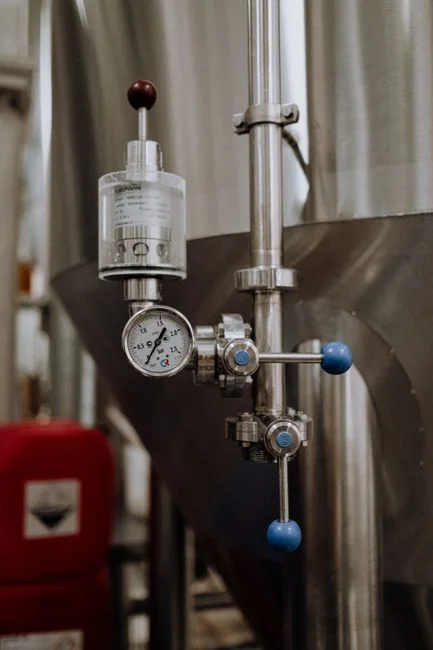
A membrane aerated biofilm reactor is an attached-growth biological process in which oxygen passes through gas-permeable membranes into a biofilm rather than being introduced through conventional bubble aeration. The oxygen source and the biofilm are separated physically, while microorganisms attached to the membrane surface consume biodegradable organics and can oxidize ammonia.
Outer biofilm layers can remain anoxic or anaerobic while the membrane-adjacent layer remains aerobic. That stratification can support simultaneous nitrification and denitrification within one reactor, subject to the availability of biodegradable carbon, ammonia, alkalinity and suitable operating conditions. The broader MABR design methodology for food-processing wastewater describes this counter-diffusional structure and its application limits.
Two commercial performance claims require careful treatment during procurement. Mejec reports nitrification rates exceeding 2 g N/m²/day and biofilm densities reaching three times those of conventional plastic media (2026). These are not seafood-specific acceptance criteria or universal sizing constants. They must be reconciled with the proposed membrane geometry, wastewater composition, operating temperature and the supplier’s calculation method.
The key biological dependencies are:
- Organic removal: the wastewater must contain a biodegradable fraction that the attached biomass can use.
- Nitrogen management: nitrification requires available ammonia, acceptable alkalinity, suitable pH and temperature; denitrification requires usable carbon and anoxic conditions.
- Environmental control: toxicity, shock loads, mixing and air distribution affect activity and fouling.
- Hydraulic protection: equalization and upstream solids control limit biomass exposure to short organic, FOG and chemical peaks.
- Maintenance access: membrane inspection, cleaning, air-system reliability and biofilm management must be incorporated into the operating plan.
MABR does not provide the downstream solids separation supplied by an MBR. Unless a separate clarification, filtration or membrane stage is installed, biological solids remain in the effluent. Dissolved phosphorus, residual nitrogen and soluble organics also remain beyond what biological treatment can be assumed to remove, so the discharge or reuse objective determines the required polishing sequence.
Set the MABR design basis from representative wastewater data
A defensible MABR design begins with an approved site-specific wastewater characterization, not a generic flow-per-unit rule. The 2025 Environmental Pollution review establishes that processing streams differ materially in pollutant concentration; it does not establish a seafood-processing MABR loading rate. Each bidder should therefore derive reactor capacity from the same agreed data set and disclose the calculation method.
Request average and peak flow, production shifts, washdown schedules, equalization volume and planned line expansion. Composite and event-based testing should cover COD, BOD, TSS, oil and grease, ammonia, total nitrogen, phosphorus, pH, temperature, alkalinity, conductivity and toxicity. Source-stream sampling should distinguish initial washing, filleting, cooking and canning, final washing and combined discharge. Event samples are particularly important for washdown, product-change and cleaning periods.
Define the compliance objective before comparing reactor configurations: direct discharge, sewer pretreatment or a defined reuse application have different solids, nutrient, microbial and documentation requirements. A bidder’s treatment objective should identify the receiving permit or sewer limit, intended end use, applicable validation requirements and whether production expansion is included.
| Required design input | Bidder disclosure required | Why it affects the MABR decision |
|---|---|---|
| Average and peak flow; operating shifts; event storage | Hydraulic loading, equalization response and peak-feed behavior | Determines whether the biofilm receives a controlled feed or repeated shock loads. |
| COD, BOD and biodegradable fraction | Organic-removal calculation and reactor zoning | Defines oxygen and carbon demand and potential denitrification capacity. |
| Oil and grease, TSS and source-stream solids | Pretreatment performance requirements and solids inventory | Identifies membrane fouling and downstream separation demand. |
| Ammonia, total nitrogen and alkalinity | Aeration and nitrification calculation | Establishes whether simultaneous nitrogen management is technically supportable. |
| Phosphorus and treatment objective | Biological uptake basis or downstream removal strategy | Clarifies whether polishing is required for nutrient compliance. |
| pH, temperature, conductivity and toxicity | Operating envelope, chemical control and seasonal basis | Defines biological inhibition and cold-weather capacity. |
| Membrane geometry and reactor layout | Membrane area, air demand, mixing, recirculation and redundancy | Provides the physical basis for the proposed performance guarantee. |
| Sludge and maintenance arrangements | Excess-sludge withdrawal, inspection, cleaning and replacement method | Connects biological performance to operability and whole-plant cost. |
Each proposal should disclose membrane area, reactor zoning, blower demand, mixing, recirculation, solids inventory, excess-sludge withdrawal, bypass provisions, fouling allowance, temperature basis and standby strategy. Review chemical dosing only against confirmed process chemistry; an automatic chemical dosing system must follow the required reagent, range, interlocks and discharge consequences.
Do not convert the supplied research into a universal loading rate. No seafood-processing MABR loading rate is established by the provided sources. If a supplier offers a fixed flow or loading figure without deriving it from the approved site data and explaining the design margins, that figure should not be used for procurement.
Choose between MABR, MBR and conventional biological treatment
Choose the treatment architecture from the required effluent quality and operating constraints. Evaluate MABR when compact biological treatment, retrofit potential and nitrogen management dominate. Evaluate MBR when integrated solids separation or near-reuse treatment is central. Retain activated sludge when reliable existing infrastructure, hydraulic capacity and operating expertise make a technology change unnecessary.
HydropureWater’s cataloged integrated MBR attributes provide a useful comparison point: submerged PVDF filtration below 1 μm, a footprint stated as 60% smaller than conventional systems, and package availability from 10–2,000 m³/day. These are product attributes, not evidence that an MBR will meet a seafood site’s permit or reuse specification. The integrated MBR membrane bioreactor still requires site-specific biological, pretreatment and polishing design.
| Decision condition | Primary evaluation | Critical limitation |
|---|---|---|
| Compact biology, retrofit potential and nitrogen management dominate | MABR | Requires upstream FOG and solids control, downstream solids separation, mixing and fouling controls. |
| Stringent solids separation or near-reuse treatment is central | MBR | Membrane separation does not remove every dissolved contaminant; pretreatment and post-treatment remain necessary. |
| Reliable activated-sludge infrastructure and operating expertise already exist | Conventional biological treatment | Still requires clarifier performance, sludge handling and compliance verification. |
The 2025 Environmental Pollution review describes seafood wastewater as rich in organic matter, nutrients and salts. That combination can create substantial biological oxygen demand, nitrogen-management requirements and residual dissolved solids and nutrients. Biological treatment alone may therefore not resolve every discharge or reuse requirement.
For an MABR retrofit, verify basin structure, airflow, hydraulic profile, solids inventory, controls, access, membrane-removal routes and the absence of untreated bypasses. A retrofit drawing is not complete if modules cannot be inspected or replaced without draining unrelated infrastructure. For a broader architecture comparison, see the MBR and conventional activated-sludge comparison and the seafood wastewater MBR comparison.
Validate nutrients, fouling and operating risks before purchase
Successful biological treatment does not prove that a seafood effluent meets its discharge or reuse specification. In a Vietnamese seafood-processing factory study, AnMBR effluent contained COD of 250.43 mg/L, total phosphorus of 19.96 mg/L and total nitrogen of 62.65 mg/L; additional post-treatment was required (HydropureWater, MBR for Seafood Processing Wastewater: 2026 Guide). These results demonstrate that membrane separation cannot be treated as complete removal of dissolved contaminants.
The Kenyan fish-processing pilot provides application evidence, not a transferable design guarantee. Commercial PES membranes achieved 93±2% COD removal and 69±3% phosphate removal, while PBM-coated membranes achieved 96±1% COD removal and 84±1% phosphate removal. The study used pre-filtered Makindi fish-farm wastewater, specific membrane modules and defined study conditions; those conditions do not match an unscreened, variable commercial seafood plant without further validation (HydropureWater, MBR for Seafood Processing Wastewater: 2026 Guide).
For an MABR purchase, require acceptance discussion of:
- membrane fouling and the frequency and chemistry of cleaning;
- biofilm sloughing and downstream solids removal;
- uneven air distribution and inadequate mixing;
- odor generation during storage, treatment and sludge handling;
- low-temperature biological performance;
- inspection access, air-system redundancy, alarms and power-loss response;
- safe membrane removal, replacement and reactor isolation;
- nutrient, residual organic and microbial compliance against the actual discharge or reuse specification.
Downstream treatment should follow the required water quality rather than the MABR choice. A UV sterilizer, chlorine dioxide generator or multi-media filter may be relevant components, but none should be selected from the process name alone. Each requires a defined contaminant, dose or filtration objective, confirmation of compatibility and validation against the intended end use.
Build a performance guarantee and total-cost comparison
A performance guarantee is auditable only when its influent basis and operating conditions are explicit. Require the supplier to state permitted influent ranges, production schedule, analytical methods, sampling points, flow conditions, exclusions and correction rules. A removal percentage without an influent envelope cannot be tested reliably.
Recommended acceptance parameters include BOD, COD, ammonia, total nitrogen, TSS, energy consumption, sludge production, odor, membrane condition and system availability. The MBR maintenance protocol and operating data illustrates the kind of operating information needed to make membrane condition and availability measurable.
Establish the energy baseline before accepting an aeration saving. Record existing blower power, aeration strategy, flow, organic load, ammonia load and ambient conditions. Mejec states that aeration typically represents 50–70% of a plant’s total energy bill and reports retrofit aeration-energy reductions of up to 75% (2026). Fluence reports MABR aeration-energy reductions of up to 90% and overall-energy reductions of up to 50% (2026). These are commercial retrofit claims, not seafood-plant results, and should not enter a guarantee without a site-specific baseline.
Compare complete installed scopes rather than reactor-only prices. The commercial schedule should separate pretreatment, reactor and membranes, air systems, equalization, controls, chemicals, sludge handling, utilities, labor, maintenance, downtime exposure and disposal. The supplied research contains no seafood-processing MABR capital or operating cost figures, so a defensible budget requires quotations based on the approved design basis.
| Cost or guarantee category | Information required from each bidder | Procurement check |
|---|---|---|
| Installed treatment scope | Foundations, piping, electrical, controls, commissioning and delivery terms | Confirm that prices cover a complete, operable train rather than reactor modules alone. |
| Pretreatment and sludge handling | Performance basis, chemical use, sludge volume and disposal route | Do not exclude DAF, screening, equalization or dewatering from comparison. |
| Performance guarantee | Influent limits, test methods, sampling points and correction rules | Reject guarantees that become void under normal production or cleaning conditions. |
| Energy claim | Auditable baseline and guaranteed consumption | Separate measured plant-specific savings from manufacturer claims. |
| Operating risk | Fouling allowance, cleaning, redundancy, inspection and replacement access | Price downtime and maintenance access into lifecycle cost. |
| Validation | Pilot or side-stream plan, feed definition and acceptance criteria | Use representative, event-sensitive wastewater when FOG, toxicity or seasonal variation could affect biology. |
Use pilot or side-stream testing when FOG risk, toxicity, seasonal production, cleaning events or variable flows could materially change performance. The pilot should receive representative proposed feed, not an averaged sample, and its acceptance criteria should connect reactor behavior to the discharge or reuse objective.
Frequently Asked Questions
Can MABR treat raw seafood processing wastewater directly?
Normally, no. Screening, FOG and solids control, flow and load equalization, and chemical safeguards should precede biological treatment. The 2025 Environmental Pollution review found that cooking and canning wastewater carried the highest BOD, COD, nitrogen, phosphorus and oil concentrations, while stages 1 and 4 carried lower loads; those differences make direct treatment of raw combined wastewater an unreliable design assumption.
What flow or loading rule should be used to size an MABR?
No defensible universal seafood-processing MABR flow or loading rule exists in the supplied evidence. Require the supplier to use representative stream data, defined production and event conditions, temperature and fouling allowances, and a disclosed calculation method. If a bidder cannot show how its proposed flow and reactor area follow from the approved design basis, request a revised derivation rather than accept the headline capacity.
How should a supplier be selected and checked for compliance risk?
Request membrane area, reactor zoning, air demand, mixing, recirculation, redundancy, fouling allowance, temperature basis, inspection access, sludge handling and a complete-scope price. Require a guarantee with explicit influent limits, analytical methods, sampling points, operating conditions, exclusions and correction rules. Verify the downstream polishing and disinfection scope against the actual discharge or reuse requirement.
When is MBR more suitable than MABR?
Evaluate MBR when integrated solids separation or near-reuse treatment is central; evaluate MABR when compact biological treatment, retrofit potential and nitrogen management dominate. The cataloged MBR’s submerged PVDF filtration below 1 μm, footprint stated as 60% smaller than conventional systems, and package availability from 10–2,000 m³/day are comparison attributes, not proof of site compliance. A successful biological stage does not establish that COD, phosphorus, nitrogen, TSS or microbial requirements are met.