Why Poultry Processing Wastewater Demands a Purpose-Built DAF
A dissolved air flotation (DAF) system for poultry processing wastewater is sized to remove high suspended solids, blood, and FOG (fats, oils, and grease) loads before biological or membrane polishing. Raw poultry effluent typically carries 5,000–6,000 mg/L COD and 3,000–3,500 mg/L total solids; chemical-DAF at 300–450 kPa saturation pressure with 30–40% recycle achieves 80–99% SS and O&G removal, 80–95% TSS, and 90%+ COD reduction when paired with PAC or ferric chloride plus polymer.
Field measurements at a commercial broiler plant (Abboah-Afari & Kiepper, ASABE 2012) put mean raw COD at 5,263 mg/L and mean TS at 3,355 mg/L after primary offal screening at 1,500–3,000 µm and secondary screens at 500 µm — numbers that bracket almost every U.S. broiler line in the 100–400 birds-per-minute class. That load arrives in surges tied to kill cycles and carries emulsified blood and rendered fat that resists plain sedimentation. A circular scraper or DAF without chemistry will skim maybe 30–40% of the floatable fraction; gravity clarifiers perform significantly worse once FOG emulsifies.
Downstream, the consequence of sending that load forward is well documented. At the Céu Azul Alimentos plant (Del Nery et al., 2007), DAF instability was traced directly to influent variability and inadequate chemical dosing, with full-scale removals stuck at 43 ± 15% SS and 49 ± 8% O&G before corrective action. Equalization plus on-line TSS control is essential on a poultry line. The design target is 80–99% SS and O&G removal (chemical-DAF) — the only range that protects a downstream UASB, SBR, or MBR membrane bioreactor from organic shock and fouling.
DAF Design Parameters for Poultry Effluent
Four variables must be balanced when sizing a flotation unit: saturation pressure, recycle rate, A/S (air-to-solids) ratio, and hydraulic surface load (Krofta et al., 1995, as cited in Del Nery 2007). Adjusting one without re-checking the others is the primary reason RFQs result in systems that are over budget or under-performing.
| Parameter | Typical Range (Poultry) | Design Implication |
|---|---|---|
| Saturation pressure | 300 kPa (full influent) or 400–500 kPa (recycle) | Higher pressure dissolves more air; recycle pressurization at 450 kPa outperforms 100% influent at 300 kPa in head-to-head trials (Del Nery 2007). |
| Recycle ratio | 30–40% of DAF effluent | Drives the A/S ratio without disrupting floc; below 30% the air supply starves, above 50% the contact zone short-circuits. |
| A/S ratio | 0.005–0.060 (mass air : mass influent SS) | Must stay below the 30 mL air/L water ceiling before microbubble coalescence begins (Dassey 2010). |
| Hydraulic surface load | 5–15 m/h | Sets the tank area; higher loads cut CAPEX but risk carryover of unsettled floc. |
| Microbubble diameter | 20–100 µm | Industrial DAF targets 30–80 µm for SS/FOG capture; full ranges in the DAF engineering specifications guide. |
| HRT (total tank) | 20–40 min | Split ~3 min contact zone, ~20 min separation zone. |
| Contact zone hydraulic load | 40–80 m/h | High enough to drive bubble–floc contact, low enough to avoid floc shear. |
| Saturation tank HRT | 60–180 s at working pressure | Below 60 s the water exits under-saturated; above 3 min the saturator is oversized. |
For a 50 m³/h broiler line, these parameters resolve to roughly 12–18 m² of flotation area at 7 m/h surface load, a 15–20 m³/h recycle pump at 450 kPa, and a saturator sized to deliver 6–10 g air/m³ influent. Bird type shifts these requirements: turkeys and spent hens produce higher FOG per kg liveweight, so the A/S target should be set 10–15% above a broiler baseline.
Coagulant and Flocculant Selection
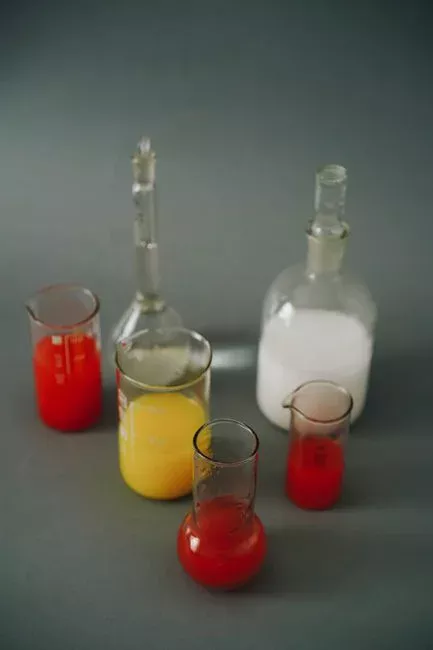
Dosing strategies vary by plant, but jar tests and published data provide a clear path for chemical selection. Four programs bracket the realistic options on poultry effluent.
| Program | Dosage | SS / TSS Removal | COD Removal | FOG / O&G | Source |
|---|---|---|---|---|---|
| PAC + anionic polymer (full-scale, 300 kPa, 100% influent) | 24 mg Al³+/L + 1.5 mg/L | 43 ± 15% | 43 ± 9% TCOD | 49 ± 8% | Del Nery 2007 |
| No chemicals (lab, 40% recycle, 450 kPa) | — | 57 ± 3% | — | 60 ± 14% | Del Nery 2007 |
| Ferric chloride + anionic polymer (lab) | 800 mg/L FeCl₃ + 900 mg/L Floccin 1115 | 97.3% TSS | 91% | ~100% | Dassey 2010 |
| Plain DAF baseline (literature) | — | 38–70% | — | 63–95% | Lovett & Travers 1986; Massé & Masse 2000 |
Two findings are critical. First, the same chemical program that delivered 43% SS in the full-scale Céu Azul reactor achieved 57% in the lab simply by switching to 40% recycle pressurization, demonstrating that hydraulic configuration is often more significant than chemistry when the saturator is correctly applied. Second, ferric chloride plus polymer reaches near-complete FOG removal, but the 800 + 900 mg/L dose significantly increases operating cost and risks alkalinity depletion on soft water (Dassey 2010 identified overdosing as a concern on low-alkalinity streams).
PAC remains the standard where sludge volume and pH tolerance are priorities; it works across pH 5–9, produces less metal-bearing sludge, and pairs effectively with an automatic chemical dosing skid for closed-loop PLC control. Jar tests on actual plant effluent are required for final validation, as both Del Nery 2007 and Dassey 2010 anchored their final recommendations in bench confirmation rather than literature extrapolation.
Process Flow: DAF Upstream of Biological or Membrane Polishing
The standard train for a poultry line is rotary screens → static screens → equalization → DAF → (UASB or SBR or MBR) → optional RO/UF for reuse. The Céu Azul plant (Del Nery 2007) utilizes this configuration upstream of two UASB reactors, with the equalization tank performing as much work as the DAF in stabilizing the influent load.
For reuse-grade discharge, the DAF sits in front of a flat-sheet polyamide RO membrane operating cyclically (Polymers 2026, vol. 18:1974). DAF pretreatment is the documented front-end for that train; the membrane study used DAF effluent as feed and reported stable hydraulic performance at 0.5 L/min crossflow with reversible and irreversible fouling dominated by residual organics rather than raw SS.
Sludge handling is an integral part of the sizing decision. DAF float from a poultry line typically runs 3–6% dry solids, is FOG-rich, and is difficult to dewater. A plate-and-frame filter press is the standard pairing, as it handles the FOG loading that causes centrifuges to struggle and produces a cake dry enough for off-site rendering or composting. Quantifying the protection benefit is essential for system design: cutting SS and O&G by 80–99% in the DAF stage prevents organic shock in downstream UASB reactors and protects MBR or RO systems from premature fouling.
Operating Strategy, Common Failure Modes, and 2026 Cost Ranges
Optimal operating strategy involves 40% recycle pressurization at 450 kPa, which outperforms 100% full-influent pressurization at 300 kPa in head-to-head trials (Del Nery 2007). The recycle loop provides the saturator's supply; therefore, the saturator should be sized for recycle flow rather than total plant flow, a design detail often overlooked in RFQs.
Failure modes engineers should account for include A/S mismatches, where exceeding the 30 mL air/L water ceiling causes microbubble coalescence and sudden removal collapse (Dassey 2010). Inconsistent polymer dosing causes 15–20% removal fluctuations in the same plant (Del Nery 2007); this is best addressed with an automatic dosing skid rather than manual operator adjustments. For a detailed failure-mode checklist, the DAF troubleshooting guide covers common recurring faults.
2026 cost ranges for food-industry DAF skids in the 5–50 m³/h class run $40,000–$350,000 CAPEX, depending on materials of construction, automation level, and included chemical-DAF ancillaries. This should be treated as an engineering estimate; the DAF unit decision framework provides the variables that influence final pricing. The base unit itself is covered in the HydropureWater DAF system catalog (4–300 m³/h, 13 standard models).
Frequently Asked Questions
What removal rates should a DAF target on poultry processing wastewater?
Chemical-DAF should hit 80–99% SS and O&G, 80–95% TSS, and 90%+ COD when paired with PAC or ferric chloride plus polymer (Del Nery 2007; Dassey 2010). Plain DAF without chemistry delivers only 38–70% SS and 63–95% FOG (Lovett & Travers 1986).
What saturation pressure and recycle ratio work best for poultry effluent?
40% recycle pressurization at 450 kPa outperformed 100% full-influent pressurization at 300 kPa in head-to-head trials at the Céu Azul plant, raising SS removal from 43 ± 15% to 57 ± 3% (Del Nery 2007). Design the recycle loop around the saturator, not total plant flow.
Which coagulant program is recommended for poultry slaughterhouse DAF?
PAC at 24 mg Al³+/L plus 1.5 mg/L anionic polymer is the documented full-scale baseline (Del Nery 2007); ferric chloride at 800 mg/L plus 900 mg/L anionic polymer reached 97.3% TSS, 91% COD, and ~100% FOG in jar tests (Dassey 2010) but increases OPEX and risks alkalinity depletion on soft water.