What Changes When PepsiCo Acquires an Arizona Plant?
Arizona wastewater requirements after a PepsiCo acquisition depend on the acquired plant’s permits, wastewater streams, discharge destinations, treatment performance and compliance history—not on PepsiCo’s ownership alone. Before closing, the buyer should obtain every applicable ADEQ or sewer authorization and amendment, map each stream and outfall, verify whether the permit remains valid after the transfer, and confirm that the installed treatment system can meet the applicable limits. The research identifies no PepsiCo Arizona plant, permit number, effluent limit or flow, so each site-specific requirement must be confirmed from the permit file and with Arizona counsel and the responsible regulator.
The acquisition creates no universal wastewater standard. The governing baseline comes from the facility’s existing authorizations, actual discharges, receiving environment and operating history. A purchase agreement may transfer assets and liabilities, but it does not establish that the buyer’s legal entity may discharge under a seller’s permit or that the installed equipment remains adequate for the acquired production plan.
Arizona counsel and the responsible ADEQ program must determine whether each authorization is transferable, requires notification, or must be modified because the permittee, operator, facility description, discharge source or ownership changed. The immediate transaction decision is narrow: can every wastewater discharge continue lawfully after closing under an existing authorization, or is a permit-modification or new-authorization path required?
The acquisition rules can be compared with the Freeport-McMoRan Morenci transaction precedent. EPA’s April 30, 2025 order identifies ADEQ Permit No. 99245 for that specific Greenlee County mining and processing facility. It does not identify a PepsiCo plant, establish a generic Arizona permit or resolve the acquired site’s transfer path. The available research does not disclose the target Arizona plant, permit number, wastewater flow, discharge point or effluent limits, so those facts remain closing-diligence items.
Map the Plant's Wastewater Routes Before Choosing Equipment
Each discharge route has a different legal and operational evidence trail. The acquisition team should build a source-to-discharge map before discussing treatment equipment, because a sanitary sewer authorization, an ADEQ discharge permit, an internal reuse loop and a zero-liquid-discharge facility impose different obligations.
Start with process water, contact water, clean-in-place wastewater, stormwater, sanitary sewage, contaminated runoff and any wastewater imported from another organization. For each stream, record the process origin, flow pattern, seasonality, sampling point, destination and responsible operator. The SBR design guide for snack food wastewater can help structure process-stream questions, but it cannot supply the Arizona target’s flows or chemistry.
| Wastewater route | What to establish | Documents or confirmations needed |
|---|---|---|
| ADEQ-authorized surface-water discharge | Permitted outfall, discharge characteristics and current compliance | ADEQ permit, attachments, amendments, monitoring reports, notices of violation and agency correspondence |
| Groundwater discharge | Whether discharge is permitted and which program controls it | ADEQ authorization, aquifer-protection records, site hydrogeology and relevant agency confirmation |
| Sanitary sewer discharge | Local pretreatment duties and discharge destination | Sewer-use or discharge agreement, pretreatment limits, sewer correspondence, permit conditions and monitoring history |
| Internal reuse | Treatment quality, storage, distribution and contamination controls | Process specifications, reuse records, validation results, operating controls and storage and piping drawings |
| Zero-discharge management | Containment, evaporation or residual handling without an authorized outfall | Site balance, pond and tank records, stormwater controls, groundwater monitoring and closure obligations |
| Purchased reclaimed water | Supply continuity and governing supply authorization | Supply contract, supplier permit and quality records; confirm whether the agreement survives the acquisition |
Zero discharge does not eliminate monitoring, containment or closure exposure. It describes how water is managed, not proof that every route is authorized. The buyer should also ask whether production depends on purchased reclaimed water and whether interruption, quality change or contract termination could shift water to another destination.
Verify Every Permit and Approval in the Closing File
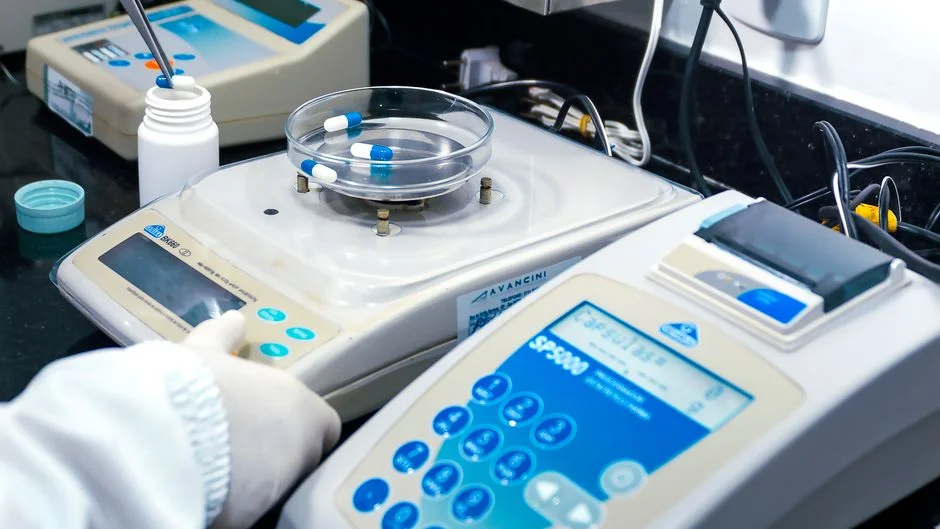
The permit file must establish the legal status, operating limits and transfer pathway for every applicable wastewater authorization. A seller’s compliance summary is not a substitute for the original permit and attachments.
Request all applicable ADEQ industrial wastewater, discharge, pretreatment, groundwater and aquifer-protection permits, together with amendments, renewals, monitoring reports, notices of violation, consent orders and agency correspondence. Also obtain sewer discharge and pretreatment agreements, supply agreements and reclaimed-water authorizations where relevant.
| Permit-file extraction | Diligence question | Transaction significance |
|---|---|---|
| Permittee and operator | Does the named legal entity match the entity that will own or operate the plant? | Potential transfer, notice or modification requirement |
| Authorized activity, source and outfall | Does the physical plant match the permitted facility? | Unpermitted discharge risk and required application |
| Effective date, limits and conditions | What must the buyer continue to satisfy? | Operating covenant and compliance blocker |
| Monitoring and reporting | Which samples, records and deadlines apply? | Staffing, laboratory and reporting cost |
| Corrective-action obligations | Are all deadlines and violations resolved? | Closing condition, reserve or indemnity |
| Financial assurance | Who is the obligor, and does a change of control affect coverage? | Replacement or reissued security |
| Sewer and supply agreements | Will the utility accept the successor and continue service? | Possible consent, renegotiation or operating interruption |
Reconcile every authorization against physical piping, tanks, treatment units, sampling points and outfalls. Then obtain written confirmation from Arizona counsel and the responsible authority regarding whether the permit is transferable, requires notification, requires modification or needs a new authorization. Do not infer wastewater duties from Arizona’s Title V air-quality program. The EPA’s April 30, 2025 Morenci order explains that Title V requires monitoring, recordkeeping and reporting, but that program is not evidence of the acquired plant’s wastewater requirements.
Test Whether the Existing Treatment Plant Can Support the Business
A permit may remain legally usable while the installed treatment system lacks the capacity or reliability needed for the acquired operation. Capacity testing must compare actual performance with peak, average and storm conditions, production rates, downtime and planned expansion.
Request at least one year of influent and effluent analytical data, operating-flow records, storm-event records, bypass and spill logs, pond-level data where applicable, and sampling chain-of-custody records. Review constituents relevant to the process, potentially including suspended solids, pH, oil and grease, metals, acidity or alkalinity, nutrients and process-specific chemicals. Numerical effluent limits must come from the applicable authorization, not from generic treatment guidance.
| Test area | Evidence to obtain | Decision to resolve |
|---|---|---|
| Hydraulic capacity | Measured flow history, production records, storm runoff and storage volumes | Can the train handle peak and storm flows? |
| Process capacity | Influent and effluent chemistry under representative loading | Can required effluent performance be maintained? |
| Reliability | Maintenance, alarm, bypass, outage, redundancy and operator records | Are manual interventions hiding capacity constraints? |
| Residuals | Sludge quantity, characteristics, storage and disposal records | Is the residual route available and compliant? |
| Expansion | Planned production changes and reuse objectives | Is reserve capacity adequate for the business plan? |
For a food-processing plant, specifically examine batch-room clean-in-place rinses, crusher process water, bad batches and seasonal production effects using site data. Do not transfer results from another PepsiCo facility. The vegetable-processing wastewater treatment design provides a technical reference, not evidence about the acquired Arizona stream.
Model loss of reuse, recycling or zero-discharge operation. A contamination event, treatment failure, power interruption or sudden production increase can change storage demand, shift water to another destination or create a discharge that would not occur under normal operation. A system that handles average flow but lacks storage, redundancy or controlled bypass provisions may not provide sufficient operating assurance.
Use Equipment Evidence Without Transferring Another Plant's Results
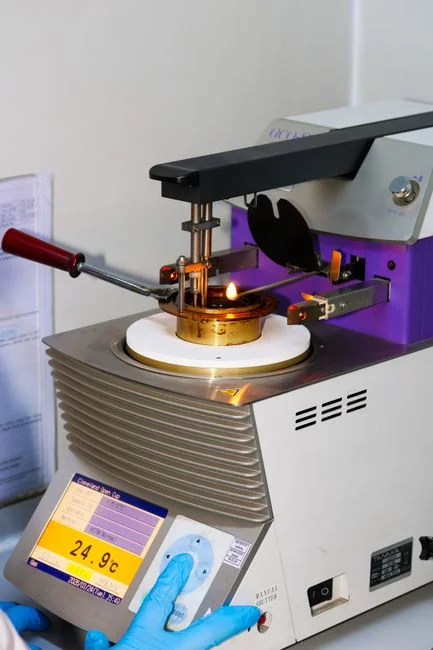
Added treatment should be selected only after the permit duties, wastewater characterization and operating envelope are known. Depending on site evidence, alternatives may include clarification, an industrial DAF system for food-processing wastewater, biological treatment, an MBR wastewater treatment system, filtration, disinfection, dewatering or chemical dosing.
Equipment selection should reflect contaminant load, flow variation, required effluent performance, residual handling, available footprint and operating constraints. A generic “food-processing wastewater” label is not a design basis.
| Evidence | Scope | Permitted use in Arizona acquisition |
|---|---|---|
| Aquacycl’s Fresno laboratory results: 99% BOD/COD removal, 100% TSS removal and 98% nitrates and TKN removal | Early project-development results for potato lines at the PepsiCo Fresno facility | Comparative technology evidence only |
| Seven-month modular onsite demonstration | PepsiCo Fresno project-development case | Reason to require validation under Arizona site conditions |
| Average elimination of 110 tons of greenhouse-gas emissions per month | Aquacycl’s reported Pepsi plant corporate case study | Not a design input, cost basis or guaranteed result |
Aquacycl reports that its early project-development laboratory results achieved 99% BOD/COD removal, 100% TSS removal and 98% nitrates and TKN removal for potato lines after a seven-month modular onsite demonstration. Its separate average figure of 110 tons of greenhouse-gas emissions eliminated per month at the Pepsi plant is a corporate case-study claim.
Neither claim establishes performance, cost, energy use or compliance for the Arizona acquisition. Use them to frame a site-specific engineering validation plan, supported by Arizona permit limits, measured wastewater data, a mass-balance check and an independent performance test.
Convert Wastewater Findings into Transaction Decisions
Every unresolved wastewater issue should become a classified finding, a named owner, a decision date and a funded corrective action. The classification determines whether the issue must be resolved before signing, at closing or through a post-closing covenant.
| Finding | Potential transaction treatment | Required support |
|---|---|---|
| Compliance blocker | Closing condition or prohibition on the affected discharge until cured | Permit file, violation record, regulator correspondence and proposed cure |
| Permit-modification requirement | Condition precedent with schedule and cost allocation | ADEQ pathway, application requirements and timing |
| Near-term capital need | Price adjustment, reserve, seller credit or funded covenant | Site-specific engineering estimate and vendor proposal |
| Historical liability | Indemnity, insurance review or separate settlement | Baseline sampling and complete compliance history |
| Operating-cost exposure | Operating model, staffing plan and price adjustment | Flow, chemistry, labor, utilities and consumables |
| Routine improvement | Post-closing capital plan | Engineering comparison and demonstrated benefit |
Permit-transfer uncertainty, exceedances, unremediated contamination, inadequate capacity and missing monitoring records may justify a closing condition or indemnity, but only when the site record supports the concern. Do not insert boilerplate protections without identifying the underlying exposure.
Commission pre-closing baseline sampling and an equipment inspection to distinguish acquisition-date conditions from later performance changes and to support enforcement of seller representations. Quantify identified gaps using vendor proposals and the buyer’s flow, chemistry, labor, energy and consumables data. The supplied research contains no defensible Arizona plant-specific wastewater cost figure, so neither a purchase-price adjustment nor a capital reserve can be stated reliably without those inputs.
Any site-specific estimate should cover equipment, civil work, installation, commissioning, analytical validation, training, consumables, sludge disposal and warranty exclusions. A headline equipment price does not answer the capital or operating-cost question.
Closing Checklist for Arizona Wastewater Due Diligence

The wastewater workstream should close in a fixed sequence: retrieve the complete permit file, reconcile it with seller representations, conduct baseline sampling, inspect the treatment assets, confirm the transfer path with Arizona counsel and the responsible authority, and quantify every remaining gap.
| Sequence | Required deliverable | Release condition |
|---|---|---|
| 1. Retrieve records | Complete permit, amendment, agreement, monitoring and enforcement file | No unexplained authorization gap |
| 2. Reconcile representations | Permit-to-discharge and representation-to-record comparison | Discrepancies assigned |
| 3. Establish baseline | Documented sampling and analytical results | Chain of custody and methods verified |
| 4. Inspect assets | Capacity, condition, redundancy and bypass assessment | Physical system matches documents |
| 5. Confirm transfer path | Legal and regulator confirmation for each authorization | Closing treatment assigned |
| 6. Quantify gaps | Funded engineering and operating-cost model | Owner, date and funding source recorded |
Do not rely on continued authority to discharge until the specific authorization and transfer pathway are confirmed. If legal review, baseline records and field inspection disagree, resolve the discrepancy before closing rather than carrying it forward as an assumed compliance item.
Frequently Asked Questions
Do Arizona wastewater permits automatically transfer when PepsiCo acquires a plant?
No automatic transfer should be assumed. Transferability, notice or modification must be confirmed for each ADEQ authorization, sewer agreement and supply agreement with Arizona counsel and the responsible authority, including whether the acquiring entity may hold and operate it.
How much will wastewater treatment cost for the acquired Arizona plant?
The supplied research provides no defensible Arizona plant-specific cost. Request a site-specific estimate using permit limits, measured flow and chemistry, equipment condition, residuals, labor, utilities and consumables. The supplier should state the basis of price and identify exclusions rather than provide only a headline equipment price.
How should treatment equipment be sized for the acquired plant?
Size against measured average, peak and storm flows; expected production changes; reuse objectives; storage and redundancy requirements; and residual-handling constraints. A containerized MBR sizing guide for Phoenix can inform the method, but current permit conditions, influent testing and the final proposal remain controlling.
What should PepsiCo request from a wastewater equipment supplier?
Request a scope tied to measured site conditions and applicable limits that includes equipment, civil work, installation, commissioning, analytical validation, training, consumables, sludge disposal and warranty exclusions. The supplier should also state design flows, performance criteria, redundancy, controls, utility requirements and the basis for the proposed capacity.
Can another PepsiCo plant's treatment results be used to justify the Arizona system?
Only as comparative evidence. The Fresno results and Aquacycl’s corporate emissions claim do not establish Arizona limits, equipment sizing, cost, energy use or guaranteed performance for the acquired plant. Use them to frame testing and validation, not to replace site-specific data and permit analysis.