What Wastewater Obligations Follow a PepsiCo Mexico Plant Acquisition?
When PepsiCo acquires a plant in Mexico, wastewater compliance must be resolved before closing. The first step is to map each water source and discharge outlet: Tecma identifies NOM 001 SEMARNAT 1996 for industrial wastewater discharged to ground or a septic system under federal jurisdiction, and NOM 002 SEMART 1996 for industrial wastewater discharged to a municipal sewer. The acquirer should verify permit ownership, transferability, conditions, renewal history, annual testing, annual reporting and the accredited Mexican laboratory records. It must also assess historical contamination because a purchaser may immediately assume responsibility for contamination found on the property. Treatment selection follows characterization of flow, pollutants, variability, reuse objectives and the full source-to-discharge system.
The governing obligations depend on the plant’s actual water source, discharge destination, permit conditions, operating history and contamination history—not simply on PepsiCo’s identity as acquirer. An identified permit indicates a regulatory route, but it does not establish that the permit can be transferred to PepsiCo’s legal entity or that the installed system can continue operating lawfully after closing.
PepsiCo should therefore run three parallel workstreams:
- Permit and authority review: establish the controlling federal or state instrument, authorization status, permit conditions, reporting history and lawful transfer path.
- Legacy-contamination assessment: investigate historical releases, septic-system use, groundwater conditions and contaminant migration independently of permit status.
- Physical-system assessment: test whether collection, equalization, treatment, discharge, monitoring, sludge handling and bypass controls can perform as required.
Findings should translate into pre-closing conditions, indemnities, remediation allocation, capital commitments and named post-closing controls. The legacy wastewater liability due-diligence framework provides a useful structure for keeping these issues separate.
Map Each Water Source and Discharge Outlet
Tecma’s two pathways distinguish the regulatory route by water source and discharge destination, so every outlet must be mapped before permits or treatment equipment are assessed. A mixed site can require separate regulatory cases; a process line discharging to ground cannot be judged against the municipal-sewer pathway applied to another line.
| Documented water source | Documented discharge destination | Pathway identified by Tecma | Diligence action |
|---|---|---|---|
| Well | Ground or septic system | Federal jurisdiction associated with NOM 001 SEMARNAT 1996 | Obtain well records, permit narrative and physical discharge-point evidence; have Mexican counsel confirm the controlling authority and instrument. |
| Municipal supply | Municipal sewer | State pathway associated with NOM 002 SEMART 1996 | Obtain supply and sewer agreements, pretreatment requirements, permit conditions and sewer correspondence. |
| Multiple sources or destinations | Ground, sewer, septic system or another receiver | Evaluate each outlet separately | Build a stream-specific map and confirm which federal or state requirements govern each route. |
The map should cover wells, municipal supply, process-water sources, collection lines, equalization, treatment, sampling points, bypasses and final outlets. It should also identify where streams combine or separate. The supplied research distinguishes federal groundwater or septic-system discharge from municipal-sewer discharge; it does not establish requirements for every other receiving route, so those routes require specific confirmation from Mexican environmental counsel.
Request well construction records, utility invoices, water-supply agreements, source maps, drainage drawings, sewer agreements, permit narratives and physical discharge-point records. Then reconcile those documents against a site walk. Undocumented bypasses, unidentified discharge points and a mismatch between permit drawings and installed piping are diligence findings, not administrative details.
For food and beverage sites, the food and beverage wastewater pretreatment requirements can support the diligence framework, but it cannot substitute for Mexican authorization or site-specific limits.
Confirm the Applicable NOM, Permit and Authority
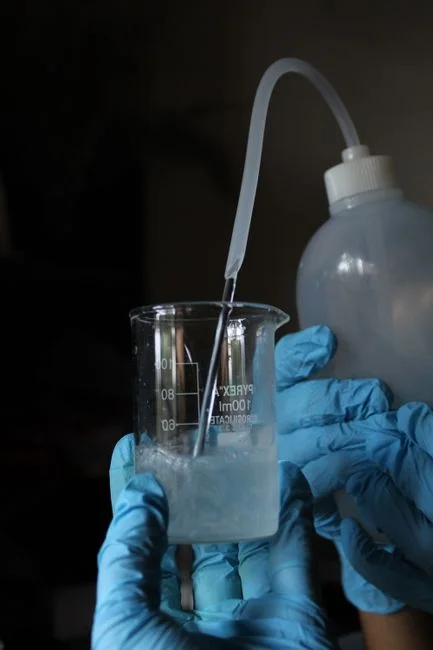
Mexican Official Norms are binding technical standards, while the site-specific permit and written authority or counsel confirmation establish the conditions applicable to the acquired outlet. NAPS, in its 2024 update, describes NOMs as technical standards containing binding specifications, values and characteristics that may establish maximum allowable contaminant limits for contaminants in water, air and soil.
For the source-and-discharge scopes supported by the research, Tecma identifies:
- NOM 001 SEMARNAT 1996 for industrial wastewater discharged to ground or a septic system under federal jurisdiction.
- NOM 002 SEMART 1996 for industrial wastewater discharged to a municipal sewer.
The supplied research does not provide pollutant-limit values for either standard. The diligence team should therefore obtain the official instruments and the permit conditions rather than import generic limits from another jurisdiction, industry or discharge route.
Request the current permit, supporting authorizations, renewal history, discharge-point descriptions, permit conditions, compliance correspondence, inspection findings and discharge-monitoring reports. Confirm whether the permit is current, restricted, suspended, modified or under renewal. Most importantly, determine whether PepsiCo’s acquiring entity can hold and operate it after closing; an identified Mexico wastewater permit transfer cannot be assumed from property ownership.
Mexican counsel should identify the controlling federal or state authority and confirm the authorization applicable to each outlet. Preserve the permit register, authorization correspondence, official NOM text and written authority confirmations in the transaction data room. These documents establish the regulatory baseline; they do not establish the condition of the plant or resolve contamination.
Build the Testing and Reporting Compliance Baseline
Tecma states that annual wastewater testing is required and describes the municipal-sewer pathway as testing performed by an accredited and authorized Mexican laboratory. Tecma also identifies annual reporting for industrial wastewater discharges and testing and states that almost all wastewater permits and authorizations are renewed every year.
| Evidence to obtain | Control question | Required owner before closing |
|---|---|---|
| Permit, renewals and authority correspondence | Is the authorization current, and what conditions and deadlines apply? | Environmental manager and Mexican counsel |
| Laboratory reports and chain-of-custody records | Was testing performed by an accredited and authorized Mexican laboratory under the approved method? | Qualified environmental coordinator |
| Annual reports and submission receipts | Were required reports submitted on time, and did the authority raise exceptions? | Environmental manager |
| Site-specific monitoring instructions | Are daily, monthly, annual or permit-conditioned duties in addition to the annual baseline? | EHS and plant operations |
| Renewal file and authority register | Who prepares, submits and retains each renewal? | Accountable manager before expiry |
Do not treat “annual” as a complete compliance schedule. Verify actual due dates, covered parameters, approved sampling points, analytical methods and reporting recipients. Determine whether site-specific permit conditions require daily, monthly or other monitoring. Obtain historical laboratory reports, chain-of-custody documentation, annual reports, renewal evidence and authority findings.
Missing records, inconsistent parameter lists or unexplained changes in sampling method should trigger targeted review rather than an assumption of compliance. The review should determine whether the issue is a documentation gap, a sampling-design gap, a laboratory issue, an operational deviation or evidence of noncompliance.
Before closing, assign named owners for sampling, laboratory coordination, report review, permit renewal, authority correspondence and record retention. The environmental manager should compare the permit against the current process before the laboratory finalizes its sampling plan.
Separate Permit Compliance from Legacy Contamination

Tecma states that a purchaser immediately becomes responsible for prior contamination found on the property. That makes contamination a transaction issue to resolve before closing, not a defect that becomes relevant only after the new owner assumes control.
Review historical spills, disposal practices, groundwater use, septic-system use, soil and groundwater findings, and possible contaminant-migration pathways. Ask whether former operations used chemicals that are absent from current operations and whether drainage, fill, tanks, floors or collection lines could now convey contamination to groundwater or a discharge point.
Where documents are missing, contamination is suspected or the wastewater system appears materially changed, commission targeted sampling and independent engineering review. The scope should be defined by a contamination hypothesis, not by a generic “environmental site assessment.” Sampling locations and analytes should address plausible pathways identified in the records and site inspection.
Do not infer that a valid permit demonstrates that historical contamination has been resolved. The permit may authorize current discharges while providing no evidence about the condition of soil, groundwater or abandoned infrastructure.
Specialist Mexican environmental counsel should allocate responsibility through the purchase agreement, closing conditions, indemnities, remediation provisions and any required escrow or holdback. This should distinguish:
- known contamination and identified migration risk;
- remediation obligations triggered by current or historical operations;
- future permit compliance and operating controls; and
- capital work required to restore treatment performance.
The objective is not to eliminate every environmental risk through price negotiation. It is to identify the obligation, establish its evidence, assign an owner and prevent an undefined cleanup obligation from becoming an unfunded post-closing condition.
Assess the Complete Wastewater Treatment System
A treatment unit alone is not a complete wastewater system; sizing and upgrade decisions require the full source-to-discharge route. Request wastewater flow, pollutant parameters, variability, discharge route, reuse objectives, available footprint, sludge-handling constraints and operating history. The supplied research contains no plant-specific flow or pollutant data, so it cannot support a definitive equipment selection.
Inspect collection, equalization, treatment, discharge, metering, sampling, bypasses, sludge handling and maintenance. Check whether hydraulic capacity corresponds to actual production and cleaning cycles, whether equipment can handle expected pollutant variability, and whether controls prevent untreated discharge. An unapproved bypass, leaking collection line or unidentified discharge point can defeat an otherwise adequate treatment train.
| Process need | Technology to assess | Selection basis |
|---|---|---|
| Suspended solids, oil and grease, FOG or colloidal-matter removal | Industrial DAF system for solids, FOG and oil removal | Characterization, permit conditions, flow, footprint and sludge-handling constraints |
| Biological treatment and high-quality reuse | MBR treatment for biological processing and water reuse | Influent characterization, discharge and reuse objectives, available area and operating burden |
| pH adjustment or coagulant and flocculant addition | Automatic chemical dosing system | Required process chemistry, dosing control, chemical storage and operator requirements |
HydropureWater’s DAF range is 4–300 m³/h across 13 standard models, while its MBR range is 10–2,000 m³/day with filtration below 1 μm. These are equipment ranges, not design criteria for the acquired plant. Equipment should be selected only after the applicable permit limits, wastewater variability, footprint and sludge route are documented.
Use the PepsiCo Treatment Evidence Without Misapplying It
The PepsiCo Fresno case study reports a 7-month demonstration of modular onsite BioElectrochemical Treatment technology at a U.S. bottling facility. The case study, published in October 2023, reports BOD removal above 1,350 lb/day, TSS removal up to 140 lb/day and average monthly savings of 22%.
The same source reports demonstration influent BOD as high as 149,500 mg/L. That unusually high concentration is useful evidence for one purpose: a system must be evaluated under the wastewater conditions it will actually receive. It does not establish that the same technology, configuration or performance will apply at a Mexican plant.
Do not transfer the Fresno case’s performance, cost, energy or compliance claims to the acquisition without site-specific wastewater data, Mexican permit limits and an engineering validation plan. The case involved a U.S. bottling facility, a different regulatory setting and a different discharge arrangement. Any comparison must be rebuilt around the acquired site’s permit route, treatment objective, sewer or groundwater receiving conditions and operating variability.
The defensible lesson is the method rather than the result: use a staged demonstration with measurable acceptance criteria. Define the influent basis, test protocol, duration, operating envelope, analytical methods, acceptance limits, operator workload and corrective-action process before treating the demonstration as a procurement commitment.
Set Closing Conditions and Post-Closing Controls
Unresolved permit-transfer issues, material contamination, treatment deficiencies and missing compliance records should appear explicitly in closing conditions, indemnities, remediation provisions or the capital plan. Do not accept a general representation that the seller is “compliant”; identify the document, condition, physical defect and remedy attached to each unresolved issue.
Tecma reports that SEMARNAT may inspect a wastewater site without advance notice. The site should therefore maintain an inspection-ready file containing the current permit, renewal evidence, laboratory reports, chain-of-custody records, submissions, monitoring records, equipment logs and corrective-action files.
| Risk finding | Pre-closing response | Post-closing control |
|---|---|---|
| Permit cannot be held or operated by the acquiring entity | Closing condition; obtain authority confirmation and establish transfer steps | Authority correspondence owner and renewal calendar |
| Material legacy contamination | Targeted assessment, remediation scope, indemnity or escrow | Named remediation plan, sampling protocol and verification criteria |
| Treatment gap or unreliable compliance margin | Capital scope, supplier validation plan and agreed acceptance criteria | Operating logs, preventive maintenance and change control |
| Missing sampling or reporting records | Reconstruct baseline and define regulator-facing remediation | Monthly compliance review and centralized evidence retention |
Define who may stop an unauthorized discharge, communicate with the authority, preserve samples and approve and document remediation. Change control should cover production, wastewater chemistry, water source, drainage configuration and treatment operation because historical sampling may no longer describe the discharge after a modification.
The transition from diligence to operations should end with a named-owner environmental-management and operating-control schedule. Each obligation should have an owner, due date, required record, escalation route and review forum.
Frequently Asked Questions
Can PepsiCo rely on the seller’s existing wastewater permit after closing?
No automatic transfer should be assumed. Mexican counsel and the relevant authority should confirm the permit holder, transferability, conditions, renewal status and whether PepsiCo’s acquiring entity may hold and operate the authorization. The title deed alone does not resolve the permit question.
How much should PepsiCo budget for a wastewater upgrade in Mexico?
The supplied research supports no universal acquisition-cost or payback figure. A defensible estimate requires the permit file, wastewater characterization, engineering condition assessment and a supplier scope covering equipment, civil work, installation, commissioning, analytical validation, training, consumables, sludge disposal and warranty exclusions. PepsiCo should require the supplier to state the basis of price and identify exclusions rather than accept a headline equipment price.
What wastewater data should PepsiCo request before sizing equipment?
Request wastewater flow, pollutant parameters, variability, discharge route, applicable permit limits, reuse objectives, available footprint, sludge-handling constraints and operating history. Include collection, equalization, sampling, metering, bypass and maintenance records. Without these inputs, neither DAF nor MBR capacity can be selected responsibly.
When is DAF more appropriate than MBR for an acquired food and beverage plant?
DAF should be evaluated when suspended solids, oil and grease, FOG or colloidal matter drive the removal duty. MBR should be evaluated when biological treatment and high-quality reuse are required. Both remain subject to characterization, the Mexican permit conditions, footprint, sludge handling and operating requirements; an acquisition announcement is not a sufficient design basis.
How should the site prepare for an unannounced environmental inspection?
Keep current permits, renewal evidence, analytical results, chain-of-custody records, monitoring data, operating logs and corrective-action files inspection-ready. Pre-authorize personnel to accompany inspectors and provide records. The response protocol should identify who can stop an unauthorized discharge, communicate with the authority, preserve samples and approve documented remediation.