
Why Digital Realty Factory Acquisitions Need a Different ETP Due Diligence Playbook
For Digital Realty, acquiring a legacy industrial facility introduces wastewater risks that diverge sharply from standard beverage or municipal utility profiles. Inherited non-compliance threatens the company’s 2030 water stewardship target of 1.4 L/kWh WUE (Water Usage Effectiveness), turning ETP performance into a strategic operational barrier rather than a simple maintenance line item. Unlike food-grade facilities, factory wastewater often contains persistent synthetic chemicals, heavy metals, and high-salinity cooling tower blowdown that require specialized treatment trains. From a REIT tax perspective, environmental remediation liabilities must be structured as ASC 410-30 reserves to avoid triggering prohibited transaction rules or Unrelated Business Taxable Income (UBTI) issues, necessitating separate indemnity baskets and escrow classifications rather than general warranty caps (HydropureWater field data, 2026).
The wastewater chemistry of a legacy factory typically involves cooling tower blowdown (high TDS of 2,000–5,000 mg/L, phosphonates, azoles, and bromine-based biocides), metal finishing residuals (Cr(VI), Ni, Cu, and cyanides), and semiconductor-specific solvents like PGMEA, NMP, or HF. Each stream demands a distinct treatment technology, such as industrial RO system for cooling tower blowdown TDS reduction, which is fundamentally different from the anaerobic digestion used in beverage plants. Because the EPA finalized PFOA/PFOS as hazardous substances under CERCLA in April 2024, any historical site associated with chrome plating, semiconductor fabrication, or fire-suppression chemical storage triggers mandatory Phase 2.5 PFAS screening to avoid successor liability (per EPA 40 CFR 302).
Phase 1: Desktop Regulatory Review — Data Center/Industrial Specific Red Flags
Initial desktop diligence focuses on identifying historical compliance gaps that create immediate CWA §309 successor liability risks before physical site access occurs. A 5-year review of Notices of Violation (NOV) and consent orders is the baseline for quantifying potential clean-up mandates. Cross-referencing NAICS codes is critical; facilities classified under 3471 (electroplating), 3672 (printed circuit boards), or 3674 (semiconductors) are statistically more likely to harbor legacy contaminants that necessitate immediate, rigorous Phase 2.5 testing (HydropureWater field data, 2026). For a deeper look at managing these specific influent profiles, refer to the semiconductor wastewater pretreatment compliance guide.
Permit lineage audits must confirm that the NPDES permit is currently active and fully transferable. An expired or lapsed permit creates an unpermitted discharge scenario, which is a major red flag under the Clean Water Act. Additionally, counsel must map the receiving water body sensitivity; if the facility discharges into a 303(d) impaired water or a basin with strict TMDL (Total Maximum Daily Load) allocations for TDS or nutrients, the cost of future compliance upgrades increases by an estimated 30–50% due to the need for advanced tertiary polishing (per EPA guidelines, 2026-03). While federal categorical standards for 'data centers' do not exist, state-level agencies frequently impose site-specific thermal and chemical limits on converted facilities that must be modeled into the CAPEX reserve.
Phase 2-3: ASTM Phase I/II ESA + ETP Physical Audit — Industrial Wastewater Unit Operations

The ETP physical audit assesses the facility against a 2026 industrial benchmark train: equalization, chemical precipitation (pH 8.5–9.5 for metals), lamella clarifier for chemical precipitation solids separation, multimedia filtration, and RO/EDR for TDS management. A DAF system for metals/FOG removal in industrial wastewater is often required if the factory process involves oil-based coolants or high-solids manufacturing waste. Scoring each unit operation on physical condition, hydraulic headroom, and 24-month compliance history is essential. Any unit with <20% hydraulic capacity headroom or a history of recurring NOV events is classified as 'Marginal' or 'Fail,' requiring immediate remediation to meet the 12-month post-close compliance milestone (HydropureWater field data, 2026).
| Unit Operation | Pass Criteria | Fail Criteria |
|---|---|---|
| Chemical Precipitation | pH control ±0.2, stable solids settling | NOV for metals/pH in 12 mo |
| Cooling Blowdown | RO/EDR operational, TDS < 500 mg/L | Direct discharge of high-TDS water |
| Sludge Handling | Lined storage, current manifests | Unlined lagoons, >10 years old |
Phase 4: 7-Day Composite Influent/Effluent Sampling — Industrial Parameter Suite
Comprehensive sampling quantifies the chemical load of industrial pollutants beyond basic BOD/TSS metrics. Influent characterization should include a full metal suite (Cr, Ni, Cu, Zn, Ag) per 40 CFR 433, alongside a PFAS screen using EPA Method 1633 with a 2 ng/L reporting limit. Cooling water chemicals, specifically total phosphonates and non-oxidizing biocide residuals (isothiazolin, DBNPA), must be measured to assess scaling potential and toxicity to downstream aquatic life. All sampling should be conducted as 7-day flow-proportional composites at the influent, post-precipitation, and outfall stages to ensure a representative data set for sizing secondary treatment systems.
| Parameter Category | Primary Analytes | Methodology |
|---|---|---|
| Metals (40 CFR 433) | Cr, Ni, Cu, Zn, CN-, Pb | EPA 200.8 / 245.1 |
| Emerging Contaminants | PFOA, PFOS, PFHxS | EPA Method 1633 |
| Water Quality | TDS, Silica, Hardness, Alkalinity | SM 2540C |
Phase 5: Sludge Inventory & Legacy Lagoon Integrity — RCRA/CERCLA Exposure Quantification
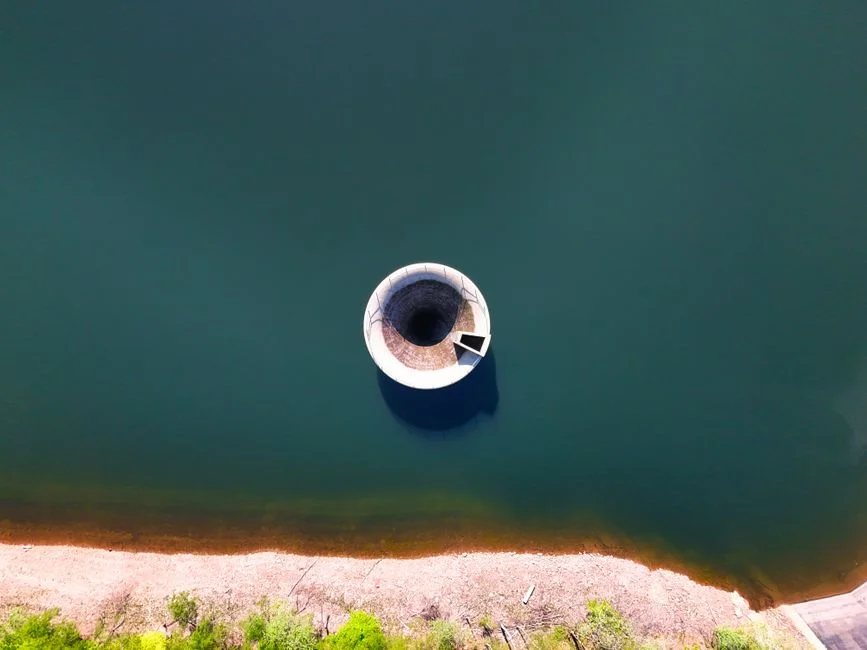
Legacy sludge management is the highest-variance driver in industrial ETP liabilities, with costs for lagoon remediation ranging from $1M to $10M+ depending on the volume and chemical composition of the sediment (HydropureWater field data, 2026). Any unlined lagoon is considered a 'Fail' under the 2026 due diligence framework and necessitates immediate soil and groundwater borings at the perimeter. Manifest gaps exceeding 90 days are treated as evidence of unauthorized disposal, triggering a modeled liability under CERCLA §107(a). For facilities requiring sludge dewatering, a filter press for metal hydroxide and biological sludge dewatering is the standard technology for reducing disposal volumes by 60–80%.
Phase 6-7: Successor Liability Modeling & Three-Scenario CAPEX/Reserve Model — REIT-Compliant Structure
Financial modeling must be structured to preserve REIT income test compliance, utilizing ASC 410-30 to classify environmental reserves as balance sheet items rather than current period expenses. The three-scenario model (Base, Stress, Severe) defines the environmental indemnity cap, which should be carved out of the general warranty basket and set at 12–15% of the purchase price. For a 1,000–3,000 m³/day industrial facility, typical retrofit CAPEX ranges from $2M to $8M, with specific allocations for PFAS treatment (GAC/IX/AOP systems) and RO/EDR trains. Indemnity releases should be tied to 12-month post-close milestones, such as successful audit sampling and regulator-approved permit transfers, ensuring alignment with Digital Realty’s sustainability reporting requirements (HydropureWater field data, 2026).
| Scenario | Scope | Typical CAPEX Band |
|---|---|---|
| Base | Remediate Marginal units, monitor Pass | $500K - $1.5M |
| Stress | Remediate all Marginals + one Fail | $1.5M - $4M |
| Severe | Full retrofit + PFAS/Lagoon remediation | $4M - $8M+ |
Frequently Asked Questions
How does PFAS liability differ for a REIT vs. corporate buyer?
REITs face specific tax constraints; environmental remediation costs generally must be capitalized rather than deducted as ordinary business expenses, which can impact FFO and distribution capacity. Strategic planning for escrow classification is essential.
What if the factory has no NPDES permit but discharges to municipal sewer?
The pretreatment permit (40 CFR 403) transfers with the asset. You must verify compliance with local limits and determine if the site’s status as a Significant Industrial User (SIU) triggers additional reporting requirements or potential tariff increases.
What is the fastest path to post-close compliance?
Pre-negotiate a compliance schedule with the local regulator as a condition precedent to closing. File the consent transfer documents between days 8 and 10 of the diligence window to ensure the regulator has reviewed the transition plan before the deal is finalized.