Why a Legacy Bottling ETP Is a Material Deal Risk in 2026
A legacy bottling ETP can transfer $5–$50 million of undisclosed environmental liability to a buyer through three documented channels: pre-close consent exceedances that mature into fines, unlined sludge lagoons that trigger remediation under successor liability, and expired permits that shut the line on day 30 of ownership (HydropureWater field data, 2026). For a corporate development lead evaluating a bottling target, the effluent treatment plant is not an operational footnote — it is a deal-control item that drives purchase-price adjustment, indemnity scope, and closing condition language. Treat it with the same rigor you would give to a working-capital adjustment or a customer-concentration clause.
Define the liability explicitly: historic non-compliant discharge, unlined sludge lagoons, expired discharge consents, and undisclosed Notices of Violation (NOV) from the prior 5 years. Each category maps to a different legal exposure — RCRA for sludge, CERCLA for groundwater, the local consent regime for ongoing discharge — and each has a different capex and reserve profile. The Nigerian Bottling Company (NBC) case pattern shows what defensible evidence looks like: a state-led independent technical team plus academic experts conducted site inspections, water sampling, on-site testing, and laboratory analysis before approving the ETP, and the regulator then published the findings in a stakeholder forum (Edo State Government, 2026-04). An acquirer should require the same evidentiary standard in confirmatory diligence — anything less is unverifiable.
Quantify the engineering exposure. Typical beverage bottling wastewater carries influent BOD of 1,500–4,000 mg/L and COD of 3,000–8,000 mg/L, dominated by residual sugars and CIP chemicals; an under-sized or non-aerated legacy ETP will routinely breach biochemical oxygen demand and total suspended solids consent values. Under Coca-Cola's 2026 water stewardship commitments, the acquired plant is expected to meet or exceed local discharge consent within 12 months of close, and any non-conformance on the first post-close sampling event can trigger the indemnity — see the full factory acquisition ETP due diligence protocol for legacy wastewater for the equivalent semiconductor-fab scope.
The 7-Phase ETP Due Diligence Protocol for a Coca-Cola Acquisition
Hand this checklist to your QofE provider on day one of confirmatory diligence. Each phase produces a discrete deliverable that feeds the next, and each has a defined exit gate before the deal team moves on.
- Phase 1 — Desktop Regulatory Review. Pull all discharge consents, NOV history, and self-monitoring reports for the prior 5 years. Flag any consent operating within 80% of its limit; that band typically signals a system already in stressed compliance.
- Phase 2 — ASTM Phase I and Phase II ESA. Phase I (ASTM E1527-21) identifies Recognized Environmental Conditions; Phase II advances to soil, groundwater, and sediment sampling for legacy contaminants and any unlined sludge lagoon leachate.
- Phase 3 — ETP Physical and Process Audit. Walk the plant, score each unit operation (screening, equalization, anaerobic reactor, aerobic basin, clarifier, sludge handling), and rate each Pass / Marginal / Fail.
- Phase 4 — Influent and Effluent Sampling. Run 24-hour composite sampling across at least 7 operating days; test for BOD, COD, TSS, pH, temperature, sugars, and nutrients. Compare to consent limits and to the NBC EIA lab-analysis benchmark.
- Phase 5 — Sludge Inventory and Disposal Trail. Estimate on-site sludge mass, lagoon age, liner integrity, manifest records, and final disposal route. This phase often surfaces the largest hidden liability.
- Phase 6 — Successor-Liability Legal Review. Scope CERCLA, RCRA, EU IED, and local equivalents; confirm which pre-close violations transfer with the share or asset purchase.
- Phase 7 — Financial Model. Convert every finding into a CAPEX line, an OPEX delta, and a contingent reserve; present a 3-scenario base / mid / worst-case model.
The 7-phase protocol above mirrors the structure used in the electronics fab legacy wastewater audit framework, adapted from semiconductor fab requirements to beverage effluent parameters. The exit gate for each phase is a written sign-off that goes into the data room before the next phase opens — never run Phase 4 sampling before Phase 3 has identified the unit operations you need to instrument.
| Phase | Deliverable | Indicative Duration | Exit Gate |
|---|---|---|---|
| 1 — Desktop Regulatory | Consent & NOV register, 5-year self-monitoring trend | 5–7 days | Counsel sign-off on flagged consents |
| 2 — Phase I & II ESA | REC list, soil/groundwater lab results | 15–25 days | Phase II report accepted by QofE |
| 3 — ETP Physical Audit | Unit-operation scorecard, photo log | 3–5 days on-site | Pass / Marginal / Fail ratings locked |
| 4 — Sampling | 7-day composite influent/effluent lab data | 14 days (incl. lab turnaround) | Consent exceedance memo |
| 5 — Sludge Audit | Mass estimate, manifest trail, lagoon integrity | 5–10 days | Reserve recommendation |
| 6 — Successor-Liability Review | Pre-close violation transfer memo | 5 days | Counsel sign-off |
| 7 — Financial Model | 3-scenario capex/opex/reserve model | 3–5 days | Deal team sign-off |
Inside the ETP: What a Compliant Bottling Effluent Train Looks Like in 2026
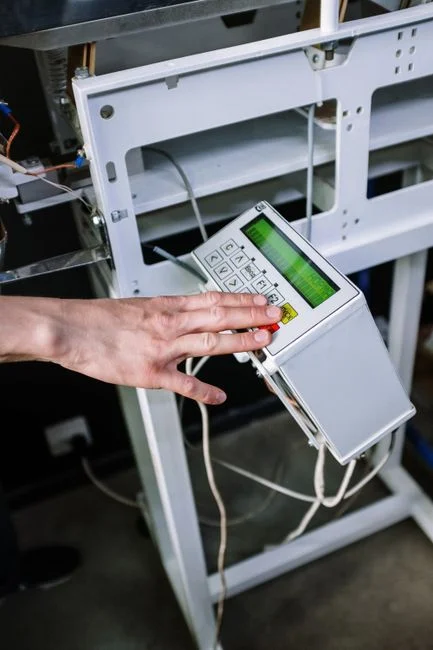
A compliant bottling ETP in 2026 is a two-stage biological train: anaerobic digestion to convert the high sugar and organic load into recoverable biogas, followed by aerobic polishing to drop residual BOD and TSS to consent levels. The anaerobic stage is sized for 6–10 kg COD/m³·day with a 20–30 day HRT, and the aerobic stage is sized for 0.3–0.6 kg BOD/m³·day with a 4–8 hour HRT on the secondary clarifier. The NBC reference design — a 2,500 m³/day facility with an HDPE outfall pipeline and state-supervised EIA — is the current benchmark for compliant beverage effluent in 2026 (Edo State Government, 2026-04).
Typical front-end unit operations include a rotary mechanical bar screen for ETP headworks with 6–10 mm openings, grit removal, and flow equalization sized for 1.5–2× the average diurnal flow to dampen batch CIP surges. pH correction to 6.5–7.5 precedes the biological stage. Typical back-end unit operations are a secondary clarifier or MBR polishing step, with tertiary disinfection only where the consent or water-reuse target requires it. Compare the target's actual unit operations to this reference train and flag any missing equalization, missing biogas capture, or aerobic basin volume that is undersized by more than 20% against the design flow.
The energy balance matters for the deal model. Anaerobic digestion of bottling wastewater typically yields 0.35–0.45 m³ biogas per kg COD destroyed, with 60–70% methane content; a 2,500 m³/day plant with 4,000 mg/L COD influent can therefore recover 3.5–4.5 GWh/yr of thermal energy and offset 15–25% of plant boiler demand (HydropureWater field data, 2026). For an anaerobic digester engineering reference covering sizing, HRT, and biogas-to-energy integration, the 2026 design standard is the baseline against which the target's ETP should be measured.
ETP Audit Scoring Rubric: Pass, Marginal, or Fail
Score each unit operation on three dimensions: physical condition, hydraulic capacity versus design flow, and historical compliance over the prior 24 months. A unit operation is Pass when it is compliant for ≥24 months and has ≥20% hydraulic headroom against the peak instantaneous flow; Marginal when compliant for 12–24 months or carrying <20% headroom; and Fail on any NOV, overflow report, or non-conformance event in the prior 12 months (HydropureWater field data, 2026).
Score the outfall and receiving-water sensitivity separately. An HDPE pipeline to a monitored outfall with documented discharge-point coordinates and dilution modeling is the current best-practice benchmark (NBC reference, 2026-04). A failed concrete outfall, an unmonitored combined sewer overflow, or a discharge to a sensitive receiving water (drinking-water abstraction downstream, ecologically protected zone) automatically escalates any Marginal score to Fail. Score sludge handling on a parallel rubric: unlined lagoons, missing manifests, or lagoon age >10 years are automatic Fails and require a dedicated reserve line independent of the ETP process capex.
Aggregate the unit scores into a single weighted plant rating — typically Pass with 80%+ unit operations at Pass, Marginal with any single Fail on a non-critical unit, and Fail with any critical-unit Fail (anaerobic reactor, aerobic basin, outfall, or sludge handling). The aggregated rating drives the capex envelope, the negotiation position, and the consent transfer timing. Use the table below to lock the scoring at the Phase 3 exit gate.
| Unit Operation | Pass Criteria | Marginal Trigger | Fail Trigger |
|---|---|---|---|
| Bar screen / headworks | No bypass, intact seals, <6 mm openings | Visible corrosion, partial bypass | Bypassed or missing screening |
| Equalization basin | ≥1.5× avg flow retention, working mixer | 1.0–1.5× retention or mixer down | <1.0× retention, no mixing |
| Anaerobic reactor | HRT 20–30 d, biogas capture, stable pH 6.8–7.4 | HRT 15–20 d or intermittent gas capture | HRT <15 d, no gas capture, sour |
| Aerobic basin / MBBR | DO 1.5–2.5 mg/L, F/M within design band | DO excursions or F/M off-band >20% | Persistent under-aeration, foam events |
| Secondary clarifier | TSS <30 mg/L, no sludge carryover | TSS 30–60 mg/L intermittent | TSS >60 mg/L or recurring carryover |
| Sludge handling | Lined storage, current manifests, <10 yr | Lined, manifests incomplete | Unlined, no manifests, >10 yr |
| Outfall | HDPE, monitored, dilution modeled | HDPE, monitored, no dilution model | Concrete, unmonitored, sensitive receiver |
Quantifying the Risk: 9 Common ETP Findings and Their 2026 CAPEX Impact
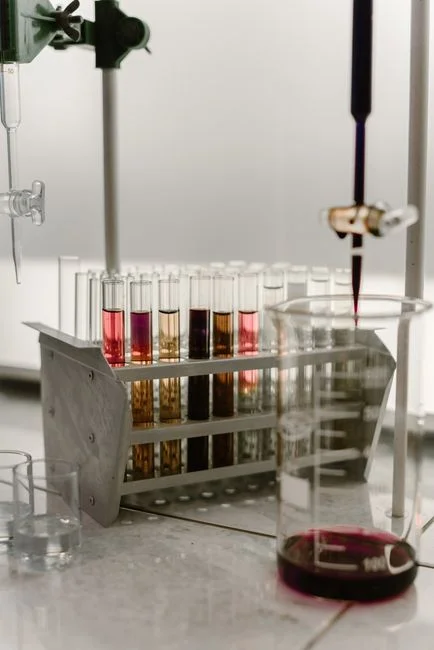
The 9 findings below account for the bulk of historic bottling-ETP liability. For each row, the CAPEX band is anchored to a 1,000–2,500 m³/day reference plant; halve the lower end and double the upper end for plants outside that range. OPEX delta is the annual chemical, energy, and sludge-handling swing versus a compliant baseline.
| # | Finding | CAPEX Band (USD) | OPEX Delta (USD/yr) | Reserve Recommendation |
|---|---|---|---|---|
| 1 | Consent exceedance (BOD/COD/TSS) | 200,000–1,200,000 | 50,000–150,000 | 100% capex + 24 mo OPEX buffer |
| 2 | Undersized equalization | 150,000–400,000 | 20,000–40,000 | 100% capex |
| 3 | Failed clarifier | 180,000–450,000 | 15,000–30,000 | 100% capex; price chip option |
| 4 | No biogas capture | 400,000–1,500,000 | (–) 50,000 to 200,000 (savings) | 50% capex; energy offset documented |
| 5 | Unlined sludge lagoon | 600,000–3,000,000 | 30,000–80,000 | 100% capex + Phase II ESA overlay |
| 6 | Aging concrete outfall | 250,000–800,000 | 10,000–20,000 | 100% capex; replace with HDPE |
| 7 | Missing online monitoring | 60,000–180,000 | 5,000–15,000 | 100% capex |
| 8 | Prior NOV history (5 yr) | 100,000–500,000 | 0 | Indemnity escrow, 3-yr term |
| 9 | CERCLA / RCRA successor-liability exposure | 1,000,000–10,000,000+ | 0 | Special indemnity + environmental insurance wrap |
Two CAPEX line items are usually the deal-defining numbers. A failed clarifier replacement typically lands in the low six figures for a 1,000–2,500 m³/day plant when scoped to a high-efficiency lamella clarifier for secondary clarification with 30–50% footprint reduction versus a conventional clarifier. Sludge dewatering capex is driven by a plate and frame filter press for sludge dewatering rated to 60–80% dry solids, which is the same configuration used in the NBC 2,500 m³/day upgrade to manage biological sludge output. Use the NBC outfall benchmark to validate replacement-cost assumptions for pipelines and outfall structures — HDPE butt-fusion pipe at 2,500 m³/day design flow is a defensible reference cost point for any 2026 bottling-ETP retrofit (Edo State Government, 2026-04).
For Marginal or Fail findings, require one of three contractual responses: a price chip carved from headline consideration, an environmental indemnity with a defined term and cap, or pre-close remediation as an explicit condition precedent to closing. Anything less leaves the buyer carrying the full balance-sheet exposure post-close.
Closing Mechanics: Environmental Reps, Indemnities, and the 14-Day Pre-Close Plan
The technical findings above are worthless unless they land in the SPA. Draft 2026-standard environmental representations covering current compliance status, the prior 5 years of NOV history, sludge disposal and manifest records, and groundwater conditions at the plant boundary. Carve environmental reps out of the general warranty cap — a 10–15% cap on headline consideration is typical, but environmental exposure should run on a separate cap that reflects the modelled reserve. Negotiate a dedicated environmental indemnity with a 3–7 year term, depending on the size of the modelled reserve and the regulator's track record of retrospective enforcement in the relevant jurisdiction. Price an environmental insurance wrap (cost typically 2–4% of the insured limit) to backstop unknown legacy conditions that surface inside the indemnity tail.
Lock a 14-day pre-close work plan to convert the Phase 7 financial model into binding documents. Days 1–3: final composite sampling and lab turnaround; Day 4: receive the Phase II ESA final report; Days 5–7: QofE and counsel walk-down of the ETP, matched to the unit-operation scorecard; Days 8–10: consent transfer application filed with the regulator; Days 11–14: SPA schedules and indemnity exhibits finalized, signed, and filed with closing. For any Marginal or Fail item not remediated pre-close, the agreed remediation schedule becomes an annex to the SPA with milestone-based release of the indemnity escrow.
| Day | Action | Owner | Output |
|---|---|---|---|
| 1–3 | Final 7-day composite influent/effluent sampling | QofE lab | Lab certificate of analysis |
| 4 | Phase II ESA final report received | Environmental consultant | Final ESA report |
| 5–7 | ETP walk-down vs. unit-operation scorecard | Process engineer + counsel | Locked Pass/Marginal/Fail register |
| 8–10 | Consent transfer application filed | EHS counsel | Regulator acknowledgement |
| 11–14 | SPA schedules, indemnity exhibits, escrow | M&A counsel | Signed closing annexes |
Stage the post-close retrofit behind an agreed compliance timeline — the same model used when NBC upgraded to the 2,500 m³/day facility with state-supervised verification (Edo State Government, 2026-04). The 12-month water-stewardship deadline in the Coca-Cola policy becomes the natural milestone for releasing the post-close retrofit budget and closing the indemnity escrow.
Frequently Asked Questions
What ETP due diligence is needed if Coca-Cola acquires a factory with legacy wastewater liabilities?
A 7-phase protocol covering desktop regulatory review, ASTM Phase I and Phase II ESA, ETP physical audit, 7-day composite influent/effluent sampling, sludge inventory, successor-liability review under CERCLA/RCRA, and a quantified CAPEX retrofit model. Each phase produces a discrete deliverable that feeds the next, and the final output is a 3-scenario financial model and a 9-row risk register with CAPEX bands that plug directly into the SPA.
How long does a bottling ETP due diligence take in 2026?
End-to-end confirmatory diligence takes 35–55 days: 5–7 days for the desktop review, 15–25 days for the Phase I/II ESA, 14 days for the 7-day sampling window, and 5–10 days for the sludge audit and financial model, followed by a 14-day pre-close plan. The 12-month post-close water-stewardship commitment sets the retrofit completion deadline.
What is the typical CAPEX range to bring a 1,000–2,500 m³/day bottling ETP to consent compliance in 2026?
For a 1,000–2,500 m³/day plant, the all-in retrofit typically falls between $1.5M and $6M, dominated by sludge lagoon remediation (15–30%) and clarifier or aerobic basin replacement (10–20%). Unlined sludge lagoons and CERCLA/RCRA successor-liability exposure are the two line items with the widest range — the latter can run from $1M to $10M+ depending on the Phase II ESA findings (HydropureWater field data, 2026).
How does the consent transfer work in the closing mechanics?
The consent transfer application is filed on Days 8–10 of the 14-day pre-close plan, with the regulator's acknowledgement required as a condition precedent to closing. The transfer schedule and any negotiated compliance timeline become an annex to the SPA, with the 12-month post-close milestone tied to the indemnity escrow release — see the UMC factory acquisition ETP due diligence protocol for the equivalent semiconductor-fab consent-transfer sequence.