Why legacy ETP exposure is the most under-priced line in a UMC factory deal
UMC factory acquisitions with legacy ETP exposure require a five-phase due-diligence program: pre-LOI Phase I ESA under ASTM E1527-21, an 8-item permit-transfer audit, a 9-item asset-condition audit, a Phase II ESA for any recognized environmental condition, an ASC 410-20 asset retirement obligation study, and jurisdiction-specific permit-transfer filings 90–180 days pre-signing. A 2024 mid-market chemicals platform deal closed with a 22-month consent decree and a $9M ETP retrofit after undisclosed BOD exceedances surfaced in the first post-closing self-monitoring cycle; the reserve had been sized at $1.5M, and the fund wrote down 18% of equity at month 14. That pattern repeats in 2026: undisclosed ETP non-compliance inflates deal reserves by $2M–$18M and triggers 18–36 month remediation timelines under EPA, EU IED, India CPCB, and China GB 8978-2025 frameworks (per 2026 PE platform-deal field data).
Generic chemicals checklists miss UMC's sector mix entirely. Semiconductor fabs, EV battery cell plants, and electronics assembly sites carry Cu/Ni/Co/Li heavy-metal loading, fluoride, ammonia-nitrogen, and PFAS — with oil & grease from metalworking fluids at 200–800 mg/L in the influent. The 2026 China GB 8978-2025 revision tightened COD, ammonia-N, and total-P limits for integrated electroplating wastewater, so any target grandfathered under GB 8978-1996 will require renegotiation within 12 months of closing. The compounding effect is straightforward: heavier chemistry, tighter standards, slower remediation. A deal team using a commodity-chem checklist under-prices reserves by a factor of 3–5x. The five-phase program that follows is the corrective.
The 8-item permit-transfer audit: run it before the LOI
Most post-closing ETP write-downs originate from questions the deal team failed to ask before issuing the LOI. Run the 8-item permit-transfer audit verbatim, pulled from the data room before signing:
- Current permit or consent number and issuing authority
- Expiry date and renewal status
- Permitted vs. actual daily flow for the last 12 months
- Parameter list vs. current effluent characterization (especially for any production-mix change post-permit issuance)
- Renewal history, including any refused or contested renewals
- Transferability trigger language
- Name-change provisions for the new operating entity
- Any open Notice of Violation (NOV) or pending administrative consent order
Two terms must be defined in the data room: a permit non-conformity event is any effluent parameter exceedance recorded in a self-monitoring report that has not been formally resolved with the regulator; an administrative consent order is a written, enforceable agreement with a regulator specifying corrective actions, a compliance schedule, and stipulated penalties for missed milestones. The two carry different pricing consequences — a non-conformity event can usually be closed in the diligence window, while an open consent order almost always requires a purchase price adjustment or escrow carve-out.
A current permit is not an assignable permit. In the US, an NPDES permit transfer is generally automatic on name change provided written pre-closing notice is filed; failure to file is a deal-closing blocker, not a post-closing item. In India, CPCB Consent-to-Operate transfer typically requires a 90–180 day pre-signing application plus a State Pollution Control Board site inspection. The EU IED recast imposes revised BAT-AELs for waste treatment and chemical sectors with compliance milestones running through 2027, so any EU target needs a regulatory-change cost-sharing clause in the SPA rather than a generic representations package. Flag any permitted-vs-actual flow variance above 10% as an automatic Phase II trigger — the gap almost always signals undocumented bypass or unpermitted production growth.
| Item | What to request | Threshold that triggers Phase II |
|---|---|---|
| Permit number & issuing authority | PDF of current consent; regulator name | Expired or under renewal freeze |
| Expiry & renewal status | Renewal application date; agency response | Outstanding conditions on renewal |
| Permitted vs. actual m³/day (12 mo) | Monthly DMR plus inline flow logs | Variance >10% |
| Parameter list vs. effluent characterization | Lab certificate for last 4 quarters | Any parameter on permit not in current lab panel |
| Renewal history | 5-year renewal correspondence log | Any refused or contested renewal |
| Transferability trigger language | Permit clause on assignment | Clause requires regulator pre-approval |
| Name-change provisions | Standard assignability form | Form not pre-approved by regulator |
| Open NOV or consent order | 5-year enforcement database pull | Any unresolved NOV or open order |
The 9-item asset-condition audit: where the capex hides
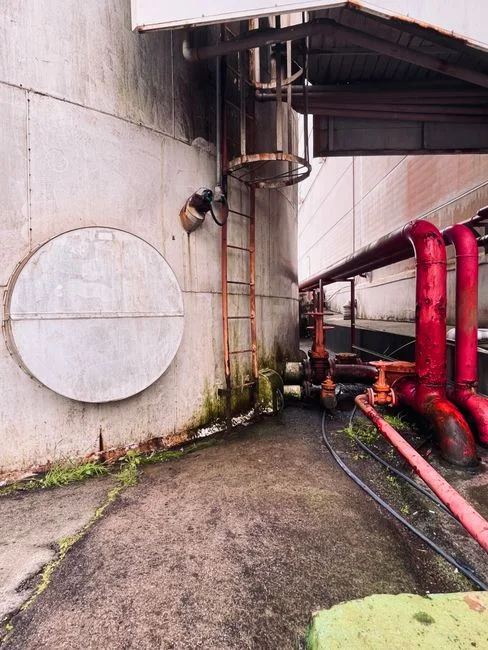
The CIM rarely shows near-term replacement capex because the EPC warranty — typically 12–24 months from mechanical completion — is almost always expired at closing. Every capex item the asset review surfaces becomes the buyer's problem. Run the nine asset-condition questions before the LOI: (1) design vs. actual hydraulic loading in m³/day; (2) design vs. actual organic loading in kg BOD/day; (3) age and last refurbishment date of major units; (4) last membrane replacement date; (5) MBR cassette age and supplier model; (6) blower and pump operating hours vs. nameplate service life; (7) structural condition of concrete tanks; (8) electrical and PLC vintage — anything pre-2010 is functionally obsolete and unsupported; and (9) SCADA data retention period.
MBR membrane service life runs 5–8 years; any target with cassettes older than 7 years carries a near-term replacement liability of $420K–$1.8M that does not appear in the maintenance budget (per MBR engineering guides, 2025). An integrated MBR cassette retrofit is the line item most likely to hit at closing, and the 2026 filter press retrofit and upgrade guide is the field reference for downstream dewatering capex when paired with a lamella clarifier retrofit for primary solids reduction.
The SCADA trap is the most-missed item: 90 days of retention is unusable for trend analysis; 3+ years is the standard. Absence of long-retention SCADA is itself a Phase II trigger, because the deal team cannot validate hydraulic or organic loading claims without a usable trend file. PLC vintage matters operationally as well as financially — pre-2010 hardware cannot be supported on current firmware, and parts lead times stretch to 12+ weeks once a controller fails. Treat any variance greater than 15% between design and actual BOD loading as a capacity-review trigger; it usually means a production line has been added or upgraded without a permit modification.
Phase I and Phase II ESA: what ASTM E1527-21 actually covers
A Phase I ESA under ASTM E1527-21 identifies recognized environmental conditions (RECs) through historical records review and site reconnaissance — no sampling. A Phase II ESA adds sampling and is mandatory when any REC is identified, and PE financing requires quantified exposure to size the purchase price adjustment or escrow. The two deliverables are not interchangeable.
PFAS is explicitly excluded from the Phase I hazardous-substance definition under ASTM E1527-21. Historical PFAS testing must be requested separately; it cannot be relied on as a Phase I deliverable. For a UMC target with semiconductor fab or EV battery cell exposure, this is the single most-missed item in the diligence pack. Seven hidden-liability items rarely make the CIM and must be requested directly:
- Phase I ESA availability and date (or a Phase I must be commissioned)
- On-site sludge lagoon volume, age, and characterization
- Hazardous-waste manifests for the last 5 years
- PFAS or Cr(VI) testing history, requested separately from any Phase I
- Buried tank and underground piping registry
- Off-site disposal contractor audit trail, including license verification
- Historic operator non-compliance records from state/EPA enforcement databases
For an ETP-heavy UMC target, the Phase I is the floor, not the ceiling. Any REC — including a historical NOV, a buried tank, or a sludge lagoon with no characterization data — should drive an immediate Phase II. PE financing terms will almost always require it for quantified exposure.
The ASC 410-20 asset retirement obligation: non-negotiable DD deliverable
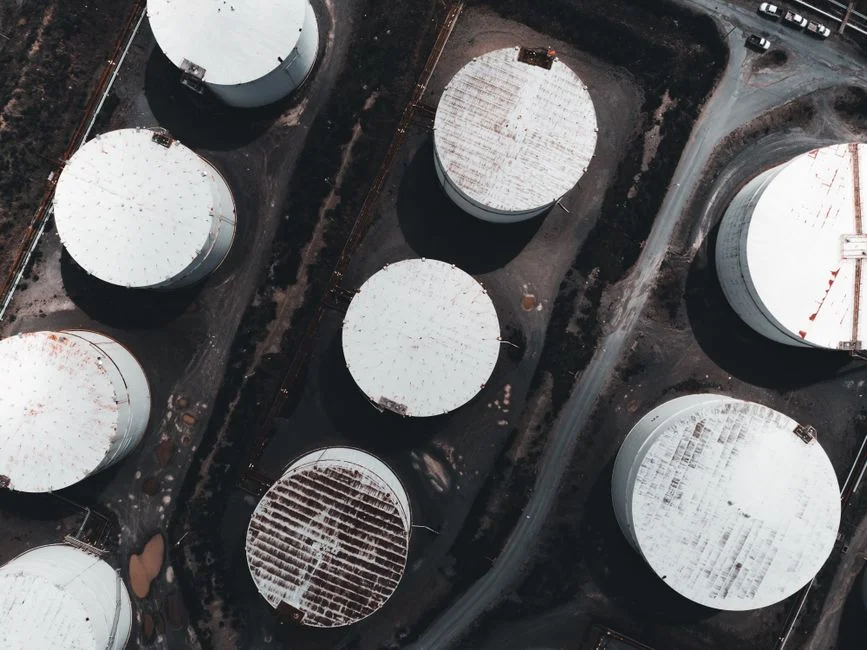
An asset retirement obligation under ASC 410-20 is the legal obligation to retire an ETP asset at the end of its useful life, including decommissioning, sludge removal, concrete tank demolition, and site remediation. Insist on an ARO study as a non-negotiable due-diligence deliverable; the resulting liability must be booked at closing and will flow through the purchase price adjustment. Skipping the ARO study is one of the most common reasons a deal team discovers the decommissioning number only after signing.
Anchor the scope to 2026 cost data: hazardous sludge disposal runs $80–$450/tonne (HydropureWater field data, 2026), and an undocumented lagoon can represent 200–2,000 tonnes of working-capital exposure. For a semiconductor or EV-battery target carrying nickel, cobalt, or chrome loading, the ARO has to account for heavy-metal-bearing sludge and the cost differential for hazardous-waste-classified transport. Plan on-site volume reduction around a plate and frame filter press for on-site sludge dewatering sized to the lagoon characterization data, with the disposal cost tied to the cake's TCLP classification rather than the raw lagoon volume.
Benchmark the heavy-metal exposure against the 2026 PCB hybrid ZLD case achieving 99.8% copper recovery — that range is the hidden-liability reference point for any UMC target carrying Cu/Ni/Co loading. The ARO study and the Phase II ESA findings should be cross-referenced before the IC memo; a Phase II that identifies 800 tonnes of metal-bearing sludge and an ARO booked at 200 tonnes is a $200K–$1M reserve gap that will surface in the first post-closing audit.
2026 cost benchmarks and reserve sizing: the model an IC will accept
Defensible cost benchmarks let the deal team argue down seller representations or size the escrow rather than discover the number post-closing. Use the table below as a starting position and adjust for site-specific factors — region, contamination profile, regulator posture.
| Line item | Scope | 2026 cost range |
|---|---|---|
| Basic ETP upgrade (capacity / parameter compliance) | Civil + electromechanical, no major process change | $280 – $620 per m³/day treated |
| MBR cassette swap + balance of plant | Cassette replacement + ancillary BOP | $420K – $1.8M |
| ZLD retrofit (RO + evaporator/crystallizer) | Site-specific heavy-metal / brine trains | $2.8M – $11M (full ZLD $5M–$15M) |
| Hazardous sludge removal and disposal | Characterization + transporter class | $80 – $450 per tonne |
| Phase II ESA findings remediation | REC-driven, scope-dependent | $250K – $3.5M typical |
| DAF micro-bubble pre-treatment retrofit | High oil & grease EV paint-and-assembly | $15K – $60K per DAF unit (recurring 3–5 yr) |
Worked example: 1,200 m³/day EV paint-and-assembly plant. 80th-percentile basic ETP upgrade at $496/m³/day × 1,200 m³/day = $595K. Apply a 0.6 probability of historical BOD exceedance over a typical 4-year non-compliance tail: $595K × 0.6 × 4 = $1.43M reserve floor. Add the MBR cassette line if cassettes are older than 7 years ($420K–$1.8M, near-certain at closing) and the DAF pre-treatment capex for the oil & grease loading ($15K–$60K per unit, recurring 3–5 years).
The 2026 environmental reserve band is 2–8% of enterprise value, with 10–15% of consideration held in escrow for 24–36 months and environmental R&W survival of 5+ years (well beyond the standard 12–18 months) for any ETP-heavy target. Commission a 90-day post-signing Environmental Insurance (EIL) feasibility study; EIL is materially cheaper than escrow for ETP-heavy targets and covers the long-tail remediation risk that 5-year R&W survival may not reach.
SPA-level items: 7 terms the seller's counsel will push back on

Push outside counsel on seven SPA-level items, each tied to a specific deal-phase trigger:
- Environmental R&W survival of 5+ years (well beyond the standard 12–18 months) for any ETP-heavy target
- Specific environmental indemnity outside the general basket, rather than reliance on the basket-and-cap
- 10–15% escrow held 24–36 months
- Permit-transfer cooperation covenant with seller obligations through the transfer date
- Regulatory change cost-sharing for post-closing EU IED recast or GB 8978-2025-driven upgrades
- Phase II ESA bring-down as a closing condition, not a post-closing deliverable
- No MAE carve-out for pre-signing environmental findings
The 2026 trend is specific environmental indemnities displacing basket-and-cap structures for industrial targets, because basket-and-cap exposes the buyer to the seller's insurance limits and deductible erosion from non-environmental claims. Carve-out language on the MAE definition is a frequent flashpoint: sellers argue any pre-signing non-compliance is known and priced, buyers argue undisclosed findings are not — close that gap in the LOI, not at signing. For the comparable EV/auto-OEM workstream already in market, the Samsung factory ETP due diligence checklist for 2026 walks through the same SPA structure on an auto-OEM deal.
Flag the multi-jurisdiction permit-transfer timing risk against the exclusivity period — or extend the long-stop date to avoid an 18–24 month reapplication cycle in India. For UMC's semiconductor and EV-battery target profile, the permit-transfer matrix below summarizes the timing and pre-signing filing window by jurisdiction:
| Jurisdiction | Permit instrument | Pre-signing filing window | Key risk |
|---|---|---|---|
| US | NPDES individual permit | Written notice pre-closing | Failure to file = deal-closing blocker |
| EU | IED permit with BAT-AEL milestones | Variation application 6–12 mo | 2027 BAT-AEL tightening |
| India | CPCB / SPCB Consent-to-Operate | 90–180 days + site inspection | 18–24 mo reapplication if missed |
| China | GB 8978-2025 discharge permit | Renegotiation within 12 mo of closing for pre-2026 permits | Tightened COD, NH₃-N, total-P |
| Korea | KECO water-quality permit | 60–120 days for name change | Specific heavy-metal ceilings |
| Japan | Water Pollution Control Act permit | 30–60 days notification | Trihalomethane and F⁻ limits |
Frequently Asked Questions
What environmental due diligence is required if UMC acquires a factory with legacy wastewater liabilities?
A five-phase program: pre-LOI Phase I ESA under ASTM E1527-21, 8-item permit-transfer audit, 9-item asset-condition audit, Phase II ESA for any recognized environmental condition, and an ASC 410-20 asset retirement obligation study — with jurisdiction-specific permit-transfer filings 90–180 days pre-signing. Provision 2–8% of enterprise value as the 2026 environmental reserve band.
How long does an ETP permit transfer actually take, and what is the deal-closing risk if the timing is missed?
In India, file the Consent-to-Operate transfer application 90–180 days pre-signing and budget for a State Pollution Control Board site inspection; flag the timeline against exclusivity or extend the long-stop date to avoid an 18–24 month reapplication cycle. In the US, an NPDES name-change transfer requires written pre-closing notice and is a deal-closing blocker if missed.
What does the 2026 reserve band look like for an ETP-heavy industrial target?
Undisclosed ETP non-compliance inflates deal reserves by $2M–$18M and triggers 18–36 month remediation timelines under EPA, EU IED, India CPCB, and China GB 8978-2025 frameworks (per 2026 PE platform-deal field data). Hold 10–15% in escrow for 24–36 months and insist on R&W survival of 5+ years for any ETP-heavy target.
Does a Phase I ESA under ASTM E1527-21 cover PFAS exposure?
No. PFAS is explicitly excluded from the Phase I hazardous-substance definition under ASTM E1527-21, so historical PFAS testing must be requested separately and cannot be relied on as a Phase I deliverable. For semiconductor and EV-battery targets, PFAS testing history is a stand-alone request.
Related Equipment
- DAF micro-bubble pre-treatment unit — specifications, capacity range, and technical data