PCB Wastewater Treatment Project: 2025 Hybrid System Design with 99.8% Copper Recovery & ZLD Cost Breakdown
A 2025 PCB wastewater treatment project requires a hybrid system combining chemical pretreatment, ion exchange, and reverse osmosis (RO) to achieve 99.8% copper recovery and zero liquid discharge (ZLD). For a 50 m³/h facility, CAPEX ranges from $1.2M–$2.5M, with OPEX of $0.80–$1.50/m³ treated. Copper recovery can offset 30–50% of OPEX, while RO reduces hauling costs by up to 90%. Compliance with China GB 31573-2015 (0.5 mg/L copper) and US EPA limits (1.3 mg/L) is achievable with proper system design.
Why PCB Wastewater Treatment Projects Fail: The Hidden Costs of Compliance Gaps
The average hauling cost for non-compliant PCB wastewater in 2025 ranges from $0.50 to $1.20 per gallon, often exceeding the total annual OPEX of an on-site ZLD system. Many facilities struggle with "compliance drift," where fluctuating production volumes lead to heavy metal spikes that bypass traditional batch treatment systems. In the United States, EPA violations under the Clean Water Act (CWA 309) can result in fines of up to $37,500 per day, making the financial risk of inadequate treatment far higher than the CAPEX of advanced recovery systems.
Beyond fines, the failure to implement a robust printed circuit board wastewater treatment project results in significant lost revenue. PCB etching wastewater typically contains 10–50 g/L of copper. With the London Metal Exchange (LME) 2025 copper price averaging $8,000 per ton, a facility discharging 50 m³/h of untreated rinse water is effectively "pouring" thousands of dollars into the sewer daily. For example, a Northeastern PCB facility recently reported reducing hauling costs by 90% after transitioning from a simple precipitation model to a closed-loop ZLD system, saving approximately $250,000 annually in disposal fees alone.
Failure in these projects often stems from a lack of stream segregation. When high-concentration etching liquids mix with dilute rinse waters, the efficiency of copper recovery from wastewater drops by as much as 60%, and the chemical demand for precipitation triples. Successful projects in 2025 prioritize the separation of complexed metals (like EDTA-chelated copper) from free ions to prevent membrane fouling and ensure stable discharge parameters.
PCB Wastewater Composition: What’s Really in Your Effluent?
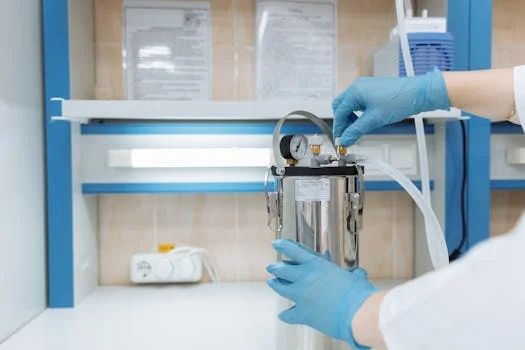
PCB manufacturing wastewater is characterized by high concentrations of heavy metals and a complex mix of organic surfactants and inorganic salts. Understanding the specific concentrations of your effluent is the first step in sizing a zero liquid discharge system. While etching processes produce high-purity copper streams, plating and stripping operations introduce nickel, tin, and lead, often stabilized by chelating agents that resist standard pH adjustment.
| Contaminant Category | Primary Sources | Typical Concentration Range | Regulatory Target (Avg.) |
|---|---|---|---|
| Copper (Cu) | Etching, Micro-etch, Rinsing | 10–50 g/L (Etch), 1–5 mg/L (Rinse) | <0.5 mg/L |
| Nickel (Ni) | Electroless Nickel Plating | 2–10 mg/L | <1.0 mg/L |
| Tin (Sn) / Lead (Pb) | Solder Stripping, Plating | 5–20 mg/L (Sn), 1–3 mg/L (Pb) | <1.0 mg/L (Pb) |
| Organics (COD) | Resists, Inks, Defoamers | 50–200 mg/L | <50 mg/L |
| Cyanide (CN-) | Gold/Silver Plating | 1–10 mg/L | <0.2 mg/L |
| Ammonia (NH3-N) | Ammoniacal Etching | 50–300 mg/L | <15 mg/L |
The presence of organics like surfactants and brighteners is particularly problematic for RO membrane for PCB effluent applications. These substances can cause rapid organic fouling, reducing membrane flux by 30% within the first 48 hours if not managed via advanced oxidation or carbon filtration. the chemical shift toward cyanide-free plating has introduced new organic complexes that require specific coagulants for effective heavy metal wastewater treatment.
Hybrid System Design: Step-by-Step Process for 99.8% Copper Recovery and ZLD
A high-performance hybrid system integrates chemical, physical, and electrochemical processes to maximize resource recovery while achieving ZLD. This design ensures that 95% of the process water is recycled back to the production line, significantly reducing the facility's water footprint.
- Stream Segregation: High-concentration etching waste (50 g/L Cu) is isolated from low-metal rinse waters (1–5 mg/L). This prevents the dilution of valuable metals and protects the downstream RO membranes from extreme osmotic pressure.
- Chemical Pretreatment: Utilizing a PLC-controlled chemical dosing for PCB wastewater pretreatment, the system adjusts pH to 9.0–9.5. Polyaluminum chloride (PAC) is dosed at 50–100 mg/L, followed by anionic polymer flocculants at 2–5 mg/L. This achieves 95% Total Suspended Solids (TSS) removal and precipitates the bulk of the heavy metals.
- Copper Recovery via Electrowinning and IX: For high-concentration streams, electrowinning recovers copper at 99.9% purity. For dilute rinse water, ion exchange (IX) units operating at approximately 45 gpm achieve 99% copper removal, polishing the effluent to levels below 0.1 mg/L.
- Reverse Osmosis for ZLD: The pretreated water is processed through high-recovery RO systems for PCB wastewater ZLD projects. These systems typically achieve 90–95% water recovery. The permeate is reused in rinse tanks, while the concentrate moves to the final stage.
- Concentrate Treatment and Dewatering: The RO concentrate is processed via vacuum evaporation or crystallization. Resulting solids are dewatered using a sludge dewatering for PCB wastewater treatment residuals to minimize hazardous waste volume.
| Process Stage | Key Parameter | Design Target |
|---|---|---|
| Pretreatment | Hydraulic Retention Time (HRT) | 30–60 Minutes |
| Copper Recovery | Electrowinning Purity | 99.9% Pure Cathode |
| RO System | Recovery Rate | 75%–90% (Varies by TDS) |
| Final Effluent | Copper Concentration | <0.5 mg/L (GB/EPA Compliant) |
This integrated approach is similar to how electroplating wastewater treatment compares to PCB projects, though PCB projects often deal with higher organic loads from dry-film resists. The use of VSEP (Vibratory Shear Enhanced Processing) RO can further enhance recovery in high-solids applications by reducing membrane scaling.
Technology Comparison: Ion Exchange vs. RO vs. Hybrid Systems for PCB Wastewater
Choosing the right technology depends on the facility's flow rate, metal concentration, and local discharge regulations. While Ion Exchange (IX) is highly effective for polishing, it cannot handle the high salt loads of a full ZLD project on its own.
| Technology | Best Use Case | CAPEX (50 m³/h) | OPEX ($/m³) | Recovery Rate |
|---|---|---|---|---|
| Ion Exchange (IX) | Dilute rinse water polishing | $200K–$500K | $0.30–$0.50 | 99% Metal Removal |
| Reverse Osmosis (RO) | Water reuse & ZLD | $500K–$1.2M | $0.50–$1.00 | 90–95% Water Recovery |
| Hybrid (IX + RO) | Full recovery & Compliance | $1M–$2.5M | $0.80–$1.50 | 99.8% Cu / 95% Water |
A deep dive on RO technology for PCB wastewater ZLD reveals that while RO has higher CAPEX, it is the only technology that reliably meets the stringent 2025 "Zero Discharge" mandates. IX systems are prone to high OPEX if metal concentrations are too high, as resin regeneration frequency increases chemical consumption and generates secondary waste. Hybrid systems mitigate this by using IX only for the final polishing of RO permeate or the treatment of specific low-concentration streams.
Cost Breakdown: CAPEX, OPEX, and ROI for a 50 m³/h PCB Wastewater Treatment Project
Budgeting for a printed circuit board wastewater treatment project requires a dual focus on initial investment and long-term operational savings. For a 50 m³/h facility, the total investment is typically recouped within 2 to 5 years through a combination of copper sales and the elimination of water procurement and hauling costs.
- CAPEX Breakdown:
- Pretreatment Systems (Dosing/Clarification): $200,000–$400,000
- Ion Exchange Units: $300,000–$600,000
- RO Membrane Arrays: $500,000–$1,000,000
- Evaporation/Crystallization (ZLD): $200,000–$500,000
- OPEX Breakdown ($/m³):
- Chemicals (Coagulants/Acids): $0.20–$0.40
- Energy Consumption: $0.30–$0.60
- Maintenance & Consumables: $0.20–$0.30
- Labor: $0.10–$0.20
When compared to the cost benchmarks for industrial wastewater projects in Asia, PCB systems tend to have 20% higher OPEX due to the specialized chemicals required for breaking metal complexes. However, the ROI is driven by electrowinning for copper recovery, which can yield $50–$150 in recovered metal value per ton of wastewater treated in high-concentration streams. A system with a $1.5M CAPEX and $150,000 annual OPEX, saving $300,000 in hauling and $150,000 in water/copper recovery, achieves a 3.3-year payback period.
Compliance Blueprint: Meeting China GB, US EPA, and EU Discharge Limits for PCB Wastewater
Navigating global regulatory standards is critical for multinational PCB manufacturers. The design of a PCB manufacturing wastewater system must be mapped to the most stringent local limits to ensure long-term viability. China’s GB 31573-2015 is currently among the strictest, requiring copper levels below 0.5 mg/L, which is more demanding than the standard US EPA limit of 1.3 mg/L.
| Pollutant | China GB 31573-2015 | US EPA (40 CFR 433) | EU IED (Best Available Tech) |
|---|---|---|---|
| Copper (Cu) | 0.5 mg/L | 1.3 mg/L | 0.5 mg/L |
| Nickel (Ni) | 1.0 mg/L | 2.0 mg/L | 0.5 mg/L |
| Cyanide (CN) | 0.5 mg/L | 0.2 mg/L | 0.1 mg/L |
| Ammonia (NH3) | 15 mg/L | N/A (Local) | 5–10 mg/L |
To maintain compliance, facilities must implement a rigorous monitoring checklist. This includes daily pH and conductivity tracking, weekly heavy metal analysis via ICP-OES, and monthly COD/BOD testing. Utilizing RO permeate effectively guarantees compliance with copper limits, as the membrane rejection rate for divalent ions typically exceeds 99.5%, resulting in effluent concentrations well below 0.1 mg/L.
Frequently Asked Questions
What is the best technology for copper recovery in PCB wastewater?
Electrowinning is the most efficient technology for recovering 99.9% pure copper from high-concentration etching wastewater (50 g/L). For low-concentration rinse water (1–5 mg/L), ion exchange (IX) is preferred. A hybrid system using both ensures a total recovery rate of 99.8% across the entire facility.
How much does a PCB wastewater treatment system cost?
For a 50 m³/h facility, CAPEX typically ranges from $1.2M to $2.5M for a hybrid ZLD system. OPEX ranges from $0.80 to $1.50 per cubic meter treated. These costs are often offset by copper recovery values and a 90% reduction in wastewater hauling fees.
Can PCB wastewater be discharged to the sewer?
Discharge is only permitted if the wastewater meets local limits, such as the US EPA limit of 1.3 mg/L copper or the China GB limit of 0.5 mg/L. Most PCB manufacturers utilize RO systems to ensure their permeate meets these standards, or they implement ZLD to eliminate discharge entirely.
What are the biggest mistakes in PCB wastewater treatment projects?
The three most common errors are: 1) Failing to segregate high-copper etching streams from dilute rinses; 2) Underestimating RO membrane fouling from organic surfactants; and 3) Ignoring the revenue potential of copper recovery, which can pay for 30–50% of the system's operating costs.
How do I calculate ROI for a PCB wastewater treatment system?
Use the formula: ROI (years) = CAPEX / (Annual Savings - Annual OPEX). Annual savings include avoided hauling costs ($0.50–$1.20/gallon), reduced water procurement costs, and the market value of recovered copper ($8,000/ton). Average payback for hybrid systems is 3.3 years.