Why 2026 Is an Inflection Year for Wastewater Biogas
The global waste-derived biogas market is tracking a 5.77% CAGR from 2026 to 2034, with industrial wastewater and co-digestion segments outpacing municipal-only installations (per the April 2026 market outlook). Three forces are converging: regulators are converting wastewater treatment plants (WWTPs) from energy sinks into net-energy facilities, technology vendors are commercialising on-site biomethane upgrading at scales that were pilot-only in 2022, and food-sector generators are actively seeking gate-fee partners to dispose of fats, oils, and grease (FOG) in anaerobic digesters.
A 2024 Springer bibliometric review of 23 years of "wastewater-to-energy" research identified three dominant themes — biogas production through anaerobic digestion (AD) of sewage sludge, methane generation via microbial wastewater treatment, and hydrogen production from biomass — and flagged biogas upgrading, biomethane, and the circular economy as the topics gaining the most citation momentum (Springer Environmental Science, 2024). That academic signal aligns with what industrial buyers see in 2026: project pipelines are now centred on integrated sludge-plus-co-substrate AD with grid injection, not on standalone sludge-only digestion.
Regulatory tailwinds are reinforcing the shift. The EU Fit-for-55 package sets binding biomethane targets across member states, China has folded wastewater-sector methane capture into its dual-carbon roadmap, and India's SATAT scheme continues to expand the compressed biogas (CBG) off-take market. For plants in any of these jurisdictions, the 2026 capital question is no longer "should we add digestion?" but "how do we size the upstream equipment so the digester actually delivers the methane yield our feasibility study promised?" The broader 2026 resource recovery outlook maps the eight technology tracks a typical industrial plant should evaluate in parallel.
The 2026 Biogas Process Stack: From Influent to Grid-Quality Methane
A 2026 industrial biogas line is a chain of unit operations where every upstream choice moves the downstream methane number. The reference design runs from headworks through to biomethane upgrading, and the yield lever sits in the middle: poorly screened or poorly dewatered feed will silently cap the digester at 60–70% of its design methane output.
Headworks screening is the first yield-control step. A rotary mechanical bar screen for digester headworks protection at 3–6 mm aperture removes rags, plastics, and textiles that would otherwise accumulate as ragging in the digester, displace active volume, and force unscheduled shutdowns. Plant data consistently shows that 1 kg of screened plastics in the feed removes roughly 8–12 m³ of effective digester volume per year through rag buildup (HydropureWater field data, 2026).
Pre-treatment and FOG capture sit between screening and thickening. A DAF system for FOG recovery ahead of co-digestion typically achieves 85–95% FOG removal at 20–50 mg/L influent concentrations, recovering a stream that is itself a high-yield co-substrate (0.8–1.0 m³ CH₄/kg VS added) when redirected to the digester. Without DAF, free-floating FOG crusts the digester roof, traps gas, and lowers net yield by 10–25%.
Thickening and sludge dewatering set the digester's total solids (TS) feed condition. The 2026 target is 5–8% TS into the digester and 60–80% TS cake post-press for downstream solids management. A plate-and-frame filter press for digester feed thickening at 6–8 bar operating pressure delivers this range with polymer demand in the 4–8 kg polymer per dry tonne of solids band (HydropureWater field data, 2026).
Anaerobic digestion in 2026 remains dominated by the mesophilic (35–38 °C) continuously stirred tank reactor (CSTR) at hydraulic retention time (HRT) 20–30 days and organic loading rate (OLR) 2–4 kg VS/m³·d for mixed primary and waste activated sludge. Biogas upgrading then concentrates the raw 55–65% CH₄ stream to grid-grade >97% CH₄ via water scrubbing (mature, lowest OPEX), pressure swing adsorption (PSA, compact footprint, highest purity), or membrane separation (modular, lowest CAPEX at small scale). The table below summarises the stack and the key 2026 operating targets at each step.
| Unit Operation | 2026 Target / Range | Impact on Biogas Yield |
|---|---|---|
| Bar screening | 3–6 mm aperture, <5% organic bypass | Prevents rag volume loss; protects downstream equipment |
| DAF (FOG recovery) | 85–95% FOG removal | Recovers high-yield co-substrate; prevents scum capping |
| Sludge thickening/dewatering | 5–8% TS to digester; 60–80% TS cake | Sets OLR window; reduces digester heating load |
| Mesophilic CSTR AD | 35–38 °C, HRT 20–30 d, OLR 2–4 kg VS/m³·d | Workhorse configuration for mixed sludges |
| Biogas upgrading | >97% CH₄ for grid / CNG | Converts disposal cost into RNG revenue stream |
Anaerobic Digestion and Co-Digestion: Reactor Choices for 2026
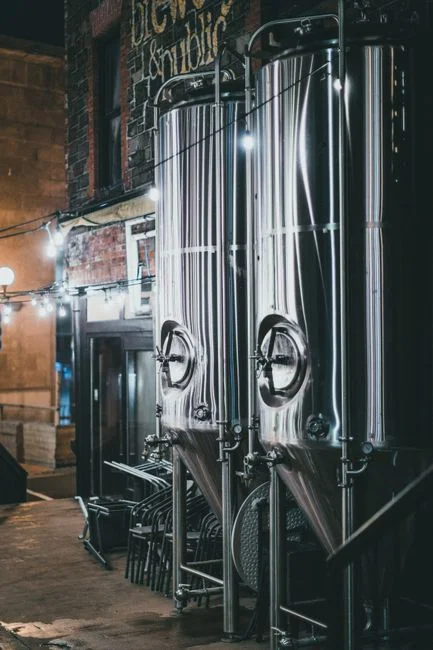
Reactor selection in 2026 is driven by influent characteristics, not by generic preference. CSTRs remain the default for mixed municipal and industrial sludges because they handle variable solids and co-substrates without plugging. For high-strength soluble COD streams — brewery, food processing, pulp and paper, and monosodium glutamate (MSG) — high-rate anaerobic reactors such as expanded granular sludge bed (EGSB) and upflow anaerobic sludge blanket (UASB) reactors deliver 10–30× the volumetric loading of a CSTR at a fraction of the footprint. The EGSB reactor design for high-strength industrial wastewater is the relevant reference for plants evaluating that route.
Co-digestion is where the 2026 economics move. Mixing primary sludge with FOG or food waste at volatile solids (VS) ratios of 70:30 to 50:50 lifts methane yield by 20–40% over sludge-only baselines, primarily by raising the feed's biodegradable fraction and balancing the carbon-to-nitrogen (C:N) ratio closer to the 20–30:1 optimum for methanogens. The yield uplift comes with operational constraints: FOG dosing above ~30% VS triggers inhibition risk, and food-waste streams often require pre-pasteurisation at 70 °C for 60 minutes to meet hygiene standards for the digestate end-use.
The table below compares the 2026 design and operating parameters for the three reactor families an industrial buyer will see in vendor proposals.
| Reactor Type | Best-Fit Feed | HRT | OLR | CH₄ Yield |
|---|---|---|---|---|
| CSTR (mesophilic) | Mixed primary + waste activated sludge; co-digestion with FOG/food waste | 20–30 days | 2–4 kg VS/m³·d | 0.2–0.4 m³/kg VS added |
| EGSB | High-strength soluble COD (brewery, food, MSG, pulp condensate) | 6–12 hours | 8–15 kg COD/m³·d | 0.3–0.5 m³/kg COD removed |
| UASB | Soluble COD at moderate temperatures (>20 °C) | 12–24 hours | 5–10 kg COD/m³·d | 0.25–0.45 m³/kg COD removed |
The decision logic for 2026 capital planning is straightforward: if your feed is >10,000 mg/L soluble COD and your plant footprint is constrained, EGSB wins. If your feed is mixed sludge with co-substrate potential and you need operational flexibility, CSTR remains the right call. If you sit between those two, UASB offers the lowest CAPEX in the high-rate family but tolerates the least hydraulic and thermal variation.
Biomethane Upgrading and End-Use Economics in 2026
Raw biogas combustion in a combined heat and power (CHP) engine returns roughly 30–45% of the energy as electricity, with the remainder lost as waste heat. Upgrading the same biogas to >97% CH₄ and dispatching it to a higher-value off-take route typically doubles to quadruples the revenue per cubic metre of methane, depending on the local market. In 2026, the dominant off-takes are grid injection (piped renewable natural gas, or RNG), compressed natural gas (CNG) for vehicle fleets, and industrial boiler fuel substitution.
Technology choice at the upgrading step is a CAPEX-versus-OPEX trade. Water scrubbing is the 2026 default for plants above ~2,000 m³ biogas/h: it is mature, tolerant of hydrogen sulphide (H₂S) swings, and has the lowest OPEX per m³ CH₄ produced, though it carries the highest water-treatment burden. PSA delivers the highest methane purity (>99%) in a small footprint, which makes it common at food-and-beverage plants where space is constrained. Membrane separation is the modular option, attractive at sub-1,000 m³ biogas/h flows where operators want to add capacity in stages rather than commit to a single-train design. None of these choices is universally correct; the right answer depends on flow rate, target purity, and whether the by-product CO₂ has any sale value in the local market.
Two commercial drivers now shape 2026 project economics more than technology choice. First, RNG pricing in the EU and parts of North America carries a green-premium tied to renewable energy certificates; the exact value varies with policy and contract structure, but it remains a material line item. Second, voluntary carbon markets continue to credit avoided methane emissions from wastewater, providing an additional revenue layer for plants that document baseline-and-project emissions. The combined effect is that 2026 biomethane projects are rarely justified on energy revenue alone — they need the RNG and credit stack to reach defensible payback.
2026 CAPEX, OPEX, and ROI Framework for an Industrial Biogas Project
A 2026 industrial anaerobic digestion project handling 5,000–50,000 m³/d of wastewater typically sits in the multi-million-USD CAPEX range, with the dominant cost items being the digester tank(s), biogas upgrading train, and the combined heat and power (CHP) or grid-injection BoP (balance-of-plant). Pre-treatment equipment — screening, DAF, and dewatering — is a smaller share of total CAPEX but a disproportionate share of the project's yield and uptime, which is why the upstream stack is the first place a process engineer should look when feasibility numbers miss.
OPEX is driven by four line items: energy for mixing and digester heating (typically 5–15% of the biogas energy output is recirculated to keep the reactor at 35–38 °C), polymer for sludge dewatering, nutrient and trace-element dosing for co-digestion stability, and operations-and-maintenance (O&M) labour. Plants that under-size thickening and dewatering consistently run hotter digester heating loads, because feeding at 3% TS instead of 6% TS means pumping twice the water through the heated reactor volume. The sludge dewatering cost-reduction strategies piece covers the operational levers in detail.
2026 industrial biogas projects, including biomethane off-take and any eligible carbon or RNG credit revenue, typically reach payback in the 5–9 year window. Project IRRs in this band are defensible to most corporate finance teams; projects that fall outside it usually do so because of one of three issues — feed strength below the assumed COD/VS concentration, insufficient co-substrate supply to realise the 20–40% yield uplift, or an off-take contract that under-prices the upgraded methane. The table below is a skeleton a project engineer can adapt to their own feasibility model.
| Cost / Revenue Line | 2026 Typical Range or Driver | Engineering Lever |
|---|---|---|
| CAPEX (AD plant, 5,000–50,000 m³/d) | Multi-million USD, scale-dependent | Modular upgrading train; standard digester geometry |
| OPEX — heating | 5–15% of biogas energy recirculated | Raise feed TS from 3% to 6–8% via dewatering |
| OPEX — polymer | 4–8 kg polymer / dry tonne solids | Optimise conditioning; consider belt press vs plate press |
| Revenue — upgraded CH₄ | 2–4× value of on-site electricity | Secure grid/CNG off-take before final sizing |
| Revenue — RNG / carbon credits | Policy- and market-dependent | Document baseline; structure contract early |
| Payback window | 5–9 years, with credit stack | Validate feed strength and co-substrate supply first |
HydropureWater supplies the pre-treatment and sludge-handling equipment — bar screens, DAF units, and filter presses — that sit ahead of the digester in this stack. Getting the upstream numbers right is what lets the downstream CAPEX deliver the yield the feasibility study assumed.
Frequently Asked Questions
What is the 2026 growth rate for the waste-derived biogas market?
The global waste-derived biogas market is forecast at a 5.77% compound annual growth rate (CAGR) from 2026 to 2034, with industrial wastewater and co-digestion identified as the faster-growing segments (April 2026 market outlook).
How much can co-digestion increase methane yield over sludge-only digestion?
Mixing primary sludge with FOG or food waste at volatile solids (VS) ratios between 70:30 and 50:50 typically lifts methane yield by 20–40% over sludge-only baselines, by raising biodegradable fraction and balancing the C:N ratio closer to the 20–30:1 optimum for methanogens.
What is the typical hydraulic retention time (HRT) for a mesophilic CSTR digester in 2026?
Mesophilic CSTRs operating at 35–38 °C for mixed municipal and industrial sludges run at HRT 20–30 days and OLR 2–4 kg VS/m³·d, with methane yield of 0.2–0.4 m³ per kg VS added.
What upstream total solids (TS) target should feed an anaerobic digester?
Target 5–8% TS into the digester after thickening/dewatering, and 60–80% TS in the post-press cake for solids management. Feeding below 5% TS increases heating energy per m³ of biogas produced.
Related Equipment
- plate-and-frame filter press for digester feed thickening — specifications, capacity range, and technical data