What Changes When Micron Acquires a Mexican Plant?
Wastewater compliance after Micron acquires a plant in Mexico depends on the site’s water source, discharge route, permit conditions and operating history, rather than on the buyer’s identity alone. Federal or state jurisdiction determines the applicable standards, while the current permit and contaminant data establish site-specific obligations. Acquisition also requires environmental due diligence because Mexican legal guidance states that purchasing or acquiring property can make the owner immediately responsible for prior contamination. Historical permits, laboratory results, discharge records and treatment performance therefore belong in the closing decision, not in a post-closing compliance checklist.
Before accepting environmental liability, identify the plant’s state, municipality, source of process water, wastewater-generating operations, receiving body and every discharge point. Confirm whether each stream is industrial, domestic or mixed, and determine the legal entity named as permittee. The acquisition team should then test five issues: permit validity, historical compliance, contaminant characterization, adequacy of the existing treatment train, and whether the authorization must be transferred, modified or reissued after closing.
This review is more demanding than collecting an environmental certificate. Production changes, revised ownership, altered discharge points or a different reuse objective may require the authority to review whether the existing permit still matches the facility. See Mexico plant-acquisition wastewater due diligence for the transaction structure behind this workflow.
The United States PFAS example must remain separate. The MAN006 permit, its December 31, 2026 expiration and the associated Virginia monitoring dispute concern Micron’s Manassas facility and the Upper Occoquan Service Authority. They are not Mexican legal requirements and should not be imported into a Mexican permit analysis. The useful lesson is narrower: semiconductor wastewater can contain contaminants that conventional treatment and existing permit conditions do not adequately control.
Which Mexican Wastewater Permit and NOM Apply?
Mexican permit jurisdiction follows the site’s water source and final discharge route, not the company’s place of organization. Tecma states that water supplied by a well falls under federal jurisdiction, while water supplied through a municipal system falls under state jurisdiction. The buyer should verify those facts against the acquired plant’s water rights, utility records and actual flows before determining which authority and standards govern the discharge.
| Site condition or discharge route | Applicable framework identified by Tecma | Diligence request |
|---|---|---|
| Water from a well | Federal jurisdiction | Water-source documentation, federal authorization and discharge permit |
| Ground or septic discharge under federal jurisdiction | NOM 001 SEMARNAT 1996 establishes maximum permissible contaminant levels | Current permit, monitoring plan, sample results and renewal evidence |
| Industrial wastewater discharged to a municipal sewer | NOM 002 SEMART 1996 provides the contaminant-limit framework for industrial wastewater | Discharge permit, sewer-use or pretreatment requirements and sewer authority correspondence |
| Discharge to a river or another federally regulated receiving body | Site-specific authorization and limits are required | Current authorization, receiving-body conditions, monitoring records and enforcement history |
Tecma states that a permit is required, annual wastewater testing is required, and discharged wastewater must meet the applicable standards. A permit may also contain broader monitoring, reporting, treatment and operating conditions than the headline NOM alone suggests. The governing document for the site therefore controls; a buyer should not select equipment from the NOM label without reading the permit.
Request the current authorization, renewal correspondence, discharge permit, sewer-use or pretreatment conditions, monitoring plans and the exact legal entity listed as permittee. Check whether permits name the operating company, property owner or another legal entity, and whether a transfer or reissuance is necessary. If the plant has more than one discharge route, document each one separately: a municipal-sewer permit does not authorize a ground discharge, and groundwater or septic requirements should not be substituted for river-discharge limits.
What Must Be Tested, Reported and Renewed?
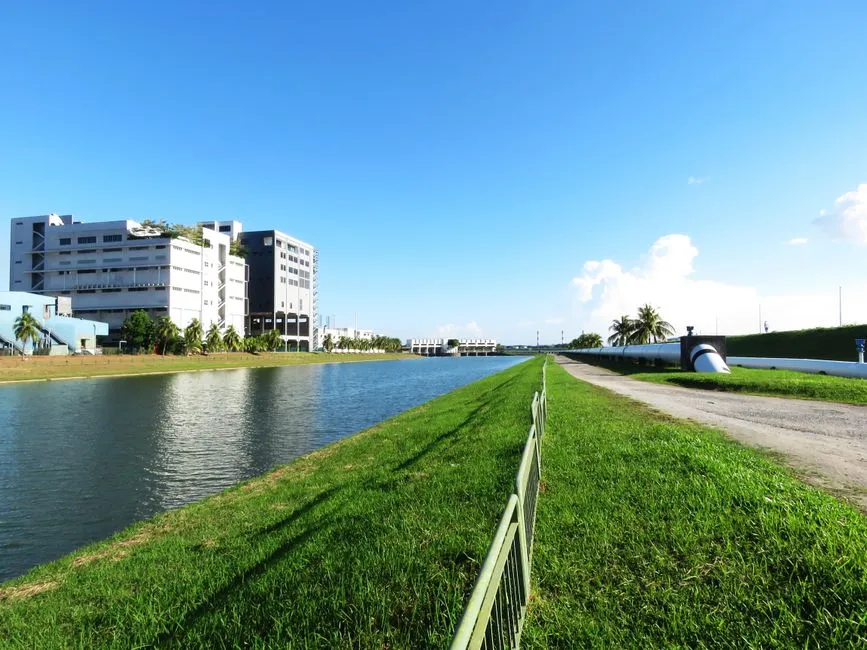
Annual wastewater testing, reporting and permit renewal form the minimum documentary framework described by Tecma for an industrial wastewater compliance review. The buyer should obtain evidence rather than rely on a seller’s statement that the site is “in compliance.”
| Document or control | What to verify | Closing consequence |
|---|---|---|
| Permits and authorizations | Current term, permittee, discharge point, limits, monitoring conditions and transfer or reissuance status | Identify missing authority or conditions that must be resolved before closing |
| Annual laboratory reports | Accredited and authorized Mexican laboratory, analytical method, results, exceedances and corrective actions | Evaluate the permittee’s actual compliance history and data quality |
| Chain-of-custody records | Sample identification, collection, preservation, transport and laboratory receipt | Test whether reported results can be defended during an inspection |
| Water-use and discharge records | Flow, destination, operating date and consistency with the current permit | Reconcile the site’s water balance with its reported discharges |
| Annual filings and renewals | Submission date, authority receipt, renewal status and correspondence | Determine whether operating authority will remain valid after closing |
| Monitoring plans and violation records | Required parameters, sampling points, notices, violations and closure of corrective actions | Estimate remediation and compliance risk |
Tecma identifies NOM 001 SEMARNAT 1996 for federally regulated ground or septic discharges and NOM 002 SEMART 1996 for municipal-sewer discharges. The laboratory’s credentials and the complete analytical reports are important because an annual result is only useful if the buyer can establish who sampled it, how it was analyzed and whether the applicable limits were met. Ask for laboratory credentials, methods, chain-of-custody records, exceedances, explanations and evidence of corrective action.
Annual reporting is required for discharges and testing, and Tecma states that most relevant wastewater permits and authorizations must be renewed every year. The compliance file should therefore include permits, renewals, monitoring plans, historical results, noncompliance notices, corrective actions and correspondence with the federal, state or municipal authority. The buyer should also reconcile the permit with current ownership, production, discharge points and treatment train; a change after acquisition may require authority review.
Tecma also states that SEMARNAT audits can examine records and inspect the physical site without advance notice. A complete, accessible file is therefore an operating control, not merely closing paperwork. Daily, monthly and annual reporting responsibilities should be assigned to qualified Mexican environmental personnel before transfer.
How Should Semiconductor Wastewater Be Evaluated?
Semiconductor wastewater must be characterized stream by stream before a treatment or reuse system is selected. A facility-wide average can conceal a concentrated rinse, cleaning or chemical-recovery stream that controls the required treatment performance.
| Information to request | Decision supported | Key issue for the buyer |
|---|---|---|
| Process-by-process wastewater map | Defines segregation and sampling points | Separate rinse, CMP, cleaning, chemical recovery, cooling, stormwater and sanitary streams |
| Flow, pH, temperature and conductivity | Establishes hydraulic and load variation | Do not size from a single average flow |
| Metals, fluorides and organics | Identifies treatment and pretreatment needs | Match methods to the applicable Mexican permit and reuse target |
| PFAS screening and method-specific results | Tests whether source control is needed | Confirm whether PFAS-bearing chemicals, spent baths, sludges or concentrates are segregated |
| Current treatment mass balance | Tests the adequacy of the installed train | Include influent, each treatment stage, residuals and final discharge |
The supplied Virginia evidence is a semiconductor risk indicator, not a Mexican standard. Chips Communities United reported that 20 PFAS compounds were detected in Micron wastewater, with average total PFAS of 1,419 ng/L across 16 quarterly datasets received between 2022 and 2026. It also reported average PFOA of 57 ng/L, average PFNA of 32 ng/L and approximately 68% short-chain PFAS. Those figures describe the cited Virginia monitoring analysis; they are not Mexican discharge limits.
The same source states that granular activated carbon can achieve 40% to 70% removal of shorter-chain PFAS, compared with greater than 95% removal of PFOS in one cited example. That supports a source-specific feasibility test: request method-specific data and treatment mass balances rather than assuming conventional treatment will adequately control short-chain compounds. It also reinforces the need to establish whether PFAS-bearing chemicals, spent baths, sludges or concentrates are managed separately from the main wastewater train.
Evaluate reuse, zero-liquid-discharge and source-control options against actual flow, contaminant profile, water balance and economic objectives. The UF and DAF options for semiconductor CMP wastewater and the chip-fab wastewater treatment and ZLD blueprint provide relevant process context, but the acquired plant’s data must remain the basis for selection.
Which Treatment System Should the Buyer Specify?
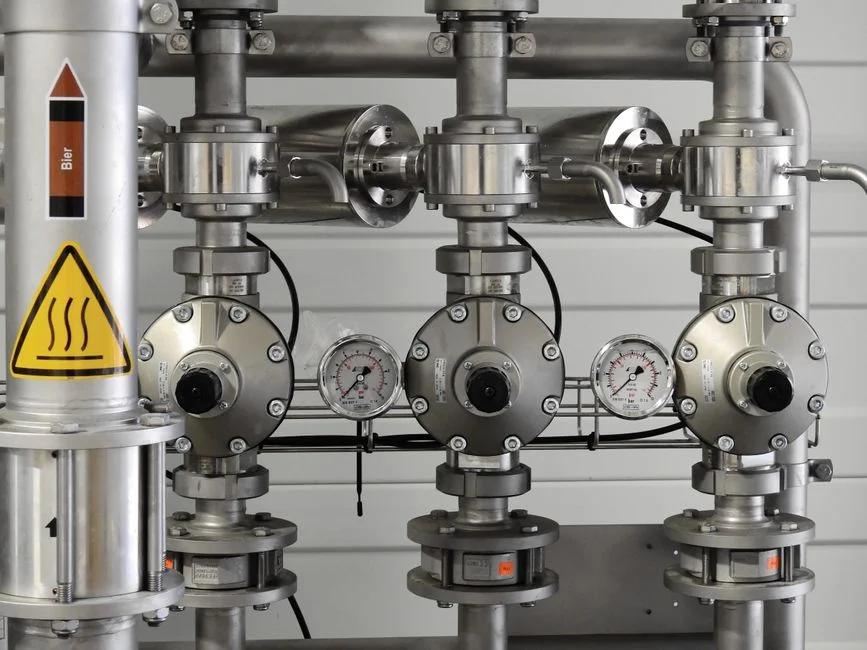
The buyer should specify treatment only after connecting the wastewater characterization to the applicable permit, required reuse quality and residual-handling route. A catalog unit cannot resolve an unknown flow, contaminant load or discharge limitation.
| Characterization or objective | System to evaluate | Specification basis and cautions |
|---|---|---|
| Suspended solids, oil and grease, FOG or colloidal material | DAF | Use an industrial DAF pretreatment system where these constituents must be removed before biological, membrane or reuse treatment |
| Bacteria, colloids and suspended solids before RO | UF | Catalog systems use hollow-fiber PVDF membranes, automatic backwash and air scour |
| Compact biological treatment with membrane separation | MBR | Evaluate an integrated MBR wastewater treatment system where the process objective requires biological treatment and solids separation |
| High-quality industrial reuse | Industrial RO | Evaluate against semiconductor reuse requirements, automation and the recovery objective |
| Defined residual stream | Chemical dosing, sludge dewatering and disinfection | Specify only after the process train, residual chemistry and disposal route are established |
The available equipment descriptions state that the UF catalog includes hollow-fiber PVDF systems from 2,000 to 40,000 L/h with 0.03 micron membranes, automatic backwash and air scour. The MBR catalog lists 10 to 2,000 m³/day, PVDF membranes and filtration below 1 micrometer. The industrial RO catalog identifies semiconductor applications, PLC automation and recovery rates up to 95%. These are equipment attributes, not proof that any system will meet the acquired site’s permit or reuse target.
Require the supplier to size equipment using an agreed wastewater characterization, the discharge permit, flow variability, reuse target and residual-management route. If suspended solids, oil and grease, FOG or colloidal material must be removed first, DAF is the relevant pretreatment question. If the objective is bacteria, colloids and suspended-solids removal before RO, evaluate UF. If compact biological treatment and membrane separation are both required, evaluate MBR. These are conditional decisions, not a universal treatment sequence.
The supplier should also show how chemical consumption, sludge or concentrate volume, energy, maintenance, bypass conditions and residual transfer affect the selected train. A comparison of MBR and conventional activated sludge may help frame biological-process selection, but the acquired plant’s wastewater and operating objectives still control.
A Closing-Ready Wastewater Due-Diligence Checklist
- Establish jurisdiction and routes. Confirm the state, municipality, water source, receiving body, discharge points and whether each stream is industrial, domestic or mixed.
- Verify authority. Obtain every permit, renewal, authorization, sewer or pretreatment condition, monitoring plan, annual filing, laboratory report and violation record. Confirm the permittee and the transfer or reissuance path.
- Investigate inherited contamination. Commission a transaction-specific environmental site assessment addressing soil, groundwater and relevant historical operations. Tecma states that acquiring property can make the owner immediately responsible for prior contamination; its example concerns contamination that occurred 20 years earlier.
- Characterize semiconductor streams. Develop a sampling plan with an accredited and authorized Mexican laboratory. Define parameters, sampling points, flow variability, PFAS screening and the method-specific information required for the permit and reuse assessment.
- Test treatment adequacy. Model the existing treatment train against applicable discharge limits and the buyer’s production or reuse plan. Identify capital works, operating changes and residual-management costs.
- Prepare for operation. Assign Mexican environmental personnel to daily, monthly and annual reporting, keep a complete inspection file and prepare for a SEMARNAT inspection without advance notice, as highlighted by Tecma.
The acquisition team should treat unresolved permit status, historical contamination or an unidentified discharge route as closing workstreams with assigned legal and engineering owners. A site-specific wastewater assessment framework can help organize the technical review, but the conclusion must be based on the acquired plant’s evidence rather than a facility-type template.
Frequently Asked Questions
What budget should a buyer set for wastewater compliance and treatment at the acquired plant?
No defensible acquisition budget or equipment price can be calculated from the supplied research alone because the site flow, wastewater characterization, permit limits, residual route and treatment objectives are not provided. The buyer should request those inputs from the seller, validate them through sampling and permit review, and ask shortlisted suppliers for comparable site-specific scopes. A quotation should separate equipment, installation, utilities, chemical use, monitoring, sludge or concentrate disposal, and compliance work so that the assumptions can be reviewed.
When should a treatment supplier be selected and sized?
Selection should begin after the buyer has the current permit, site flow and flow variability, stream-specific composition, discharge route, reuse target and residual-handling route. The supplier should then explain which process functions are required, demonstrate sizing against those inputs and identify any unresolved analytical gaps. Equipment should not be ordered solely from a general chip-fab description or catalog flow range.
What should acquisition due diligence include beyond the wastewater permit?
Review the permit and all renewals, sewer or pretreatment conditions, annual laboratory results, chain-of-custody records, annual filings, violations and corrective actions. Investigate historical contamination through a transaction-specific site assessment. Also verify the production profile, discharge points, existing treatment train and reporting responsibility, because Tecma states that SEMARNAT may inspect records and the site without advance notice.
Do the Virginia PFAS measurements apply as limits for a Micron plant in Mexico?
No. The reported average total PFAS of 1,419 ng/L, average PFOA of 57 ng/L, average PFNA of 32 ng/L and approximately 68% short-chain PFAS are Virginia monitoring results, not Mexican discharge limits. They are useful for identifying semiconductor risk and testing whether the plant’s treatment train can address short-chain PFAS. The Mexican purchasing decision must use the acquired site’s applicable permit, NOM and site-specific characterization.
Related Equipment
- integrated MBR wastewater treatment system — specifications, capacity range, and technical data