
What Changes When an Existing Mexican Plant Changes Hands
Freeport-McMoRan inherits the plant’s existing environmental permitting position upon acquisition and must apply its site-specific permits, discharge conditions, monitoring duties, and closure commitments while adding corporate water-governance controls. The acquisition does not automatically create a new wastewater standard or a universal permit-transfer rule. The buyer must confirm which approvals must be transferred or modified, map every wastewater stream, test treatment performance against actual permit obligations, and assign responsibility for monitoring, reporting, and closure liabilities.
Freeport-McMoRan’s 2017 CDP Water response states that water risks are included in its operational risk factors and that its Sustainability Development Leadership Team maintains a standing agenda item on water topics. That supports a governance response during acquisition diligence, but it does not establish a Mexican legal requirement. A corporate policy can impose tighter internal controls; it cannot replace a permit condition, regulator instruction, or applicable statutory duty.
The immediate diligence questions are concrete: Which legal entity holds each permit? Does the plant discharge to a sewer, surface water, groundwater, a tailings or mine area, or another receiving route? Which wastewater streams and monitoring obligations are affected by the transaction? Are any violations, inspections, notices, or remediation commitments open? Which entity remains responsible for financial assurance, reclamation, and post-closure monitoring?
These questions also define the boundary between legal compliance and equipment selection. An engineer can evaluate treatment performance against a confirmed design basis, but cannot infer Mexican limits from a corporate disclosure or substitute an equipment catalog for regulator confirmation. For broader treatment-selection context, see MBR versus conventional activated sludge for mining wastewater.
Build the Plant's Wastewater Baseline Before the Deal Closes
A defensible acquisition baseline requires the permits, operating records, and site observations needed to connect each wastewater stream to its legal route and treatment performance.
Request the current wastewater and hazardous-waste permits, discharge authorizations, sewer or receiving-body agreements, monitoring plans, analytical results, compliance notices, violations, remediation commitments, financial assurance, and closure provisions. Also obtain the operating logbooks, laboratory records, flow-meter data, chemical inventories, sludge or sediment records, maintenance history, and process drawings. Records should be reconciled to the legal permit holder, not merely to the operating site, because a permit, a discharge right, and a closure obligation may have different owners.
Construct a stream-by-stream inventory. At minimum, address domestic sewage; cooling and wash water; process water; stormwater; contact water; mining-influenced water; off-site drainage; and sludge or sediment waste. For every stream, record source process, average and peak flow, variability, seasonality, chemistry, treatment stage, discharge destination, monitoring points, responsible operator, and supporting records.
| Baseline field | Evidence to obtain | Diligence question |
|---|---|---|
| Stream origin and variability | Process diagrams, flow logs, production records | Can treatment and monitoring handle normal, peak, storm, and upset conditions? |
| Receiving route | Permits, sewer agreements, discharge records | Which legal instrument controls this discharge? |
| Water chemistry | Certified analytical results and sampling plan | Does performance meet the confirmed permit conditions? |
| Treatment train | P&IDs, equipment list, maintenance and bypass logs | Is each unit effective, available, and monitored? |
| Residuals and closure | Sludge records, financial assurance, closure plan | Who owns disposal, reclamation, and post-closure obligations? |
The New Mexico operations page for Freeport-McMoRan provides a mining-water precedent rather than a Mexican legal rule. It states that copper-bearing ore can naturally produce acidic, metal-bearing water and that mining accelerates impacted-water production; consequently, the New Mexico operations contain and reuse impacted water. That supports investigating containment and reuse at the acquired plant, but the supplied research contains no Mexican flow, concentration, or permit data.
Do not estimate site flow, pollutant concentrations, treatment capacity, or closure exposure without permits, monitoring records, and a qualified site survey. The DAF versus clarifier for mining wastewater and MBR versus conventional activated sludge for mining wastewater are useful screening references, not substitutes for plant data.
Determine Which Wastewater Requirements Actually Apply
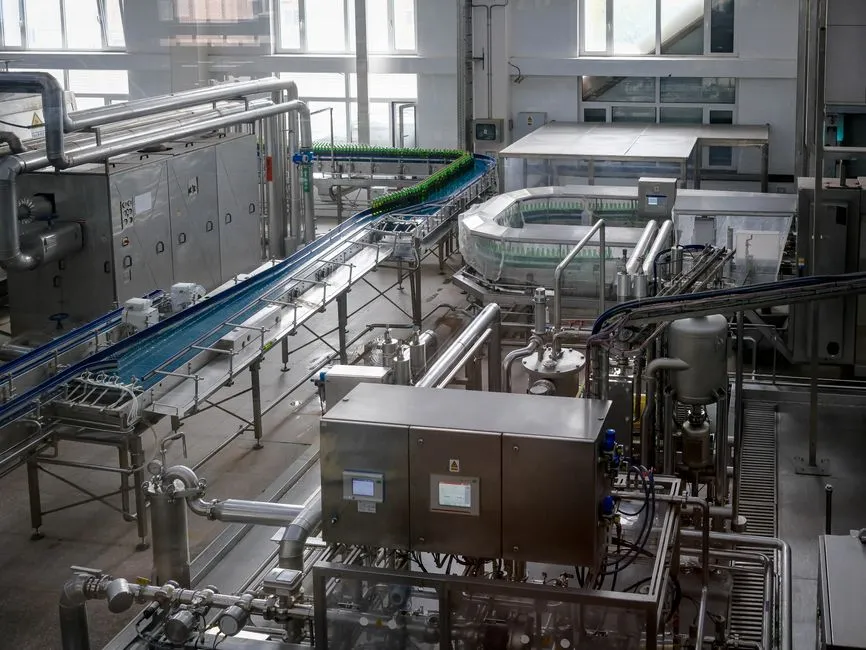
The controlling requirements must be established from the plant’s actual activities, receiving route, location, and permit instruments; no numeric Mexican effluent limit can be inferred from the supplied research.
- Verify the current federal, state, and local requirements applicable to the plant’s mining, industrial, municipal-sewage, or other sector-specific activities.
- Identify each controlling instrument: an individual permit, covered permit, sewer-use or discharge authorization, water-right or resource authorization, hazardous-waste obligation, or combination of approvals.
- Ask the issuing authority how a change of control is handled. The permit may be transferable, require modification, or remain with the same legal entity while operational responsibilities change.
- Reconcile permit conditions with monitoring, reporting, recordkeeping, financial assurance, inspection, and closure duties.
- Record the authority, legal basis, date, conditions, and evidence for every applicable requirement in the diligence register.
Do not treat a U.S. or Peruvian operating example as proof of Mexican law. The freeportinnewmexico.com operations page discusses containment, reuse, monitoring wells, reporting, and reclamation in New Mexico. Its relevance is technical: mining-influenced water can require an engineered control and monitoring regime. The applicable Mexican authority, conditions, and limits still require verification.
| Requirement check | What the buyer must establish | Decision consequence |
|---|---|---|
| Legal basis and authority | Applicable jurisdiction, issuing authority and current instrument | No baseline is reliable until the controlling source is identified. |
| Change-of-control treatment | Written confirmation on transfer, modification or continuity | Make the required action a closing condition or priced liability. |
| Discharge route | Surface water, sewer, groundwater, mine area, reuse or another route | Each route requires its own compliance and treatment assessment. |
| Numeric limits | Exact permit conditions and applicable regulatory conditions | Do not populate the gap with generic or assumed limits. |
| Monitoring and closure | Sampling points, frequency, reporting, assurance and post-closure duties | Assign cost, owner, schedule and evidence of compliance. |
Freeport-McMoRan’s 2017 CDP response reports nine facilities exposed to Colorado River basin water risks, representing 61–70% of active mine operations globally. Use this only as evidence that enterprise water-risk oversight can cover multiple facilities; it is not a Mexican permit requirement. The supplied material also does not verify company-wide discharge-quality data, so it cannot establish the acquired plant’s compliance performance. For a general regulatory scoping exercise, the industrial wastewater engineering and compliance guide illustrates the need to verify jurisdiction-specific requirements, but Kenya’s framework is not applicable to a Mexican plant.
Evaluate Whether the Existing Treatment Train Closes the Gap
Each treatment unit should be accepted only when its operating record, maintenance status, and treatment performance address a confirmed wastewater objective and permit condition.
Compare the existing train against solids removal, oil and grease control, acidity correction, metal removal, biological treatment, disinfection, filtration, and sludge handling. For mining-influenced water, assess containment and reuse. Freeport-McMoRan’s New Mexico operations page states that impacted water is contained, reused in the mining process, checked through monitoring wells, and reported to regulators. That precedent does not prove those controls are required in Mexico, but it provides a useful evaluation sequence for the acquired site.
| Assessment area | Required evidence | Upgrade or liability decision |
|---|---|---|
| Process performance | Flow and chemistry trends against confirmed permit conditions | Confirm adequacy, upgrade, or document a residual risk. |
| Hydraulic resilience | Peak-flow, storm, upset and bypass records | Define equalization or additional treatment scope. |
| Equipment condition | Maintenance, failure, redundancy and operator records | Repair, replace or provide contingency before closing. |
| Monitoring and controls | Instrument calibration, sampling method, alarms and data validation | Close instrumentation or reporting gaps. |
| Residuals and safety | Sludge handling, chemical storage, odor and emergency arrangements | Price the missing infrastructure and operating controls. |
Equipment selection follows the gap analysis. A DAF system for industrial wastewater pretreatment is a comparison point for physical separation; the supplied research states a capacity range of 4–300 m³/h across 13 standard models. That range is a product reference, not confirmation that any model fits the acquired plant. Flow, wastewater characteristics, treatment objectives, and site constraints govern selection.
An MBR wastewater treatment for industrial reuse is a comparison point for compact biological treatment and reuse concepts. The supplied research states a capacity range of 10–2,000 m³/day and filtration below one micrometre. Neither figure establishes suitability for the acquired site. Evaluate hydraulic loading, process chemistry, reuse quality, pretreatment needs, membrane cleaning, solids handling, controls, redundancy, and operator competency.
Check the complete system: hydraulic surge, bypasses, odor control, chemical storage, sludge dewatering, monitoring instrumentation, redundancy, operator competence, and emergency response. A treatment train that meets a laboratory result but cannot handle actual flow or upset conditions has not closed the engineering gap.
Turn Diligence Findings Into a Pre-Closing Remediation Plan
Every material wastewater finding should have a defined disposition, accountable owner, financial treatment, and verification before the transaction closes.
| Finding category | Required treatment | Closing evidence |
|---|---|---|
| Closing condition | Complete permit transfer or modification, critical repairs, baseline validation, or other pre-closing action. | Written authority confirmation, accepted tests, and released obligations. |
| Post-closing capital project | Define design basis, equipment scope, schedule, local partners, commissioning tests, and monitoring. | Approved estimate, funding, schedule, and performance criteria. |
| Operating corrective action | Correct procedures, operator competency, maintenance, sampling, or recordkeeping. | Completed action and operating evidence. |
| Accepted liability | Price the residual obligation with an explicit contingency and indemnity. | Board or transaction approval, quantified exposure, and responsible owner. |
For each remediation item, state the permit action, design basis, equipment scope, schedule, local implementation needs, commissioning evidence, monitoring plan, and responsible executive. Do not accept a remediation estimate without verified flow, analysis, site-survey information, and permit inputs. The supplied research provides no acquisition-site flow, cost, or compliance figures.
Freeport-McMoRan’s 2017 CDP response describes a Peruvian wastewater treatment plant designed to treat approximately 90% of Arequipa’s domestic sewage and industrial discharges that previously reported directly into the Rio Chili. This is a historical example of integrated, community-scale treatment, not a design benchmark for Mexico.
Use a firm decision rule: proceed only when permit transfer, baseline performance, closure liability, and remediation costs are documented and financially reconciled. The wastewater treatment cost and ROI decision framework can structure the comparison, but the acquisition team must enter verified site inputs rather than generic assumptions.
Frequently Asked Questions
What wastewater requirements apply when Freeport-McMoRan acquires a plant in Mexico?
The applicable requirements are those in the plant’s current Mexican permits and the federal, state, and local rules tied to its activities and receiving route. The buyer must confirm whether change of control requires a transfer, modification, or other regulator action. The supplied research does not establish a universal numeric effluent limit for the acquired plant.
How much will wastewater compliance and remediation cost?
There is no defensible acquisition-site price in the supplied research. Request a cost breakdown based on verified flows, water analyses, site survey, permit conditions, treatment-gap design, local construction and operating inputs, monitoring, residual
Frequently Asked Questions
Does Freeport-McMoRan need a new wastewater permit when it acquires a plant in Mexico?
Yes, under Mexican environmental law, a permit transfer is required. The acquirer must submit a formal notice to the National Water Commission (CONAGUA) to update the discharge permit (Permiso de Descarga) associated with the site. Failure to update the permit title within the legally mandated timeframe can lead to the invalidation of water rights and the imposition of significant administrative penalties.
What wastewater records should I request during due diligence on a Mexican plant acquisition?
You must request the current CONAGUA discharge title, the last 24 months of analytical laboratory reports (Bitácoras de Descarga), and proof of payment for water usage fees (Derechos de Agua). Additionally, verify the site's compliance with NOM-001-SEMARNAT-2021, which sets the maximum permissible limits for contaminants in discharges to national water bodies, and confirm the existence of a valid Registro de Descarga for discharging into municipal sewage systems if applicable.
How do I size a wastewater treatment system for an acquired industrial plant?
Sizing must be based on a mass balance analysis of the facility’s specific operational flow rates and the chemical load of the influent, including heavy metals, total suspended solids (TSS), and pH levels. You should calculate the hydraulic load based on peak production capacity plus a 20% safety buffer, while ensuring the system can achieve the specific concentration limits mandated by NOM-001-SEMARNAT-2021 for the receiving water body type.
Should I choose DAF or MBR for a mining plant in Mexico?
The choice depends on the specific contaminant profile: Dissolved Air Flotation (DAF) is generally superior for mining operations requiring the removal of oils, greases, and emulsified solids prior to downstream processing. Membrane Bioreactor (MBR) technology is better suited for high-strength organic wastewater or scenarios requiring high-quality effluent for water reuse (recirculación), provided the influent does not contain heavy metal concentrations that would cause membrane fouling or chemical degradation.
What compliance risks should block a Mexican plant acquisition?
Acquisitions should be blocked if the facility lacks a valid Title of Concession or Discharge Permit, as these are difficult to retroactively legalize and can lead to immediate operational shutdowns. Other red flags include a history of non-compliance with NOM-001-SEMARNAT-2021 resulting in ongoing litigation, the presence of soil contamination requiring remediation under the Ley General para la Prevención y Gestión Integral de los Residuos, or outstanding federal tax liens related to environmental water usage fees.