Why the CAS vs MBR Question Comes Up for Mining and Metals Sites
Mining and metals-finishing wastewater in and around Grove Hill typically carries high and variable total suspended solids (TSS), heavy metals, sulfate, hardness, and pH swings — the exact constituents that expose the limits of gravity settling in conventional activated sludge (CAS). CAS separates biomass in a secondary clarifier; a membrane bioreactor (MBR) replaces that clarifier with submerged membranes, such as the 0.1 μm PVDF flat-sheet modules used in the DF-series flat-sheet MBR modules, and decouples hydraulic retention time from solids retention time. Local sites also need to meet NPDES metals limits and may want to reuse treated water for dust suppression or process service. Those reuse and metals drivers, combined with the high solids and shock loads typical of mining influent, lead an operator to reopen the CAS vs MBR question instead of accepting CAS as the default.
How Each Process Handles Mining-Specific Contaminants
Heavy metals are removed by precipitation and biosorption in both CAS and MBR; the operational difference is that an MBR retains more biomass and finer solids, so metal-bearing flocs stay in the reactor instead of leaving with the clarifier overflow. High TSS and abrasive solids from mining favor MBR because the membrane acts as an absolute barrier downstream of the biology, but only if upstream screening protects the membranes — a step such as the rotary mechanical bar screen in the GX series. Sulfate and hardness affect both systems in similar ways biologically; the ceramic MBR study by Pienaar (2011, Boloka Institutional Repository, North-West University) on systems operating under non-steady-state conditions shows that biological upset recovery is faster when mixed-liquor suspended solids (MLSS) is high and washout is mechanically prevented. FOG, oil, and floatables from equipment wash-down should be removed upstream of either system — DAF pre-treatment is a standard guard regardless of the biological choice, as discussed in the DAF vs clarifier guide for mining wastewater.
Side-by-Side Comparison: MBR vs Conventional Activated Sludge
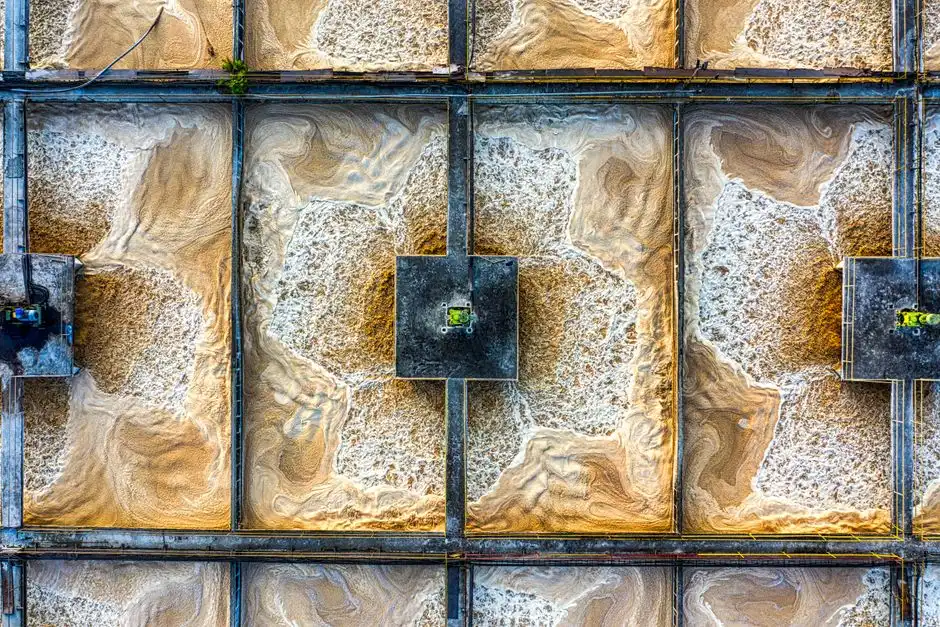
The table below maps the parameters a process engineer most often asks about. The HydropureWater MBR figures are taken from the verified vendor product specification; the CAS framing is anchored to the U.S. EPA 2012 emerging-technology inventory (EPA 832-R-12-011, March 2013), which lists CAS alongside Deep Shaft, IFAS, AGSP, and AnMBR as biological options at different states of development — context that CAS is one of several biological pathways rather than the only one.
| Parameter | Conventional Activated Sludge (CAS) | Membrane Bioreactor (MBR) |
|---|---|---|
| Biomass separation | Gravity settling in secondary clarifier | Submerged membrane filtration (0.1 μm pore size per HydropureWater DF series) |
| Typical MLSS range | Lower, constrained by clarifier solids loading | Higher, decoupled from clarifier |
| Effluent TSS | Limited by clarifier overflow performance | Defined by membrane integrity, vendor-published at <1 μm filtrate |
| Footprint | Larger aeration basin plus clarifier | 60% smaller footprint than conventional systems per HydropureWater MBR specification |
| HRT / SRT coupling | Coupled through clarifier and sludge return | Independent HRT and SRT |
| Sensitivity to upsets | Higher risk of biomass washout | Higher MLSS and absolute barrier reduce washout risk |
| Effluent reuse suitability | Often needs tertiary polishing | Near-reuse-quality, suitable for RO/UF feed |
| Pre-treatment requirement | Screening and grit removal | Finer screening; FOG removal typically required |
| Module energy baseline | Aeration only | Submerged flat-sheet modules documented at 10–20× lower energy than external cross-flow designs (HydropureWater DF series) |
The MBR integrated MBR system trades clarifier concrete and sludge return pumping for membrane cassettes, finer pre-treatment, and module-aeration energy. Whether that trade pays off depends on the site triggers covered in the next two sections.
When CAS Is Still the Right Answer Near Grove Hill
CAS remains appropriate where land is available, influent is relatively steady, and the permit is discharge-only with no reuse requirement. Existing CAS basins at older mining or quarry sites can often be retrofitted — IFAS carriers added to the existing aeration basin, or MBR cassettes installed in the same tank — rather than fully replaced, a capital decision that should be evaluated against the greenfield MBR option. For very high flows with modest effluent quality targets, CAS paired with a well-designed secondary clarifier, or a high-rate unit such as the high-efficiency sedimentation tank, is typically lower CAPEX and carries no membrane-replacement risk. The 2012 EPA inventory lists CAS as a fully established process; for sites that match the CAS-friendly profile, that maturity is a procurement argument in its favor.
When MBR Becomes the Better Choice for a Mining Site
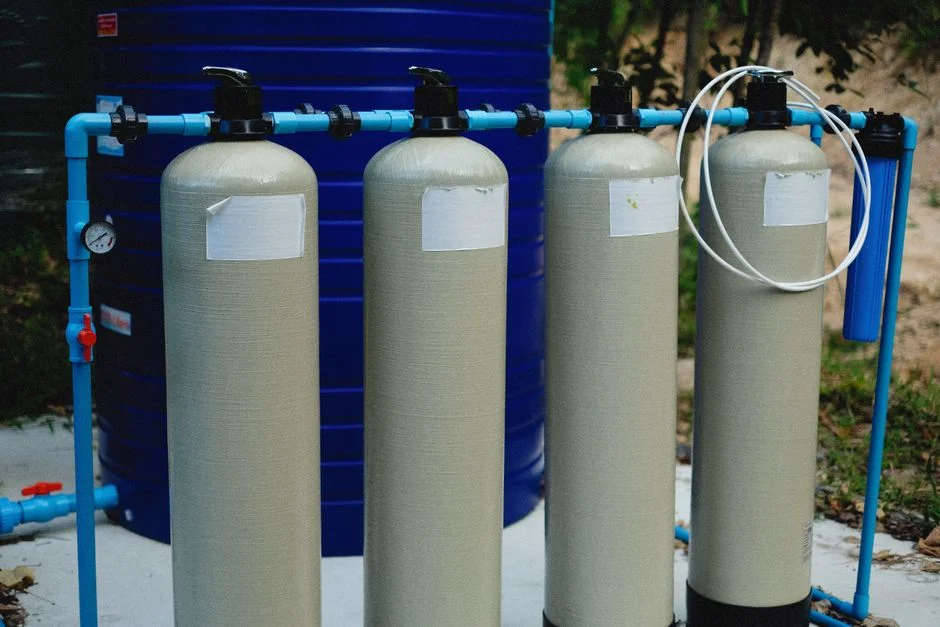
The decision typically turns on four site triggers that a process engineer should evaluate in order.
| Trigger | What to check on site | Why MBR wins |
|---|---|---|
| 1. Footprint constraint | Available pad area for new or expanded biological treatment | 60% smaller footprint than conventional systems (HydropureWater MBR specification) |
| 2. Reuse requirement | Is treated water needed for dust suppression, wash water, or RO feed? | <1 μm filtrate quality protects downstream equipment such as an industrial RO system or a polishing UF system |
| 3. Upset tolerance | Batch leachate, stormwater ingress, mill downtime | Higher MLSS and decoupled HRT/SRT improve recovery from shock loads |
| 4. Tight effluent metals or TSS limits | Can the existing clarifier reliably meet NPDES metals and TSS limits? | Absolute membrane barrier retains metal-bearing flocs and fines that a clarifier would discharge |
If none of these four triggers apply, the site is likely a CAS candidate and the operator should not pay the MBR premium. The compliance angle is covered in more detail in the mining pretreatment compliance guide.
Sizing, Footprint, and Cost Framing for a Grove Hill Project
Use the verified HydropureWater MBR product ranges to bracket the equipment envelope before requesting vendor proposals: the integrated system covers 10–2,000 m³/day, and the DF-series cassettes cover 32–135 m³/day per cassette at 80–225 m² of membrane area. Submerged flat-sheet modules are documented at 10–20× lower energy than external cross-flow designs per the HydropureWater DF series specification, which is the relevant baseline for cost modeling rather than older cross-flow numbers. OPEX items specific to MBR that CAS does not carry include membrane aeration, periodic chemical cleaning, and end-of-life membrane replacement; mining-specific clean-in-place intervals and membrane life should be requested from the vendor against the actual influent. CAPEX items specific to CAS that MBR avoids include large concrete clarifiers, sludge return pumping stations, and clarifier internals, but MBR adds membrane cassettes and finer pre-treatment. The MBR cost-per-m³ 2026 guide walks through these line items in more detail.
Integration With the Rest of the Treatment Train
The CAS/MBR decision does not stand alone, as both systems require equalization, pH adjustment, and often metal precipitation upstream. A chemical dosing skid such as the automatic chemical dosing system is standard regardless of biological process choice. Downstream of either system, mining sites usually need sludge dewatering, typically a sludge dewatering filter press, and, for reuse, polishing such as RO or UF. When the MBR feeds an RO for zero-liquid discharge, the MBR's <1 μm filtrate specification becomes operationally important because it controls the fouling load that the RO must handle; this is the practical reason why the MBR–RO pairing is the default for reuse trains rather than a CAS–RO pairing.
Frequently Asked Questions
What budget should a Grove Hill mining plant plan for an MBR retrofit versus a new CAS basin?
No single budget figure applies across mining influents. The HydropureWater MBR product range covers 10–2,000 m³/day for the integrated system, which is the equipment envelope to size against; vendors should be asked to quote membrane replacement intervals, clean-in-place chemical consumption, and aeration energy at the actual site flow and MLSS target before a budget is locked.
How do I choose between MBR suppliers for a metals wastewater duty?
Compare suppliers on three metrics: documented module pore size and energy baseline (the HydropureWater DF series states 0.1 μm and 10–20× lower energy than external cross-flow), references on similar mining or metals influents, and willingness to provide site-specific membrane life and CIP-interval estimates against your actual wastewater characterization.
Can an existing CAS basin be retrofitted to MBR without building a new tank?
Yes. Existing aeration basins can be refitted with MBR cassettes or IFAS media, which avoids the cost of new concrete and maintains the existing hydraulic profile. The decision should weigh the cost of new membranes and finer pre-treatment against the avoided cost of clarifiers and sludge return pumping.
Does MBR remove heavy metals better than CAS for NPDES compliance?
Biological metal removal (biosorption and co-precipitation) occurs in both systems. The MBR advantage is mechanical: the membrane retains the metal-bearing flocs and fine solids that a clarifier would discharge in its overflow, so the effluent TSS and the particulate metal load leaving the biological step are lower. Final compliance still depends on upstream precipitation chemistry and downstream polishing.