
Start with the permit, not the treatment skid
Mining and metals plants near Millard meet pretreatment limits by characterizing each wastewater stream, identifying the applicable permit and categorical standard, and designing treatment around the receiving publicly owned treatment works’ current local limits. A defensible treatment train commonly starts with pH adjustment, followed by coagulation and flocculation, clarification, ancillary chemical control, and filtration, with sludge dewatering added as needed. DAF can remove metal-hydroxide flocs, while lamella clarification can increase separation capacity. Final sizing must be based on site-specific influent data, not a generic mining template.
The governing distinction is the discharge path. EPA’s NPDES program establishes discharge limits and conditions for industrial and commercial point sources and protects receiving waters and POTWs. The Clean Water Act requires point-source discharges from mining operations, including discharges from associated impoundments, to be authorized under NPDES, according to the US EPA’s Industrial Wastewater guidance. A discharge entering a municipal sewer is different: the plant is an industrial user evaluated through the receiving POTW’s pretreatment program, including its permit, local limits, monitoring conditions, and sewer-use ordinance.
EPA’s mineral-mining effluent guidelines are in 40 CFR Part 436 and are incorporated into NPDES permits, as the agency’s Mineral Mining and Processing Effluent Guidelines page explains. A separate commercial mining treatment guide identifies 40 CFR Part 440 as the metal-mining categorical standards source. Neither source establishes a Millard-area sewer limit. No numeric discharge limit should be inserted into an equipment specification until the receiving authority has confirmed the current POTW permit, local limits, applicable mining subcategory, state requirements, and site-specific permit conditions.
Use this minimum document set to define the discharge envelope before requesting equipment prices:
| Document | Decision supported | Unresolved risk if omitted |
|---|---|---|
| Current NPDES or other discharge authorization | Identifies authorized discharge points and applicable permit conditions | Assumptions about coverage or discharge routing |
| Receiving POTW permit, local limits, and sewer-use ordinance | Defines sewer acceptance and monitoring requirements | Equipment may target the wrong limits |
| Applicable 40 CFR subcategory | Establishes the relevant categorical framework | Wrong standards basis |
| Recent monitoring results and process-stream inventory | Shows actual water quality, flow variation, and discharge routing | Unverified mass and hydraulic loading |
The regional comparison in this fabricated-metals pretreatment roadmap illustrates the same permit-first discipline, but Millard buyers should not transfer another basin’s local requirements into their project.
Build the treatment train around the actual wastewater chemistry
The treatment sequence should remove contaminants in the order dictated by their chemical behavior. Genesis Water Technologies’ Mining Water Treatment: How to Meet Stricter Standards describes mining wastewater as commonly containing suspended solids, acidity, metals, heavy metals, metalloids such as iron, arsenic, and manganese, and, in some cases, high salinity. Mine drainage and acid rock drainage also make acidity and variable flow central design questions.
- Adjust pH. Raise or lower pH to the condition required for metal removal. Genesis Water Technologies states that pH adjustment can help dissolved metals precipitate, while the commercial Price-area mining guide specifically identifies iron, arsenic, and manganese as dissolved metals addressed by this step.
- Coagulate and flocculate, then clarify. Chemicals aggregate suspended solids and small metal particles into larger flocs. DAF or settling then removes the resulting flocs, including metal-hydroxide precipitates.
- Apply ancillary treatment where needed. Corrosion inhibitors protect equipment; ion exchange or specialty resin can address metals that pH adjustment alone does not remove; biocide can control biological fouling.
- Filter the clarified water. Backwash media filtration can polish residual suspended solids. The referenced centrifugal option is described by Genesis Water Technologies as suitable for larger particles up to 2,000 micron.
| Block | Primary purpose | Design input still required |
|---|---|---|
| pH adjustment | Create the precipitation condition for dissolved metals | Raw pH, alkalinity, acidity, metal species, dosing range |
| Coagulation, flocculation, and clarification | Remove suspended solids and metal-hydroxide flocs | Flow profile, solids loading, settleability or flotation results |
| Ancillary treatment | Polish residual metals and control fouling or corrosion | Residual-metal profile, water chemistry, materials compatibility |
| Filtration | Remove remaining suspended solids | Post-clarifier TSS, particle distribution, filterability, backwash waste |
| UF, if required | Remove colloids and suspended solids before reuse or RO | Reuse objective, feed chemistry, membrane pretreatment, recovery |
Filtration should not be asked to remove substances that the upstream blocks have left dissolved. Likewise, adding ultrafiltration does not remove dissolved salts. A multi-media filter for polishing clarified wastewater may be appropriate in Block 4, but its media and loading must reflect the measured post-clarifier water—not raw mine drainage.
For reuse or RO protection, add a UF stage only after the project objective requires it. HydropureWater’s hollow-fiber UF uses 0.03-micron PVDF membranes and is intended to remove colloids and suspended solids. That specification defines the stated barrier, not the site capacity; permeate production, recovery, cleaning demand, and pretreatment remain engineering calculations.
Choose clarification equipment by floc behavior and site constraints
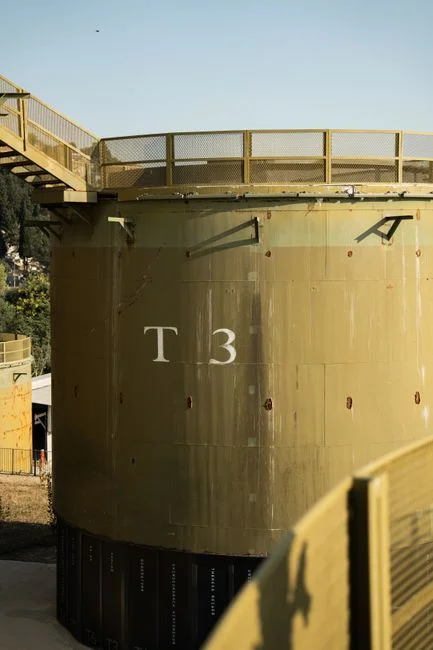
DAF is the stronger candidate when the clarification target is a low-density metal-hydroxide precipitate that settles slowly in a conventional clarifier. The Genesis Water Technologies guide explains that micro-bubbles lift these precipitates. A lamella clarifier is the stronger candidate when increasing separation capacity within an existing footprint is the governing objective; the commercial mining guide describes it as a common mining-effluent retrofit.
Neither choice proves that every dissolved metal meets the sewer limit. Both DAF and conventional settling remove solids. If the permit or characterization identifies residual dissolved metals, they require an appropriate polishing step before the train can be accepted.
| Decision factor | DAF | Lamella clarification |
|---|---|---|
| Primary evidence | Micro-bubbles can lift low-density metal-hydroxide flocs that settle slowly | Can increase separation capacity within an existing footprint |
| Best fit to review first | Floc flotation behavior and poor conventional settleability | Footprint constraint and retrofit potential |
| Vendor catalog coverage | HydropureWater covers 4–300 m³/h across 13 standard models | HydropureWater states surface loading rates of 20–40 m/h |
| Chemical-use claim | Not established by the supplied research | HydropureWater states chemical consumption can be reduced by up to 30% under the manufacturer’s stated conditions |
| Shared requirement | Measured flow, solids loading, chemistry, footprint, and final discharge or reuse criteria | Measured flow, solids loading, chemistry, footprint, and final discharge or reuse criteria |
Those catalog figures are comparison inputs, not design approval. The DAF versus clarifier guide for mining wastewater provides the appropriate engineering questions: what happens across the actual operating range, what floc recovery is demonstrated, and how will the equipment perform during peak flow or changing chemistry?
For preliminary evaluation, compare an industrial DAF system for mining wastewater with a high-efficiency lamella sedimentation tank. Do not select either from catalog capacity alone. The RFP should require the bidder to state how the proposed unit handles each measured flow and solids-loading condition, what chemical demand applies, and what polishing remains necessary.
Turn permit values into a defensible equipment specification
A priceable equipment specification must define the discharge envelope, the measured influent envelope, and the treatment objective. The permit supplies limits; the influent characterization supplies the mass loading; the operating profile supplies the duty cycle. Without all three, a supplier is pricing assumptions.
Before final sizing, require a 12-month influent characterization and jar tests, as recommended in the commercial mining treatment guide. The characterization should capture normal flow and seasonal or campaign extremes rather than a single grab sample. Jar tests should establish pH response, coagulant and flocculant demand, residual-metal removal, settleability, and filtration behavior for representative samples.
| Requirement | Information the bidder must state | Buyer check |
|---|---|---|
| Flow | Average, peak, minimum, campaign profile, and equalization assumptions | Trace each value to the characterization or permit |
| pH | Raw range, target range, control method, chemical storage and dosing assumptions | Confirm target against precipitation and local-limit requirements |
| TSS | Influent loading, removal stage, expected clarified and filtered TSS basis | Require test method and operating basis |
| Each applicable metal | Removal mechanism, residual, polishing step, and monitoring point | Map each metal to the current permit and local limit |
| Discharge point | Exact routing, routing restrictions, and surcharge or monitoring conditions | Confirm directly with the receiving POTW |
| Monitoring frequency | Automatic measurements, sampling points, records, and alarms | Match only permit-required and operationally justified items |
| Reuse objective | Quality target, recovery, treatment additions, and disposal of concentrates | Do not include UF or RO without an approved objective |
Ask each bidder to identify the wastewater stream entering each block, the pollutant-removal mechanism, the residual leaving that block, and the next treatment step. A proposal that stops at clarification without addressing residual metals is incomplete.
Controls should be included as equipment, not left to field improvisation. HydropureWater’s automatic dosing systems are described as skid-mounted, pre-wired, factory-tested, and designed for coagulants, flocculants, pH adjusters, and specialty chemicals. Require the PLC-controlled chemical dosing skid proposal to define local skid integration, calibration, interlocks, fail-safe responses, and factory acceptance tests.
Every quotation should state assumptions, duty cycle, chemical consumption, residuals, controls, commissioning tests, and responsibility boundaries. No vendor should guarantee a final sewer limit without the current permit, receiving POTW limits, and measured influent.
Manage the metal-bearing solids before they become a permit problem
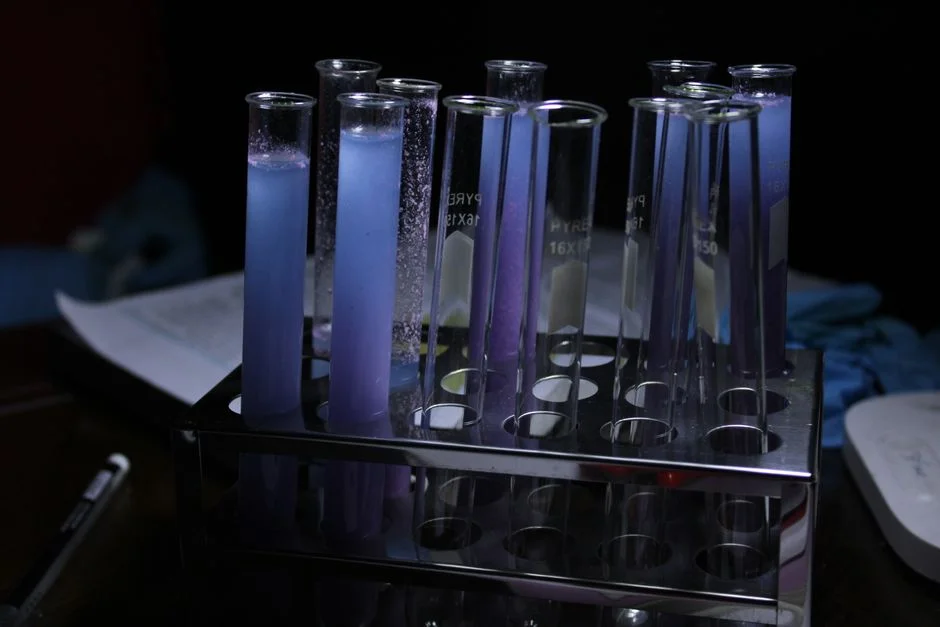
Sludge from pH adjustment and coagulation is a metal-bearing residual, not a secondary detail. The receiving authority may require evidence that the residual will be dewatered, stored, transported, and disposed of through an approved route. A liquid-treatment train should therefore not be purchased independently from its residual-management plan.
Where dewatering is required, a plate-and-frame filter press is an available route. HydropureWater offers filtration areas from 1 m² to 500 m² with manual, hydraulic, or fully automatic PLC operation. These are vendor specifications, not proof that a particular sludge will reach a particular cake condition.
- Define dry and wet sludge generation for each campaign and operating scenario.
- State whether dewatering is continuous, scheduled, or batched around mill campaigns.
- Identify conditioning chemicals and the resulting chemical demand.
- Specify cake collection, storage, transport, and the permitted disposal route.
- Identify backwash, wash-water, and spent-media handling requirements.
The plate-and-frame filter press for metal-bearing sludge should be selected from measured sludge properties, not a generic assumption that all mine sludge behaves alike. Plate area, plate count, operating mode, and control scope depend on sludge volume, rheology, conditioning response, operating schedule, and the disposal route. Until those inputs are available, asking for a guaranteed cake yield or a universal dewatering method would be technically indefensible.
Commission against the sewer permit, not only the equipment datasheet
Equipment startup is not the same as demonstrating sustained sewer compliance. The acceptance sequence should move through each process block, verify its operating response, and only then test the combined train against the receiving POTW’s current permit conditions.
- Calibrate pH instruments and prove chemical feed, dilution, and interlocks.
- Confirm coagulant and flocculant preparation, dose control, and mixing conditions.
- Verify clarification performance across the intended flow and solids-loading range.
- Confirm filtration operation, backwash, and stable final suspended-solids performance.
- Collect final samples using the methods and points identified in the permit and POTW requirements.
Use recent monitoring data and the 12-month influent characterization to set operating bands, alarm points, and contingency actions. A high observed value should trigger investigation of feed chemistry, chemical delivery, hydraulic loading, or solids carryover—not simply a larger dose without understanding why performance changed.
Include startup samples, bypass conditions, chemical-storage safeguards, spare-parts availability, operating procedures, and operator training as procurement deliverables. Maintain the industrial multi-media filter maintenance protocol as a referenced operating document if media filtration is included, and align inspection intervals with actual performance rather than treating the protocol as a permit.
Routine monitoring should cover pH, flow, TSS, applicable metals, and relevant residuals to the extent required by the current permit and local program. Sampling frequency, analytical methods, averaging periods, and compliance reporting belong in the permit-compliance matrix. Acceptance testing should establish whether the combined train performs across normal operations and the agreed startup conditions, while the owner remains responsible for permit compliance and recordkeeping.
Frequently Asked Questions
Does an NPDES permit prove that a mining plant can discharge to a municipal sewer?
No. NPDES addresses point-source discharges to waters of the United States, including regulated mining discharges and associated impoundments, according to the US EPA’s Industrial Wastewater guidance. A sewer discharge is evaluated under the receiving POTW’s industrial-user pretreatment requirements. The current POTW permit, local limits, sewer-use ordinance, and site-specific approvals must be confirmed separately.
Why are 12 months of influent data and jar tests needed before final equipment sizing?
The characterization defines actual flow, pH, solids, metal, and operating conditions, while jar tests establish how the chemistry responds to treatment. The commercial mining treatment guide specifically recommends a 12-month influent characterization and jar tests before sizing. In an RFP, require the supplier to show which test supports each sizing assumption, expected chemical demand, residual-metal treatment, and proposed operating bands.
Should a Millard-area plant choose DAF or a lamella clarifier?
Choose based on demonstrated floc behavior, flow variability, solids loading, available footprint, and downstream objectives. DAF can lift low-density metal-hydroxide precipitates that settle slowly; lamella clarification can increase separation capacity within an existing footprint. Ask each bidder to demonstrate performance under the measured design and peak conditions, including the residual dissolved-metal treatment required afterward.
What should a buyer request when comparing equipment cost and supplier selection?
Request a scope-based quotation rather than a unit price. It should list the stream covered, design flow, solids and chemistry basis, duty cycle, chemical consumption, controls, residual handling, factory testing, site commissioning, and warranty boundaries. For delivery and lead time, require confirmation of the selected configuration, included accessories, document submittal dates, and any approval dependencies. Do not rely on catalog capacity ranges as site design capacity or accept a guaranteed final limit without the permit and measured influent.
When is UF relevant to a mining pretreatment project?
Add UF when the approved objective is reuse or protection of an RO system, not as a default step for basic sewer compliance. HydropureWater’s hollow-fiber UF uses 0.03-micron PVDF membranes for colloids and suspended solids, but the feed chemistry, recovery, cleaning needs, and disposal of concentrates still require project-specific design. A UF water-treatment system should therefore be evaluated against the reuse specification and downstream process requirements.