What pretreatment actually means for a Price-area mining or metals plant in 2026
A mining or metals plant near Price, US meets 2026 pretreatment limits by holding a US Environmental Protection Agency (EPA) National Pollutant Discharge Elimination System (NPDES) permit and, where the plant sends wastewater to a sewer rather than a surface water body, by also satisfying the local publicly owned treatment works (POTW) pretreatment program that EPA delegates under 40 CFR Part 403. The EPA framework, as described in the Genesis Water Tech mining guide, requires any US mine generating wastewater to operate under an NPDES permit that covers discharges from extraction, washing, and ore-processing circuits.
When a facility discharges to a municipal sewer, it becomes an "industrial user" under EPA's categorical pretreatment program, which delegates day-to-day enforcement to the local POTW. The POTW applies its own local limits, generally derived from 40 CFR Part 403 plus state rules, on top of the federal categorical standards in 40 CFR Part 440 for metal mining. The federal categorical standards in 40 CFR Part 440 are the effluent limitations EPA has set for the metal mining subcategory, covering pollutants such as total suspended solids (TSS) and total recoverable metals.
For a Price-area operator, the practical trap is that acid-rock drainage plus the uranium/vanadium/heavy-metal profile typical of the Price River basin produces wastewater that is both acidic and metal-laden, and local sewer limits are usually tighter on metals than direct-discharge limits. Before sizing any unit operation, pull three documents: the current NPDES permit, the discharge limits from the receiving POTW (for the Price basin, the local control authority publishes a sewer-use ordinance and pretreatment limits that govern what can be sent to the collection system), and 40 CFR Part 440 for the applicable mining subcategory. Without those three in hand, any equipment list is a guess.
The four-block treatment train that gets acidic, metal-laden mining wastewater to sewer specs
The four-block train documented in the Genesis Water Tech mining guide is the minimum defensible sequence for an acidic, metal-laden influent: pH adjustment, coagulants and flocculants, ancillary chemicals, and filtration. This sequence ensures each block sets the influent condition the next block relies on.
Block 1 is pH adjustment with acid or alkali dosing on a PLC-controlled chemical dosing skid. The Genesis Water Tech mining guide identifies pH correction as the first step, both for effluent quality and to drive dissolved metals such as iron, arsenic, and manganese to precipitate as hydroxides. Without pH correction first, downstream coagulants and filters cannot reliably drop dissolved metals to sewer-pretreatment levels.
Block 2 is coagulant and flocculant dosing, followed by a dissolved air flotation clarifier or settling step. Per the same source, coagulants and flocculants aggregate suspended solids and small metal particles into large flocs so the clarifier or downstream filter can remove them. If this step is skipped, the multimedia filter in Block 4 blinds within hours.
Block 3 is the ancillary chemical step: corrosion inhibitors to protect piping and filters, ion exchange or specialty resins for metals that pH adjustment alone will not drop, and biocides to keep the clarifier and filter from fouling. The Genesis Water Tech mining guide lists these as the additional chemicals required to prepare water for filtration and protect wastewater systems.
Block 4 is filtration. Per the Genesis Water Tech mining guide, popular options are backwash media filters (such as Natzeo media) and centrifugal units rated for larger particle sizes up to 2000 micron. This block polishes residual suspended solids and protects any downstream reuse or polishing step. Changing the sequence — filtering before pH correction, for example — increases chemical consumption and media loading, and typically means the plant will not meet local limits on the first pass.
| Block | Unit operation | Target pollutant(s) | Source |
|---|---|---|---|
| 1 | pH adjustment (acid/alkali dosing) | Dissolved acidity; iron, arsenic, manganese in solution | Genesis Water Tech mining guide |
| 2 | Coagulation + flocculation + clarification (DAF or settling) | Suspended solids; metal-hydroxide flocs | Genesis Water Tech mining guide |
| 3 | Ancillary chemicals (corrosion inhibitor, ion exchange, biocide) | Residual metals; fouling control | Genesis Water Tech mining guide |
| 4 | Filtration (backwash media, centrifugal up to 2000 micron) | Remaining suspended solids before discharge | Genesis Water Tech mining guide |
From floc to clear: choosing the right clarification and filtration hardware for 2026
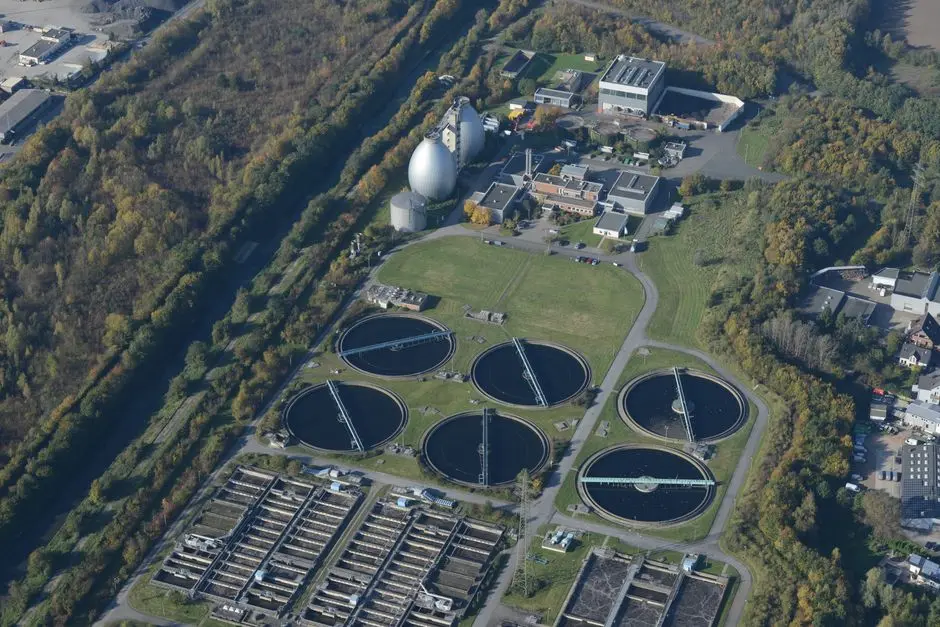
Dissolved air flotation (DAF) is the workhorse for metal-hydroxide flocs because micro-bubbles lift low-density precipitates that settle slowly in a conventional clarifier. For plants that already have a settling basin, a lamella clarifier for mining effluent is a common retrofit that increases surface loading inside the existing footprint and is widely paired with DAF as a polish step. Cross-references for this kind of head-to-head hardware choice are laid out in a separate DAF vs clarifier decision guide for mining wastewater.
For the filter step, a multi-media backwash filter with anthracite, sand, and garnet is the standard polish after DAF or lamella, and an integrated coagulation-sedimentation-filtration package is the typical skid choice for plants that want a single PLC-controlled line rather than three separate vessels. These packages are documented to cover the broad influent range that mine water and tailings supernatant present.
Where the plant's goal extends beyond sewer discharge to reuse or zero liquid discharge (ZLD), the right move is to add an UF polishing for reuse or RO protection step ahead of any reverse osmosis (RO) unit. A hollow-fiber UF at roughly 0.03 micron removes the residual colloids that otherwise foul RO membranes and lets the plant push recovery higher. The sizing envelope and influent limits for any of these steps should be confirmed with jar tests and a 12-month influent characterization; the equipment supplier can then match pH-adjustment, clarification, and filter sizing to the actual envelope rather than a textbook value.
Sludge handling, disinfection, and the documentation you need before you buy
Heavy-metal sludge from Blocks 1 and 2 is the residual a Price-area plant must manage before it can sign a purchase order for the rest of the train. The standard dewatering step is a plate-and-frame filter press for metal sludge, which is the documented way to bring the metal-laden sludge to a handleable cake for off-site disposal or, where state rules allow, stabilization. The choice of plate area, plate count, and PLC versus manual operation depends on sludge volume and on whether the facility runs continuously or in batches tied to mill campaigns.
If the same sewer line receives any contact water — truck wash, lab sink, eye-wash stations — the plant also has to address microbial sewer limits. A chlorine dioxide generator is the typical choice for metal-finishing and mill operations because it tolerates the pH swings that hypochlorite does not, and a UV sterilizer is the non-chemical alternative where the receiving POTW discourages residual oxidizer in the discharge. The Genesis Water Tech mining guide frames treated-water reuse as both an environmental, social, and governance (ESG) and a water-security win, which is particularly relevant for the arid Price basin where freshwater withdrawals are a community concern.
Before issuing a purchase order, the operator should compile: the current NPDES permit, the local POTW discharge limits, the 40 CFR Part 440 subcategory that applies, the 2025–2026 Discharge Monitoring Report (DMR) data, and a 12-month influent characterization. The supplier sizes pH-adjustment, DAF, filter, and sludge equipment against that envelope. Any vendor that quotes equipment before seeing those five documents is not equipped to deliver a compliant system. For a parallel compliance playbook in a different geography, the Halo mining/metals pretreatment playbook covers the same dual-regime logic for a different state, and the primary sedimentation tank design guide covers the upstream settling step in more detail.
Frequently Asked Questions
What does "pretreatment" mean under 40 CFR Part 403 for a sewer-discharging mine?
Under 40 CFR Part 403, pretreatment is the set of local limits, monitoring, and treatment requirements that EPA delegates to a POTW to enforce on industrial users discharging to its sewer. For a mining or metals plant, pretreatment is in addition to, not a replacement for, the federal NPDES permit, and it usually sets tighter numeric limits on metals than direct-discharge NPDES because the POTW is protecting its own biological treatment process and sludge quality.
What is the order of the four-block train, and why is the order fixed?
The order documented in the Genesis Water Tech mining guide is pH adjustment, then coagulants and flocculants, then ancillary chemicals (corrosion inhibitors, ion exchange, biocides), then filtration. The order is fixed because pH correction drives dissolved metals such as iron, arsenic, and manganese out of solution; without that step, downstream coagulants and filters cannot drop those metals to sewer-pretreatment levels, and chemical consumption and media loading both rise.
What three documents should a Price-area operator pull before sizing any equipment?
The operator should pull the current NPDES permit, the discharge limits from the receiving POTW (the local sewer-use ordinance and pretreatment limits for the Price basin), and 40 CFR Part 440 for the applicable metal mining subcategory. Together those three define the discharge envelope, the local numeric limits, and the federal categorical standards that the equipment has to hit on a continuous basis.
How should a plant decide between reuse and sewer discharge, and how should it evaluate a supplier?
The reuse-versus-sewer decision is driven by the local POTW's capacity charge, by the cost of the next increment of freshwater in the Price basin, and by whether the plant needs RO-quality water for a process circuit. If any of those three inputs favor reuse, the right train is the four-block sequence plus UF polishing ahead of RO; if all three favor sewer discharge, the plant should size only to the local limits. For supplier evaluation, a 2026 buyer should request three things in writing: documented chemistry competence on metal-hydroxide precipitation, a verifiable NPDES or POTW track record on metal-mining or metal-finishing projects, and after-sales support including on-site commissioning and a guaranteed media-and-resin supply chain.
Related Equipment
- multi-media backwash filter — specifications, capacity range, and technical data