Why Halo Mining and Metals Plants Run Two Permits in 2026
Mining and metals plants near Halo, US meet 2026 sewer-discharge pretreatment limits by working under two parallel federal authorizations: CWA §307(b) and 40 CFR Part 403 for sewer discharge to a local POTW, and an NPDES permit under CWA §402 for any direct surface-water or stormwater outfall. Most Halo-area operations carry both, because stormwater outfalls and any contact-water discharge to a receiving stream trigger §402 separately from a sewer connection (per Fluence, 2024-11, as cited in S2). Conflating the two is the single most common reason a plant sizes its treatment train against the wrong numbers.
The categorical pretreatment standards most likely to apply to a Halo-area operation are 40 CFR Part 430 (Metal Mining), 40 CFR Part 434 (Coal Mining), 40 CFR Part 437 (Ore Mining and Dressing, with subcategory limits at 40 CFR 437.40–437.47), and 40 CFR Part 433 (Metal Finishing) where plating, pickling, or anodizing lines are co-located. Under 40 CFR 433.15, copper is capped at 3.38 mg/L daily maximum and 2.07 mg/L monthly average, and total chromium at 2.77 mg/L daily maximum and 1.71 mg/L monthly average. The binding numbers, however, are the local POTW's sewer-use ordinance, not the federal categorical standard — especially for zinc, copper, lead, and ammonia — and they must be pulled from the control authority before the design basis is written (per S2).
The 2026 Halo Discharge Envelope: Federal Categorical vs Local POTW
The 2026 sewer envelope a Halo-area EHS engineer is measured against typically includes pH 6.0–10.0 (often restricted to 6.5–9.0), TSS ≤ 250–500 mg/L, total arsenic ≤ 0.5 mg/L, total iron and manganese ≤ 5–10 mg/L each, and oil & grease ≤ 100 mg/L (per S1, local Kentucky POTW framing). These represent standard Kentucky POTW parameters; the local sewer-use ordinance and 40 CFR 430/434 limits must be confirmed with the control authority before equipment is specified (per S1). Where ore mining and dressing applies, 40 CFR Part 437 subcategory limits at 40 CFR 437.40–437.47 set the daily-max and monthly-average floors, and local POTW monthly averages are typically tighter than the federal cap (per S2). S1 also notes that 40 CFR Part 434 categorical standards often include concentration-based caps on TSS typically ranging from 30 mg/L to 100 mg/L, with Fe often capped below 5.0 mg/L and Mn below 2.0 mg/L to prevent interference with the POTW's biological treatment process.
Three 2024–2025 EPA actions are reshaping the 2026 envelope. The Lead and Copper Rule Revisions (LCRR) are pushing lead action levels toward 10 µg/L and forcing POTWs to re-derive local limits at lower numbers. EPA's 2024 Multi-Sector General Permit (finalized 2024-09) added PFAS monitoring for PFOS, PFOA, PFHxS, and PFNA in sectors that include metal mining. The 2025 ore-mining BAT revisions (2025-03) tighten the cost-benefit envelope on total recoverable metals (per S2). Civil penalties under CWA §309 reach $25,000 per day per violation, which is why the local monthly average, not the daily max, drives equipment sizing (per S2).
| Parameter | 40 CFR Part 437 Daily Max (mg/L) | 40 CFR Part 437 Monthly Avg (mg/L) | Typical Local POTW Limit (mg/L) |
|---|---|---|---|
| pH | — | — | 6.0–10.0 (often 6.5–9.0) |
| TSS | Per subcategory (437.40–437.47) | Per subcategory (437.40–437.47) | ≤ 250–500 (40 CFR 434 often 30–100) |
| Total Arsenic | Per subcategory | Per subcategory | ≤ 0.5 |
| Total Fe | Per subcategory | Per subcategory | ≤ 5–10 (40 CFR 434 often < 5.0) |
| Total Mn | Per subcategory | Per subcategory | ≤ 5–10 (40 CFR 434 often < 2.0) |
| Oil & Grease | Per subcategory | Per subcategory | ≤ 100 |
| Total Copper (40 CFR 433.15 if applicable) | 3.38 | 2.07 | Local limit — confirm with POTW |
| Total Chromium (40 CFR 433.15 if applicable) | 2.77 | 1.71 | Local limit — confirm with POTW |
| Lead (LCRR overlay) | — | — | Action level approaching 10 µg/L |
| PFAS (PFOS, PFOA, PFHxS, PFNA) | — | — | 2024 MSGP monitoring trigger |
Local numbers are the binding target. Pull the current sewer-use ordinance from the control authority before writing the design basis, and treat the LCRR lead and PFAS monitoring requirements as a 2026 permit-cycle risk that the current quote may not yet have absorbed (per S2).
Stage 1 — pH Adjustment and Metals Precipitation
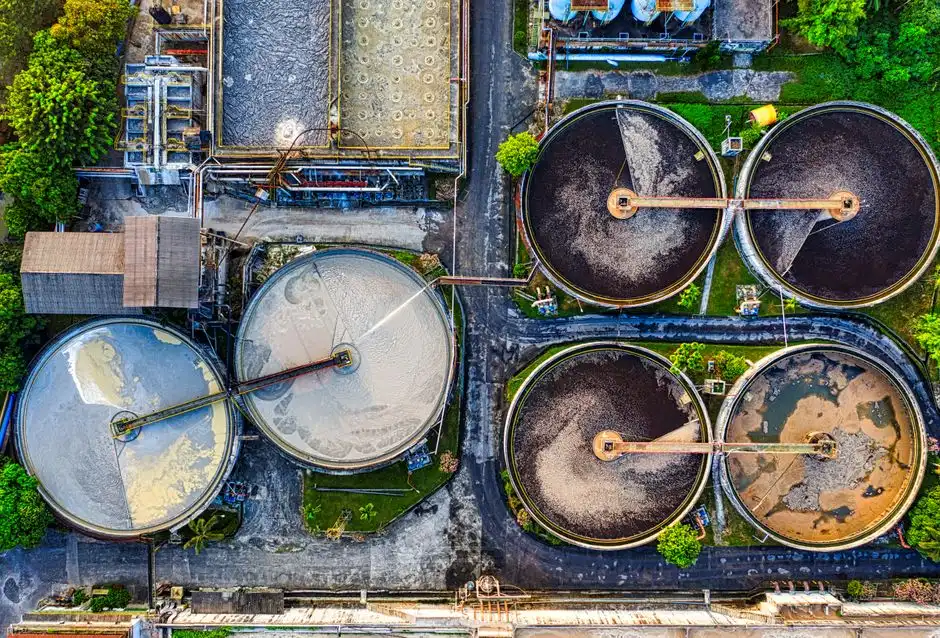
Lime or caustic is dosed to neutralize acidic mine water and precipitate dissolved Fe, Mn, As, and other heavy metals as hydroxides; lime is cheaper per ton but generates 3–5× more sludge, so high-TDS mining streams often justify NaOH (per S2). Dose control is managed by a PLC-controlled automatic chemical dosing skid for pH correction and coagulant injection linked to an in-line pH probe. The setpoint is typically 8.5–9.0 for maximum metal-hydroxide precipitation when Pb and As are present, then adjusted to 7.0–8.0 for discharge (per S1). For batch-discharged streams from shift changes, dump-leach cycles, and mill clean-outs, the Phelps reference sizes equalization at 8–24 hours of average daily flow (per S2); the Dayhoit reference sizes equalization at 20–30 minutes of holding time to smooth feed variability before Stage 2 (per S1).
Hydroxide precipitation with NaOH or lime achieves 85–95% total metals removal in operating mining/metals installations (per Fluence, 2024-11, as cited in S2). Sulfide precipitation (NaHS, FeS, Na₂S) is reserved for streams that must drop residual metal below 0.1 mg/L, with sulfide residuals of 0.01–0.05 mg/L for Cu, Zn, Cd, and Ni at 2–4× higher reagent cost and H₂S off-gassing controlled by sealed reactors and scrubbed vents (per S2). For deeper sub-0.1 mg/L residual specs, the sulfide precipitation engineering specs for sub-0.1 mg/L residuals blueprint walks the design.
Stage 2 — Coagulation and Flocculation
Coagulant selection follows the Dayhoit guidance: alum at 50–150 mg/L, ferric chloride at 30–100 mg/L, or polyaluminum chloride to neutralize colloidal charge, followed by anionic polyacrylamide flocculant at 1–5 mg/L to bridge destabilized particles into settleable flocs of 0.5–3 mm (per S1). A hydraulic residence time of 15–25 minutes in a flocculation basin with a low-shear paddle is the 2026 industry standard — the right geometry to keep floc intact going into the clarifier (per S1).
The arsenic gate sits between Stage 1 and Stage 2: oxidize As(III) to As(V) with ClO₂ or H₂O₂ and add an iron-arsenate co-precipitation step before UF to ensure effective removal, since hydroxide precipitation alone underperforms on As(III) (per S1). If the upstream influent already carries 50–100 mg/L of fines in the clarifier overflow, a multi-media filter upstream of UF is often the lowest-cost insurance against clarifier underperformance on a polymer mis-dose or hydraulic surge (per S1).
Stage 3 — DAF vs Lamella: Choosing the Right Clarifier for Halo Streams
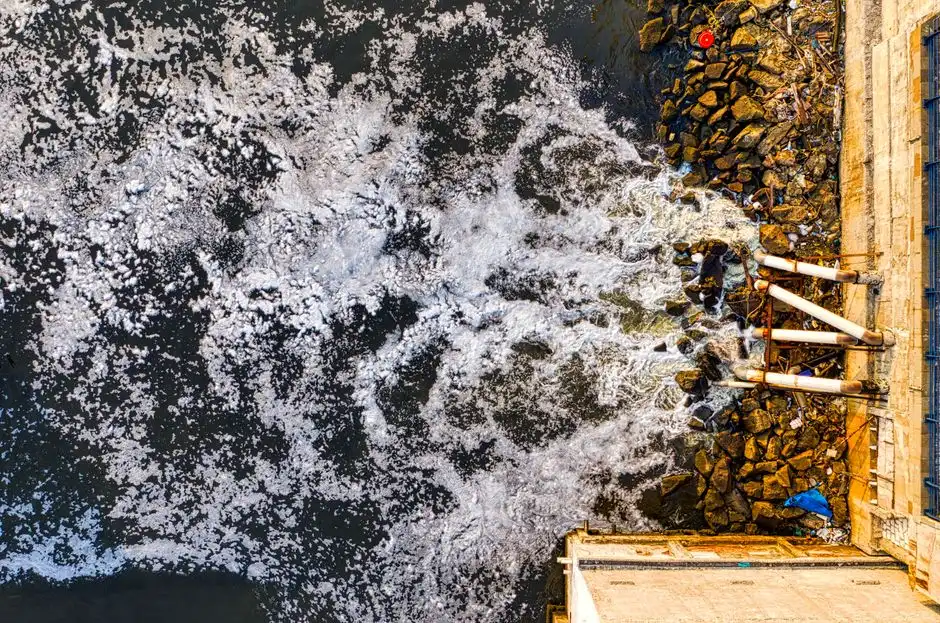
The clarification decision rests on choosing between DAF and lamella technology. The DAF system for TSS and oil/grease removal operates at 5–25 m³/m²·h hydraulic loading, floats oil-coated and colloidal particles with 20–80 µm whitewater micro-bubbles, and achieves 90–98% TSS removal and 85–95% oil/grease removal in mining/metal-finishing service; standard units cover 4–300 m³/h across 13 models (per S2). DAF is the right pick when the stream carries hydrocarbons from coal prep, truck wash, equipment washdown, or co-located finishing lines (per S1 and S2).
A lamella clarifier for high-TDS metal-hydroxide streams operates at 20–40 m/h surface loading, in roughly one-third the footprint of a conventional clarifier, with lower chemical consumption because the sludge blanket is denser, and handles heavy metal-hydroxide flocs very well (per S2). It does not remove free oil or colloidal fines as effectively as DAF. Use the heuristic: DAF when the stream carries oil, grease, or fine colloidal metals; lamella when the stream is primarily a metal-hydroxide sludge at high flow and the footprint is constrained (per S2). A multi-media filter between the clarifier and the sewer manhole, with 1–2 m/h filtration rate and differential-pressure-triggered backwash, is the safety net that strips residual TSS to under 10 mg/L and absorbs clarifier underperformance on a polymer mis-dose or hydraulic surge (per S2). For a side-by-side, the DAF or clarifier for mining/metals wastewater decision guide breaks down loading rates and footprint for adjacent locales.
| Criterion | DAF | Lamella Clarifier |
|---|---|---|
| Hydraulic / surface loading | 5–25 m³/m²·h | 20–40 m/h |
| Footprint vs conventional | Larger; 4–300 m³/h standard | ~1/3 of conventional |
| TSS removal | 90–98% | High for metal-hydroxide flocs |
| Oil & grease removal | 85–95% | Poor on free oil |
| Best-fit stream | Oil, colloidal fines, flow under 200 m³/h | Metal-bearing sludge, flow above 100 m³/h, footprint-constrained sites |
| Sludge character | Float; lower solids | Dense metal-hydroxide blanket |
For ongoing operations, the DAF maintenance checklist covers the daily, weekly, and monthly tasks that keep performance inside the local monthly-average envelope.
Stage 4 — Polishing Ultrafiltration and the 2026 Membrane Choice
Specify a 0.03 µm PVDF ultrafiltration system (or 0.1 µm PVDF) to polish the clarifier overflow to under 1 NTU turbidity and under 5 mg/L TSS — the standard threshold for avoiding POTW surcharges (per S1). The operating window is flux 50–80 L/m²·h and TMP under 1.0 bar, with automatic backwash and CIP; ceramic SiC is the preferred choice for hot, abrasive, high-TDS mining feeds (per S1). Hollow-fiber PVDF UF systems accept up to 300 ppm turbidity in the feed and use automatic backwash and air scour, which matches the post-clarifier stream from a Halo DAF or lamella train.
For arsenic-heavy streams, run the iron-arsenate co-precipitation step from Stage 2 ahead of UF so the As(V)-laden floc is captured on the membrane rather than passing through to the sewer (per S1). Specify RO and UF membrane elements compatible with any original supplier to keep spares and replacement cycles under plant control. Treated effluent post-UF is suitable for cooling loops, dust suppression, or ore washing; recycling reduces freshwater demand and lowers discharge-hauling costs (per S1).
The 2026 EPA Overlay: PFAS Monitoring, LCRR, and the BAT Revisions
Three 2024–2025 EPA actions are reshaping the 2026 envelope, and a 2026 vendor quote may not yet have absorbed them. LCRR is pushing lead action levels toward 10 µg/L and forcing POTWs to re-derive local limits at lower numbers; the local monthly-average lead number is now the constraint for any Halo plant with a Pb-bearing stream. The 2024 Multi-Sector General Permit (finalized 2024-09) added PFAS monitoring for PFOS, PFOA, PFHxS, and PFNA in sectors that include metal mining; the monitoring trigger must be priced into the 2026 quote. The 2025 ore-mining BAT revisions (2025-03) tightened the cost-benefit envelope on total recoverable metals, lowering the ceiling on what conventional hydroxide precipitation can leave in the effluent (per S2).
Practical implication: ask each shortlisted vendor whether the proposal reflects LCRR, MSGP PFAS, and 2025 BAT, and request the assumed local monthly-average numbers as a line item (per S2's vendor-evaluation framing). For co-located plating or anodizing lines, the chrome-6-free processes in industrial pretreatment guide is a useful parallel for tightening 2026 risk.
Sludge Dewatering, Recycling Loop, and the Penalty-vs-CAPEX Frame
Metal-laden sludge from pH adjustment, coagulation, DAF float, and UF backwash must be dewatered before disposal to maintain clarifier operational capacity. A plate-and-frame filter press for metal-laden sludge dewatering with polypropylene plates and an automatic plate-shifter is the 2026 spec for plants producing over about 2 dry tonnes of sludge per day, achieving 60–70% dry solids by weight, reducing cake volume, and recovering filtrate for plant recycling (per S1). Sizing: calculate daily total dry solids (clarifier underflow TSS × flow, plus DAF float and UF backwash solids) and match to a press with 0.5–1.0 m³ chamber volume per 50–80 kg dry solids per cycle, with a 90–180 minute cycle time (per S1).
Adding a brackish-water RO downstream of UF enables reuse in boiler feed, reagent make-up, or final rinse for metals recovery, with RO concentrate managed by zero-liquid-discharge (ZLD) or controlled evaporation; UF/RO capex typically recovers in 18–36 months through freshwater cost avoidance in water-stressed operations (per S1). The penalty-vs-CAPEX frame: civil penalties under CWA §309 reach $25,000 per day per violation, so a single pH or zinc excursion that puts the local monthly average over the limit is enough to trigger a Notice of Violation (per S2). Ask each shortlisted vendor for a sized proposal against the local sewer-use ordinance monthly-average number and the CWA §309 penalty exposure, then compare the net present value of that proposal against the cost of a single compliance excursion. Design for the peak 2-hour flow with 20–30% turndown capacity, and treat to the local POTW's sewer-use ordinance because the local numbers are tighter and the penalty structure is strictly enforced (per S2).
Frequently Asked Questions
What is the compliance risk of a single discharge excursion for a Halo mining or metals plant?
A single pH or zinc excursion that puts the local monthly average over the limit is a Notice of Violation under CWA §309, with civil penalties up to $25,000 per day per violation (per S2). The local POTW's monthly-average number — not the daily max — is the constraint that drives equipment sizing.
What budget should a Halo-area EHS engineer plan for a 2026 pretreatment upgrade?
Budget is driven by flow band, influent metals profile, and the gap between current performance and the local POTW monthly-average limit. The actionable check is to ask each shortlisted vendor for a sized proposal against your measured influent concentrations, the local sewer-use ordinance monthly-average number, and the CWA §309 penalty exposure (up to $25,000 per day per violation), then compare the net present value of that proposal against the cost of a single compliance excursion before accepting a quote (per S2). For an apples-to-apples comparison, require the LCRR, 2024 MSGP PFAS, and 2025 ore-mining BAT revisions to be reflected as line items in each quote.
How should a Halo-area EHS engineer select between DAF and a lamella clarifier?
Use DAF when the stream carries oil, grease, or fine colloidal metals; use a lamella clarifier when the stream is primarily a metal-hydroxide sludge at high flow and the footprint is constrained (per S2). DAF runs at 5–25 m³/m²·h hydraulic loading and removes 85–95% oil/grease; lamella runs at 20–40 m/h surface loading in roughly one-third the footprint of a conventional clarifier but does not remove free oil as effectively.
How should the train be sized against the local sewer-use ordinance?
Design for the peak 2-hour flow with 20–30% turndown capacity, and treat to the local POTW's sewer-use ordinance because the local numbers are tighter and the penalty structure is strictly enforced (per S2). Pull the current sewer-use ordinance from the control authority before writing the design basis, and confirm each parameter against the local categorical rule — 40 CFR 430, 434, 437, or 433 — that applies to the operation.