Why Dayhoit-area Mines Can't Discharge Without Pretreatment in 2026
Any U.S. mine generating process wastewater must hold a National Pollutant Discharge Elimination System (NPDES) permit; that requirement applies to coal prep, mineral processing, and metals-recovery operations in the Dayhoit area of Harlan County, Kentucky (per EPA NPDES industrial wastewater guidance, 2017-01). Beyond federal permits, Dayhoit-area plants discharging to a local publicly owned treatment works (POTW) must satisfy categorical pretreatment standards—primarily 40 CFR 430 for metal mining and 40 CFR 434 for coal mining—and any local sewer-use ordinance enforced by the POTW.
The discharge envelope for a Dayhoit-area EHS engineer typically includes: pH 6.0–10.0 (often restricted to 6.5–9.0), TSS ≤ 250–500 mg/L, total arsenic ≤ 0.5 mg/L, total iron and manganese ≤ 5–10 mg/L each, and oil & grease ≤ 100 mg/L. These represent standard Kentucky POTW parameters; confirm these requirements with the local control authority before specifying equipment.
Two failure modes drive compliance risk. The first is the acute excursion: a single pH or arsenic spike that triggers a Notice of Violation, state referral, and potential consent-order remediation costs. The second is chronic accumulation, where metals meet daily limits but steadily build in the POTW's biosolids, resulting in surcharges for the mine. Effective pretreatment depends on precise unit operations designed to handle specific influent concentrations.
The Four-Stage Treatment Train Mining Plants Near Dayhoit Use
A standard treatment train for Dayhoit-area mines in 2026 consists of four stages: pH adjustment, coagulation/flocculation, clarification, and polishing ultrafiltration. Each stage serves a specific parameter target and utilizes equipment defined in the plant P&ID.
Stage 1 — pH adjustment to 6.5–9.0. Lime or caustic is dosed to neutralize acidic mine water and precipitate dissolved iron, manganese, arsenic, and other heavy metals as hydroxides. Dose control is managed by a PLC-controlled chemical dosing skid for pH correction and coagulant injection linked to an in-line pH probe; the setpoint is typically 8.5–9.0 for maximum metal hydroxide precipitation when arsenic and lead are present, then adjusted to 7.0–8.0 for discharge. An equalization basin provides 20–30 minutes of holding time to smooth feed variability before Stage 2.
Stage 2 — coagulation and flocculation. Coagulants (alum at 50–150 mg/L, ferric chloride at 30–100 mg/L, or polyaluminum chloride) neutralize colloidal charge, followed by anionic polyacrylamide flocculant at 1–5 mg/L to bridge destabilized particles into settleable flocs. A hydraulic residence time of 15–25 minutes in a flocculation basin with a low-shear paddle is the industry standard.
Stage 3 — clarification. Choose a DAF system for TSS, oil and grease removal from mine wash water when the stream carries hydrocarbons (coal prep, truck wash, equipment washdown) — DAF typically reduces influent TSS of 1,000–5,000 mg/L to under 100 mg/L while removing 90%+ of oil and grease. For high-TDS mineral slurries with low oil content, a lamella clarifier for high-TDS mineral slurry settling offers higher economic efficiency based on dry-solids loading.
Stage 4 — polishing ultrafiltration. A 0.1 µm (or 0.03 µm) PVDF or ceramic SiC UF unit polishes the clarifier overflow to < 1 NTU turbidity and < 5 mg/L TSS, meeting most POTW limits and providing water quality suitable for recycle. Specify a 0.03 µm PVDF ultrafiltration system as the heavy-metal polishing step with automatic backwash and CIP; ceramic SiC is the preferred choice for hot, abrasive, high-TDS mining feeds.
| Stage | Unit Operation | Parameter Target | Typical Influent → Effluent |
|---|---|---|---|
| 1 | pH adjustment (lime/caustic) | pH 6.5–9.0 | pH 2–4 → 7.0–9.0; dissolved metals precipitate as hydroxides |
| 2 | Coagulation + flocculation | Dose: alum 50–150 mg/L or FeCl₃ 30–100 mg/L; anionic PAM 1–5 mg/L | Colloidal charge neutralized; floc size 0.5–3 mm |
| 3 | DAF or lamella clarifier | Hydraulic loading 5–25 m³/m²·h | TSS 1,000–5,000 mg/L → < 100 mg/L; O&G 90%+ removal |
| 4 | UF (0.03–0.1 µm PVDF or SiC) | Flux 50–80 L/m²·h; TMP < 1.0 bar | Turbidity < 1 NTU; TSS < 5 mg/L |
Matching Equipment to Each Pollutant in Mining Wastewater
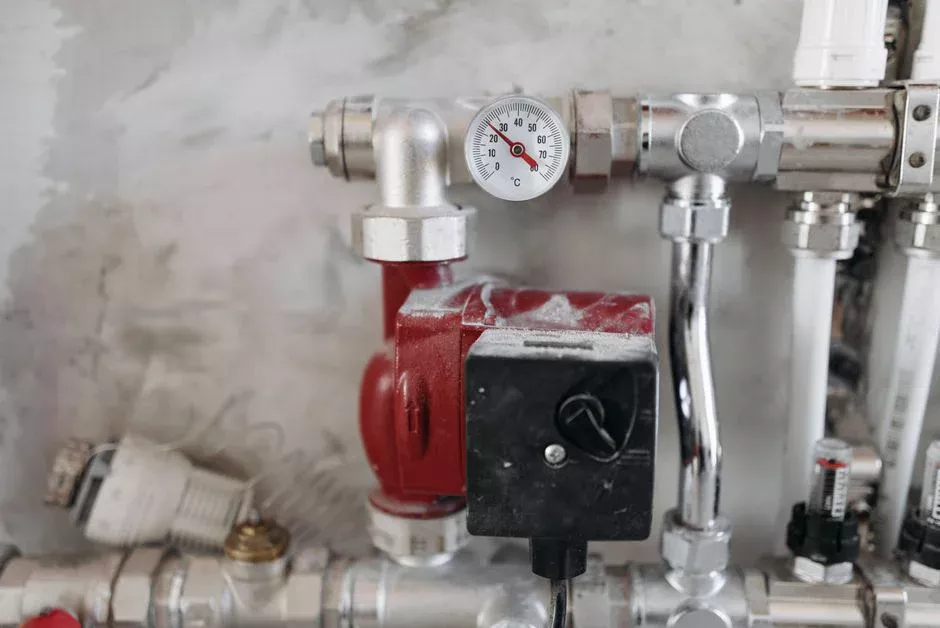
EHS engineers must select unit operations based on specific pollutant removal requirements. The table below maps four main mining-wastewater pollutant classes to the equipment stages used in 2026, serving as a cross-check against local POTW limits.
For TSS and turbidity, DAF or lamella clarification drops bulk solids, while UF polishing achieves < 1 NTU and < 5 mg/L TSS, the standard threshold for avoiding POTW surcharges. A multi-media filter upstream of UF is often used to extend membrane life if clarifier overflow carries 50–100 mg/L of fines.
Dissolved heavy metals—Fe, Mn, As, Pb, Zn—are primarily removed via pH adjustment to 6.5–9.0, where 80–99% removal occurs as metal hydroxides co-precipitate with the coagulant (HydropureWater field data, 2026). Arsenic(III) requires oxidation to As(V) and an iron-arsenate co-precipitation step before UF to ensure effective removal.
For oil and grease, common in coal-handling and metals-finishing streams, DAF with whitewater micro-bubbles (20–80 µm) removes 90%+ of influent O&G.
| Pollutant | Primary Unit Operation | Typical Influent | Typical Effluent (2026) | Notes |
|---|---|---|---|---|
| TSS / turbidity | DAF or lamella + UF | 1,000–5,000 mg/L; 200–1,000 NTU | < 5 mg/L; < 1 NTU | Insert multi-media filter if clarifier overflow > 100 mg/L |
| Dissolved Fe, Mn, Pb, Zn | pH adjustment (Stage 1) + coag. | 5–200 mg/L (Fe); 1–50 mg/L (Mn) | < 1–5 mg/L (Fe); < 1 mg/L (Mn) | 80–99% removal as hydroxides |
| Arsenic (As) | pH 8.5–9.0 + Fe co-precipitation + UF | 0.5–10 mg/L | < 0.1–0.5 mg/L | Oxidize As(III)→As(V) with ClO₂ or H₂O₂ for reliable removal |
| Oil & grease | DAF (micro-bubble whitewater) | 50–1,000 mg/L | < 10–25 mg/L | 90%+ removal; skim frequently |
| Brackish / high TDS | UF + RO (BWRO) | 2,000–10,000 mg/L TDS | < 500 mg/L TDS | Concentrate to ZLD loop; do not specify without pilot |
Sludge Dewatering: The Step Mining Pretreatment Often Forgets
DAF and clarifier performance often degrades due to improper sludge management. Metal-laden sludge from pH adjustment, coagulation, DAF float, and UF backwash must be dewatered prior to disposal to maintain clarifier operational capacity.
Plate-and-frame filter presses are the industry standard for mining sludges, achieving 60–70% dry solids by weight, reducing cake volume, and recovering filtrate for plant recycling. Sizing is based on dry-solids mass: calculate the daily total (clarifier underflow TSS × flow, plus DAF float and UF backwash solids) and match to a press with 0.5–1.0 m³ chamber volume per 50–80 kg dry solids per cycle, with a 90–180 minute cycle time. A plate-and-frame filter press for metal-laden sludge dewatering with polypropylene plates and automatic plate-shifter is the 2026 spec for Dayhoit-area mines producing over ~2 dry tonnes of sludge per day.
From Compliance to Profit: Reusing Treated Effluent in 2026
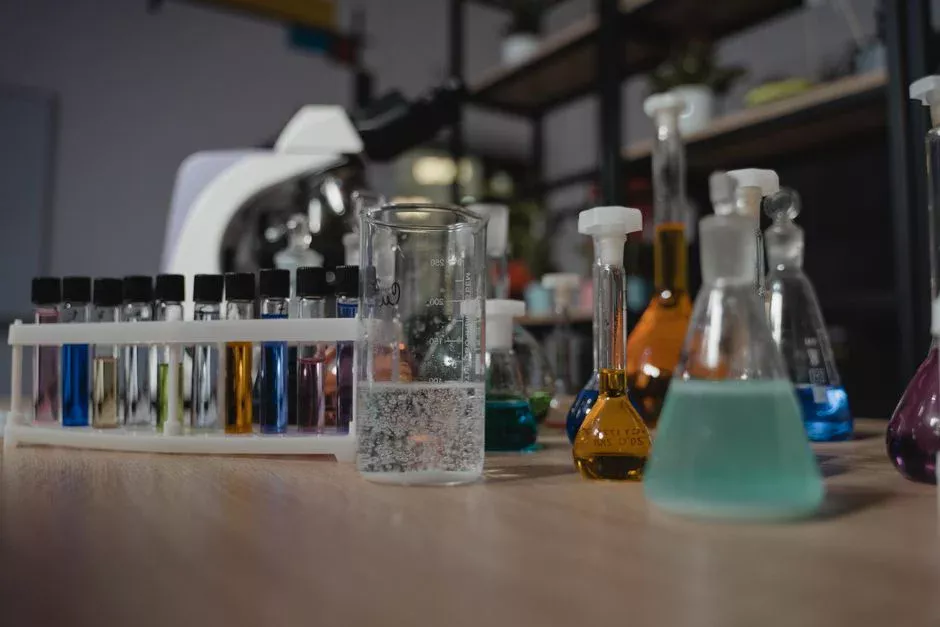
Treated effluent post-UF is suitable for cooling loops, dust suppression, or ore washing. Recycling reduces freshwater demand, lowers discharge-hauling costs, and transforms pretreatment from a regulatory cost into a water-security asset (HydropureWater field data, 2026). In water-stressed operations, recycling often recovers UF/RO capex within 18–36 months through freshwater cost avoidance.
Adding a brackish-water RO downstream of UF enables reuse in boiler feed, reagent make-up, or final rinse for metals recovery. RO membranes require compatible membrane elements rated for the target feed, a separate CIP skid, and a concentrate management plan, such as zero-liquid-discharge (ZLD) or controlled evaporation.
For cross-industry comparisons, the industrial water treatment system comparison for 2026 details four-stage logic for adjacent sectors, while the EV/auto plant pretreatment compliance template for 2026 demonstrates how regulatory requirements apply to different process streams. The transportation-plant pretreatment compliance guide for 2026 provides a parallel for O&G-removal strategies.
Frequently Asked Questions
What are the typical pretreatment limits a Dayhoit-area mine faces in 2026?
Expect pH 6.0–10.0 (often 6.5–9.0 locally), TSS ≤ 250–500 mg/L, total arsenic ≤ 0.5 mg/L, total iron and manganese ≤ 5–10 mg/L each, and oil & grease ≤ 100 mg/L—confirm requirements against the local POTW's sewer-use ordinance and 40 CFR 430/434.
Why is pH adjustment the first step in a mining wastewater treatment train?
Adjusting pH to 6.
Frequently Asked Questions
What pretreatment limits apply to mining wastewater discharged to a sewer near Dayhoit, KY?
Mining facilities discharging to a Publicly Owned Treatment Works (POTW) near Dayhoit must adhere to local sewer use ordinances and federal Categorical Pretreatment Standards under 40 CFR Part 434. These limits often include mass-based or concentration-based caps on Total Suspended Solids (TSS), typically ranging from 30 mg/L to 100 mg/L, and strict metal-specific limits, such as Iron (Fe) levels often capped below 5.0 mg/L and Manganese (Mn) below 2.0 mg/L to prevent interference with biological treatment processes at the municipal plant.
How do mines remove heavy metals like iron, manganese, and arsenic before sewer discharge?
Removal is typically achieved through chemical precipitation followed by physical separation. Operators raise the wastewater pH to between 8.5 and 9.5 using lime or caustic soda, which converts dissolved metals into insoluble metal hydroxides. Arsenic is often removed through co-precipitation with ferric salts or by utilizing specialized adsorption media, such as activated alumina or iron-based resins, to ensure effluent concentrations meet the stringent local discharge thresholds required for the 2026 compliance cycle.
What pH range is required for mining wastewater before it can be discharged to a POTW?
Most POTWs require mining wastewater to be neutralized to a pH range of 6.0 to 9.0 Standard Units prior to discharge. This range is critical to protect the structural integrity of the sewer collection system from corrosion and to ensure that the microbial populations within the POTW’s secondary treatment processes remain viable and effective at breaking down organic matter.
Is dissolved air flotation or a lamella clarifier better for mining wastewater?
The choice depends on the specific gravity and settling velocity of the particulate matter. Lamella clarifiers are generally preferred for mining applications involving high-density metal precipitates because their inclined plates provide a large effective settling area in a compact footprint, effectively removing heavy solids via gravity. Dissolved Air Flotation (DAF) is better suited for wastewater streams with high oil and grease content or light, low-density solids that do not settle readily, making it less common for standard metal-heavy mining effluent.
Can treated mining wastewater be reused in the plant instead of discharged?
Yes, treated mining wastewater can be recycled for non-potable plant operations, such as dust suppression, equipment wash-down, or mineral processing make-up water. Implementing a closed-loop water circuit requires advanced filtration, such as multi-media filters or ultrafiltration, to ensure that recycled water does not accumulate excessive total dissolved solids (TDS) or scaling agents that could damage process machinery or interfere with froth flotation stages.