The True Cost Stack Behind Sludge Dewatering
Most plants negotiate dewatering cost as if it were a single polymer-supplier line item, when in practice it is a five-bucket OPEX stack. On a mid-size industrial WWTP producing 5–20 dry ton/day, polymer conditioning runs 35–50% of total dewatering cost, energy 15–25%, hauling and disposal 20–30%, labor 5–10%, and wear parts and maintenance 3–7% (HydropureWater field data, 2026). Knowing the share of each bucket is what lets you target the right lever instead of squeezing the polymer vendor for a 2% rebate that changes nothing.
The right denominator for comparison across plants and technologies is cost per dry ton ($/dry ton), not $/m³ of feed. Two plants at the same flow can have wildly different costs because one runs 18% cake solids and the other runs 28%. Hauling scales with wet tonnage, polymer scales with dry tonnage, and energy scales with both — so the only honest benchmark that holds across conditioning chemistry, dewatering equipment, and disposal route is dollars spent per dry ton of solids actually captured.
Each 5-point drop in cake solids at 10 dry ton/day means roughly 50–80 extra wet tons hauled per year, which at a $60–$120/wet-ton tipping fee is $3,000–$9,600/year per percentage point of moisture. Outsourced mobile dewatering services such as the Filtratec model in Europe report all-in pricing of $40–$120/dry ton, which is itself a $/dry-ton benchmark — and a useful way to sense-check whether your in-house OPEX is competitive before launching a CAPEX request. The HydropureWater plate-and-frame filter press is one equipment path that pushes cake solids high enough to attack the hauling bucket directly.
Strategy 1: Optimize Polymer Conditioning Before Anything Else
Polymer dose on mechanical dewatering typically lands between 5 and 12 kg of active polymer per dry ton of sludge; on poorly conditioned streams, doses above 15 kg/dry ton are common and almost always indicate an upstream problem, not a vendor problem. Without a jar-test program in place, over-dosing by 30% is the rule rather than the exception — a number that matches the polymer-cost share in the OPEX stack above. A 1–2 week jar test plus a dosing audit is the cheapest, fastest path to a 20–30% polymer-spend reduction, and it requires no CAPEX.
Emulsion versus dry polymer is a real trade-off worth costing out. Dry polymer is roughly 30% cheaper per kilogram of active product, but it needs 30–60 minutes of maturation, occupies more floor space, and becomes impractical below about 5 m³/h of feed flow. Emulsion polymer makes on the fly and is the default for most WWTPs above 5 m³/h. Either way, mixing is where most plants leave money on the table: excessive shear breaks flocs and re-binds water, raising both dose and final cake moisture. For in-line mixers, hold 300–500 rpm with under 2 seconds of contact in static mixers, then drop to a low-shear mixing stage before the press or centrifuge.
For hard-to-dewater industrial sludges — oily, fibrous, or high-MLS sludges from food, pulp and paper, or refinery service — the literature on chemical oxidation conditioning is worth a look. Work in the Tan et al. line of research on FeCl₃ combined with cationic polyacrylamide (CPAM) has shown dewaterability improvements of 15–25% on conditioned excess sludge, translating directly into either lower polymer dose or higher cake solids. The HydropureWater automatic chemical dosing system is the equipment that makes consistent dose control practical at the milligram-per-liter level once the jar test identifies the optimum.
Strategy 2: Thicken First, Dewater Second
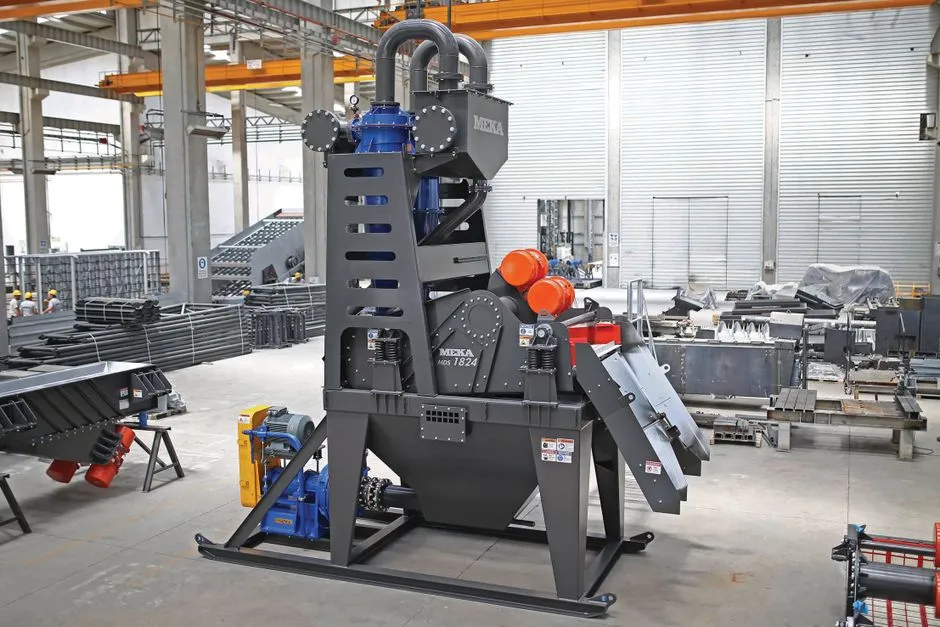
Thickening feed sludge from 0.8% to 3% DS cuts polymer consumption by roughly 25%, dewatering energy by 30%, and wear-part replacement by 20% — the gains compound because every downstream cost bucket gets cheaper at the same time (HydropureWater field data, 2026). For plants running below 2% feed solids, thickening is usually the highest-ROI CAPEX project available, ahead of any dewatering-equipment swap.
Two technologies dominate. Inclined-plate settlers, packaged as lamella clarifiers, hit surface loadings of 20–40 m/h and reduce footprint by 60–70% versus circular thickeners of equivalent capacity — the right choice for sedimentation-thickening duty on biological or mineral sludges. Dissolved air flotation outperforms gravity thickening on floatable, oily, or fibrous sludges common in food processing and pulp and paper, and the HydropureWater DAF system covers that duty directly. For biological or chemical sedimentation sludges, the HydropureWater lamella clarifier is the equivalent option.
Strategy 3: Match Dewatering Technology to Sludge Type
Choosing a dewatering technology by vendor preference is how plants end up with the wrong machine; choosing by sludge rheology and target cake solids is how plants end up with a defensible cost position. The four workhorse technologies — belt press, screw press, decanter centrifuge, and plate-and-frame filter press — each have a sweet spot, and the $/dry-ton spread across them is wide enough to swing the entire OPEX stack.
The table below distills operating ranges drawn from equipment manufacturer data, the 2026 filter press cost data for seafood processing wastewater, and HydropureWater field data.
| Technology | CAPEX range | Cake solids (%) | Polymer (kg active / dry ton) | Energy (kWh / dry ton) | OPEX ($ / dry ton) | Best-fit sludge |
|---|---|---|---|---|---|---|
| Belt press | $30K–$150K | 18–22 | 8–14 | 8–15 | $18–$35 | Fibrous biological sludge, high flows |
| Screw press | $80K–$300K | 20–28 | 4–8 | 4–8 | $8–$18 | Digested or pre-thickened sludge, ≤30 m³/h |
| Decanter centrifuge (DecaPress-type) | $150K–$500K | 22–30 | 5–10 | 25–45 | $20–$45 | Industrial oily/inorganic, odor-sensitive sites |
| Plate-and-frame filter press | $12K–$280K | 25–35 | 2–5 | 3–6 | $12–$28 | Low-volume, high-disposal-fee sites, batch duty |
Belt presses win on CAPEX and throughput but lose on OPEX and cake dryness. Screw presses hit the lowest OPEX at typical municipal/industrial biosolids because polymer and energy are both low. Decanter centrifuges are the only enclosed continuous option, which matters at odor-sensitive or food-grade sites, but they are the energy hogs of the group. Plate-and-frame filter presses deliver the driest cake and the lowest polymer per dry ton, which is why they dominate wherever landfill tipping fees exceed roughly $80/wet ton — and the HydropureWater plate-and-frame filter press covers 1–500 m² of filtration area, so it scales from pilot to large plant. For a deeper framework on selection logic, the sludge dewatering machine technology selection guide walks through the decision tree.
Strategy 4: Cut Energy Cost with VFDs and Operating-Window Tuning
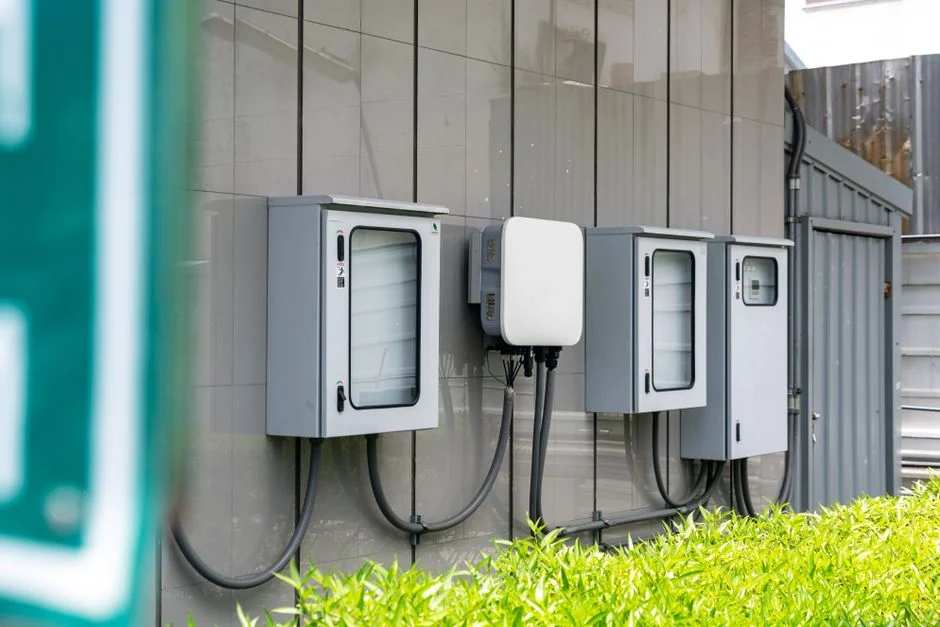
Centrifuge main drives draw 60–80% of dewatering-section energy, so a VFD retrofit on a decanter centrifuge typically pays back in 8–18 months at 2026 industrial tariffs. Belt press and screw press drives are smaller but the same logic applies: slowing the drive to match feed solids cuts kWh per dry ton by 10–25% without changing moisture content. Polymer make-up and feed pumps should run only during dewatering windows, not 24/7; plants that re-time pump operation typically cut polymer-pump energy 40–60%.
Useful 2026 benchmarks: belt press 8–15 kWh/dry ton, screw press 4–8, decanter centrifuge 25–45, plate-and-frame filter press 3–6. The filter press is the energy winner per dry ton, but it is throughput-limited, so the energy math only beats a centrifuge at small-to-mid plant sizes. One often-overlooked lever: warm sludge dewaters faster and at lower polymer dose, so capturing waste heat from blowers or digesters to keep feed above 30 °C pays off across every other bucket in the stack.
Strategy 5: Reduce Hauling and Disposal Cost Through Cake Dryness
Hauling is the bucket most plants treat as fixed. It is not. The worked math: a 10 dry ton/day plant running 20% cake solids ships 50 wet ton/day; the same plant at 30% cake solids ships 33 wet ton/day. That is roughly 5,000 wet tons/year of avoided hauling, and at $80–$120/wet-ton tipping fees the line item moves by $400K–$600K/year. In EU markets, coastal China, and the US Northeast, where landfill bans and high disposal fees are the norm, hauling can swell to 25–35% of total dewatering OPEX — second only to polymer.
Drier cake also unlocks beneficial-use pathways that convert a cost line into a revenue or avoided-cost line: composting, soil blending, and cement-kiln co-processing all typically require cake solids above 28–30% and total solids above 25%. Plants that cannot hit those numbers with their existing technology are the right candidates for a technology swap rather than further optimization. The HydropureWater plate-and-frame filter press is the technology choice for plants chasing >28% cake solids precisely because the filter press delivers the driest cake in the mechanical-dewatering family.
Strategy 6: Automate to Cut Labor and Dose Variability
Manual polymer adjustment holds dose variance around ±25%, and that variance is what over-spends polymer and destabilizes cake solids. Tying dose to feed flow and an online TSS or DS sensor typically cuts variance to ±5%, which on most plants is a 10–18% polymer-spend reduction (HydropureWater field data, 2026). At the same time, one operator shift is removed because the system self-tunes through normal feed variability.
On the equipment side, PLC-controlled filter presses with auto-plateau detection cut cycle time 10–15% by skipping under-pressurization and over-pressurization phases that operators routinely leave in the cycle as a margin of safety. Inline cake-solids measurement — microwave or NIR probes — feeds back into press pressure or centrifuge bowl torque, holding the dryness target steady. For the measurement layer, the 2026 TSS sensor selection guide for WWTP automation walks through probe selection and placement. For dose control, the HydropureWater automatic chemical dosing system ties flow, sensor, and pump into one closed loop. For broader context on where automation is heading, the 2026 wastewater resource recovery trends article shows how data-driven operation is becoming the norm rather than the exception.
Strategy 7: Run an Outsourced-Mobile Pilot Before CAPEX
Mobile dewatering services — the Filtratec model in central Europe, and equivalents in North America and China — typically charge $40–$120/dry ton all-in. That price point is high against a well-run in-house operation ($15–$30/dry ton), which is why mobile services are usually reserved for <5 dry ton/day plants or for short-term needs under 12 months. The real value of a mobile pilot is not outsourcing; it is benchmarking. A 2–4 week mobile campaign on your sludge tells you, in your own influent, what cake solids and polymer consumption are achievable before you commit to a $200K–$500K equipment purchase.
One pitfall: mobile vendors are not accountable for polymer cost separately in their pricing, so always require a polymer-consumption disclosure clause in the pilot contract. Without that clause, you cannot tell whether the cake solids they delivered were bought with 6 kg/dry ton or 18 kg/dry ton of polymer — and the answer changes your whole CAPEX business case.
Sample 2026 Cost Reduction Roadmap and ROI
The seven strategies above are not equal-priority; they sequence naturally into a 12-month plan that starts with no-CAPEX moves and ends with a CAPEX decision only if the OPEX gap remains. Quarter 1: run the polymer jar test and dose audit, retune make-up water, install a single online TSS probe if you have none. Quarter 2: thicken-audit the upstream process and execute low-cost VFD retrofits on pumps and main drives. Quarter 3: deploy automatic chemical dosing tied to flow and TSS, and add PLC auto-cycle logic on existing presses. Quarter 4: re-benchmark; if the residual gap is still significant, run a mobile pilot or commission the HydropureWater plate-and-frame filter press upgrade.
Worked ROI for a 10 dry ton/day plant currently at 22% cake solids with $80/wet-ton hauling. A $90K plate-and-frame press upgrade that moves the plant to 28% cake solids delivers roughly 17 wet tons/day of avoided hauling, ~25% polymer reduction, and one operator shift reclaimed — about $185K/year in combined savings, for a payback inside 6 months. Where CAPEX is blocked, a $20K package of polymer optimization plus dosing automation typically delivers 15–25% OPEX reduction with payback under 12 months. The numbers are sensitive to local hauling and disposal fees: plug your own $/wet-ton into the framework before walking into a budget meeting. The sludge dewatering machine technology selection guide is the natural next read once the equipment decision is on the table.
Frequently Asked Questions
What is a realistic $/dry ton target for sludge dewatering in 2026? A well-run in-house mechanical dewatering operation should land between $15 and $30 per dry ton across all buckets; outsourced mobile service typically runs $40–$120 per dry ton all-in.
Which dewatering technology has the lowest OPEX? Screw press on typical municipal or industrial biosolids; plate-and-frame filter press for low-volume sites or where disposal fees exceed roughly $80 per wet ton.
How much polymer is normal per dry ton? 5–12 kg of active polymer per dry ton. Anything above 15 kg/dry ton is a red flag pointing to conditioning chemistry, upstream process, or mixing problems.
Can I improve cake solids without buying new equipment? Yes — 2–4 points of cake solids gain is typical from polymer optimization, extended press or centrifuge residence time, and warmer feed sludge above 30 °C.
Is mobile dewatering cheaper than owning? Only below 5 dry ton/day or for short-term needs under 12 months. Above that, in-house mechanical dewatering wins on $/dry ton within 18 months once polymer and hauling savings are factored in.