Why Seafood Processing Wastewater Breaks Generic Filter Press Sizing
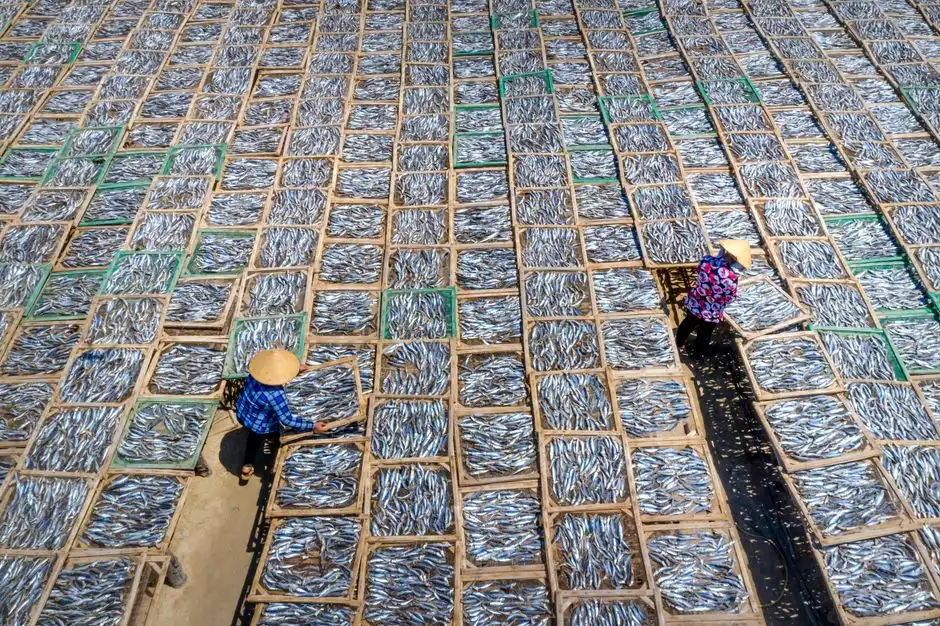
A seafood plant generates four sludge streams that share almost nothing with the dairy, brewery, or red-meat wastewater that generic filter-press spec sheets are written for. Fish and shrimp washing lines produce low-TSS, high-BOD liquor (TSS 500–1,500 mg/L, BOD 800–2,500 mg/L). Peeling and de-heading lines run much heavier — TSS 3,000–6,000 mg/L with oil and grease at 200–1,500 mg/L. Surimi washing releases sticky, protein-bound solids reaching 8,000 mg/L TSS and BOD up to 4,000 mg/L. Fishmeal cook liquor and stickwater concentrate can exceed 15,000 mg/L TSS with ammonia above 1,000 mg/L (HydropureWater field data, 2026). A press sized on a municipal 2% biosolids curve simply does not see the same fluid.
Salt is the variable that defeats standard screw-press design. Dissolved NaCl at 0.5–3% compresses the electrical double layer around colloidal proteins, weakening floc cohesion. Operators see this as "fluffy" cake that slumps off the conveyor, or as breakthrough solids in the filtrate. Field experience shows cationic polyacrylamide (CPAM) consumption rises 20–40% above municipal biosolids baselines to compensate, and the working envelope is best framed as TSS 1,500–8,000 mg/L and BOD 800–4,000 mg/L — not the 2–4% dry-solids figure used in vendor brochures.
Temperature is the second silent penalty. Fishmeal cook liquor and surimi wash water arrive at 40–55°C. Standard polypropylene filter cloth is rated to 80°C, but PP plate gaskets and hydraulic seals degrade above 50°C if not specified for warm service. A press quoted on cold municipal duty has a real risk of leaking within the first quarter on a warm fishmeal line. A HydropureWater plate and frame filter press specified with rubber-edged PP plates and EPDM hydraulic seals handles this envelope without modification.
Filter Press Types Compared for Seafood Sludge
Recessed-plate (chamber) filter presses are the mechanical workhorse. Filter feed is pumped at 6–15 bar into chambers formed by recessed PP plates; solids build into a cake as filtrate exits through the cloth. Cake dryness lands at 55–65% for fish canning and shrimp peeling solids, with TSS capture of 95–97%. CAPEX is the lowest of the three options. The limitation is fixed chamber volume: once the cake fills the recess, the cycle ends.
Membrane (diaphragm) filter presses add a second squeeze. After the fill cycle, an elastomeric membrane behind each plate is inflated with water or air at 15–30 bar, mechanically expressing another 8–15% water from the cake. Dryness climbs to 72–78% on surimi and fishmeal solids, with capture of 96–98%. The 18–30 month payback versus a recessed plate is driven by haulage savings: a cake at 75% DS weighs roughly 40% less than one at 60% DS, so every truckload moves more dry product to disposal or rendering.
Screw presses occupy the low-CAPEX band — US$3,000–$10,000 per the generic supplier listings — but deliver 10–20 percentage points lower TSS capture on protein-bound seafood sludge. They work as a pre-thickener ahead of a DAF or as a standalone on coarse shrimp shells, not as a final dewatering step on surimi stickwater. Belt presses are not recommended: free fish oil blinds polyester belt fabric in 2–4 weeks, and the resulting filtrate is rarely compliant.
| Parameter | Recessed Plate | Membrane (Diaphragm) | Screw Press |
|---|---|---|---|
| Cake dryness on fish/surimi sludge | 55–65% DS | 72–78% DS | 35–50% DS |
| TSS capture rate | 95–97% | 96–98% | 75–85% |
| Polymer consumption (CPAM) | 3–8 kg/t DS | 4–10 kg/t DS | 2–4 kg/t DS |
| Footprint (m² for 20 m³/h) | 15–20 | 18–25 | 6–10 |
| CAPEX band (2026) | US$35K–$90K | US$90K–$200K | US$3K–$10K |
| Best-fit seafood sub-process | Shrimp peeling, canning | Surimi, fishmeal | Pre-thickener, coarse shells |
Pair any of these presses with a DAF pre-thickener when influent TSS is below 2,000 mg/L — flotation lifts solids to 3–5% underflow before the press sees them, halving the hydraulic load and shrinking the required plate area by roughly 30%.
Sizing the Press: Flow Rate, Cake Target, and Polymeric Pre-Treatment
The standard sizing equation is filtration area (m²) = feed solids (kg/h) ÷ [target cake solids × cycle time × operating pressure]. For a 20 m³/h line at 4,000 mg/L TSS targeting 35% cake DS and a 90-minute cycle, the math lands at 25–40 m² of plate area. Below is the working envelope for typical seafood plant sizes (HydropureWater field data, 2026):
| Plant Profile | Feed Flow | Influent TSS | Required Plate Area | Recommended Press |
|---|---|---|---|---|
| Small shrimp peeling | 3–8 m³/h | 2,000–4,000 mg/L | 5–10 m² | Manual recessed plate, 6–10 chambers |
| Mid-size fillet / canning | 15–25 m³/h | 2,500–5,000 mg/L | 20–35 m² | Semi-auto recessed plate, 20–30 chambers |
| Large surimi line | 30–45 m³/h | 5,000–8,000 mg/L | 50–80 m² | Auto membrane press, 40–60 chambers |
| Industrial fishmeal plant | 40–60 m³/h | 8,000–15,000 mg/L | 80–120 m² | Auto membrane press, 60–80 chambers + cake wash |
Polymer conditioning is non-negotiable. Cationic polyacrylamide (CPAM, charge density 40–60%, molecular weight 8–12 MDa) is dosed at 3–8 kg per ton dry solids for fish canning and shrimp sludge, and 6–12 kg/t DS for surimi stickwater and fishmeal liquor — roughly double the 2–4 kg/t DS used on municipal biosolids. Dose is set by jar testing on the actual feed; an automatic polymer dosing skid with online charge measurement is the only way to hold the dose within ±10% as salt and protein load shift through the shift.
2026 CAPEX and OPEX Breakdown for Seafood Filter Press Systems
The 2026 seafood filter press market splits cleanly by flow band. Bare-equipment pricing (FOB China, excluding installation) runs as follows (HydropureWater market range, 2026):
| Capacity | Automation | Plate Area | Bare CAPEX (US$) |
|---|---|---|---|
| 5 m³/h | Manual | 5–10 m² | $12,000–$25,000 |
| 15 m³/h | Semi-automatic | 20–35 m² | $35,000–$70,000 |
| 30 m³/h | Automatic | 50–80 m² | $90,000–$160,000 |
| 50 m³/h | Fully auto + cake wash | 80–120 m² | $200,000–$280,000 |
Hidden CAPEX is where the SERP results mislead buyers. Civil works, the automatic polymer dosing skid, cake handling conveyor, filtrate pump, and PLC/SCADA integration typically add 25–40% to bare equipment cost. A 30 m³/h line quoted at $120K for the press alone will land at $165K–$190K installed.
OPEX for an operating seafood filter press breaks down as: polymer US$0.30–$1.10 per m³ of filtrate, electricity US$0.05–$0.15 per m³, cloth replacement US$0.10–$0.40 per m³, and labor US$0.20–$0.60 per m³. Combined OPEX is US$0.80–$3.20 per m³ of filtrate, dominated by polymer.
5-year ROI example: a 25 m³/h surimi plant in Vietnam currently dewatering on a belt press and hauling 60% DS cake at 12 truckloads per month spends roughly $240K/year on haulage. Upgrading to a membrane filter press (75% DS cake) cuts truck count to 6 per month, saving approximately $180K/year. At an all-in CAPEX of $330K including civil works, payback lands at ~22 months. The same plate and frame filter press family covers a 5 m³/h shrimp line and a 50 m³/h fishmeal line; only chamber count, plate size, and the hydraulic pack change.
Compliance Pathways: EPA, EU, and QCVN Standards for Seafood Effluent
The press only matters if the filtrate clears the permit. In the US, EPA 40 CFR Part 408 sets effluent limitation guidelines for the fish processing category (subparts A–C covering fresh, canned, and cured products) with BOD limits typically 25–50 mg/L monthly average, TSS 30–70 mg/L, and oil and grease 10–25 mg/L after full secondary treatment. In Vietnam, QCVN 40:2011/BTNMT column B caps industrial BOD at 50 mg/L, TSS at 100 mg/L, and oil and grease at 10 mg/L. EU processors under Directive 91/271/EEC face similar BOD/TSS ceilings.
A correctly operated membrane filter press typically produces filtrate at 100–300 mg/L TSS, with BOD in the 200–600 mg/L range and oil and grease below 50 mg/L — values that meet 40 CFR Part 408 and QCVN 40 only after downstream biological polishing (typically a sequencing batch reactor or MBR; see MBR for food processing wastewater cost in 2026 for sizing). The press is the unit operation that makes the downstream biology affordable by removing 95–98% of suspended solids upstream.
Selecting a Filter Press Supplier: 5 Technical Questions to Ask
Vendor shortlisting for a seafood plant should be a five-question filter, not a price comparison sheet.
- What is the guaranteed cake dryness on your specific sludge sample, not on water or municipal biosolids? Demand a bench test or a reference install on a comparable stream.
- What is the polymer consumption in kg per ton dry solids, and at which influent TSS? A vendor who quotes a number without specifying both has not done the test.
- What is the cycle time at the proposed chamber pressure, and how does it scale with salt content? Salt reduces effective pressure transmission; the answer should be in minutes per cycle at 0.5%, 1.5%, and 3% NaCl.
- Is the press plate material and gasket rated for warm (40–55°C) fishmeal or surimi liquor? PP plates handle the temperature; the gasket compound is the usual failure point.
- What is the cloth material — polyester or polypropylene — and expected life on protein-rich seafood sludge? Honest answers land at 800–1,500 cycles, not 3,000.
Any supplier answering all five on a single page — including a plate and frame filter press specified for warm, salty, protein-rich duty — belongs on the shortlist. For polymer system sizing in parallel, the automatic polymer dosing skid data sheet should match the press hydraulic capacity, not be quoted separately. The same logic applies when comparing against adjacent industries: a filter press for biodiesel wastewater guide shares the membrane-squeeze principle but the sludge rheology is entirely different.
Frequently Asked Questions
What is a realistic 2026 CAPEX range for a small seafood processing filter press? A small shrimp peeling or canning line at 3–8 m³/h should budget US$12,000–$25,000 for a manual recessed-plate unit, plus US$8,000–$15,000 for installation, polymer dosing, and civil works. The installed total typically lands at US$22,000–$40,000 in 2026.
Can a screw press replace a plate press for seafood processing wastewater? No, not as a final dewatering step. Screw presses deliver 75–85% TSS capture on protein-bound surimi and fishmeal sludge, leaving 3–5× the residual solids that a recessed plate or membrane press produces. They are best used as a pre-thickener ahead of a DAF or filter press, not as the primary unit operation.
Can the filter press cake be sold or is it a disposal cost? Fishmeal, canning, and surimi sludge cakes at 65–78% DS are accepted by rendering plants as raw material for fishmeal and pet-food protein, often at a negative disposal cost (the renderer pays a tipping fee). Cake containing only peeling or washing solids with no protein value is a disposal cost, typically US$40–$90 per wet ton depending on region.
What polymer dose is required for seafood sludge? Cationic polyacrylamide at 3–8 kg per ton dry solids for fish canning and shrimp sludge, rising to 6–12 kg/t DS for surimi and fishmeal streams. This is roughly double the 2–4 kg/t DS typical of municipal biosolids because dissolved salt weakens floc cohesion.
How often does a seafood filter press need maintenance? Filter cloth replacement runs 800–1,500 cycles on protein-rich sludge (every 2–4 months in continuous surimi service). Hydraulic seal service is annual. Plate gasket inspection should be quarterly on warm fishmeal duty above 50°C. Budget roughly 4–6% of CAPEX per year for preventive maintenance.