Why Biodiesel Wastewater Demands a Dedicated Filter Press
A filter press for biodiesel wastewater handles a solids stream that a clarifier or centrifuge cannot economically process: 2-8% suspended solids dominated by potassium or sodium catalyst soaps, free glycerin carryover, and 0.1-0.5% residual methanol (HydropureWater field data, 2026). In a 5 Mgal/yr dry-wash plant, that translates to roughly 3,000-5,000 lb/day of soap-rich sludge that fouls polish filters, kills RO membranes, and pushes COD well past the 200-400 mg/L discharge window most U.S. municipal POTWs enforce. The free-glycerin fraction alone drives COD into the 15,000-40,000 mg/L range on the raw slurry, which is why a standard gravity clarifier overflows within hours of a transesterification upset.
The second problem is hazard classification. Methanol flash point sits at 11°C (52°F), so any vapor accumulation in the press room triggers NEC Class I Div 1 grouping, and the press itself must use pneumatic or hydraulic closure with no live electrical components in the bay (per Durco biodiesel filter press product guide, 2023). A standard centrifuge with an electric drive and VFD cannot be installed in that footprint without an expensive purge-rated enclosure, which is why recessed-plate and membrane-plate presses dominate 1-10 Mgal/yr biodiesel service.
Mid-scale plants also run intermittent, batch-style campaigns tied to feedstock delivery and reaction turnover. A recessed-plate DAF system upstream cuts FOG by 70-90% and drops the oil load before the slurry reaches the press, but the press must still absorb a peak batch that can double the hourly flow for 1-2 hours. That flexibility — idle at zero flow, full production at 6-8 m³/hr — is exactly what a filter press does well and a decanter centrifuge handles poorly.
Plate vs Membrane Filter Press: Which One Fits Biodiesel Duty
Recessed-plate (chamber) presses reach 15-25% dry solids on biodiesel sludge with lower CAPEX and a simpler plate-shifting sequence, while membrane (squeeze-plate) presses push to 30-40% dry solids by inflating an elastomeric diaphragm in a second cycle, at 40-70% higher capital cost (per Durco EP Filter Press Construction sidebar, 2023). For a 5 Mgal/yr facility producing 15-25 tons/day of wet cake, that 10-15 percentage-point jump in cake dryness directly cuts hauling tonnage and landfill tipping fees, which usually tips the lifecycle math toward a membrane press once monthly sludge volumes cross roughly 20 tons.
Filter plate media must be rated to 170°F for biodiesel dry-wash service; above that temperature the press steps up to a pressure-leaf filter (per Durco product guide, 2023). Polypropylene plates handle the standard 150-170°F window but deform above 195°F, so any plant running high-temperature methanol recovery needs a metallurgy review. Plate-shifting sequence, automatic drip pans, and explosion-proof hydraulic packs (pneumatic or hydraulic closure only, no electric actuators in the bay) should all be line items on the spec sheet, not optional extras.
| Parameter | Recessed-Plate (Chamber) Press | Membrane (Squeeze-Plate) Press |
|---|---|---|
| Dry solids achieved (biodiesel sludge) | 15-25% | 30-40% |
| Relative CAPEX (baseline = recessed) | 1.0× | 1.4-1.7× |
| Cycle time (fill, press, wash, discharge) | 2-4 hours | 2-3 hours (second squeeze cuts dewater time 20-30%) |
| Plate media temperature rating | Up to 170°F (PP standard) | Up to 170°F (PP) / 195°F+ (steel-reinforced) |
| Air supply requirement | Optional (hydraulic only) | 0.3-0.6 kWh/cycle equivalent, dedicated compressor |
| Explosion-proof compliance | Pneumatic or hydraulic closure, no live electrical in bay | Same; diaphragm inflation air must be inert-rated if feed >110°F |
| Best-fit plant size | 1-5 Mgal/yr, intermittent batches | 5-10 Mgal/yr, continuous high-strength feed |
For most 1-5 Mgal/yr plants, a recessed-plate plate and frame filter press sized 10-50 m² is the workhorse; membrane plates pay back above 5 Mgal/yr or when landfill disposal crosses $80/ton.
Sizing the Press: Filtration Area, Cycle Time, and Throughput Math
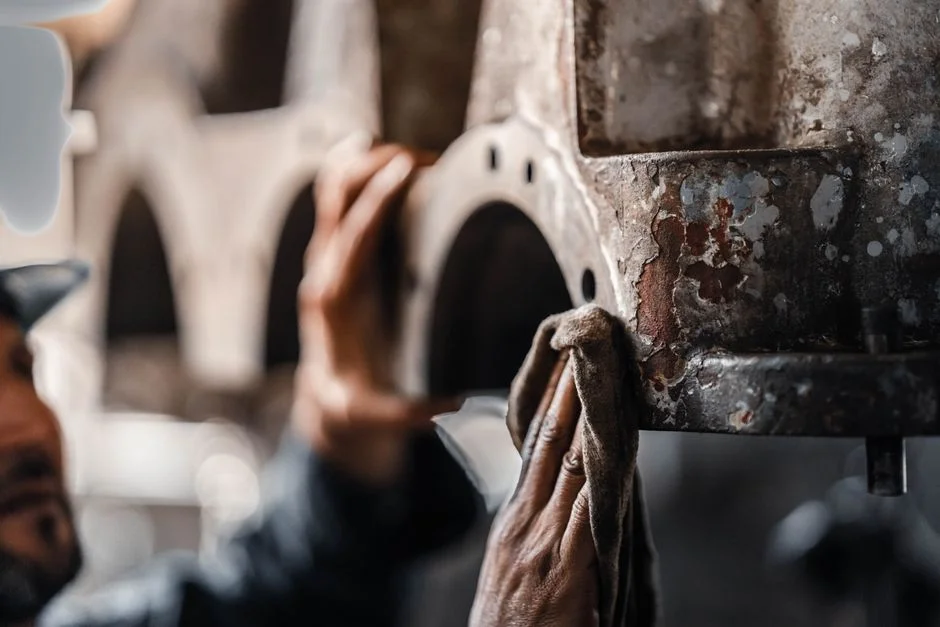
Filter press sizing for biodiesel wastewater uses the formula: Filtration Area (m²) = [Sludge Flow (m³/hr) × Cycle Time (hr)] / [Cake Thickness (mm) × Dry Solids Fraction], with a 10-15% oversize factor to absorb peak batches from transesterification upsets. A 5 Mgal/yr plant generating roughly 1,900 m³/yr of wet sludge (≈8 m³/day at 5% feed solids) needs a press that handles 6-8 m³/hr on a 3-hour cycle, with 25-32 mm cake thickness and a 0.20 dry-solids fraction in the cake. Plugging those numbers in: (8 × 3) / (30 × 0.20) = 4.0 m², then ×1.15 oversize = 4.6 m² — but that is the minimum, and most 5 Mgal/yr plants spec 15-25 m² to keep cycle time under 2 hours and leave headroom for two consecutive peak batches.
Cycle phases for recessed-plate biodiesel duty run 45-60 minutes fill, 60-90 minutes press (pressure ramp to 100-225 psi, or 7-15 bar, holding until filtrate flow drops below 0.5 L/min/m²), 15-30 minutes wash (if recovery water is being captured), and 20-30 minutes discharge. Total cycle lands at 2-4 hours under typical feed conditions, dropping to 90-120 minutes on a well-conditioned, polymer-dosed slurry. Peak batches during a transesterification upset can double incoming flow for 1-2 hours, so a 10-15% oversize on filtration area is not optional — it is what prevents the press from becoming the bottleneck when the upstream reactor vents a slug of soaps.
Catalog coverage in the 1-500 m² range — for example, the lamella clarifier and plate press lines from HydropureWater — addresses everything from a 1 Mgal/yr craft biodiesel skid to a 10 Mgal/yr commercial facility, so the spec window rarely forces a custom build. Plants above 10 Mgal/yr usually move to a continuous pressure-leaf or rotary drum filter, but at the 1-10 Mgal/yr scale the batch press is still the lowest-cost path to a landfill-grade cake.
CAPEX and OPEX Breakdown for 2026 Buyers
2026 market CAPEX for biodiesel-duty filter presses sits at $4,500-30,000 per unit depending on filtration area, plate count, and automation level, with PLC-automatic skid-mounted systems at the top of the range (per Alibaba filter press listings, 2026). A 15 m² recessed-plate manual unit lands at $8,000-12,000; a 50 m² membrane-plate automatic with explosion-proof hydraulic pack runs $22,000-30,000. Add 12-18% for ATEX or NEC Class I Div 1 certification, 170°F-rated gaskets, and pneumatic closure kits, and the budget line should carry a 15% contingency for plate-media upgrades if feed temperature exceeds 160°F.
OPEX drivers scale with cycle count, not flow: filter cloth replacement every 800-1,200 cycles (≈$400-900 per cloth set for a 15-25 m² press), hydraulic oil changes at 2,000 hours (≈$150-300 per change), and 0.3-0.6 kWh per cycle equivalent in compressed air for membrane inflation. Labor runs 0.5-1.5 operator-hours per cycle depending on plate-shifting automation. The single largest OPEX line, however, is sludge disposal — landfill tipping at $40-120/ton versus compost facility gate fees of $15-40/ton — and that line is entirely driven by the dry-solids % the press actually achieves, which is why a membrane press can pencil out even at 1.7× the capital cost once monthly cake tonnage crosses 20 tons.
| Capacity Tier | 1-2 Mgal/yr | 3-5 Mgal/yr | 6-10 Mgal/yr |
|---|---|---|---|
| Filtration area (m²) | 5-10 | 15-30 | 40-80 |
| Plate configuration | Recessed, manual shift | Recessed or membrane, semi-auto | Membrane, PLC auto |
| CAPEX (USD, 2026) | $4,500-9,000 | $10,000-18,000 | $20,000-30,000 |
| Explosion-proof adder | +12% | +15% | +18% |
| Filter cloth replacement (cycles) | 800-1,000 | 900-1,100 | 1,000-1,200 |
| Hydraulic oil change (hours) | 2,000 | 2,000 | 2,000 |
| Cake disposal (USD/ton, landfill) | $40-80 | $50-100 | $60-120 |
| Typical dry-solids achieved | 18-22% | 22-30% | 30-40% |
For plants crossing 5 Mgal/yr, the membrane tier compresses cake volume by 30-45% versus the recessed baseline, which usually returns the CAPEX premium in 18-30 months on disposal savings alone (HydropureWater field data, 2026).
Integrating the Filter Press into a Biodiesel Wastewater Train
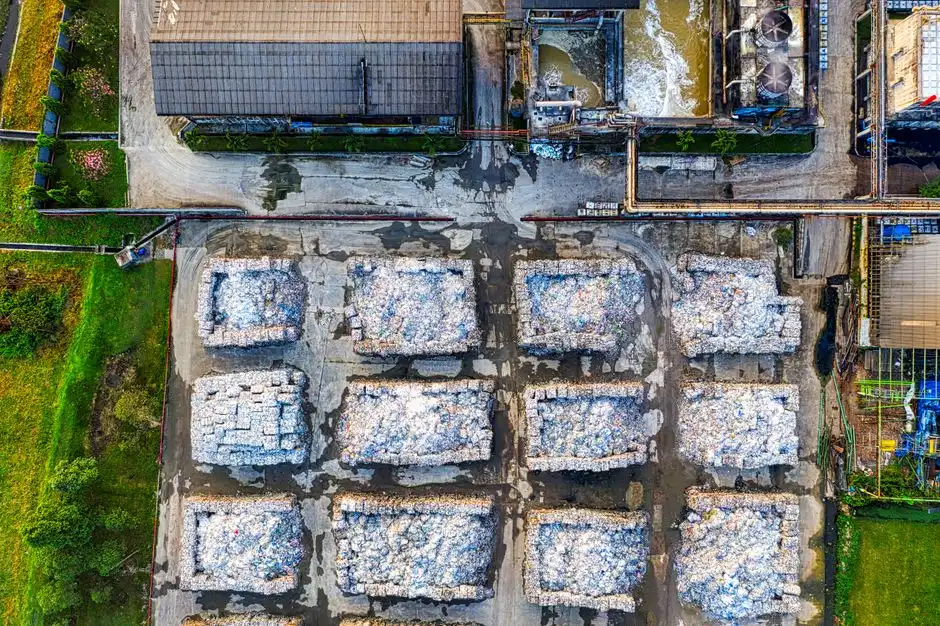
A biodiesel wastewater train typically runs oil-water separator → DAF system → equalization tank → chemical dosing for pH and coagulant → filter press → polishing RO or permitted discharge. The DAF stage is the workhorse for free oil and emulsified FOG, cutting the oil load by 70-90% before the slurry ever reaches the press; without it, the press cloth fouls within 50-100 cycles and cake release becomes a manual scraping job. The equalization tank that follows smooths the batch surges from transesterification and lets the press run at a steady 6-8 m³/hr instead of chasing peaks.
Chemical dosing ahead of the press — typically PAC (polyaluminum chloride) at 50-150 mg/L and an anionic PAM (polyacrylamide) at 2-5 mg/L — cuts specific cake resistance by 30-50% and is the difference between a 22% dry-solids cake and a 32% dry-solids cake on the same press (HydropureWater field data, 2026). Polymer selection is feedstock-driven: cationic PAM works better on high-soap, high-glycerin feeds, while anionic PAM handles catalyst-rich slurries from KOH/NaOH processes. An automatic chemical dosing system with flow-paced injection stabilizes cake moisture across feedstock swings between soybean, canola, and tallow campaigns.
Filtrate from the press normally returns to DAF or equalization, and a well-conditioned press supernatant runs below 200 mg/L TSS and 500-800 mg/L COD, well inside the envelope for the oil and grease discharge limit 2026 benchmarks across EPA, EU, and China frameworks. Discharge directly to a municipal POTW is feasible in most U.S. jurisdictions once COD sits below 1,000 mg/L; for direct surface discharge, a polishing RO or MBR stage drops the remaining glycerin and methanol traces below 10 mg/L each.
Frequently Asked Questions
What explosion-proof rating does a biodiesel filter press need in 2026?
NEC Class I Div 1 Group D, with pneumatic or hydraulic closure and no live electrical components in the press bay, because methanol vapor at 11°C flash point rules out any standard electric drive in the same footprint (per Durco product guide, 2023).
How much does a biodiesel-duty filter press cost in 2026?
$4,500-30,000 per unit depending on filtration area and automation, with a 12-18% adder for ATEX or NEC Class I Div 1 certification and 170°F-rated plate media (per Alibaba listings, 2026).
Can a screw press substitute for a filter press on biodiesel sludge?
No — a screw press for industrial sludge typically reaches only 15-20% dry solids on glycerin-rich cake and cannot match the 30-40% dryness of a membrane plate press, which translates to 30-50% higher hauling tonnage.
What dry-solids percentage should I expect from a recessed-plate press on biodiesel waste?
15-25% on standard recessed-plate duty with polymer conditioning, rising to 30-40% on a membrane plate press with a second-cycle squeeze at 7-15 bar inflation pressure (HydropureWater field data, 2026).
Does the filter press need a DAF unit upstream?
Yes — a DAF system ahead of the press cuts FOG by 70-90% and extends filter cloth life from 50-100 cycles past 800 cycles; the DAF vs IAF cost difference analysis confirms DAF as the standard pairing for 1-10 Mgal/yr biodiesel duty.
How long is a typical biodiesel filter press cycle?
2-4 hours total for recessed-plate duty, broken into 45-60 minutes fill, 60-90 minutes press, 15-30 minutes wash, and 20-30 minutes discharge; membrane presses shorten the press phase by 20-30% via diaphragm inflation.