Why Package Wastewater Treatment Plants Fit Qatar Projects
Package wastewater treatment plants in Qatar commonly target TSS <10 mg/L, BOD <10 mg/L, and COD <50 mg/L under 45°C+ heat and saline influent. Modular MBR or SBR trains typically reach 95–99% BOD/COD removal, deploy in 6–12 weeks, and cost about $800–$2,500 per m³/day.
Qatar industrial discharge volumes are projected to grow 8–10% annually through 2030 under Qatar National Vision 2030, with load growth concentrated in Mesaieed and Lusail industrial zones. Food plants, hospitals, and camps that once relied on tanker haul-away now face higher disposal fees and tighter oversight. Utility and municipal limits applied to industrial discharge are stricter on nitrogen and phosphorus than generic WHO reuse guidance, because arid aquifers have little assimilative capacity. Local power for aeration is typically $0.03–0.05/kWh, and steelwork is detailed to QCS 2014 corrosion classes.
Gulf site conditions drive the process choice. Ambient temperatures above 45°C and humidity above 80% speed biology but raise septic and odor risk if aeration or equalization is undersized. High-salinity groundwater infiltration can cut conventional biological efficiency by 20–30% when TDS climbs into the thousands of mg/L. Prefabricated steel package trains reduce field concrete risk and cut deployment time by 50–70% versus cast-in-place plants on the same hydraulic duty.
| Market Driver | Impact on Design/Procurement | Key Metric |
|---|---|---|
| Regulatory Pressure | Requirement for tertiary treatment (MBR/UF) | TSS <10 mg/L (Kahramaa 2024) |
| Extreme Heat | Insulated tanks and high-efficiency aeration | 45°C+ design temperature |
| Water Scarcity | Shift toward 100% onsite water reuse | $1.50–$2.50/m³ savings vs. desalinated water |
| Rapid Urbanization | Demand for small-footprint, modular systems | 6–12 week deployment time |
Ashghal reported treated sewage effluent (TSE) production rising from 55 million m³ in 2005 to 283 million m³ in 2023 (Ashghal / WSTA, 2023 data). That growth keeps pressure on industrial sites to match municipal reuse quality when TSE or onsite recycle is the design intent.
Process Options for Qatar Package Plants: MBR, SBR, DAF and Hybrids
Membrane bioreactor package trains are the default where reuse or tight TSS is mandatory. MBR systems for Qatar’s high-salinity wastewater typically deliver about 99% BOD and COD removal at 0.8–1.2 kWh/m³. The footprint is about 60% smaller than conventional activated sludge at equal average flow. The usual train is fine screening, anoxic denitrification, aerobic carbon removal, then a membrane tank for solids separation.
Sequencing batch reactors suit hospitals and food plants with shift peaks, including Ramadan production swings. SBR cycles (fill, react, settle, decant) achieve 95–98% BOD removal but need larger equalization when peak-to-average ratios are high. Where FOG exceeds a few hundred mg/L, DAF pre-treatment for high-FOG industrial wastewater is the practical first stage. Micro-bubble DAF units remove 90–95% FOG before biology, which protects membranes in saline influent (HydropureWater field data, 2025).
Boiler makeup or high-purity process water usually needs MBR plus RO. RO recovery in Qatar often falls to 50–60% when feed TDS is 2,000–5,000 mg/L, which raises OPEX by 20–30% versus low-TDS feeds. Selecting the right upstream floatation step using a DAF system selection guide for industrial applications is cheaper than replacing fouled membranes after the first summer.
| Technology | BOD Removal | TSS Effluent | Footprint | Energy Use (kWh/m³) |
|---|---|---|---|---|
| MBR (Membrane Bioreactor) | 99% | <1 mg/L | Ultra-Low | 0.8 – 1.2 |
| SBR (Sequencing Batch) | 95–98% | 10–20 mg/L | Medium | 0.5 – 0.7 |
| DAF (Pre-treatment) | 30–50%* | <50 mg/L | Low | 0.2 – 0.4 |
| MBBR (Moving Bed) | 90–95% | 20–30 mg/L | Low | 0.4 – 0.6 |
*DAF primarily targets FOG and TSS; BOD removal is secondary.
Compact civil works matter as much as the reactor. An Underground Package Sewage Treatment Plant (WSZ Series) keeps the hydraulic plant below grade when plot space or visual impact is constrained, and pairs cleanly with above-grade membrane skids.
Kahramaa, Ashghal and MME Limits That Drive Package Plant Specs
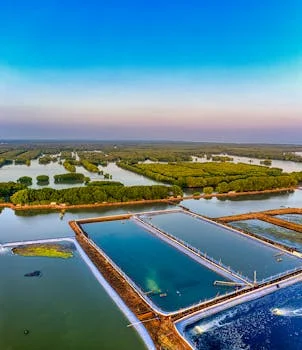
Compliance sits with the Ministry of Municipality and Environment (MME) and Kahramaa utility rules, while Ashghal sets municipal TSE quality. Earlier industrial package specs often cited BOD <10 mg/L, COD <50 mg/L, and TSS <10 mg/L. Ashghal TSE quality requirements for advanced municipal effluent set BOD <5 mg/L, COD <50 mg/L, and TSS <5 mg/L (Ashghal / WSTA). The same table sets ammonia <1 mg/L and total nitrogen <10 mg/L.
Ministry of Environment irrigation standards reported by Manawi et al. (2017) used BOD 10 mg/L for crop irrigation and 50 mg/L for amenity watering, with COD at 150 mg/L. Designers must confirm the exact discharge or reuse pathway before freezing the P&ID.
Beyond BOD/COD/TSS, package plants must hold heavy metals such as chromium <0.1 mg/L in many industrial permits, plus microbes where E. coli <100 CFU/100 mL is specified. Hospitals need pathogen and pharmaceutical control; specialized treatment for medical wastewater is the usual path before sewer discharge or TSE blending. Clinics comparing Gulf hospital schemes can also review hospital wastewater treatment systems, compliance and costs for parallel arid-climate lessons.
Qatar Construction Standards (QCS 2014) govern durability. Coastal chloride and high-TDS groundwater push buyers toward C5-M coatings or 316L stainless on wetted parts, plus Zone 2B seismic detailing for permanent installs. An Environmental Impact Assessment is typically required above 50 m³/day. Permit clocks run about 4–8 weeks inside industrial zones and up to 16 weeks for municipal-linked projects.
Sludge logistics are the quiet OPEX trap. Qatar restricts haul and landfill of biological sludge, so thickening or dewatering that cuts volume by 70–80% pays for itself in tanker trips. Non-compliance fines cited in Kahramaa 2023 enforcement summaries range from QAR 50,000 to QAR 200,000 per violation.
| Parameter | Kahramaa Limit (2024) | Monitoring Frequency |
|---|---|---|
| BOD5 | <10 mg/L | Weekly |
| COD | <50 mg/L | Weekly |
| TSS | <10 mg/L | Daily (Online) |
| Ammonia (NH₄-N) | <5 mg/L | Monthly |
| Oil & Grease | <5 mg/L | Weekly |
Cost Benchmarks for Package Plants in Qatar: CAPEX, OPEX and Payback
Modular MBR CAPEX in Qatar usually sits between $1,200 and $2,500 per m³/day of rated capacity, covering equipment, ocean freight, and commissioning. SBR packages are typically 20–30% lower on CAPEX but need more plot. Those bands track cost benchmarks for wastewater treatment in arid regions such as Jordan, though Qatar labor and import premiums push many bids to the top quartile.
OPEX is dominated by aeration power and chemicals even when power is $0.03–$0.05/kWh. At 45°C design air temperature, energy often takes 30–40% of cash OPEX. PAC, polymer, and disinfectant spend averages about $0.50–$1.00 per kg of product used. For residual control, chlorine dioxide disinfection for Kahramaa compliance is preferred over free chlorine when effluent pH runs high and DBP limits are tight.
Reuse economics close the case. Desalinated water at $1.50–$2.50/m³ means irrigation or cooling-tower makeup reuse can pay back in 3–5 years. Compliance-only plants without reuse lean on avoided tanker fees and fines for their longer payback.
| Capacity (m³/day) | Technology | Est. CAPEX (USD) | Est. OPEX (USD/m³) |
|---|---|---|---|
| 50 | MBR | $85,000 – $120,000 | $0.90 – $1.20 |
| 100 | SBR | $90,000 – $130,000 | $0.60 – $0.80 |
| 200 | MBR | $280,000 – $380,000 | $0.75 – $1.00 |
| 500 | Hybrid (DAF+MBR) | $650,000 – $850,000 | $0.85 – $1.15 |
What does upgrading a package sewage plant cost?
Upgrading a package sewage plant in Qatar typically costs 30–60% of a new modular train when membranes, DAF, or disinfection are added to an existing steel shell rated for the same average flow. Most plants we size for Mesaieed food and camp loads spend the upgrade budget on FOG removal, blower VFDs, and PLC/SCADA rather than new tanks. Civil reuse of pads and pipe racks is what keeps the ratio below a greenfield bid.
How much do package treatment plant upgrades cost?
Package treatment plant upgrades for 50–200 m³/day duties commonly land between $40,000 and $180,000 when the hydraulic shell is sound and only process modules change. A DAF skid plus controls for high-FOG feed is usually the low end; an MBR cassette retrofit with new blowers and CIP sits at the high end. Always price local commissioning and first-year membrane spares into the same CAPEX line, not as an afterthought.
Supplier Checklist for Package Wastewater Vendors in Qatar
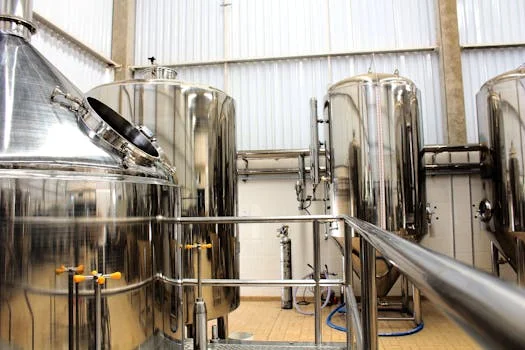
Vendor selection is a climate and service test, not a spreadsheet race. Humidity lessons from how package plants perform in tropical climates help on coatings and electrics, but Qatar adds dry heat plus salinity. Demand a GCC install list and a named Doha or Mesaieed service partner with emergency response under four hours.
Ask for third-party lab reports and walk an operating sister plant before award. Weight technical fit and local spares above headline CAPEX. PLC/SCADA with remote access cuts specialist flights when DO probes drift in summer. Prefabricated hydraulics also pair with modular lift stations; see prefabricated versus traditional pump station cost comparison when the collection network is part of the same EPC package.
| Criteria | Weight | What to Look For |
|---|---|---|
| Technical Expertise | 30% | Experience with high-TDS/high-temp influent |
| Local Support | 25% | <4 hour emergency response time in Doha/Mesaieed |
| Cost Transparency | 20% | Itemized OPEX (energy, chemicals, membranes) |
| Compliance Record | 15% | Proven Kahramaa/MME approval history |
| Warranty & Parts | 10% | Local stock of critical spares (pumps, sensors) |
Selection checklist before RFQ release:
- Confirm discharge vs TSE reuse pathway and the matching BOD/COD/TSS table.
- State design ambient temperature (≥45°C) and influent TDS range in the datasheet.
- Require FOG and grit pretreatment when industrial kitchens or slaughter lines are present.
- Mandate C5-M or 316L on wetted steel and shaded, ventilated MCC rooms.
- Include sludge thickening volume reduction (≥70%) in the base scope.
- Score local response time and spare-parts stock at 25% of the bid weight.
- Hold 10% retention until 30-day compliance sampling passes.
Case Study: Modular MBR for a Mesaieed Food Plant
In 2023, a halal meat plant in Mesaieed faced shutdown risk after repeated compliance failures. Influent BOD ran near 1,200 mg/L with FOG about 300 mg/L and TDS near 3,500 mg/L, a mix that collapses flux on generic MBR cassettes.
The installed answer was a 50 m³/day MBR preceded by high-rate DAF. Insulated reflective tanks and VFD aeration tracked DO in 45°C+ summers. DAF removed about 90% FOG before the membranes, which kept transmembrane pressure stable through the first peak season.
Effluent BOD fell below 5 mg/L and TSS below 2 mg/L, inside the plant’s permit envelope. Reuse for site watering and truck wash saved about $1.10/m³ versus desalinated water, with a calculated 4.2-year payback. The lasting lesson was simple: saline, greasy industrial feed needs aggressive pretreatment and Gulf-specific CIP training.
Who This Is For and Next Step
This guide is for EPC leads, plant engineers, and procurement managers sizing 50–500 m³/day package trains for Qatar industrial or camp loads. Look elsewhere if you need a multi-MLD municipal works or a potable reuse plant; those scopes sit with Ashghal-scale contractors. When your mass balance and TDS range are ready, request a packaged plant quote with influent data and the target reuse or discharge pathway.
Frequently Asked Questions
What is the typical lead time for a package plant in Qatar?
Most modular systems are designed, fabricated, and shipped in 6–10 weeks after drawing approval. Onsite setting, piping, and commissioning usually add 2–4 weeks when civil pads and power are ready. Allow extra time if customs clearance or third-party inspection of pressure vessels is on the critical path.
How does high salinity affect package plant performance?
High TDS slows some heterotrophs and raises osmotic pressure across membranes, which lowers sustainable flux. Qatar-ready designs use salt-tolerant biology, conservative flux, and DAF or other pretreatment so organics and FOG do not compound salinity stress. Expect higher CIP frequency when influent TDS stays above about 3,000 mg/L for long periods.
Can treated wastewater be used for drinking in Qatar?
Direct potable reuse is not the current regulatory path for TSE in Qatar. Treated sewage effluent is directed to non-potable uses such as irrigation, district cooling makeup, and industrial process water after it meets the applicable Ashghal or MME quality table. Potable supply remains desalination and approved drinking-water networks.
What are the most common maintenance issues?
Sensor scaling from hard water, membrane fouling after weak pretreatment, and overheated MCC components in unshaded panels dominate Qatar call-outs. Weekly probe cleaning, verified FOG removal, and forced ventilation or shade structures prevent most summer trips. Keep critical pump and sensor spares in-country rather than on a European shelf.
Is an EIA always required for industrial package plants?
An Environmental Impact Assessment is generally required by MME for discharges above 50 m³/day or for any facility handling hazardous industrial waste, regardless of hydraulic size. Smaller sanitary-only packages may follow a lighter permit track, but the authority confirms the path after reviewing the process description and discharge point.