What BHP Inherits When It Acquires a Mexican Plant
When BHP acquires an industrial plant in Mexico, the buyer should assume responsibility for existing site contamination and verify the plant’s wastewater permits, discharge route, analytical results, and reporting history before closing. The governing pathway depends on the water source and discharge destination: Tecma identifies NOM 001 SEMARNAT 1996 for federal groundwater or septic-system discharges and NOM 002 SEMART 1996 for industrial wastewater discharged to a municipal sewer. The plant needs an applicable permit, annual testing by an accredited and authorized Mexican laboratory, annual reporting, and generally annual permit renewal. A pre-acquisition review should also examine historical contamination, existing treatment capacity, and whether a remediation or upgrade project is required.
Wastewater is a transaction issue for a BHP plant acquisition in Mexico, rather than a post-closing operating matter. Tecma reports that a company that purchases, leases, or acquires an industrial property immediately becomes responsible for prior contamination found there. The legal consequence is that a buyer can inherit cleanup obligations along with permits, monitoring records, and treatment-system deficiencies.
The practical response is to establish a wastewater baseline before the purchase agreement, indemnity, and remediation provisions are finalized. The baseline should connect the source of process water to the discharge route, identify the applicable authorization and testing history, and test whether the installed treatment system can meet the current requirement.
Acquisition diligence and post-closing compliance must remain separate workstreams. Identifying the permit and discharge route establishes the regulatory pathway, but it does not establish whether legacy contamination exists. A separate environmental assessment is needed to evaluate historical spills, disposal practices, groundwater use, septic-system use, and the possible migration of contaminants. The resulting industrial water management framework should then become the basis for a remediation, treatment-upgrade, and operating-control plan.
Determine the Governing Wastewater Pathway
Water source and discharge destination determine the first level of the regulatory pathway. Tecma states that a well supplying water places the activity under federal jurisdiction, while water drawn from a municipal system places it under state jurisdiction. The receiving route then determines the relevant discharge standard: NOM 001 SEMARNAT 1996 for industrial wastewater discharged into the ground or a septic system under federal jurisdiction, and NOM 002 SEMART 1996 for industrial wastewater discharged to a municipal sewer.
Mexican Official Norms, or NOMs, are binding technical standards. NAPS, in its 2024 update, describes NOMs as technical standards that establish binding specifications, values, and characteristics and that can set maximum allowable pollutant limits for contaminants in water, air, and soil. The commercial summary is only a starting point: the acquirer must check the official standard, the site’s permit conditions, and the receiving authority’s requirements.
The supplied research does not provide pollutant-limit values, so the diligence team should not import generic limits into the transaction model. It should request the applicable limits from the official instruments and Mexican environmental counsel.
| Site fact | Regulatory question | Evidence to obtain |
|---|---|---|
| Water source | Does the plant use a well, municipal supply, or both? | Water supply agreements, well construction records, utility invoices and source maps |
| Discharge destination | Does the route lead to ground, a septic system, a municipal sewer, another receiving system, or multiple routes? | Site drainage drawings, permits, sewer agreements, discharge points and operating records |
| Governing authority | Which federal or state authority controls the permit? | Permit cover page, authorization correspondence and authority register |
| Permit status | Is the permit current, subject to conditions, renewal, suspension or a modification? | Permit, renewals, compliance correspondence, inspection findings and discharge monitoring reports |
| Applicable NOM | Which official standard and conditions apply to the actual discharge route? | Official NOM text, permit conditions and written confirmation from Mexican counsel |
For a mixed discharge route, assess each outlet separately. A well-fed process line that discharges to ground, for example, cannot be evaluated solely against the municipal-sewer pathway used by another line. The pretreatment compliance review should be used as a diligence framework, not as a substitute for Mexican authorization or limits.
Pre-Close Environmental Due Diligence Checklist

A pre-close review must connect documentary evidence with the physical wastewater system. Start with the permit file, then test the permit narrative against the installed plant, available analytical data, and the site’s contamination history.
Request the wastewater permit and related authorizations, renewal correspondence, compliance reports, and records of annual discharge reporting. Obtain the available historical laboratory reports and chain-of-custody documentation, then verify that testing was performed by an accredited and authorized Mexican testing laboratory as described by Tecma. Missing records, inconsistent parameter lists, or unexplained changes in sampling method should trigger targeted review rather than an assumption of compliance.
| Diligence workstream | Required findings | Transaction output |
|---|---|---|
| Authorization | Permit, supporting authorizations, renewal history, conditions, discharge points and correspondence | Confirmed permit pathway, gaps and renewal obligations |
| Monitoring and reporting | Historical laboratory reports, chain of custody, annual reports and authority findings | Compliance baseline and identified evidence gaps |
| Physical system | Source, collection, equalization, treatment, discharge point, metering, sampling points, bypasses, sludge handling and maintenance records | Condition assessment and list of required engineering actions |
| Legacy contamination | Historical spills, disposal practices, groundwater use, septic-system use, soil and groundwater findings and possible migration pathways | Contamination assessment, responsibility allocation and remediation scope |
| Capacity and treatment | Existing hydraulic and treatment capability, operating variability and compliance margin | Upgrade, retrofit or replacement decision after process characterization |
Inspect the complete route rather than treating the treatment unit as the system. A sound treatment train can still be undermined by an unapproved bypass, a leaking collection line, an unidentified discharge point, or inconsistent sludge handling. For an acquisition, the effluent treatment compliance and sizing guide can structure the engineering review, while site-specific data determines capacity and treatment selection.
NAPS identifies the General Law on Ecological Equilibrium and Environmental Protection, or LGEEPA, as the foundation of Mexico’s environmental framework in its 2024 update. The permits, discharge arrangements, and contamination findings should therefore be reviewed by specialist Mexican environmental counsel. Where documents are missing or the system appears materially changed, commission targeted sampling and independent engineering review before accepting the environmental condition in the transaction documents. This is also where DAF selection and performance guidance can inform the treatment-gap assessment.
Build the Permit, Testing and Reporting Workplan
The acquired permit should become a controlled operating schedule with named owners. Tecma states that annual wastewater testing is required to confirm that discharges remain within the maximum permissible contaminant levels for the relevant route. It also states that an accredited and authorized Mexican testing laboratory must perform the annual wastewater testing described for industrial discharges to a municipal sewer.
Tecma further identifies annual reporting for industrial wastewater discharges and testing, and states that almost all wastewater permits and authorizations must be renewed every year. The acquirer must verify the actual instruments, dates, and conditions rather than assume that a single annual rule covers every site obligation. The workplan should also accommodate the daily, monthly, and annual reports that Tecma says can form part of environmental compliance.
| Activity | Responsible owner | Required evidence |
|---|---|---|
| Permit and authorization control | Environmental manager or counsel | Current permit, conditions, renewal record, authority correspondence and closure register |
| Sample collection | Trained site personnel under the approved method | Sampling plan, field records, chain of custody and sample identification |
| Laboratory coordination | Qualified environmental coordinator | Laboratory accreditation or authorization evidence, analytical report and exception response |
| Report review and submission | Environmental manager | Reviewed calculation, submission receipt, authority comments and corrective-action log |
| Water-use and discharge records | Plant operations with EHS support | Source, flow, meter, sampling, discharge and maintenance records |
| Permit renewal | Accountable manager before expiry | Application, supporting data, fee evidence, renewal authorization and updated conditions |
Give each task a named owner and escalation route. The environmental manager should review the permit against the actual process before the laboratory confirms its sampling plan. Operations should document any change in chemistry, production, water source, drainage configuration, or treatment operation. That change-control step is necessary because a compliant report is less useful if it no longer describes the discharge being made.
Select Treatment for Any Compliance Gap
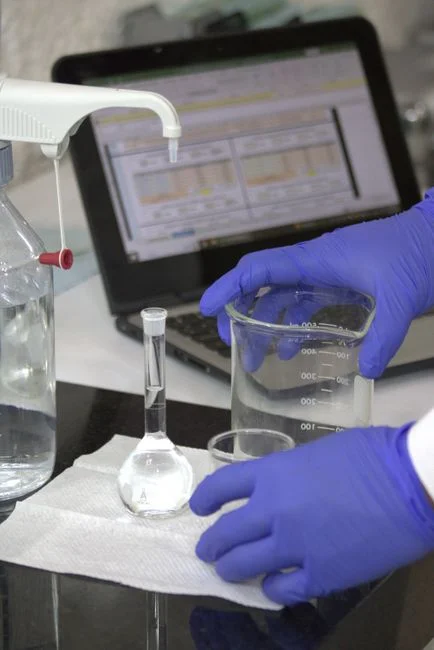
Treatment selection begins with a process characterization. The buyer needs wastewater flow, pollutant parameters, variability, discharge route, reuse objectives, and available footprint. The supplied research contains no plant-specific flow or pollutant data, so it cannot support a definitive equipment selection or a quoted acquisition cost.
For industrial wastewater containing suspended solids, oil and grease, FOG, or colloidal matter, assess dissolved air flotation. An industrial DAF system may be suitable where those removal duties drive the compliance gap, but its application still depends on the site data and applicable permit conditions.
Where biological treatment and high-quality reuse are required, assess an MBR membrane bioreactor against the required discharge and reuse objectives. Where compliance depends on pH adjustment or coagulant and flocculant addition, evaluate automatic chemical dosing as part of the process rather than as an accessory.
Genesis Water Technologies observes that recycling and reuse can support compliance and reduce reliance on municipal water in water-stressed Mexican regions. The acquirer should compare total installed scope, validation needs, operator burden, sludge handling, replacement exposure, and the operational consequence of a permit deviation.
Because the research does not support acquisition-cost or payback figures, a budget request should require a supplier to state the basis of price, included equipment, civil and installation work, commissioning, analytical validation, operator training, consumables, sludge disposal, and warranty exclusions. Equipment selection should be approved only after the discharge route, wastewater characterization, and permit limits are documented.
Prepare for Enforcement After Closing
SEMARNAT can inspect a wastewater site without advance notice, so compliance evidence must be available when personnel arrive. Tecma reports that SEMARNAT does not follow the advance-notice approach described for other Mexican government agencies and may conduct an unannounced inspection.
An audit may examine discharge and water-use records, permits and authorizations, wastewater test results, and the physical plant. The site should maintain an inspection-ready evidence room with the current permit, renewal evidence, laboratory reports, chain-of-custody records, submissions, monitoring records, equipment operating logs, and corrective-action files.
Pre-authorize personnel to accompany inspectors, provide records, and identify the operating personnel responsible for each process step. Tecma states that violations can lead to significant fines and that an inspection may produce findings requiring immediate response rather than a long correction window. A corrective-action protocol should therefore define who can stop an unauthorized discharge, who communicates with the authority, how samples are preserved, and how remediation is approved and documented.
Frequently Asked Questions
Does BHP assume responsibility for contamination at a Mexican plant it acquires?
Potentially, and the transaction team should plan on that basis. Tecma states that a purchaser immediately becomes responsible for prior contamination found on the property. Mexican environmental counsel should assess the site history and allocate responsibility through transaction protections before closing, including the permits, monitoring history, legacy assessment, and remediation scope.
What information is needed before selecting wastewater treatment equipment?
Request the wastewater flow, pollutant parameters, variability, discharge route, applicable permit limits, reuse objectives, available footprint, sludge-handling constraints, and operating history. A supplier should then provide a process basis, included scope, validation plan, operator requirements, consumables, and warranty terms. No universal configuration can be selected from the acquisition announcement alone.
What ongoing wastewater obligations should be included in the post-closing plan?
Include annual wastewater testing by an accredited and authorized Mexican laboratory, annual reporting, and generally annual permit renewal, as described by Tecma. Also identify any daily or monthly reporting applicable to the acquired site. Assign owners for sampling, laboratory coordination, permit renewal, authority correspondence, and record retention before closing.