Why Plastics and Rubber Plants Near Canton Are Indirect Dischargers, Not Direct Ones
Plastics and rubber plants in the Stark County area almost always send their process wastewater to a municipal sewer rather than directly to a river or stream, which legally classifies them as indirect dischargers under the Clean Water Act. The federal floor that applies to any industrial discharger to a Publicly Owned Treatment Works (POTW) is the General Pretreatment Regulation at 40 CFR Part 403, and on top of that floor the local POTW enforces its own Sewer Use Ordinance, which is the document that actually carries day-to-day numerical limits in most cases.
EPA's plastics molding and forming overview distinguishes between the two discharge routes for the PM&F rule. At the time of the 1984 rulemaking there were approximately 10,260 PM&F facilities in the United States, of which 810 were direct dischargers; the remaining 1,145 indirect dischargers were subject to the General Pretreatment Regulation at 40 CFR Part 403 (EPA, 40 CFR Part 463 overview, 2024 page text). For a Canton-area plant, that is the only population it can be in, because the city sewer is the receiving stream.
Rubber products manufacturing is a separate case. There is no dedicated federal categorical effluent guideline that mirrors Part 463 for SIC 30 rubber operations, so rubber plants in the Canton area typically operate under Part 403 general pretreatment standards and the receiving POTW's local limits, plus any applicable Ohio EPA requirements. EPA's 1995 Profile of the Rubber and Plastics Industry treats rubber and miscellaneous plastics as a single sector (SIC 30) for compliance profiling, but the categorical effluent guideline coverage is narrower than the sector itself.
The 2026 Regulatory Map: Part 463, Part 403, and Your POTW Limits
Three layers of rules apply to a Canton-area plastics or rubber plant that discharges to the city sewer, and the binding limit on any given day usually sits at the local layer, not the federal one. Layer one is 40 CFR Part 403, the General Pretreatment Regulation, which is the umbrella rule for any non-domestic user discharging to a POTW and which defines categorical standards, local limits, and the enforcement tools — Significant Industrial User designation, individual permits, slug control plans — that the POTW uses (EPA, 40 CFR Part 463 overview page; EPA, Profile of the Rubber and Plastics Industry, EPA/310-R-95-016, September 1995). Layer two is the categorical standard, 40 CFR Part 463 for plastics molding and forming, which EPA promulgated in 1984. Layer three is the receiving POTW's Sewer Use Ordinance, which translates Part 403 and any applicable categorical standards into specific local numeric limits and a monitoring schedule.
Part 463 covers the operations that define a typical PM&F plant: blending, molding, forming, coating, laminating, thermoforming, calendering, casting, foaming, cleaning, and finishing of plastic products, and EPA places those activities within NAICS group 3261 (Plastics Product Manufacturing) as a guide rather than as the regulatory definition (EPA, 40 CFR Part 463 overview). The regulation covers process wastewater, which includes contact cooling and heating water, equipment and product cleaning water, and finishing water; non-contact cooling water is not covered by Part 463 but can be addressed in individual permits on a case-by-case basis, so a plant that can physically segregate non-contact streams reduces both its compliance surface and its sewer flow.
Several related categorical rules matter when a plant does more than one thing on the same site. Coating of a plastic material onto a formed metal substrate is covered by Part 463 and not by the specific metal forming effluent guidelines (40 CFR Part 467 for Aluminum Forming, 40 CFR Part 468 for Copper Forming, and 40 CFR Part 471 for Nonferrous Metals Forming); only the prior metal forming operations are subject to those metal rules, while the plastic coating step is controlled by Part 463 (EPA, 40 CFR Part 463 overview). Plastic resin manufacturers that ship crude intermediate plastic material off-site fall under the Organic Chemicals, Plastics and Synthetic Fibers category (40 CFR Part 414) rather than Part 463; the same extrusion or pelletizing process, when the resin is then further processed on-site into intermediate or final plastic products, is controlled by Part 463 (EPA, 40 CFR Part 463 overview).
| Rule | Coverage | Applies to your plant if |
|---|---|---|
| 40 CFR Part 403 — General Pretreatment | All non-domestic discharges to a POTW | You discharge any process wastewater to the city sewer |
| 40 CFR Part 463 — Plastics Molding and Forming | Blending, molding, forming, coating, laminating, thermoforming, calendering, casting, foaming, cleaning, finishing (NAICS 3261 as guide) | You run any of those operations on-site |
| 40 CFR Part 414 — OCPSF | Crude intermediate plastic resin manufactured for off-site shipment | You make and ship crude resin rather than finished plastic products |
| 40 CFR Part 467 / 468 / 471 — Metal Forming | Aluminum, Copper, Nonferrous Metals forming | You have a metal forming line upstream of a plastic coating step |
| Local POTW Sewer Use Ordinance | Site-specific numeric limits, monitoring, reporting | Always, where you discharge to a POTW |
What Is Actually in the Wastewater From Plastics Molding and Rubber Operations

Plastics molding and forming process wastewater comes from three places, per EPA's Part 463 overview: contact cooling or heating water that touches the plastic product, water used to clean the surfaces of plastic products and the equipment that contacts them, and water used to finish plastic products. Each of those streams drags a different contaminant mix into the sewer, and the mix is what drives both the categorical applicability decision and the treatment train selection downstream.
Rubber operations generate a related but distinct contaminant profile. Compounding and extrusion release suspended solids; mold release agents and processing aids contribute oil and grease; latex-based operations or soluble organic additives raise BOD and COD; and cure systems, especially zinc-bearing accelerators, contribute total metals that the local POTW will track under its metals local limits. EPA's 1995 Profile of the Rubber and Plastics Industry compiles process diagrams, pollution output tables, and Toxic Release Inventory releases by facility and by state for SIC 30, and the same parameters that show up in TRI — TSS, oil and grease, BOD, COD, total metals — are the ones the local Sewer Use Ordinance will set numeric limits for (EPA, Profile of the Rubber and Plastics Industry, EPA/310-R-95-016, September 1995).
The standard POTW pretreatment parameter list that a Canton-area plant has to manage therefore reads: total suspended solids, oil and grease, pH, total metals, BOD/COD, and, depending on the local Sewer Use Ordinance, specific surfactants, plasticizers, or other organics tied to particular product lines. Non-contact cooling water is a useful segregation candidate because it falls outside the Part 463 process wastewater definition and may be addressed in individual permits on a case-by-case basis, which in practice often means lower-cost discharge terms (EPA, 40 CFR Part 463 overview).
Building the 2026 Treatment Train: Step by Step
The treatment train below is the sequence a typical 2026 indirect discharger in this sector uses to meet Part 403 plus local limits, with the unit operations ordered from headworks to discharge. The exact sizing of each step depends on the plant's peak shift flow, contaminant loadings from the unit operations, and the local POTW's specific numeric limits, which is why the local limits table is the first document a buyer should obtain before any equipment is selected.
- Step 1 — Screening and grit removal. A rotary mechanical bar screen for headworks protects downstream pumps and DAF nozzles from rags, plastic scrap, and agglomerated solids that show up in cleaning water streams.
- Step 2 — Equalization. Equalization tanks buffer batch discharges from cleaning operations and prevent pH or load shocks from reaching the chemical or biological stages. Without equalization, the downstream DAF and chemical dosing stages either over-dose on peaks or under-dose on troughs, and either failure mode is visible in the next sample.
- Step 3 — Oil, grease, and suspended solids removal. A DAF system for oil and grease removal is the standard primary stage for oil and grease and for floating colloids, sized to peak shift discharge rather than average flow because a DAF unit that handles the average will be overwhelmed by the peak.
- Step 4 — pH adjustment and coagulation. PLC-controlled chemical dosing for pH and coagulation lets the operator stabilize pH and build a floc that the DAF or downstream clarifier can remove; redundant pumps are normal for 24/7 plants.
- Step 5 — Clarification. A lamella clarifier for TSS polishing handles the DAF effluent's remaining TSS and lets the operator reduce chemical consumption by recycling sludge-bound floc.
- Step 6 — Biological or membrane polishing. Where the local POTW enforces tight BOD, COD, ammonia, or total nitrogen limits, or where the plant wants to reuse process water, an MBR system for biological polishing and reuse can be added downstream of clarification.
- Step 7 — Disinfection. For sewer discharge, disinfection is usually not required; UV or chlorine dioxide is specified mainly for reuse water.
- Sludge handling. A plate and frame filter press for DAF sludge dewaters the DAF and clarifier sludge to a transportable cake for off-site disposal.
| Treatment stage | Primary target parameter | Typical equipment |
|---|---|---|
| Screening | Rags, plastic scrap, large solids | Rotary mechanical bar screen |
| Equalization | Flow and load variation, pH shocks | Equalization tank with mixing |
| Oil/grease and floatables | Oil and grease, floating colloids | Dissolved air flotation (DAF) |
| pH and coagulation | pH, emulsified contaminants | Automatic chemical dosing system |
| Clarification | TSS | Lamella / inclined-plate clarifier |
| Biological / membrane polishing | BOD, COD, ammonia, total nitrogen | MBR or conventional activated sludge |
| Sludge dewatering | Volume reduction of DAF/clarifier sludge | Plate and frame filter press |
Two equipment-decision points that trip up a lot of plants: the DAF-versus-clarifier choice, and whether to add a biological stage at all. A DAF vs clarifier selection guide for industrial plants is useful background, but the practical answer for a PM&F or rubber plant is that the DAF goes first because the contaminant mix is dominated by oil and grease and floating colloids, and the lamella clarifier goes downstream to polish what the DAF does not catch. A related cross-sector reference for pretreatment is the fabricated metals plant pretreatment compliance guide, which uses the same Part 403 framework and the same POTW coordination logic. For plants whose wastewater has a stronger organic load, the chemical plant pretreatment compliance playbook is a useful comparison for how an MBR stage is justified against a tight local BOD or COD limit.
Canton-Area Specifics: Local Limits, Sampling, and Audit Prep
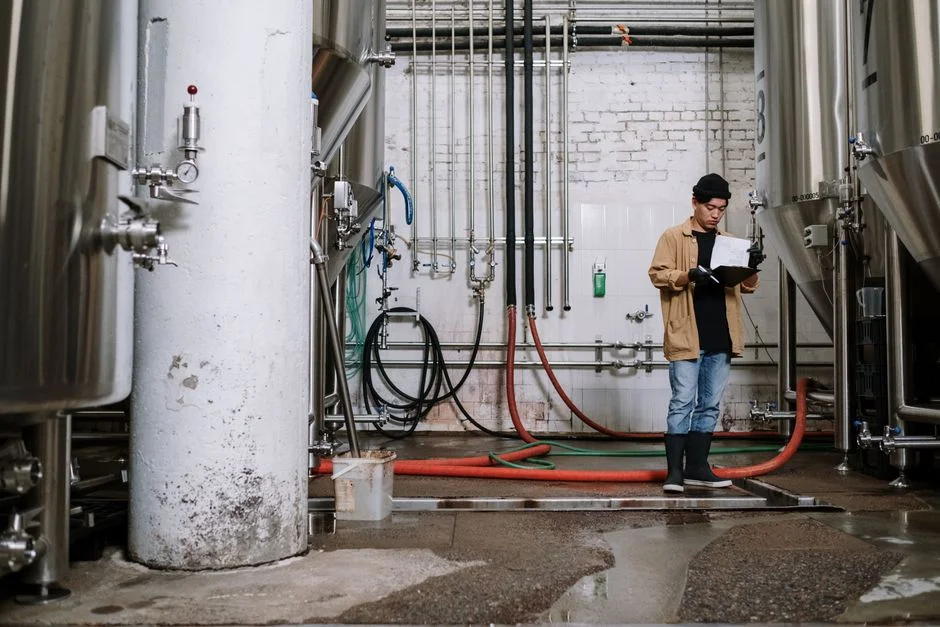
The federal categorical standards and the General Pretreatment Regulation set the framework, but the day-to-day enforcement numbers in Canton come from the local POTW's Sewer Use Ordinance, and those numbers can be — and routinely are — more stringent than the federal floor. The first action item for any plant engineer evaluating new equipment is therefore to request the current local limits table from the receiving POTW, not to start with a generic categorical standard.
The next action item is to determine the plant's Significant Industrial User (SIU) or Categorical Industrial User (CIU) status under 40 CFR Part 403, because that classification drives monitoring frequency, self-monitoring report cadence, the need for a baseline monitoring report, and the requirement to maintain a slug control plan. EPA's Sector Notebook explicitly identifies PCS (Permit Compliance System) and the National Pollution Discharge Elimination System (NPDES) as the federal databases where the local POTW reports noncompliance for the rubber and plastics sector (EPA, Profile of the Rubber and Plastics Industry, EPA/310-R-95-016, September 1995), so a compliance history review of those databases is a realistic audit-prep step.
Practical audit prep for a Canton-area plant therefore looks like: obtain the current Sewer Use Ordinance and local limits table; confirm SIU/CIU status and the resulting monitoring and reporting frequency; install or verify 24-hour composite sampling capability for TSS, BOD/COD, oil and grease, pH, and total metals, with chain of custody and lab certification on every sample; maintain a written slug control plan and a spill containment plan; and keep the baseline monitoring report and any permit renewal documentation in an audit-ready file. A plant that can physically segregate non-contact cooling water should document that segregation, because Part 463 does not cover non-contact cooling water and individual permits may allow different discharge terms for that stream (EPA, 40 CFR Part 463 overview).
Frequently Asked Questions
How do plastics molding and forming plants near Canton actually meet 2026 pretreatment limits before sewer discharge?
They meet 40 CFR Part 403 plus the local POTW's Sewer Use Ordinance, not the Part 463 categorical standard directly, because they are indirect dischargers. EPA's 1984 rulemaking identified 1,145 indirect PM&F facilities subject to Part 403 (EPA, 40 CFR Part 463 overview). The practical treatment train is screening, equalization, DAF for oil and grease, PLC-controlled chemical dosing for pH and coagulation, lamella clarification for TSS, and biological or membrane polishing only where local BOD, COD, ammonia, or total nitrogen limits require it. The binding numeric limits are the local POTW's, so request the current Sewer Use Ordinance and local limits table before any equipment is specified.
What does a Canton-area plastics or rubber plant need to budget for a 2026 pretreatment upgrade?
The research does not give a published installed-cost figure for this sector, and pricing varies too much with peak shift flow, influent loadings, and local limits to quote a generic number. A buyer should request vendor quotes for each treatment stage sized to the plant's measured peak flow, and the line items a budget should cover explicitly are: headworks screening, equalization tank sizing, DAF unit sizing to peak shift flow, chemical dosing package, lamella clarifier, optional MBR stage, sludge dewatering, instrumentation and PLC controls, and installation. Get those sized quotes, then add a contingency line for civil work and POTW coordination before any commitment.
Which equipment actually carries the load for oil and grease versus TSS in a plastics or rubber plant?
A dissolved air flotation unit is the workhorse for oil and grease and floating colloids, sized to peak shift discharge, and a lamella or inclined-plate clarifier is added downstream to polish the DAF effluent for TSS. PLC-controlled chemical dosing for pH and coagulation sits between the two and is what makes both stages hit their targets consistently. For plants with tight BOD, COD, ammonia, or total nitrogen limits, an MBR stage is added after clarification; for plants reusing process water, the MBR also feeds the reuse loop. Sludge from the DAF and clarifier is dewatered with a plate and frame filter press for off-site disposal.
What is the biggest compliance risk a plastics or rubber plant misses when planning an indirect discharge upgrade?
Most plants in this sector underestimate the SIU/CIU determination, the slug control plan, and the baseline monitoring report. Under 40 CFR Part 403, those three items together drive monitoring frequency, reporting, and the documentation a POTW inspector asks for first, and they apply to indirect PM&F facilities identified at the 1984 rulemaking (EPA, 40 CFR Part 463 overview). EPA's Profile of the Rubber and Plastics Industry explicitly lists PCS and NPDES as the federal databases where the local POTW reports noncompliance for SIC 30, so the compliance record is searchable and persistent. A buyer should treat the slug control plan and the baseline monitoring report as required deliverables on the same schedule as the equipment, not as paperwork that follows the equipment purchase.