

Which Gloucester City Applies to Chemical-Plant Pretreatment
The two Gloucesters that surface in a 2026 pretreatment search are not the same place, and the receiving sewer authority is the only one that matters to a chemical plant's discharge permit. The question at hand concerns Gloucester City, Camden County, New Jersey, which owns seven combined sewer overflow outfalls and is hydraulically connected to the Camden County Municipal Utilities Authority (CCMUA) Delaware #1 Water Pollution Control Facility in Camden, NJ. That connection is documented in the NJDEP draft combined sewer management fact sheet, dated November 9, 2023, which lists Gloucester City's collection system under NJPDES Permit No. NJ0108847 and the receiving plant under NJPDES Permit No. NJ0026182. The chemical-plant operator in this corridor is regulated by CCMUA's local limits program, not by MassDEP or by EPA Region 1.
The other Gloucester is a municipal story in Essex County, Massachusetts, where EPA, the U.S. Department of Justice, and the Commonwealth of Massachusetts announced a consent decree in 2023 requiring the city to add secondary treatment to a primary-only plant discharging to Massachusetts Bay. That settlement, valued at more than $150 million, is a public infrastructure upgrade for an East Coast municipal utility and has no jurisdictional link to a chemical Significant Industrial User discharging to the Camden County interceptor. Confusing the two Gloucesters is the most common way a searcher ends up reading the wrong consent decree, the wrong permit number, and the wrong local limits program.
For compliance managers in the New Jersey chemical corridor, the practical consequence is straightforward: every limit, sampling point, and reporting cadence is anchored to CCMUA's sewer use ordinance and the federal National Pretreatment Program, applied through New Jersey's delegated authority. Establishing that anchor up front prevents a costly scoping error in the wastewater characterization report and the SIU permit application.
The Regulatory Stack Chemical Plants Must Clear
Federal, state, and local authorities each control a different slice of the compliance picture, and a defensible design basis treats them as a stack rather than a single rulebook. The Clean Water Act National Pretreatment Program at 40 CFR Part 403 prohibits pass-through and interference at the receiving POTW and defines Significant Industrial User (SIU) obligations; where a chemical plant's SIC or NAICS code triggers a category, 40 CFR Part 414 (Organic Chemicals, Plastics, and Synthetic Fibers) and 40 CFR Part 415 (Inorganic Chemicals Manufacturing) set categorical pretreatment standards that apply at the discharge manhole regardless of what the local limits say. Categorical and non-categorical SIU status is determined by 40 CFR 403.3 and should be confirmed during the wastewater characterization step.
The New Jersey layer runs through the New Jersey Pollutant Discharge Elimination System (NJPDES) under N.J.A.C. 58:10A-1 et seq., which the NJDEP renews in coordinated action packages for the three hydraulically connected permittees: CCMUA (NJ0026182), the City of Camden (NJ0108812), and Gloucester City (NJ0108847). The November 9, 2023 NJDEP draft fact sheet (PI #46392) restates the combined sewer management framework and lists the Federal CSO Control Policy Presumption Approach with an 85% wet-weather capture target that the City of Camden, Gloucester City, and CCMUA have committed to under the September 2020 Long Term Control Plan.
CCMUA sets local limits in its sewer use ordinance, issues SIU discharge permits, and reviews capacity assurance for new or expanded industrial flows before the NJPDES permit is finalized. The November 9, 2023 NJDEP draft fact sheet places Gloucester City's average daily wastewater flow at approximately 2 MGD, all of which reaches the CCMUA interceptor and is therefore subject to the local limits program; a chemical plant sending slug loads or peak flows above the allocated capacity risks surcharging the combined system during wet weather, which becomes a separate enforcement issue under the CSO Presumption Approach.
| Layer | Authority | Key instrument | What it controls |
|---|---|---|---|
| Federal | U.S. EPA | 40 CFR Part 403; 40 CFR Part 414 (organic chemicals); 40 CFR Part 415 (inorganic chemicals) | SIU definition, general and specific prohibitions, categorical numerical standards at the discharge manhole |
| State | NJDEP, Bureau of Surface Water and Pretreatment Permitting | N.J.A.C. 58:10A-1 et seq.; NJPDES Permit No. NJ0108847 (Gloucester City CSM, draft renewal 2023-11-09, PI #46392) | State DMR cadence, CSO/LTCP oversight, delegation of the pretreatment program to CCMUA |
| Receiving POTW | CCMUA Delaware #1 WPCF, NJPDES Permit No. NJ0026182 | CCMUA sewer use ordinance and SIU discharge permit | Numeric local limits, sampling point, capacity allocation, SIU permit conditions |
For chemical plants, the practical reading of the stack is that the strictest of the three layers controls each parameter. A categorical metal limit in 40 CFR Part 414 or 415 will override a more permissive CCMUA local limit, while a tighter CCMUA local limit for a non-categorical pollutant will still bind. Sampling location, analytical methods, and DMR reporting cadence are set by the SIU permit issued under the local program.
What a Typical Chemical-Plant Pretreatment Train Looks Like in 2026
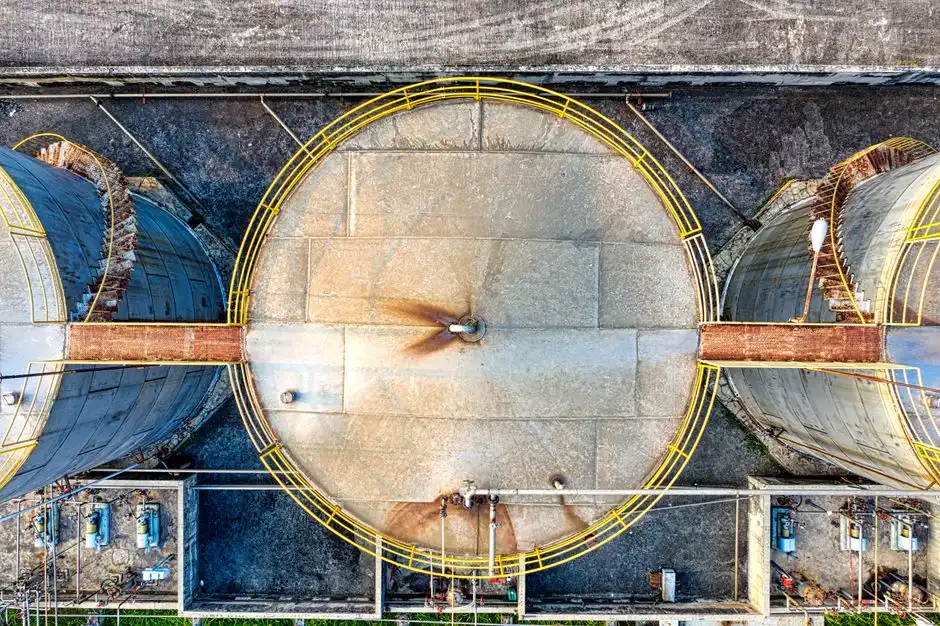
Most chemical-plant trains in the Camden County corridor are built as a sequence of unit operations that map to the pollutant categories the local limits target, rather than as a single device. The first stage is equalization and flow buffering, which dampens slug loads of pH, temperature, and BOD/COD so that downstream units see a steady-state feed; this matters because NJPDES and CCMUA limits are expressed as mg/L and the DMR is evaluated against daily and monthly averages that assume steady operation.
pH neutralization and chemical precipitation follow, typically with a PLC-controlled chemical dosing skid delivering acid or caustic plus coagulants. This stage is what allows the plant to clear the 40 CFR Part 403 general prohibitions on corrosive discharges and to meet the metal ceilings in 40 CFR Parts 414 or 415 where the SIC/NAICS code triggers a category. Dosing logic should be tied to a pH probe and a flow-paced controller, with a documented setpoint and alarm strategy that the SIU permit can audit.
Primary solids and FOG removal is normally handled by a DAF system for suspended solids and FOG removal, or by a lamella clarifier where footprint is constrained. DAF is the workhorse for knocking out the particulates and oil and grease that carry priority pollutants into the sewer, and it is the unit operation most often cited in CCMUA-facing proposals for chemical SIUs. Where biological treatment is required for organics, an MBR biological treatment system or a sequencing batch reactor carries the BOD/COD load and provides a buffer for toxicity reduction implementation requirements if any parameter is later found to have Reasonable Potential.
Final polishing and monitoring close the train. Multimedia filtration, residual chlorination followed by dechlorination or UV, and an automatic sampler tied to the SIU discharge manhole are what allow the plant to demonstrate compliance in the monthly DMR. A remote monitoring system for SIU DMR reporting ties the sampler, flow meter, and analyzer outputs to a single audit trail, which is the only practical way to defend a CCMUA local limit exceedance investigation once it is in motion. Sludge generated by the train is typically dewatered with a filter press for sludge dewatering before off-site disposal, in line with the residuals transfer and sludge quality assurance rules that NJDEP administers alongside the SIU permit.
How Engineers Size and Verify Compliance in Practice
The sizing workflow that holds up under a CCMUA or NJDEP review starts by pulling the current SIU discharge permit, the applicable 40 CFR Part 414 or 415 category from the Federal Register effluent limitations guideline tables, and a determination of whether the facility is a Categorical or Non-categorical SIU under 40 CFR 403.3. That determination governs whether categorical numerical standards apply at the discharge manhole in addition to local limits, and it sets the analytical suite the wastewater characterization report must cover. The wastewater characterization report is the document the CCMUA Capacity Assurance review and the NJPDES permit modification both reference, so it has to describe the SIC/NAICS process, peak versus average flows, and the pollutants expected at the discharge manhole with enough detail that the local limits program can allocate capacity without ambiguity.
Engineers must ensure the design fits within the hydraulic constraints of the local system. Gloucester City's collection system carries roughly 2 MGD of average daily flow from in-city sources according to the November 9, 2023 NJDEP fact sheet, and that flow is pumped through the Gloucester pump station owned and operated by CCMUA into the Delaware #1 WPCF. A new or expanding chemical SIU has to fit inside that envelope plus any allocation already made to the City of Camden's separate flows, which is why the Capacity Assurance step is real engineering work and not a paperwork formality. The process flow itself is then assembled from equalization through DAF or lamella, biological, and polishing, with toxicity reduction implementation requirements (TR-6) added for any parameter found to have Reasonable Potential under the EPA Technical Support Document framework. Delaware River Basin Commission coordination is added where the discharge or the chemical feed inventory triggers it. Auto-sampling and flow measurement at the SIU discharge point, tied to the DMR cadence in the permit, close the loop so that compliance is demonstrable on a continuous basis rather than only when a compliance officer visits.
Frequently Asked Questions
What is the actual numeric local limit my plant must meet for metals, BOD, TSS, and oil and grease?
Numeric local limits are set by CCMUA's sewer use ordinance and re-stated in each plant's SIU discharge permit, and they are not published in a single national table. A chemical plant should request the current local limits letter from CCMUA's pretreatment staff and compare each parameter against the categorical ceilings in 40 CFR Part 414 or 415 where applicable; the strictest value controls. The wastewater characterization report is the deliverable that anchors this comparison for the permit file.
How do I budget for a pretreatment train upgrade in the Camden County system?
Capex depends on flow, on whether the plant is a Categorical SIU under 40 CFR 403.3, and on which unit operations the wastewater characterization report justifies. The defensible budgeting step is to size the train from peak flow and pollutant loadings, request a budgetary proposal against that sizing basis, and confirm with CCMUA whether capacity allocation is available before committing to a purchase order; the November 9, 2023 NJDEP fact sheet places the in-city average daily flow at approximately 2 MGD, which is the envelope a new or expanded SIU has to fit inside.
How do I pick a supplier for a chemical-plant pretreatment train in New Jersey?
Shortlist vendors that can document prior SIU work in the CCMUA service area or in comparable New Jersey POTW programs, and ask each one to provide a process flow mapped parameter-by-parameter to the local limits letter and to any 40 CFR Part 414 or 415 category that applies. A proposal that does not name the sampling point, the DMR cadence, and the toxicity reduction implementation trigger is not yet a compliant design basis. Reference projects at other New Jersey chemical SIUs are the single best filter, because the regulator's expectations on sampling architecture and capacity assurance carry over directly.
What is the typical lead time from order to commissioning for a 2026 pretreatment train?
Lead time is driven by the long-lead items in the train rather than the skid assembly as a whole: equalization basins, DAF or lamella packages, and the MBR biological treatment system or SBR package typically set the schedule. A chemical plant should request a GANTT chart from each bidder that itemizes engineering, fabrication, shipping, installation, and the CCMUA witness-test window, and should confirm that the auto-sampling and remote monitoring architecture is included rather than treated as an add-on. A side-by-side read of those schedules is the most reliable way to compare suppliers before signing.