
What Changes When Digital Realty Acquires an Indian Plant?
When Digital Realty acquires an industrial plant in India, the buyer must verify the plant’s existing Consent to Establish (CTE) and Consent to Operate (CTO), applicable CPCB and State Pollution Control Board (SPCB) standards, monitoring obligations and treatment-system performance. The site-specific CTO can be stricter than national general standards and remains the key operating document. A change in corporate ownership does not automatically prove that consents, treatment capacity, OCEMS records or compliance liabilities are transferable. The acquisition team should treat wastewater as a condition-precedent workstream: verify the legal operator, obtain the CTO and discharge agreements, characterise every stream, validate treatment performance, price non-compliance exposure, and confirm the required consent-transfer or fresh-consent pathway with the relevant SPCB.
The question is conditional: Digital Realty’s 2026-06-22 announcement reports a platform with more than 300 facilities in more than 55 metros across more than 30 countries, but it does not identify a disclosed Indian industrial-plant acquisition matching this scenario. Nothing in that announcement should be treated as evidence of a pending transaction. The acquisition analysis below is a framework for an Indian plant if one is considered.
Under the legal structure described by Spans in its India wastewater regulations guide, the Environment (Protection) Act, 1986 establishes national environmental standards through the central regulatory framework, while the Water (Prevention and Control of Pollution) Act, 1974 gives SPCBs authority to issue consents and enforce discharge requirements. The buyer must identify the entity that owns the land, the entity that operates the plant, the CTE and CTO holder, and the party discharging wastewater. A share purchase, asset purchase and operating-business transfer may produce different consent consequences.
Three questions control the response: Is the existing consent valid for the acquired operation? Does the installed treatment train reliably meet every binding discharge condition? Who retains exposure for violations arising before closing? This sequence follows the structure of a plant-acquisition wastewater due diligence framework, but India’s SPCB, CTO and site-specific evidence remain decisive.
The Indian Consent and Discharge Compliance Stack
Schedule VI of the Environment (Protection) Act, 1986 is the national baseline containing the General Standards for Discharge of Environmental Pollutants; it is not a complete description of what the acquired plant must satisfy. Spans, in its India wastewater regulations guide, explains that SPCBs can impose site-specific conditions through the CTO, while applicable judicial directions or other instruments may impose additional requirements.
The transaction team should identify every governing instrument before calculating compliance exposure. The CTO normally remains the central operating document for a Red or Orange category unit, but it does not displace a sector standard, a binding NGT or court order, a municipal sewer condition, or a contractual reuse obligation that also applies to the site.
| Source of requirement | Document or authority | Diligence test |
|---|---|---|
| National baseline | Schedule VI of the Environment (Protection) Act, 1986 and applicable CPCB General Standards | Identify the applicable discharge category and any sector-specific standard. |
| Site-specific consent | CTE and CTO issued by the relevant SPCB | Verify expiry, applicant identity, outlet description, limits, monitoring conditions, amendments and transfer pathway. |
| Judicial direction | Applicable NGT or court order | Check whether the order applies by industry, location, treatment route or catchment and whether it is stricter than the CTO. |
| Sewer or reuse arrangement | Municipal agreement, trade agreement or reuse contract | Confirm receiving-system capacity, quality conditions, metering, reporting and termination or assignment rights. |
| Performance evidence | Approved-laboratory results, OCEMS records, calibration records and operating logs | Reconcile data against the CTO and investigate gaps, bypasses and exceedances. |
The CPCB Revised Classification of Industries (2016), as summarised by Spans, assigns industries through a Pollution Index based on 17 environmental parameters. Red-category operations generally require CTE, CTO, an ETP and OCEMS. Orange-category operations require a CTO, and an ETP may be required at SPCB discretion. The buyer should obtain the plant’s classification and confirm that the acquired activity—not merely the corporate identity—falls within that category.
For each outlet, obtain the exact description and applicable limit from the CTO and other governing instruments. Do not infer an inlet, storm drain, municipal sewer, irrigation or marine-discharge condition from a generic data-centre classification. The review of data center cooling blowdown treatment considerations is useful only for stream-separation questions, not as proof of Indian outlet conditions.
Build a Wastewater Due-Diligence Data Room
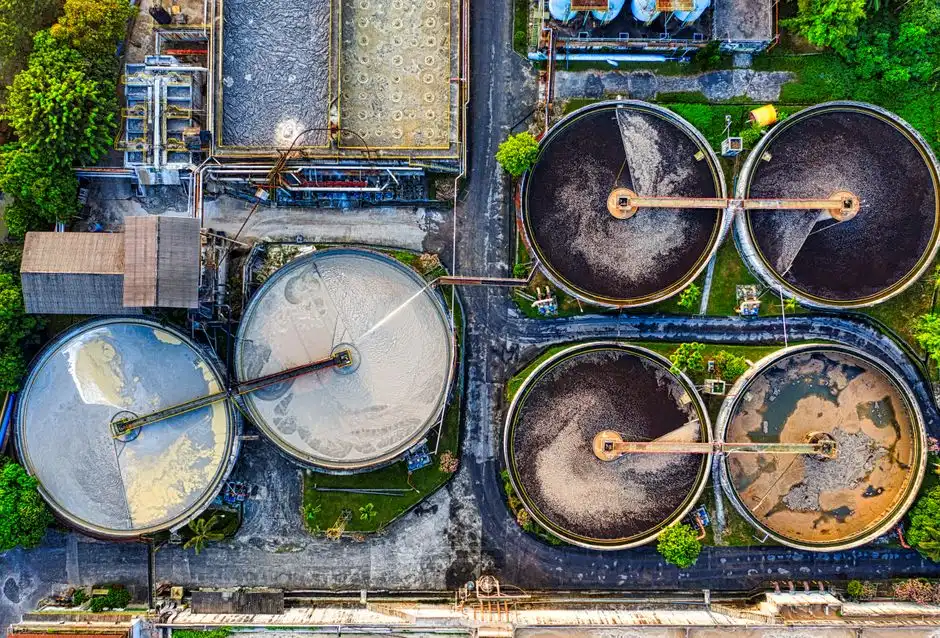
A complete data room must connect permits to physical operations rather than merely confirm that an ETP exists. It should establish permit continuity, prove historical performance, expose weak monitoring and show whether the treatment assets remain suitable for the acquired duty.
- Collect the current CTE, CTO, renewal applications, annual returns, show-cause notices, Environmental Compensation orders, NGT correspondence and every consent amendment.
- Collect 12 months of effluent-monitoring results from approved laboratories, applicable OCEMS records, calibration records, inlet and outlet flow data, bypass records and incident logs.
- Map each wastewater stream, its destination, the treatment unit serving it and the contractual or regulatory basis for that route.
- Audit installed capacity, redundancy, controls, chemical storage, sludge handling, operator competency, spare-parts availability and the remaining useful life of critical assets.
- Reconcile the permits, diagrams, operating records and Pollution Index classification into one auditable compliance model.
| Data-room item | Evidence required | Risk exposed |
|---|---|---|
| Consent chain | CTE, CTO, renewals, amendments and regulatory correspondence | Expired or mismatched consent; unknown transfer conditions |
| Monitoring history | 12 months of approved-laboratory results and applicable OCEMS data | Undetected exceedances, bypasses or incomplete reporting |
| Flow and hydraulic basis | Inlet and outlet flow, peak data, drawings and calculations | Oversized or undersized treatment train |
| Stream segregation | Domestic sewage, employee wastewater, cooling-water blowdown, process wastewater, construction wastewater, firefighting water, storm water and hazardous chemical wastewater maps | Improper mixing or a non-permitted discharge route |
| Receiving system | Sewer or reuse agreement, discharge-point drawings and evidence of receiving capacity | Contractual rejection or downstream capacity constraint |
| Asset condition | Maintenance records, controls, redundancy, chemicals, sludge route, spares and operator competence | Stranded asset and unbudgeted capital expenditure |
The CTO itself must provide the actual limits. The supplied research does not establish a universal BOD, COD, TSS or temperature limit for a Digital Realty plant, so those values should not be inserted into a generic checklist without site-specific evidence.
Monitoring history deserves particular attention. Spans reports that initial CTO support commonly uses 1–3 months of compliant monitoring data; that limited initial period is inadequate for acquisition review. Longer records are needed to reveal seasonality, bypasses, chronic exceedances and deterioration.
Match Treatment to the Wastewater Profile
Treatment selection should follow measured stream characteristics and binding discharge or reuse conditions. Equipment chosen from a corporate profile, assumed cooling-water duty or generic sector label can leave the buyer with a stranded asset.
Screening and equalisation should be considered where rags, plastics, suspended solids or variable flow could overload downstream biological, membrane or flotation equipment. A DAF wastewater pretreatment system may fit where the profile supports removal of suspended solids, oil and grease, FOG or colloidal matter. HydropureWater’s supplied catalogue specifies DAF capacity from 4–300 m³/h across 13 standard models; this is a manufacturer catalogue range, not a statement of the acquired plant’s duty.
Where compact biological treatment and low suspended-solids effluent are required, an integrated MBR wastewater treatment system may be relevant. The supplied catalogue specifies 10–2,000 m³/day capacity and filtration below 1 μm. Neither specification eliminates the need to match wastewater composition, flow variability, operating controls and the CTO.
| Treatment issue | Screening question | Potential route | Acquisition evidence |
|---|---|---|---|
| Variable or debris-bearing flow | Can the downstream process tolerate flow and solids variation? | Screening and equalisation | Measured flow series, upstream controls and bypass records |
| Suspended solids, oil, grease or FOG | Are the contaminants suitable for flotation separation? | DAF, subject to process testing | Wastewater characterisation, performance tests and sludge route |
| Biological treatment requirement | Is biodegradable loading present, and is compact treatment required? | MBR or another demonstrated biological route | Influent and effluent data, hydraulic balance and control records |
| Segregated domestic sewage | Can the flow be treated separately, and is underground installation feasible? | WSZ underground integrated sewage treatment plant | Measured domestic flow, land and geotechnical review |
| Specialised contaminants | What contaminant and treatment objective must be met? | Chemical dosing only after characterisation | Dosage design, chemical supply and operator controls |
| Reuse or membrane permeate | Does the reuse specification justify membranes and concentrate management? | UF or RO with appropriate pretreatment | Permeate specification, energy assessment and concentrate disposal route |
The supplied HydropureWater catalogue describes a WSZ underground integrated sewage treatment plant for 1–80 m³/h and automatic PLC-controlled chemical dosing for coagulants, flocculants, pH adjusters and specialty chemicals. These are equipment-selection inputs, not substitutes for site flow data. The DAF versus clarifier selection guide illustrates the necessary process-specific comparison.
Include sludge dewatering and lawful disposal in the acquisition model. Treatment performance cannot be judged without establishing the fate and permitted handling of generated residuals.
Determine Consent Transfer and Closing Conditions

The relevant SPCB must confirm the process for the contemplated transaction. The supplied research does not establish that every plant CTO transfers automatically on a share sale or asset transfer, so the buyer should not treat the existing consent as confirmed merely because the business continues under a new corporate parent.
Resolve the legal-operator question before closing. The CTE and CTO applicant, discharge holder and party responsible for operating the facility must align with the entity that will actually operate the acquired plant. Obtain written confirmation of the required consent-transfer, amendment or fresh-consent process and the documents needed to complete it.
Where confirmation is outstanding, unresolved historical non-compliance exists, or remediation requires capital expenditure omitted from the acquisition model, use a condition precedent, specific indemnity, escrow or another negotiated protection. Exposure can include Environmental Compensation orders, show-cause responses, monitoring gaps, off-site disposal liabilities and the cost of upgrading or replacing treatment assets.
Closing deliverables should also cover OCEMS integration where mandated, approved-laboratory contracts, operator training, critical spares, chemical supply and preventive maintenance. Spans states that renewal applications are commonly submitted 90 days before expiry and that documentation requirements vary by state; the transaction timetable should therefore account for renewal and consent-transfer workstreams separately.
A practical sequence is: obtain the SPCB pathway, reconcile the legal operator, close permit gaps, complete the performance audit, price remediation, document residual liability and then release the relevant closing condition.
Apply a Red, Amber and Green Acquisition Decision
The wastewater decision should be based on evidence tied to the acquired site, not on the presence of an ETP or the buyer’s corporate profile. A green rating means the permit chain, physical treatment and compliance history are aligned. An amber rating means the issue is resolvable, but consent continuity, performance or liability allocation remains unresolved. A red rating means the operating model or legal position cannot presently support lawful and reliable wastewater disposal.
| Rating | Decision | Indicative findings | Required action |
|---|---|---|---|
| Green | Proceed subject to ordinary closing controls | Valid CTE and CTO align with the operating entity; historical monitoring demonstrates compliance; treatment capacity is demonstrated; reporting is current; no material liability remains unresolved. | Complete confirmatory checks and preserve compliance obligations in post-closing management. |
| Amber | Proceed only with defined protections | Transfer requires SPCB confirmation; treatment performance varies; OCEMS or reporting records contain gaps; sludge arrangements need strengthening; remediation is defined and priceable. | Assign an owner, evidence requirement, capital estimate, operating cost, closure date and contractual liability allocation. |
| Red | Do not close without resolution or block the acquisition | Discharge occurs without valid consent; exceedances or show-cause notices lack closure; treatment cannot meet binding limits; residuals have no lawful route; or the legal operator and consent holder do not align. | Resolve through regulatory action, closure, enforceable transfer protection or walk-away. |
Set a walk-away threshold before negotiations begin. It should reflect the site’s actual consent, remediation and operating risks, not a generic treatment-cost estimate. Every amber or red finding needs an owner, required evidence, capital estimate, operating cost, closure date and contractual allocation of liability.
Recheck applicable NGT or court directions before signing. Spans notes that such orders can impose stricter standards or require zero liquid discharge for particular industry clusters and catchments. Their applicability must be established from the order and the site’s activity and location, not assumed from a generic industrial description.
Frequently Asked Questions
What will the wastewater remediation cost after an Indian plant acquisition?
There is no transferable acquisition-cost benchmark in the supplied research. Request a defensible estimate built from the actual CTO limits, measured flow and quality data, the treatment-gap audit, the sludge route, and the capital and operating cost of any required upgrade. Keep remediation contingent on verified evidence rather than a generic per-unit rate.
How should the buyer select and qualify an Indian wastewater treatment supplier?
Require the supplier to demonstrate an applicable process design, local O&M capability, documentation support and performance evidence for the actual Indian site. The plant-acquisition wastewater due diligence framework can structure the audit, but the supplier’s evidence must match the acquired stream, CTO and site constraints.
How should ETP capacity be sized for the acquired plant?
Use measured flow data, peak factors and verified stream segregation. Do not size from corporate averages, equipment catalogue capacity or unverified production assumptions. The measured duty must then be checked against the binding discharge conditions and the treatment train’s redundancy.
Does a valid Consent to Operate guarantee that consent will transfer on closing?
No. The operator must maintain valid consent, but the transaction-specific transfer route must be confirmed by the relevant SPCB. The legal operator, consent holder and discharging entity should be aligned before closing and any necessary amendment or fresh consent completed.
Why are historical monitoring records essential to acquisition diligence?
Spans reports that initial CTO support commonly relies on 1–3 months of compliant monitoring data, while an acquisition requires evidence across changing operating conditions. Request a longer record set, including approved-laboratory results, OCEMS data, calibration records, bypass events and incident logs, to expose historical liability and treatment deterioration.