Start With the Cooling and Wastewater Design
A Columbus data center needs a treatment plan for cooling-tower blowdown, construction fill-and-flush water, chemical cleaning wastewater and other non-contact wastewater. The correct system depends on the cooling design, contaminant profile, sewer or NPDES route, and Columbus utility requirements. Evaporative cooling concentrates solids and salts in blowdown, while closed-loop commissioning water may contain corrosion-treatment chemicals and require separate testing and approval. Treatment may include equalization, solids removal, pH control, disinfection where justified, filtration and reuse.
Start with the heat-rejection design, not the IT load alone. StopOhioDataCenters reports that a 100 MW data center using cooling-tower evaporation may consume 100 to 300 times more water annually than a similar facility using direct evaporative-free air cooling. That difference changes makeup demand, blowdown volume and the wastewater treatment train required for a Columbus facility.
The same source cites 2025 industry estimates of up to 110 million gallons per year for cooling at a 10 to 20 MW medium-sized data center and around 528,000 gallons per day for a 100 MW-class hyperscale facility. These are industry estimates reported by StopOhioDataCenters, not Columbus discharge limits or equipment-sizing requirements. A similar engineering framework is discussed in this engineering framework for data center blowdown treatment.
Before buying equipment, obtain the final cooling design, evaporative makeup rate, cooling-tower cycles of concentration, expected blowdown frequency, source-water analysis and operating ranges. Define the facility’s separate waste streams: cooling-tower blowdown, direct evaporative-free heat-rejection drainage, closed-loop fill-and-flush wastewater, chemical cleaning waste and sanitary sewage. If the site includes industrial wastewater reuse, also identify the receiving process and its water-quality requirements.
Do not fold construction water into routine blowdown. Closed-loop piping may be filled, circulated and flushed with corrosion-control chemicals before operation, so its acceptance route must be established independently. The data center wastewater and cooling blowdown treatment guide provides a useful process framework, but final design must use the Columbus site’s actual cooling configuration and written utility conditions.
Map Every Waste Stream Before Choosing a Treatment Route
Each waste stream needs its own sampling program, containment strategy and written disposal decision because routine blowdown acceptance does not establish that construction flushing or chemical-cleaning waste can enter the sewer.
| Waste stream | What to characterize | Planning action |
|---|---|---|
| Cooling-tower blowdown | Suspended solids, dissolved solids, hardness, pH, conductivity, treatment chemicals, cycles of concentration and flow variation | Establish the sewer or reuse objective from measured influent and written acceptance criteria |
| Direct evaporative-free heat-rejection drainage | Source-water constituents, rainfall contribution, corrosion products, pH and discharge frequency | Determine whether it qualifies as non-contact stormwater, process drainage or another utility category |
| Closed-loop fill-and-flush wastewater | Corrosion-control chemicals, metals, pH, conductivity, turbidity, suspended solids and microbial indicators | Contain, test and obtain utility acceptance before discharge; identify an alternate destination |
| Chemical cleaning and maintenance waste | Cleaning products, pH, metals, suspended solids and campaign-specific constituents | Segregate from routine blowdown and obtain a campaign-specific disposal method |
| Sanitary sewage | Flow and applicable sewer or pretreatment requirements | Keep separate unless the approved treatment and sewer plan expressly covers the combined flow |
Cooling-tower blowdown requires the most careful routine characterization because evaporation concentrates source-water contaminants such as solids and salts. E&E News reports that evaporative heat rejection concentrates contaminants present in the source water, making blowdown similar in some respects to discharge from commercial buildings and homes but potentially relevant to discharge volume and continuous loading.
Construction fill-and-flush water requires a different control plan. The closed loop is cleaned before operation, sometimes with chemicals intended to control corrosion. Loudoun Water requires construction fill-and-flush water to be tested before sewer discharge and independently verifies the results, according to E&E News. That is a documented utility practice in northern Virginia, not an automatic Columbus requirement; Columbus approval still has to be obtained in writing.
The risk is not theoretical. E&E News reports that Cheyenne’s utility temporarily stopped accepting affected closed-loop wastewater, revoked the related wastewater permit and directed waste to an appropriate facility. The incident demonstrates why startup water needs isolation, sampling and an approved alternate route.
Request written confirmation for each stream. Define the authorized destination, acceptance parameters, testing method, laboratory requirements, prior-notice period, maximum flow and response if a sample fails. More detail on the reuse and cooling treatment decision appears in this wastewater reuse and cooling treatment guide.
Compare the Four Disposal and Reuse Options
Direct sewer discharge is the common baseline, but it becomes a controlled route only after the receiving utility defines acceptable quality, monitoring and operating conditions; the treatment unit is not itself a discharge authorization.
| Option | When it is appropriate | Decision evidence required |
|---|---|---|
| Municipal-sewer discharge | The Columbus receiving utility accepts the characterized stream under written conditions | Local limits, pretreatment requirements, monitoring, sampling and contingency provisions |
| On-site pretreatment followed by sewer discharge | Characterization shows constituents requiring removal or control before sewer entry | Measured flow and loading, identified treatment objectives and utility acceptance |
| On-site reuse | Treated blowdown has a defined application and the process can reliably meet its specification | Reuse demand, receiving-equipment limits, treatment validation and operating envelope |
| Direct permitted discharge | Ohio EPA issues the applicable authorization and site conditions support the proposed outfall | Issued permit, monitoring, reporting, receiving-water requirements and operational controls |
E&E News reports that most U.S. data centers send wastewater to local treatment plants. For Columbus, municipal-sewer pretreatment is therefore a practical route to investigate, but equipment selection should follow the utility’s written acceptance criteria and the measured blowdown quality. Utility approval is not a substitute for demonstrating treatment performance.
On-site pretreatment should reflect the contaminant and failure mode. Equalization handles variable flow; physical separation or filtration addresses identified solids; and pH adjustment or coagulation should be included only where the measured wastewater and applicable limits justify them. Reuse adds another constraint: the final stream must fit the receiving process, whether that is cooling, process makeup or another application. The DOE-linked OpenAlex source on reclaimed water supports reclaimed water as a cooling alternative where freshwater supplies are constrained, but it does not establish a Columbus reuse specification.
Do not design to a proposed direct-discharge route. E&E News reports that a December Ohio proposal sought to make direct discharge easier, but Ohio EPA had not taken further action in the cited report. StopOhioDataCenters also says Ohio EPA released a draft general NPDES permit framework in 2025 and 2026. A draft is not an issued project authorization.
Columbus and central Ohio planning adds a capacity consideration. StopOhioDataCenters says most Ohio data centers draw from municipal water systems and that the Mid-Ohio Regional Water Study expects water and wastewater demand to rise sharply with the data-center buildout. Confirm service capacity and discharge acceptance as separate approvals.
Include a no-discharge contingency for construction, cleaning and upset streams: isolation valves, covered storage, sufficient emergency capacity and a pre-approved alternate disposal arrangement. Do not rely on a sewer that may suspend acceptance without notice.
Build a Treatment Train Around the Actual Contaminants
Finalize the treatment train only after separating the streams, measuring the constituents that control the discharge or reuse objective, and obtaining the governing acceptance conditions.
- Establish equalization and segregation. Provide dedicated storage for routine blowdown, with a separate contingency route for construction, chemical-cleaning and unusual discharges. Segregation prevents a one-time cleaning event from overwhelming the routine treatment train or invalidating the sewer sampling basis.
- Remove solids, oil and colloids where demonstrated. If testing identifies suspended solids, oil and grease, coloidal matter or FOG, a DAF system for cooling-blowdown solids and oil removal can provide physical separation through micro-bubble flotation and automatic skimming. Select hydraulic capacity and contaminant loading from measured flows and test results, not nominal treatment claims.
- Polish the stream for reuse where needed. Use a UF system for wastewater reuse polishing where its 0.03 micron PVDF membrane barrier, automatic backwash and air scour fit the defined reuse objective. For broader suspended-solids, turbidity and colloid removal, the available multi-media filtration option may be more appropriate. These product specifications describe available equipment; they do not establish a Columbus outlet requirement.
- Control chemistry against a specification. An automatic chemical dosing for pH and coagulation control can apply coagulants, flocculants, pH adjusters or specialty chemicals through PLC-controlled injection. Specify the chemical, target range, dose limits, residual handling and interlocks only after receiving the applicable discharge or reuse conditions.
- Evaluate disinfection by application. Use chlorine dioxide or UV only when the reuse application, permit or commissioning risk requires microbial control. The available chlorine dioxide generator supports industrial cooling-loop and process-wastewater applications. UV offers chemical-free disinfection without disinfection by-products, but neither technology is required by default.
- Define the residual route before startup. DAF sludge and filter solids require a disposal plan. A filter press for wastewater treatment sludge can provide solid-liquid separation, but dewatering performance, containerization, transport and final disposition must be included in the design.
Do not claim a universal outlet quality. The supplied research provides no Columbus-specific numeric wastewater limits. The final train must be matched to measured influent, the applicable NPDES conditions, sewer permit, pretreatment agreement, reuse specification and commissioning acceptance procedure. Keep the treatment train modular so that the unit serving routine blowdown is not also the sole means of managing a chemical-cleaning event.
Plan Monitoring, Commissioning and Utility Acceptance
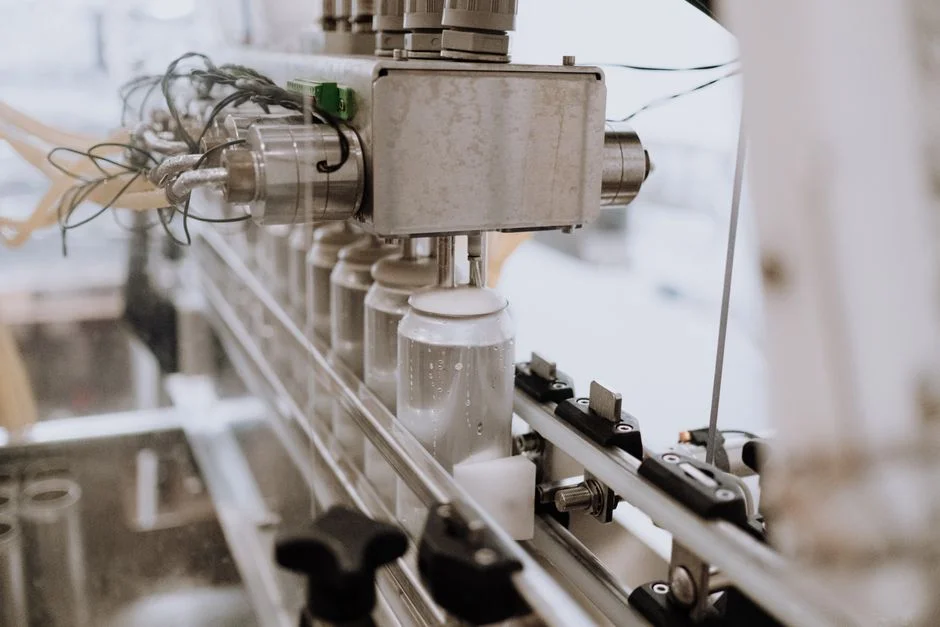
Commissioning should test each waste stream under its expected operating conditions before connecting it to the permitted discharge route.
Create a sampling plan that covers routine blowdown, first fill, every construction flush, chemical cleaning, storm-related non-contact water and upset events. For construction fill and flush, use the approach documented by Loudoun Water: test before discharge and obtain utility review, with independent verification where the utility requires it. E&E News reports that Loudoun Water applies that process because construction chemicals may not be suitable for the wastewater treatment plant.
Set operating triggers from the written acceptance conditions. Include automatic diversion to a contained holding tank when flow, pH, conductivity, turbidity or another monitored parameter approaches an approved limit. A diversion system is only credible if the tank has available capacity, the route is physically isolated and the alternate disposal plan remains current.
Retain chain-of-custody records, calibration records, chemical inventory, batch-treatment logs and disposal manifests. These records establish what was sampled, which result applied, where the water went and whether treatment remained within the approved operating envelope. For reuse, verify performance across the actual seasonal, chemical and hydraulic ranges rather than relying on a single vendor test or commissioning sample.
Coordinate the commissioning plan with the receiving utility before generating the wastewater. The approach in this temporary wastewater treatment commissioning guide illustrates the value of containment, controlled treatment and documented acceptance, although Columbus utility requirements must govern the data center project.
Use This Procurement and Approval Checklist
Procure equipment only after the design basis, discharge route and regulatory responsibilities are documented in writing.
- Obtain the final cooling design, source-water analysis, expected blowdown flow, peak events, cooling-tower cycles of concentration, construction schedule and cleaning practices from the engineering team.
- Secure written acceptance criteria from the Columbus sewer utility for every proposed waste stream. Obtain written authorization from Ohio EPA before designing for direct discharge.
- Require each equipment supplier to identify the design basis, pretreatment assumptions, required redundancy, control strategy, chemical consumption, sludge route, commissioning protocol and permit-supporting test data.
- Price the full chain: equalization, treatment, disinfection if required, instrumentation, residuals, sludge dewatering, alternate disposal and operator labor.
- Review the treatment train against the future operating envelope, including startup, cleaning, shutdown and emergency conditions—not only steady-state blowdown.
Ask the supplier what evidence supports the proposed outlet performance and which changes require redesign. A fixed outlet guarantee made before receipt of the actual permit limits and influent characterization is a procurement risk. The engineering framework for data center blowdown treatment can support that technical review, while the data center wastewater reuse and cooling framework provides a useful comparison structure.
Assign a responsible owner for utility communications, sampling, chemistry control, equipment operation and disposal records. The treatment supplier may warrant equipment performance, but the facility remains responsible for demonstrating that each stream is authorized before discharge.
Frequently Asked Questions
How much does a Columbus data center wastewater treatment system cost?
Final pricing depends on measured flow, contaminant loading, storage, treatment route, automation, chemical use, sludge handling and alternate disposal. The supplied research provides no defensible Columbus equipment price. Request itemized quotations based on the source-water analysis, expected blowdown flow, construction and cleaning volumes, written discharge criteria, reuse specification and required redundancy.
Which treatment system should be selected for cooling-tower blowdown?
Select it from measured suspended solids, dissolved solids, hardness, pH, conductivity, treatment chemicals and written sewer or reuse criteria. A DAF system is relevant when physical contaminants must be removed; filtration may be needed for solids and turbidity; chemical control and disinfection should be included only where the character and objective justify them.
Can construction fill-and-flush water go to the Columbus sewer?
Do not assume that it can. Closed-loop fill-and-flush water may contain corrosion-control chemicals and other constituents not covered by routine blowdown acceptance. Request a stream-specific testing protocol, prior-notice requirement and written approval from the receiving Columbus utility, and maintain an approved alternate disposal route.
Should a Columbus data center use a DAF system or an MBR system?
DAF is a physical-treatment option when measured suspended solids, oil and grease, colloids or FOG are the controlling contaminants. MBR is more relevant when the objective requires biological treatment and membrane filtration. Compare each option against the actual wastewater, target use, written limits, residual route and operating burden rather than treating either as a default.
Related Equipment
- DAF system for cooling-blowdown solids and oil removal — specifications, capacity range, and technical data