What an Enugu data center must treat
An Enugu data center needs a source-specific treatment train, not a generic blowdown skid. It must characterize municipal, borehole or other makeup water; segregate domestic sewage, cooling-tower blowdown and reverse-osmosis reject; and control dissolved solids, hardness, suspended solids, microbial growth, pH and alkalinity before reuse or discharge. Preliminary treatment options include side-stream filtration or clarification, ultrafiltration and brackish-water reverse osmosis, with partial zero liquid discharge considered when concentrate disposal is restricted. Final sizing and compliance must rely on Enugu site data, current FMEnv and Enugu State conditions, and the actual discharge route.
The first task is to keep unlike streams separate. Cooling-tower blowdown contains concentrated dissolved salts, corrosion products, residual biocides, scale inhibitors, dispersants and corrosion inhibitors. Domestic sewage has a different organic load, microbial population and treatment objective. Equipment washwater may carry cleaning chemicals; firewater interactions may introduce contamination pathways; and any process wastewater requires its own source characterization.
Cooling systems account for 80–90% of data-center water demand, and on-site treatment can recover 70–90% of cooling-tower blowdown (Genesis Water Technologies, 2025). That does not mean sewage and blowdown can share one train. Domestic sewage should enter a dedicated biological treatment system; a membrane bioreactor is relevant only when the project scope includes sewage or a high-quality reuse stream.
| Stream | Primary contaminants or risks | Treatment decision before design freeze |
|---|---|---|
| Cooling-tower blowdown | Dissolved salts, scaling ions, suspended solids, biocide residues and treatment chemicals | Confirm whether the objective is cooling reuse, permitted discharge or both |
| Domestic sewage | Organic matter, nutrients, solids and pathogens | Route to a dedicated biological train; assess reuse only after effluent quality is demonstrated |
| RO reject | Concentrated dissolved salts and residual treatment chemicals | Identify an approved discharge, further-concentration or disposal route |
| Equipment washwater | Suspended solids, oils, cleaning chemicals and variable pH | Determine batch segregation, equalization and chemical-neutralization requirements |
| Firewater interactions | Possible contamination of drainage systems and surface-water pathways | Define isolation, drainage and firewater containment with the responsible authorities |
| Other process wastewater | Site-specific constituents and flow variation | Characterize separately before combining with any other stream |
The supplied research contains no Enugu source-water analysis, IT load, PUE, cooling configuration, wet-bulb data, sewer connection, receiving-water information or expansion plan. These are mandatory design inputs, not details to be inferred. The regional decision framework in this regional data-center cooling-blowdown design shows why local flow, climate and permit conditions must remain open until verified.
Define the Enugu source-water and discharge basis
No Enugu-specific water analysis or numeric discharge limit appears in the supplied research, so the design basis must begin with representative sampling and written confirmation from the relevant authorities. Collect samples from the intended municipal, borehole or other makeup-water source, each treatment stream and every proposed discharge route. Sampling should cover the operating variability relevant to the facility rather than relying on one grab sample.
For makeup water and blowdown, the test panel should include TDS and conductivity, hardness, suspended solids, pH, alkalinity, silica, iron, manganese, oil and grease, organic content and microbiological indicators, as applicable. For sewage, add the organic, solids and pathogen parameters required by the selected biological process and the receiving route. These results determine membrane pretreatment, chemical demand, disinfection and concentrate composition.
Genesis Water Technologies (2025) provides a preliminary cooling-water envelope, not an Enugu permit: TDS of 500–1,500 mg/L, hardness below 200–400 mg/L as CaCO₃, suspended solids of 10–25 mg/L, heterotrophic plate count below 10,000 CFU/mL, pH of 6.5–8.5 and alkalinity of 50–200 mg/L as CaCO₃. These values can support early option screening, but the final specification must reconcile the actual source, the cooling supplier’s limits and enforceable discharge conditions.
Record average and peak makeup demand, measured blowdown flow, cycles of concentration, IT load, PUE and operating hours. At four cycles of concentration, about 25–30% of makeup water becomes blowdown (Genesis Water Technologies, 2025). The Enugu balance still requires local flow, weather and cooling-configuration data; a nominal tower capacity is not a substitute for measured demand.
Confirm the regulatory pathway with FMEnv and the relevant Enugu State environmental authority. The supplied Nigerian guide identifies both levels as authorities to consult but provides no specific numeric Enugu effluent limit. Request the current permit, sewer-acceptance or pretreatment conditions, including limits for TDS, temperature, residual biocide, pH, suspended solids, monitoring frequency and sampling points. The due-diligence approach in this industrial wastewater acquisition guide illustrates the need to define discharge obligations before selecting equipment.
Match each stream to its treatment objective
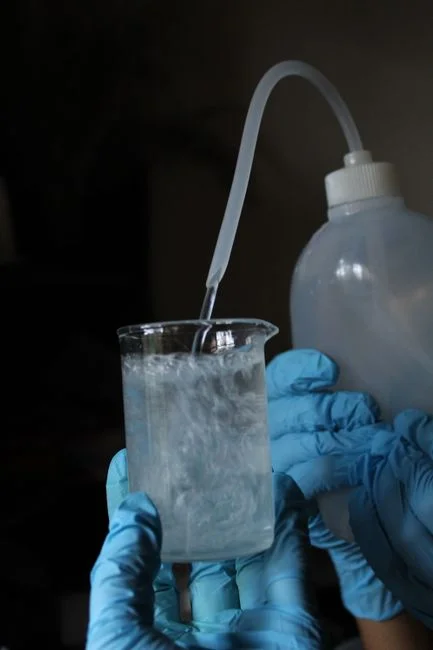
A cooling-blowdown reuse train should follow a defined process: collection and equalization, side-stream solids removal, ultrafiltration or equivalent membrane protection, reverse osmosis for dissolved-solids reduction, disinfection and controlled return as cooling makeup. Multi-media or spiral filtration removes suspended solids; a hollow-fiber UF system for blowdown pretreatment removes colloids, bacteria and particulates; and an industrial RO system for cooling-blowdown reuse reduces dissolved salts that drive scale and corrosion.
Unit selection must follow the measured water analysis. Genesis EC requires conductivity or TDS above 1,000 ppm, so it is not a universal pretreatment choice for lower-TDS Enugu source water (Genesis Water Technologies, 2025). UF also introduces pressure loss, cleaning demand and sensitivity to upstream chemistry; those costs belong in the comparison rather than being hidden inside membrane capital cost.
Sanitary sewage is a separate biological problem. The WSZ package described in the supplied research combines anaerobic/oxygen biological contact oxidation, sedimentation and disinfection for 1–80 m³/h, while the MBR system covers 10–2,000 m³/day and provides sub-micron filtration. These are documented equipment scopes, not evidence that either is required at an Enugu facility. Flow, wastewater characteristics, reuse targets and local acceptance conditions must be established first.
RO concentrate requires an approved discharge or a further concentration route. Sludges and retained solids need a defined thickening, dewatering and disposal arrangement. Without those routes, the treatment train is incomplete even if permeate quality is acceptable.
| Treatment objective | Indicative process sequence | Decision gate |
|---|---|---|
| Recover blowdown for cooling reuse | Equalization → solids removal → UF or equivalent → RO → disinfection → controlled return | Permeate must meet both the cooling specification and membrane-compatibility requirements |
| Treat domestic sewage | Biological treatment → clarification or membrane separation → disinfection where required | Separate permit and reuse assessment; do not infer suitability from blowdown results |
| Manage RO concentrate | RO recovery → permitted discharge, MVC or another concentration step | Obtain the current discharge route and disposal conditions before selecting equipment |
| Manage retained solids | Thickening or filtration → dewatering → approved disposal | Specify residual handling and disposal responsibilities |
Partial reuse with permitted concentrate discharge is generally the first commercial option to evaluate before full zero liquid discharge. That conclusion is conditional: if the Enugu permit, site constraints or concentrate route do not permit it, the partial-ZLD boundary must move.
Compare reuse, partial ZLD and full ZLD
Reuse, partial ZLD and full ZLD should be compared as commercial strategies with different capital, operating and disposal obligations. Direct reuse after suitable treatment minimizes discharge and freshwater demand, but requires a reliable cooling-quality specification. Partial ZLD uses RO followed by concentrate treatment to recover more water while retaining a residual discharge route. Full ZLD converts the residual into a solid salt residue and removes the liquid discharge route, but adds mechanical complexity and a solids-disposal obligation.
Genesis Water Technologies (2025) reports RO blowdown operating cost of US$1.50–3.00 per 1,000 gallons and ZLD operating cost of US$5–15 per 1,000 gallons. The same source places full ZLD at US$3–8 million for data-center scale and mechanical vapour compression for 10,000–30,000 GPD at US$1–3 million. These are reference scopes, not turnkey Enugu quotations; freight, import duty, foreign-exchange exposure, installation, commissioning and local service must be added.
The water-cost comparison is also screening-level. Genesis Water Technologies (2025) reports treated wastewater as 30–50% cheaper than potable water in most markets. An Enugu business case must use local water tariffs, discharge charges, electricity cost, chemical consumption, membrane replacement, labor and concentrate disposal rather than apply that percentage automatically.
RO recovery must be developed around silica, calcium carbonate and calcium sulfate scaling risks. Antiscalant selection, cleaning frequency and recovery should follow the actual concentrate chemistry. The regional approach in this Zaria data-center blowdown treatment guide is useful for comparison, but Enugu’s permit and source water remain controlling inputs.
| Strategy | Documented economic reference | Main procurement question |
|---|---|---|
| Treated reuse | RO operating cost: US$1.50–3.00 per 1,000 gallons | Can permeate meet cooling limits, and what is the net saving after treatment and disposal? |
| Partial ZLD | MVC: US$1–3 million for 10,000–30,000 GPD; ZLD operating cost: US$5–15 per 1,000 gallons | What concentrate route remains available, and who owns its long-term disposal? |
| Full ZLD | US$3–8 million for data-center scale | Is the zero-liquid-discharge benefit worth the energy, maintenance and salt-disposal burden? |
Each bidder should state guaranteed permeate flow, recovery, concentrate volume, energy demand, membrane-cleaning assumptions, redundancy and lifecycle operating cost. The framework can be compared with this Enugu-adjacent data-center treatment assessment, while keeping all site-specific values separate.
Build reliability, monitoring and commissioning controls
The treatment system must be treated as part of the cooling plant’s reliability case. Include its electrical load in the data-center generator and power-redundancy design. If blowdown treatment becomes unavailable, operations may face a discharge reduction or scaling decision; automatic isolation, controlled hold-up and a defined response are therefore part of the process design.
Specify online monitoring for flow, conductivity, pH, pressure differentials and differential pressure across filters, UF and RO. Confirm that the instruments, calibration points, alarm setpoints, data outputs and control logic are included in the supplier’s controls narrative. A treatment skid without usable measurements cannot demonstrate stable recovery or membrane protection.
Coordinate cooling chemistry with the membrane manufacturer. Residual oxidizing biocide can damage membranes, while antiscalant, acid and corrosion-inhibitor programs can foul or upset downstream treatment if their carryover is not controlled. The chemical program should identify feed concentrations, dosing limits, isolation requirements and cleaning chemicals needed for the proposed membranes.
For microbiological control, evaluate on-site chlorine-dioxide generation through a chlorine dioxide generator for cooling-water disinfection, or UV through a UV sterilizer for chemical-free disinfection. The choice must reflect the cooling system, residual requirements, membrane compatibility and the permitted discharge condition.
Run a 4–6 week source-water pilot across seasonal conditions before locking membrane sizing, following the approach documented for a comparable Nigerian data-center assessment (HydropureWater, 2026). This is a pilot-duration reference, not evidence that the same conditions apply in Enugu.
Acceptance tests should cover permeate quality, system recovery, concentrate volume, automatic backwash, dosing accuracy, alarm response, generator-backed operation where specified and operator handover. The regional design basis in this data-center cooling-blowdown design reference supports treating power redundancy and commissioning as engineering deliverables rather than optional vendor items.
Procurement and compliance checklist
The vendor package should be performance-based. Issue one specification covering hourly and daily flows, feed-water analysis, required permeate quality, recovery, concentrate route, operating hours and future expansion. A quote based only on nominal tower capacity or equipment horsepower will not provide a comparable commercial offer.
Require each supplier to submit its process flow, mass balance, equipment list, membrane data, utility demand, controls narrative, factory acceptance test plan, commissioning plan and local spare-parts support. The treatment concept should distinguish the RO and UF membrane and filter-element package from the supporting valves, filter media and treatment parts, with quantities linked to the bidder’s own design.
The commercial quotation should separately identify membrane-cleaning chemicals, cartridges, lamps or electrodes where relevant, instrumentation, local controls, freight, import duties, foreign-exchange exposure, installation and commissioning. Otherwise, the buyer cannot compare operating cost or establish a reliable replacement schedule.
The Aba guide records approximately 8–14 weeks for sea-freight lead times on imported skids (HydropureWater, 2026). An Enugu quotation must confirm actual delivery time; that Aba reference should not be copied into the Enugu schedule without vendor confirmation. The Nigerian data-center blowdown treatment guide also demonstrates the need to separate global cost references from local delivered terms.
Make permit support an explicit deliverable: treatment validation, monitoring protocols, cross-connection prevention, operational safeguards and permit-application documentation. Genesis Water Technologies (2025) documents global reuse approval timelines of 6–18 months, but the Enugu schedule must be confirmed with FMEnv and the relevant state authority.
| Check | Minimum evidence requested | Reason for the check |
|---|---|---|
| Design basis | Measured flows, representative analyses, IT load, PUE, cooling configuration and wet-bulb data | Prevents equipment selection from nominal rather than operating conditions |
| Performance | Guaranteed flow, permeate quality, recovery and concentrate volume | Creates testable vendor obligations |
| Compliance | Current FMEnv and Enugu State conditions, permit pathway and monitoring protocol | Separates the preliminary design envelope from enforceable limits |
| Delivery | Freight, duty, foreign-exchange, installation, commissioning and schedule | Converts reference costs into an Enugu capital comparison |
| Service | Stocked spares, named commissioning personnel and comparable references | Tests long-term operability rather than factory capability alone |
Require evidence of local service capability, stocked consumables, named commissioning personnel and references for comparable cooling-blowdown reuse installations. Permit participation and the treatment vendor’s responsibility for permit documentation should be stated explicitly in the contract.
Frequently Asked Questions
How much does wastewater and cooling-blowdown treatment cost for an Enugu data center?
Separate treatment operating cost from delivered capital cost. Genesis Water Technologies (2025) reports RO blowdown operating cost of US$1.50–3.00 per 1,000 gallons and ZLD operating cost of US$5–15 per 1,000 gallons; it also references full ZLD at US$3–8 million for data-center scale. These are not Enugu quotations. Request measured feed and blowdown flows, local electricity and water tariffs, concentrate-disposal cost, freight, duty, foreign exchange, installation, commissioning, membrane replacement and local service as separate quote lines. A data-center blowdown treatment framework can support comparison, but Enugu inputs must replace generic assumptions.
What treatment capacity should an Enugu data center size?
Begin with measured flows and water analyses, not equipment horsepower or nominal cooling-tower capacity. The sizing package needs average and peak makeup demand, measured blowdown flow, cycles of concentration, IT load, PUE, cooling configuration, wet-bulb data and future expansion. At four cycles of concentration, about 25–30% of makeup water becomes blowdown (Genesis Water Technologies, 2025), but this relationship does not establish an Enugu flow by itself. After source testing and a pilot, size pretreatment, UF, RO and concentrate handling against guaranteed recovery and permeate quality.
How should a wastewater-treatment supplier be selected in Nigeria?
Require guaranteed performance, a membrane-compatibility statement, local service evidence and complete FAT and commissioning documentation. Ask for a process flow, mass balance, equipment list, membrane data, utility demand, controls narrative, concentrate-disposal responsibility, stocked consumables, named commissioning personnel and references for comparable cooling-blowdown reuse installations. A cheaper equipment quote is not comparable if it excludes freight, duty, foreign exchange, installation, chemicals or local support. The delivery and service checks should reflect the market conditions described in the regional procurement framework.
What FMEnv wastewater limits apply to an Enugu data center?
The supplied research does not provide a specific numeric Enugu effluent limit, so the cooling-water design targets must not be presented as legal discharge conditions. Confirm the current FMEnv and relevant Enugu State requirements with the approving authorities. Obtain the applicable permit or sewer-acceptance conditions, including limits for TDS, temperature, residual biocide, pH, suspended solids, monitoring frequency and sampling points. A separate written approval is also required where treated wastewater is reused in cooling systems.