What treatment does a Kennedy data center actually need?
A Kennedy, Colombia data center normally needs separate treatment pathways for sanitary wastewater, industrial/process wastewater, cooling-tower blowdown, and storm or construction water. The final design depends on source-water chemistry, cooling configuration, reuse targets, discharge destination, and Colombian permit or sewer-pretreatment requirements; no universal treatment train can be selected without that information. A 2026 Open Engineering Inc lifecycle study found that UF+RO reuse increased energy demand to more than five times the freshwater case, although improved cycles of concentration reduced blowdown and chemical use. Therefore, treatment should be selected only after a water balance, pilot testing, and local permit review.
Start with segregation. Sanitary wastewater generally requires biological treatment and disinfection. Process wastewater may require industrial wastewater pretreatment, oil and solids control, or chemical treatment depending on its contents. Cooling blowdown requires a different design because it contains concentrated dissolved salts, not primarily biodegradable organic matter. Storm and construction water should be assessed separately for sediment, pH, and other site activities rather than blended automatically with process streams.
The cooling decision is consequential. Congress.gov’s Congressional Research Service report states that water-cooled chiller systems with cooling towers generally have the highest WUE because they consume more water for a given IT load. A Kennedy cooling system should therefore be evaluated during site planning, not after equipment selection. The data-center wastewater treatment planning guide provides a useful comparative starting point, but Kennedy-specific water analysis and current requirements from Colombian authorities and the receiving sewer remain mandatory.
The supplied research does not establish Kennedy-specific discharge limits, sewer acceptance criteria, source-water quality, or operating flows. Those are missing design inputs, not assumptions to fill. The defensible output at this stage is a treatment-screening framework and list of measurements, not a fixed equipment package.
Build a source-by-source water balance
A data center water balance must connect every source to its permitted destination before treatment equipment is sized. For cooling water, document makeup source, evaporation, blowdown, drift, operating hours, and the intended cooling-tower cycles of concentration. For sanitary and process streams, measure average, peak, and seasonal flows rather than relying on a single daily average.
Congress.gov’s Congressional Research Service defines WUE as total data-center water consumption divided by IT-equipment electricity demand. This is a facility-level metric, not a treatment-flow calculation. The same source reports that a 100 MW U.S. data center may directly consume roughly the water used by 2,600 households per day, but that estimate covers direct use, averages different cooling strategies, and is not a Kennedy design figure.
| Stream | Measurements required | Design consequence |
|---|---|---|
| Sanitary wastewater | Average and peak flow, variability, biological load, suspended solids, pH, temperature | Equalization, biological treatment, solids separation, disinfection, storage |
| Industrial/process wastewater | Flow, suspended solids, oil and grease, pH, conductivity, hardness, silica, TOC, and data-center-specific chemicals | Source isolation, equalization, site-specific pretreatment, and treatment duty |
| Cooling-tower blowdown | Makeup flow, evaporation, blowdown, cycles of concentration, conductivity, silica, calcium, sulfate, alkalinity, hardness, temperature, and cooling configuration | Discharge versus reuse decision, membrane pretreatment, scaling control, and concentrate management |
| Storm/construction water | Seasonal flow, sediment, pH, site pollutants, and discharge route | Sediment control, settling, diversion, or permitted discharge |
From these measurements, calculate daily and peak flows, storage residence time, equalization duty, pretreatment requirements, residual or concentrate flow, and operating redundancy. Do not select a nominal treatment capacity before resolving variability. A package that meets average demand but cannot handle a peak, shutdown, or upset condition is not a design basis.
Chemical and operational inputs are equally important. Obtain the cooling chemical program, expected inhibitor residuals, cleaning frequency, materials of construction constraints, and any future cooling configuration. For sanitary and process streams, identify chemical dosing at the source. The water balance should also state whether treatment is intended to support cooling make-up water reuse, process-water reuse, sanitary reuse, controlled discharge, or a combination.
Why cooling blowdown needs a dedicated reuse design
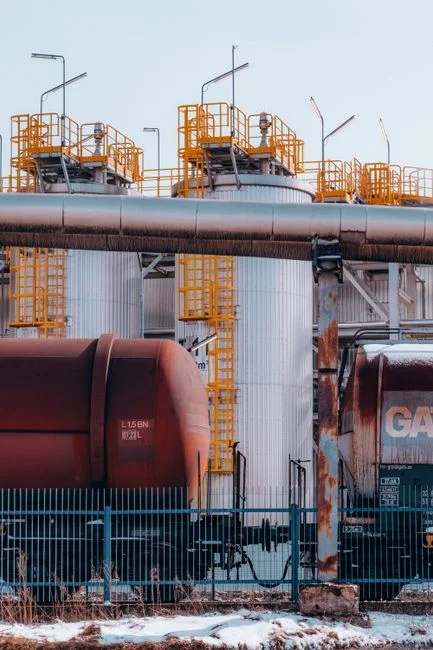
Cooling blowdown becomes chemically concentrated because evaporation removes water while dissolved salts remain in the circulating loop. A controlled purge is necessary to avoid scaling and corrosion, but recovering that purge creates a different treatment problem from ordinary wastewater reuse: the feed is enriched in the species most likely to foul or scale the treatment equipment.
IDE Tech identifies silica, calcium carbonate, and calcium sulfate as key sparingly soluble constituents of cooling-tower blowdown. These species constrain reverse-osmosis recovery because concentrating the feed increases the risk of precipitation. A cooling make-up water reuse train therefore needs chemistry-based control, not a generic membrane package.
| Design issue | Engineering implication | Evidence and qualification |
|---|---|---|
| Conventional brackish-water RO | Recovery is normally constrained by scaling and operational stability | IDE Tech reports a typical plateau of 75–80% recovery for conventional brackish-water RO |
| High-recovery concept | Combine conservative RO with controlled salt precipitation and dynamic membrane operation | IDE Tech describes this as a candidate architecture that requires site-specific validation |
| Industrial application | A mixed industrial stream was treated at around 95% recovery, with permeate silica reduced to about 1 mg/L | IDE Tech’s 2026 industrial example is not a guaranteed result for Kennedy cooling blowdown |
| Residuals | Precipitated salts become a solid stream requiring collection, storage, transport, and permitted disposal | The high-recovery concept trades membrane complexity for controlled salt handling |
The cited 95% recovery example involved blowdown from hybrid cooling towers mixed with RO brine and manufacturing-process wastewater. It demonstrates an application of the concept, not a transferable Kennedy performance guarantee. The regional data-center blowdown treatment framework and cooling blowdown treatment comparison show how location, source chemistry, and reuse objectives must shape the design.
Before committing to high recovery, pilot the actual Kennedy blowdown at relevant concentration. Establish membrane-fouling behavior, precipitation thresholds, cleaning frequency, chemical demand, achievable recovery, and the condition of the residual stream. The most important design output is not a headline recovery percentage; it is a stable, operator-controlled process with a defined residual-management route.
Match each treatment step to its actual duty
Treatment selection starts by assigning a specific contaminant-removal duty to each unit. A single train should not be expected to remove solids, degrade organics, reject dissolved salts, and disinfect the same wastewater without defined process functions between those steps.
| Candidate equipment or process | Appropriate duty | Key screening question |
|---|---|---|
| Rotary mechanical bar screen | Headworks protection for sanitary or process wastewater containing solids, rags, plastics, or fibrous debris | Does the selected upstream equipment protect pumps and downstream treatment from the expected solids load? |
| MBR | Combined biological treatment and membrane solids separation where biological treatment and compact reuse-oriented equipment are required | The equipment catalog lists capacities from 10 to 2,000 m3/day and filtration below 1 μm; is the duty range appropriate for Kennedy flows and operator capability? |
| UF | Removal of suspended solids, colloids, and turbidity before RO | The catalog describes 0.03 μm PVDF membranes, automatic backwash, and air scour; can the system handle the measured feed and cleaning demand? |
| Industrial RO | Desalination and salt removal for qualified cooling-blowdown reuse or industrial process-water polishing | Does the guarantee include scaling control, antiscalant strategy, feed conditions, and concentrate disposal? |
| Disinfection | Microbial control where required for the intended reuse or discharge route | Are on-site generation, operational controls, residual, contact time, and monitoring justified? |
For blowdown reuse, UF pretreatment ahead of reverse osmosis is the logical sequence where suspended solids, colloids, or turbidity could compromise downstream membranes. The subsequent industrial RO treatment for qualified cooling-blowdown reuse addresses dissolved salts; it does not replace solids removal, scale prevention, biological treatment, or disinfection where those duties exist.
Sanitary wastewater and chemically contaminated process wastewater may need biological treatment. The cataloged MBR can combine biological treatment with membrane solids separation, but its suitability depends on wastewater characteristics and biological loading. A rotary mechanical bar screen is protective headworks, not biological treatment, and neither a bar screen nor UF removes dissolved salt from cooling blowdown.
Chlorine dioxide is a disinfection option, not a treatment for scaling ions, dissolved salts, or organics. Apply it only where the receiving route and reuse objective justify generation, monitoring, residual management, and operator controls. The wider process design should also evaluate the rotary mechanical bar screen for solids-protective headworks and the integrated MBR system for biological treatment with membrane solids separation where those duties are demonstrated.
Energy must be assessed with water performance. Open Engineering Inc’s 2026 study found that the UF+RO reuse scenario consumed more than five times the energy of the freshwater case, while improved cycles of concentration reduced blowdown and chemical consumption. Pretreatment, recovery, energy, and chemical use must therefore be evaluated as one operating case rather than selected independently.
Compare discharge, reuse and zero-liquid-discharge options
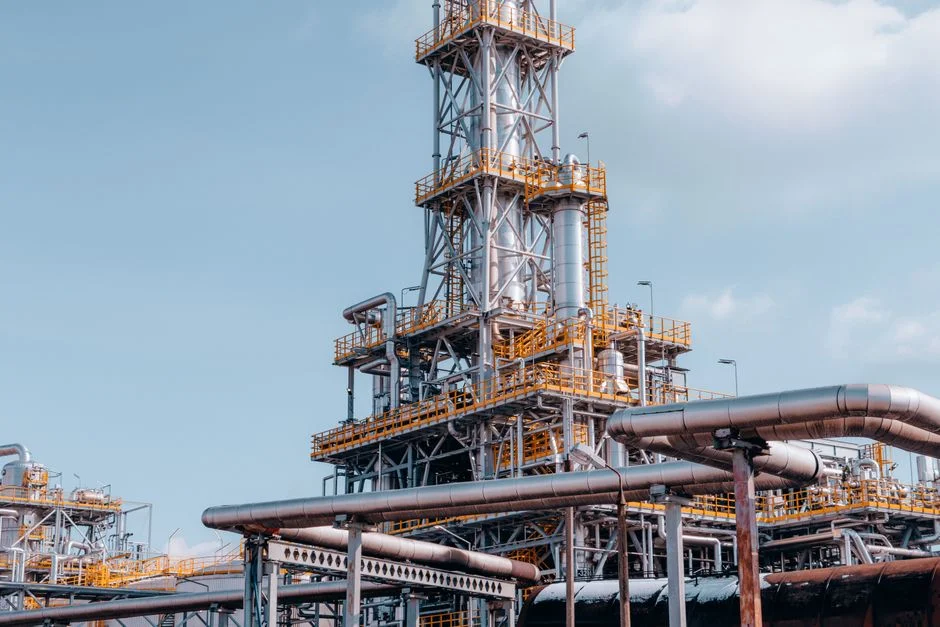
The end-of-pipe decision should compare three credible strategies: conventional treatment followed by controlled discharge, partial reuse with residual discharge, and high-recovery reuse or a zero-liquid-discharge concept. The preferred route depends on source reliability, blowdown chemistry, discharge constraints, water value, energy, residual handling, and operating capability.
| Option | Main benefit | Principal constraint |
|---|---|---|
| Conventional treatment and controlled discharge | Simplest route where discharge is permitted and reuse adds little value | Freshwater demand, discharge volume, and receiving-system impacts remain |
| Partial reuse with residual blowdown | Reduces freshwater withdrawal while retaining a controlled residual route | Requires reliable make-up demand, compatible chemistry, pretreatment, and discharge capacity |
| High-recovery reuse or zero liquid discharge | Minimizes liquid discharge and can increase internal water resilience | Higher recovery complexity, salt precipitation, solid-residue handling, energy, and maintenance |
Zero liquid discharge is not automatically superior. Membrane recovery leaves a concentrate; salt precipitation creates a solid residue; both require an operational chain for collection, storage, transport, and permitted disposal. A high-recovery decision should therefore include the fate of every residual stream, not just the permeate flow.
Open Engineering Inc’s 2026 wastewater scenario had about twice the GWP of the freshwater case, and treatment energy accounted for roughly 80% of the difference. The study also reported an indirect water penalty of approximately 0.93 L/m3, less than 0.1% of the direct displacement benefit. It examined a cooling system commissioned in 2026 and operated through 2050. Under a fully decarbonized-grid sensitivity case, the GWP penalty became less significant, while chemical production remained the main contributor.
Those findings are scenario evidence, not a Kennedy business case. The industrial water-waste reduction study supports the need to compare energy, carbon, water, and chemicals together. Before transferring its conclusions, obtain a Kennedy-specific assessment of the electricity grid, water sources, freshwater displacement value, chemical production, climate, and permitted residual route.
Size the system around reliability and operating constraints
Equipment sizing begins with the water balance, not a catalogue selection. Specify average and peak flow, operating hours, storage, equalization, minimum turndown, redundancy, and future expansion for the Kennedy site. The duty point should reflect measured seasonal conditions, while the design must also withstand upsets, cleaning, maintenance, and equipment outages.
Define feedwater and permeate targets from cooling chemistry rather than generic ultra-pure-water terminology. Request silica, calcium, sulfate, conductivity, alkalinity, hardness, TOC, turbidity, and SDI data. The supplier should state how each target relates to the proposed cooling make-up water reuse, not simply present permeate figures without their operating envelope.
Evaluate pretreatment, cartridge filtration, membrane cleaning, chemical storage, backwash or reject handling, power quality, access, drainage, noise, odor, and operator training. These items often determine whether the plant remains available after commissioning. Confirm replacement-membrane availability and the support arrangement for critical pumps, instruments, and controls.
Requests for quotations should state guaranteed flow and recovery conditions, permeate quality, chemical consumption, cleaning frequency, reject volume, operating hours, and spare-parts availability. A performance guarantee should identify the feed-water limits and test protocol. Otherwise, a recovery figure may not be comparable between suppliers.
Pilot testing is the final basis for a high-recovery architecture. Use Kennedy cooling blowdown and establish membrane-fouling behavior, scaling risk, cleaning intervals, and achievable recovery. The RO and UF membrane and filter elements for the proposed treatment train should be selected only after those results and compatibility reviews. If the pilot does not support stable operation, reduce recovery or retain a controlled discharge route rather than relying on unproven performance.
Permit and compliance questions to resolve before procurement

Colombian compliance begins with identifying the competent environmental and water authorities for the selected site, abstraction route, discharge route, and reuse proposal. Requirements must be confirmed for Kennedy; they cannot be inferred from the supplied research or from another jurisdiction’s framework.
Define the receiving route before selecting final equipment. Options may include a municipal sewer, a separate outfall, a receiving water, or a zero-liquid-discharge residue-management system. Each route changes analytical requirements, treatment objectives, and residual-management duties. The regional data-center blowdown treatment framework illustrates why local receiving-system conditions must be established early.
Obtain sewer-acceptance criteria, discharge prohibitions, temperature limits, analytical methods, monitoring requirements, and permit conditions directly from the receiving authority. The supplied research does not contain Colombian numerical limits for the proposed Kennedy site, so no numerical discharge standard should be inserted into the design basis without that confirmation.
Source characterization and receiving-water data are necessary because impacts cannot be assessed from treatment equipment alone. Congress.gov’s Congressional Research Service notes that communities may question how data-center discharges affect wastewater treatment processes and aquatic ecosystems. For a sewer discharge, provide the receiving plant with the expected flow and chemistry. For a direct discharge, evaluate the receiving water and the proposed outfall.
The environmental assessment should also cover disinfection, chemical handling, worker safety, odor, noise, emergency bypasses, and accidental discharge provisions. Confirm whether cooling-blowdown reuse creates a secondary contact with workers or public systems. Record all assumptions and authority confirmations in the permit basis so procurement does not lock in an unverified compliance concept.
A decision framework for Kennedy
A Kennedy treatment decision should proceed in six evidence-gated steps, with each step producing an input for the next. The sequence prevents a high-recovery concept or supplier package from setting the design basis before source conditions and discharge obligations are known.
| Step | Required output | Decision gate |
|---|---|---|
| 1. Source inventory and water balance | Flows, chemistry, cooling configuration, storage, equalization, residual flows, and future demand | Can each stream be measured and assigned to a treatment duty? |
| 2. Permits and sewer requirements | Confirmed authorities, receiving route, acceptance criteria, analytical methods, and permit conditions | Is the proposed endpoint legally and operationally available? |
| 3. Seasonal sampling | Representative source-water chemistry and wastewater characterization | Do the data support preliminary equipment selection? |
| 4. Pilot testing | Fouling, scaling, recovery, permeate quality, cleaning, energy, and residue results | Is the proposed train stable at Kennedy feed conditions? |
| 5. Strategic comparison | Direct discharge, partial reuse, and high-recovery reuse cases with lifecycle inputs | Which option balances water, carbon, cost, reliability, and compliance? |
| 6. Performance-based procurement | Guaranteed duty points, permeate quality, recovery conditions, consumables, cleaning, and reject or residue volumes | Can the supplier demonstrate compliance with the agreed design basis? |
Use partial reuse when source reliability, blowdown chemistry, discharge capacity, or pilot results do not support aggressive recovery. Select high-recovery treatment only when pretreatment, antiscalant or precipitation controls, residual handling, operator capability, and redundancy have been demonstrated.
Compare freshwater savings, avoided discharge, and avoided water costs against treatment energy, chemicals, sludge or salt residues, maintenance, and compliance risk. Do not value only the recovered water. A lower net water withdrawal can still be a poor decision if the added system threatens cooling reliability or creates an unmanageable residual stream.
After commissioning, track WUE, source-water withdrawal, blowdown volume, treatment energy, chemical use, membrane recovery, downtime, and permit compliance. Reconcile operating data with the design water balance. Changes in cooling configuration, server load, climate, source chemistry, or regulations should trigger an engineering review rather than a simple setpoint adjustment.
Frequently Asked Questions
What equipment capacity should a Kennedy data center specify?
Specify the measured average flow, peak flow, operating hours, storage and equalization requirements, minimum turndown, residual-management flow, and redundancy. Do not issue a capacity request based only on daily water use. A treatment supplier should demonstrate that the selected duty handles seasonal chemistry, cleaning outages, and the project’s future expansion conditions.
Is cooling-tower blowdown treatment more expensive than buying freshwater?
That comparison requires a local net-cost assessment rather than a generic yes-or-no answer. Request current freshwater and sewer prices, expected treatment energy, chemical consumption, membrane replacement and cleaning, residual disposal, labor, and maintenance costs. The 2026 Open Engineering Inc study found substantially higher energy demand for UF+RO reuse, while improved cycles of concentration reduced blowdown and chemical use; the balance must therefore be calculated for Kennedy.
Should a supplier guarantee 95% recovery for blowdown reuse?
Do not require 95% without Kennedy-specific pilot evidence and a clearly defined feed envelope. IDE Tech’s 2026 industrial example reported around 95% recovery and about 1 mg/L permeate silica, but that mixed industrial stream is not a Kennedy guarantee. Make recovery, permeate quality, energy, chemical use, cleaning frequency, and reject or residue volume part of the same performance guarantee.
How do Colombian discharge rules affect the treatment train?
Confirm the current requirements from the competent Colombian authorities and the receiving authority before procurement. Ask the supplier to state which discharge or reuse criteria its proposal assumes. If the endpoint is a municipal sewer, obtain sewer-acceptance criteria and analytical methods; if it is direct discharge or zero liquid discharge, obtain the applicable receiving-water and residue-management conditions.
What water and energy data should the operator monitor after commissioning?
Track WUE, source-water withdrawal, cooling evaporation and blowdown, cycles of concentration, treatment flow, energy consumption, chemical use, membrane recovery, cleaning events, downtime, and permit-compliance results. Reconcile these measurements against the design water balance and investigate deviations that could indicate fouling, scaling, excessive blowdown, or changing cooling duty.