Map the wastewater before choosing equipment
An Ottawa data center needs a treatment strategy designed around its actual cooling system, not a generic wastewater plant. Evaporative cooling produces concentrated blowdown containing dissolved solids, suspended material, treatment chemicals and biological organisms, while sanitary and process streams require separate treatment. A practical train normally starts with characterization, side-stream filtration and UF where suspended solids could foul membranes, followed by RO or NF when dissolved-solids reduction is required. Blowdown recovery can reduce freshwater demand, but any remaining concentrate needs an approved discharge or further-concentration route. Ottawa’s cold climate may reduce cooling-water demand, but the final design must be based on measured flows, water chemistry, seasonal cooling operation and agreement with the City of Ottawa and Ontario authorities.
Begin with an inlet inventory, not a combined wastewater flow. Separately identify cooling-tower makeup and blowdown, once-through cooling discharge if present, domestic sewage, process wastewater, stormwater, and contaminated construction or washdown water. A combined flow can hide the most restrictive stream and make the treatment train appear larger or less complex than it needs to be.
Record withdrawals separately from consumption. In an evaporative system, some circulating water leaves through evaporation, while the balance remains as liquid blowdown. KETOS, in its commercial article Myths vs. Reality: Data Centers and Water Usage, reports 70–80% evaporative consumption and 20–30% liquid return as an initial planning concept—not a site design value.
Request a full seasonal characterization campaign covering makeup water, circulating water and blowdown. Sample separately during startup, normal operation and peak cooling demand. Genesis Water Technologies reports that blowdown can contain 1,200–6,000 mg/L TDS, 10–50 mg/L suspended solids, scaling minerals, treatment chemicals and biological material, although actual values depend on source water, cycles of concentration and operating conditions. Do not assume free-air cooling eliminates treatment demand; use the actual cooling design and summer operating profile. Further treatment comparisons are available in the overview of cooling blowdown recovery treatment options.
Set Ottawa’s water balance and compliance basis
A treatment train is not defensible until the water balance distinguishes withdrawal, consumption, discharge and reuse. Water Canada, in Q&A: Could AI data centres actually benefit Canada’s water systems?, identifies sub-metering as the first requirement and calls for a verified water balance and circularity plan. The same source notes that reclaimed-water permitting pathways can be unclear across Canadian provinces.
Prepare a measured balance with the following lines:
- Municipal or alternative-source withdrawal.
- Evaporative consumption.
- Liquid cooling blowdown and once-through discharge.
- Process losses, sanitary wastewater and other site consumption.
- Treatment recovery and on-site reuse.
- Final discharge and residual concentrate.
| Balance item | Evidence required | Decision use |
|---|---|---|
| Withdrawal | Metered source flow by stream and period | Freshwater demand and source capacity |
| Consumption | Measured evaporation and other irreversible losses | Water-use effectiveness and conservation benefit |
| Liquid return | Measured blowdown, process discharge and sanitary flow | Treatment and discharge design flows |
| Recovery and reuse | Permeate or recovered-water flow, quality and destination | Net freshwater reduction |
| Residual discharge | Final effluent and concentrate volumes | Permit and disposal strategy |
Ask the City of Ottawa and the relevant Ontario authority to confirm sewer-use, stormwater and water-discharge requirements for the proposed route. The supplied research does not establish current numeric Ottawa discharge limits, so do not put assumed limits into the basis of design. The 2026 data center wastewater planning guide provides a useful planning structure, but local approvals must be confirmed directly.
Document the intended reuse destination—cooling-tower makeup, process use, washdown or irrigation—because each requires a different quality and pathogen-control basis. Where discharge cannot be accepted or reuse is not feasible, retain a contingency route for the residual stream. A water balance should be reconciled against seasonal operating data rather than a single average flow.
Match each treatment objective to the right process
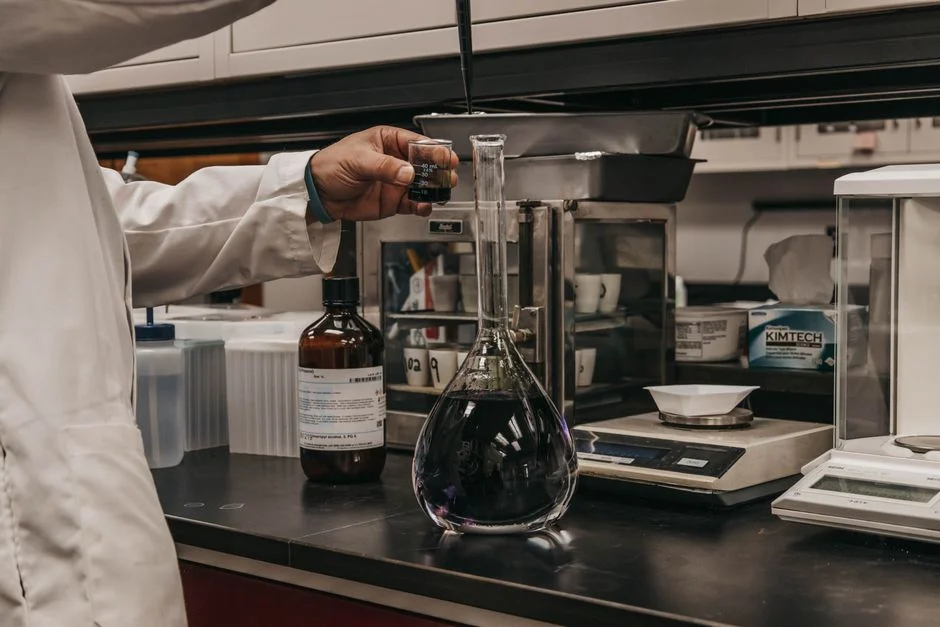
Treatment technologies are progressive barriers, not interchangeable products. The appropriate sequence is pretreatment, primary treatment where needed, advanced treatment for reuse or discharge compliance, and final concentrate management. Selecting a system from product flow alone ignores the quality target and the residual stream that still requires a lawful destination.
For suspended solids, side-stream filtration can remove corrosion products, biofilm fragments and particulates from circulating water. Genesis reports side-stream filtration capacity equivalent to 1–5% of total circulating flow, depending on system conditions and objectives. Multi-media filtration is another solids-removal barrier and can control the feed condition presented to hollow-fiber ultrafiltration pretreatment.
For bacteria, colloids and suspended solids, UF can serve as pretreatment ahead of RO or NF, or as a standalone biological and particulate barrier. HydropureWater’s published UF range is 2,000–40,000 L/h, with 0.03-micron PVDF membranes, automatic backwash and air scour. That is a catalogue range, not a selection: peak blowdown flow and feed conditions still govern the model.
For hardness-dominated blowdown, compare NF with RO. Genesis reports NF recovery of 70–85% and permeate TDS at 30–50% of feed concentration. It reports RO removal of 95–99% of dissolved solids, typically producing 10–50 mg/L TDS permeate. An industrial RO blowdown treatment system therefore creates both recovered water and a concentrate that requires separate management.
Where discharge is unavailable and very strict conservation is required, compare MVC and ZLD. Genesis reports 95–98% recovery from concentrate with MVC and 95–99% overall recovery for ZLD, while emphasizing higher capital and operating complexity. Sanitary sewage requires a separate biological treatment train; cooling-blowdown membrane specifications should not be applied to it.
| Objective | Indicative treatment barrier | Key design question |
|---|---|---|
| Remove suspended solids and biofilm material | Side-stream filtration, multi-media filtration and UF | Can peak solids loading be handled without fouling downstream equipment? |
| Reduce hardness and partial dissolved solids | NF with appropriate pretreatment | Does the reuse or discharge target depend mainly on hardness rather than total TDS? |
| Produce high-quality cooling makeup | RO, usually with UF pretreatment | What permeate quality and blend strategy are required, and where will concentrate go? |
| Eliminate liquid discharge | Concentration, evaporation and crystallization | Is the energy demand, operator capability and solids-disposal route justified? |
| Treat sanitary sewage | Separate biological treatment train | What flow, loading, effluent objective and local sewer requirements apply? |
Build a reliable pretreatment and control layer
Cooling-water chemistry is part of the treatment-train design because biocides, corrosion inhibitors, scale inhibitors and dispersants concentrate in the blowdown. Their presence can affect reuse suitability, membrane compatibility and the residuals that must be discharged. A membrane specified only for feed flow and target permeate quality is an incomplete selection.
Genesis reports that blowdown should be filtered to less than 10–15 microns and chemically conditioned against membrane scaling before UF, NF or RO, with pH adjusted for the selected membrane process. Use the site’s chemical inventory to determine whether the upstream programme must change before recovery is attempted. Do not transfer a cooling-tower chemical programme directly into a potable or process-water application.
Instrument conductivity, turbidity, hardness, silica, pH, temperature, flow and differential pressure. Define automatic backwash, permeate control, concentrate diversion, high-turbidity response and low-permeate-quality alarms. Equipment configuration should also address automatic chemical dosing for pretreatment and the associated valves, media and treatment accessories.
Specify routine membrane cleaning, replacement criteria and fail-safe response. Genesis identifies a 1–3-month chemical-cleaning interval as dependent on feed-water quality; it is not a universal design interval. A supplier should state the assumed feed chemistry and basis for its recommendation.
Where reclaimed water enters cooling systems, prepare a documented microbiological monitoring and control plan. Water Canada specifically identifies pathogen monitoring and Legionella control as barriers to reclaimed-water use. A documented RO and UF membrane-element replacement strategy should sit inside that control plan, rather than treating replacement frequency as a one-size-fits-all specification.
Size the system from measured data
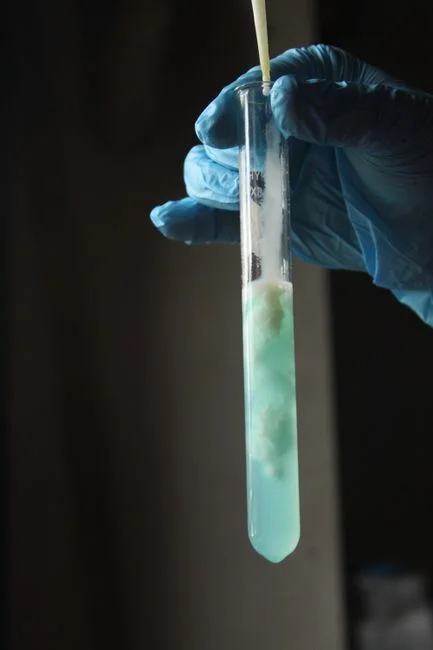
Size the treatment train from the site’s water balance and measured feed characteristics, not from server count or an equipment catalogue. The worksheet below identifies the variables the project must obtain before asking suppliers to size equipment.
| Sizing variable | Project input required | How it affects design |
|---|---|---|
| Makeup and circulating flow | Measured average and peak flows by season and operating state | Determines filtration and treatment peak loading |
| Evaporation | Measured or forecast evaporation for the actual cooling profile | Separates consumption from liquid return |
| Cycles of concentration | Existing and proposed operating target, with chemistry constraints | Influences blowdown volume and feed TDS |
| Blowdown quality | TDS, hardness, silica, turbidity, pH, temperature and treatment chemicals | Sets pretreatment and membrane compatibility |
| Recovery target | Required net permeate or reused-water output | Determines membrane area and concentrate flow |
| Residual route | Discharge agreement, storage, hauling or further-treatment capacity | Defines whether the proposed train is operable |
Genesis reports that a typical cooling tower operating at four cycles of concentration loses approximately 25–30% of makeup water as blowdown. Its example for 10 million gallons of monthly use produces 2.5–3 million gallons of blowdown. Use that as a screening case only, then replace it with the facility’s measured evaporation and blowdown data.
Size UF from peak blowdown flow, feed turbidity and required flux, including automatic-backwash capacity. The HydropureWater catalogue range of 2,000–40,000 L/h is a screening range; the selected model must be checked against actual peak flow and feed-water conditions. For RO, Genesis publishes a preliminary recovery screening band of 50–85%. Establish the project value from feed TDS, hardness, silica, temperature, antiscalant performance and concentrate-disposal constraints.
Include redundancy, bypass isolation, cleaning access, utilities, brine storage and disposal capacity in the installed-scope comparison. Do not scale treatment from water-use effectiveness alone. KETOS reports an industry-average WUE around 1.8 L/kWh and a practical range of 1–9 L/kWh; those figures describe climate and cooling performance, not the capacity of a treatment system.
Compare recovery options by commercial risk
The lowest equipment price is not necessarily the lowest commercial risk. Compare direct sewer discharge, blowdown recovery with pretreatment, reuse after RO or NF, partial concentration and full ZLD against freshwater savings, discharge fees, permit risk, concentrate destination, energy demand, operator capability, redundancy and recovery availability.
Genesis reports a 50,000 GPD blowdown RO system at $250,000–$500,000 installed and $1.50–$3.00 per thousand gallons treated, including energy, chemicals, membrane replacement and maintenance. It reports full ZLD capital of $3–$8 million and operating costs of $5–$15 per thousand gallons treated for data center applications. For low-temperature regional models, it reports an MVC system processing 10,000–30,000 GPD at $1–$3 million in capital and 15–25 kWh per 1,000 US gallons of distillate produced. These are source-specific planning references, not Ottawa quotations.
| Option | Commercial benefit | Principal risk to resolve |
|---|---|---|
| Direct sewer discharge | Simplest treatment train and lowest equipment scope | Local acceptance, discharge quality and future capacity |
| Pretreated blowdown recovery | Reduces freshwater withdrawal and liquid discharge | Feed variability, fouling and reuse-water quality |
| RO or NF reuse | Produces water suitable for defined cooling or process uses | Concentrate destination, energy and membrane recovery limits |
| Partial concentration | Reduces residual liquid volume before disposal | Whether the residual brine has an approved route |
| Full ZLD | Eliminates the liquid discharge stream | Capital, energy, operator capability and solid-waste disposal |
Require a life-cycle comparison that distinguishes withdrawal reduction, actual consumption reduction and water returned to the community. The broader comparison in data center wastewater treatment design for a hot climate remains useful as a decision framework, but Ottawa’s climate and legal requirements must be evaluated separately.
Ask each bidder to price the same scope: pretreatment, treatment, recovered-water delivery, concentrate management, utilities, controls, redundancy, maintenance, consumables and operator training. A bid that excludes brine storage or disposal is not comparable with one that assigns the residual stream a lawful destination.
Convert the design into a procurement package

A comparable procurement package starts with the same water characterization and operating assumptions for every bidder. Provide average and peak flows, seasonal chemistry, required permeate or reuse quality, recovery target, utility limits, footprint, noise limits, control architecture and residual-stream requirements. Ask bidders to state membrane materials, pretreatment requirements, operating pressure, recovery, permeate quality, cleaning frequency, consumables and guarantees separately.
Make concentrate management a mandatory design responsibility. The treatment train is incomplete until the residual stream has a lawful destination, whether that is an approved discharge route, additional concentration, storage or authorized disposal. Equipment capacity must refer to required net permeate or recovered-water output—not merely feed capacity.
Define factory and site acceptance tests for flow, permeate quality, automatic controls, membrane integrity, fail-safe operation, alarms, data export and operator training. A membrane integrity test does not replace feed-water characterization or long-term flux and recovery verification. Include a contingency for an unusable permeate or a failed pretreatment stage, especially where reuse is intended for critical cooling service.
The relevant equipment categories are hollow-fiber ultrafiltration pretreatment, multi-media filtration for solids and SDI control, automatic chemical dosing for pretreatment and an industrial RO system for dissolved-solids reduction. These are candidate components, not a mandated train; the selected route must follow the measured characterization, end use and compliance basis.
Before issuing an award, obtain written confirmation from the City of Ottawa and the relevant Ontario authority on the applicable sewer-use, stormwater and discharge route. Request current permit conditions, required monitoring and any capacity or residual-disposal constraints. Do not permit a supplier to close those uncertainties through a generic performance guarantee.
Frequently Asked Questions
How much does an Ottawa data center wastewater treatment system cost?
Ask suppliers for a project-specific installed and operating-cost quotation using the same water characterization, peak flow, recovery target and concentrate route. Genesis reports $250,000–$500,000 installed for a 50,000 GPD blowdown RO system and $3–$8 million for full ZLD, but these are published planning references, not Ottawa prices. Also request the water-savings assumption, utility rates, membrane replacement cost and disposal charge used in the life-cycle calculation.
Should the system use UF, RO, NF or ZLD for cooling blowdown?
Use UF for suspended solids, bacteria and colloid control, including pretreatment ahead of NF or RO. Choose NF when the main constraint is hardness and partial dissolved-solids removal; choose RO when high-quality permeate and broad TDS removal are required. Consider ZLD only when a lawful liquid-discharge route is unavailable and the energy, operator and solid-disposal burdens are justified. This decision depends on measured blowdown chemistry and the required end use.
How do you size a treatment system for an Ottawa data center?
Build the sizing worksheet from metered withdrawal, evaporation, blowdown, reuse and discharge, then characterize the feed during startup, normal operation and peak cooling demand. Use the site’s measured peak flow and water chemistry to size filtration, UF, RO or concentration equipment. Do not size from WUE, server count or a generic per-server water factor.
Can cooling-tower blowdown be reused instead of discharged to the sewer?
Yes, where the recovered water meets the receiving system’s chemistry, scaling, biological and operational requirements. UF or RO may be used depending on reuse quality, while antifouling and disinfection requirements must be considered. Request the City of Ottawa’s written confirmation of the reuse and residual-discharge pathway, together with a Legionella and pathogen-control plan for the reclaimed cooling water.
What permits and water-use evidence should an Ottawa data center obtain before selecting equipment?
Obtain a verified water balance, sub-metering records, seasonal characterization and a documented circularity plan. Confirm sewer-use, stormwater, water-discharge and reclaimed-water requirements with the City of Ottawa and the relevant Ontario authority. The supplied research does not establish current numeric Ottawa limits, so require written, current permit conditions and identify the residual destination before equipment selection.