Build the Teni data-center water balance first
A data center in Teni needs a source-specific water-treatment system, not one generic wastewater plant. Segregate cooling tower blowdown, reverse-osmosis concentrate, domestic sewage, equipment and floor washdown, laboratory drains, and other process discharges before selecting equipment. Characterize average and peak flow, temperature, operating schedule, cycles of concentration, current chemicals, and the intended reuse or discharge route. Then establish freshwater-reduction, discharge-reduction, and maximum-recovery objectives; zero liquid discharge should be an evaluated option, not the default.
The water balance should begin with measurements rather than equipment assumptions. IDE reports that a 100-megawatt data center may use as much as 2 million liters per day, while Genesis Water Technologies states that cooling systems account for 80–90% of data-center water demand in the United States. These figures establish the importance of cooling, but neither is a Teni design input. The 1,200–6,000 mg/L blowdown TDS and 10–50 mg/L suspended-solids ranges reported by Genesis are screening benchmarks, not substitutes for source sampling at Teni.
| Stream | Measure before design | Likely destination requiring separate review |
|---|---|---|
| Cooling tower blowdown | Average and peak flow, temperature, cycles of concentration, TDS, hardness, silica, suspended solids, chemistry | Cooling make-up, permitted discharge, or further concentration |
| RO concentrate | Flow, TDS, scaling constituents, pH, residual treatment chemicals | Managed discharge, evaporative concentration, or crystallization |
| Domestic sewage | Flow, organic load, nutrients, solids, pathogens, discharge destination | Biological treatment and disinfection before any reuse |
| Equipment and floor washdown | Flow, detergents, oils, metals, episodic discharge profile | Segregated collection, treatment, or controlled disposal |
| Laboratory and process drains | Composition, batch size, hazardous constituents | Source-specific treatment and disposal |
Use the resulting inventory to set a site-specific water balance and identify the data gaps that must be closed during design. The India data-center blowdown treatment guide provides a useful regional reference, while the water-scarce data-center treatment guide illustrates why recovered water and freshwater reliability must be considered together.
Define the cooling make-up quality envelope
Cooling make-up quality, discharge quality, and high-recovery requirements are separate design decisions. Genesis Water Technologies gives initial cooling-system benchmarks of 500–1,500 mg/L TDS, 200–400 mg/L hardness as CaCO₃, 10–25 mg/L suspended solids, pH 6.5–8.5, and alkalinity of 50–200 mg/L as CaCO₃. These are preliminary targets from a commercial reference, not Teni permit limits or site-specific operating guarantees.
Test the actual Teni feed water and blowdown for silica, calcium, magnesium, alkalinity, chloride, sulfate, conductivity, suspended solids, residual biocides, and corrosion-inhibitor ingredients. The chemical inventory matters as much as the inorganic analysis because accumulated scale inhibitors, dispersants, biocides, and corrosion products can foul membranes or remain in the recovered stream.
Cycles of concentration determine how tightly dissolved constituents accumulate in the cooling loop. Genesis reports that a tower operating at 4 cycles loses approximately 25–30% of make-up water to blowdown. Increasing cycles reduces blowdown and freshwater demand, but it also increases the likelihood of silica, calcium carbonate, calcium sulfate, corrosion, and biological challenges. The selected cycles should therefore be based on measured water chemistry, heat-transfer conditions, and treatment capability—not on the highest value the equipment can nominally achieve.
| Decision | Question to answer | Required evidence |
|---|---|---|
| Cooling make-up | Can recovered water support the selected cooling chemistry without unacceptable scaling, corrosion, or biological growth? | Teni feed and blowdown analysis, cycles-of-concentration model, membrane permeate data, chemistry compatibility |
| Discharge | Can residual liquid meet the route-specific requirements? | Current Teni and Uttarakhand requirements, receiving route, permit conditions, residual-quality analysis |
| High recovery or ZLD | Does the avoided freshwater and discharge value justify added energy, capital, solids handling, and operating risk? | Whole-life energy model, concentrate route, local disposal capacity, operator coverage, sensitivity analysis |
For commercial planning, request current local abstraction charges, wastewater tariffs, permit conditions, disposal fees, and vendor quotations. Do not transfer U.S. discharge-fee or treatment-cost figures into a Teni estimate. A preliminary industrial water-softener assessment may be relevant if hardness data show that softening is needed, but it cannot replace analysis of silica, alkalinity, organics, and the full cooling-water program.
Match each waste stream to a treatment train
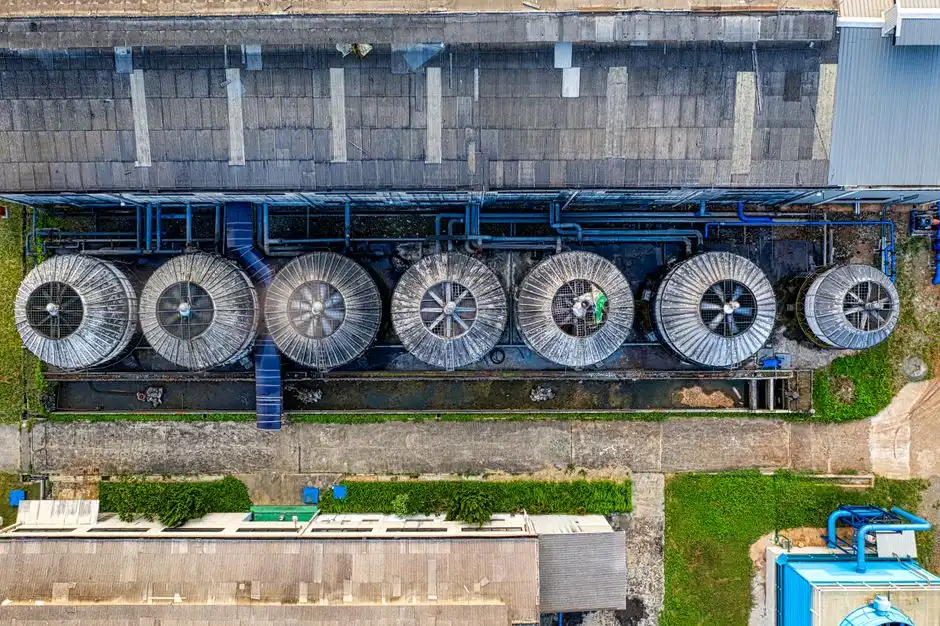
Each Teni waste stream needs a treatment train selected by contaminant and end use. For cooling blowdown, begin with side-stream filtration to control solids and biological loading. Add UF when biological and particulate control is the main objective, NF when partial hardness and sulfate removal is sufficient, or RO when dissolved-solids control is required. Genesis reports that UF typically reaches 90–95% recovery and removes suspended solids, bacteria, viruses, and high-molecular-weight organics, while RO removes 95–99% of dissolved salts and typically produces permeate at 10–50 mg/L TDS.
NF occupies an intermediate position. Genesis reports 70–85% recovery for NF and states that its permeate commonly contains 30–50% of the feed’s dissolved-solids concentration. That makes NF a candidate where hardness reduction—not full desalination—drives the requirement. The 0.03-micron PVDF ultrafiltration system can address suspended solids, colloids, and microorganisms, but it does not remove dissolved scale-forming salts.
| Objective | Primary treatment consideration | Residual-stream control |
|---|---|---|
| Improve circulating-water cleanliness | Side-stream filtration; UF if biological and particulate control is required | Monitor solids, biofilm indicators, and chemical residues |
| Reduce hardness and sulfate | NF, with chemical conditioning as required | Characterize residual hardness, alkalinity, silica, and concentrate |
| Reduce dissolved solids for cooling make-up | RO with membrane-compatible pretreatment | Concentrate must be managed separately |
| Treat domestic sewage or high-organic washdown | Biological treatment before reuse, with source segregation from cooling streams | Disinfection and residual management |
| Manage RO concentrate | Permitted partial discharge, managed brine disposal, evaporative concentration, or full ZLD | Verify the legal route and residual solids or brine destination |
Domestic sewage and high-organic washdown should normally follow a biological route before any reuse consideration. High-organic streams must not be mixed with cooling blowdown because the combined chemistry would alter membrane loading, chemical demand, and recovery assumptions. For RO concentrate, compare partial liquid discharge, managed brine disposal, evaporative concentration, and full ZLD according to permit risk, available energy, disposal infrastructure, and the value of recovered water.
Chemical control is part of the treatment train, not an accessory. Use dosing to manage pH, scale, corrosion, and residual biocides, and verify compatibility with the selected membranes. An automatic chemical-dosing arrangement should be evaluated with the cooling chemistry and membrane supplier. Where microbial control is required, add a compatible disinfection step and confirm residual behavior after recovery.
Design the pretreatment and reuse process flow
The practical blowdown-reuse sequence is segregation and equalization, side-stream filtration, coarse screening where debris is present, membrane pretreatment, RO where dissolved-solids control is required, permeate storage, chemical conditioning, and controlled return as cooling make-up. Genesis recommends filtering RO feed below 10–15 microns; its spiral-filtration examples operate at 10–25 micron filtration and remove suspended solids before UF or other membrane stages.
UF can provide a defined solids and microbial barrier before RO. A industrial reverse osmosis treatment train should only be selected after the pretreatment and antiscalant program have been established from representative feed chemistry. The recovered-water path also needs a controlled fail-safe: during membrane cleaning, high-blowdown operation, storage depletion, or maintenance shutdown, the plant must not compromise cooling continuity.
| Process step | Design basis | Principal failure to prevent |
|---|---|---|
| Segregation and equalization | Peak waste flow, operating hours, batch washdown events, equalization storage | Uncontrolled blending and treatment shock |
| Coarse and side-stream filtration | Expected solids, debris, and circulation condition | Membrane fouling and heat-transfer fouling |
| Chemical conditioning | Measured scaling tendency and membrane compatibility | Scale, membrane damage, incompatible residuals |
| UF or RO | Peak feed flow, recovery target, flux, cleaning frequency, redundancy | Recovery loss or cooling interruption |
| Permeate storage and return | Storage volume, pumping, controls, interlock with cooling demand | Unsafe return or loss of cooling continuity |
| Concentrate route | Flow, TDS, scaling constituents, disposal or concentration route | Unpermitted or unmanaged discharge |
Size treatment and equalization equipment from peak waste-generation and recovery scenarios, not only daily averages. Confirm standby power, redundancy, controls, and interlocks against the data center’s critical-systems plan. A mechanical screen, such as a rotary mechanical bar screen, is relevant only where the inventory identifies debris. A multi-media pretreatment filter may support solids removal, but its selection still requires particle and loading data.
Keep RO concentrate physically separate from the cooling feed. Its quality and quantity determine whether discharge, evaporation, crystallization, or another approved route is feasible. If recovered water requires disinfection, evaluate the process and residual compatibility with a system such as a chlorine-dioxide generator; do not presume that the oxidant is appropriate without chemistry and safety review.
Compare reuse, discharge and high-recovery strategies
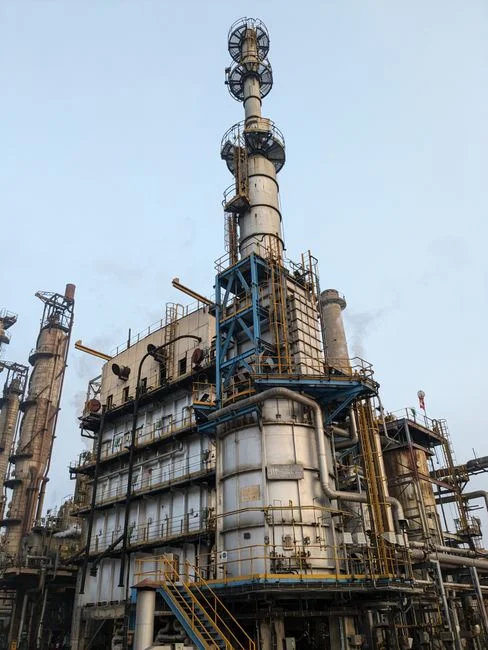
Cooling make-up reuse is the practical base case when permeate quality, cooling chemistry, pretreatment, and concentrate handling have been demonstrated. Genesis reports 60–85% recovery for this application. Conventional RO remains recovery-limited because blowdown concentrates salts and scale-forming constituents. Genesis gives 50–85% recovery for blowdown RO, while IDE reports 75–80% for conventional brackish RO before scaling becomes unmanageable.
| Strategy | Reported performance or scope | Main decision |
|---|---|---|
| Cooling make-up reuse | 60–85% recovery for this application, according to Genesis | Can recovered water meet the site cooling specification? |
| Conventional blowdown or brackish RO | 50–85% for blowdown and 75–80% for conventional brackish RO, according to Genesis and IDE respectively | Which chemistry determines the practical recovery limit? |
| Partial ZLD | Can reduce discharge volume by 80–90%, according to Genesis | Is the remaining brine lawfully and practically disposable? |
| Full ZLD | 95–99% overall recovery, with the highest capital and operating costs among the compared options, according to Genesis | Does water value justify thermal energy and solid-waste handling? |
The 2026 life-cycle analysis by Open Engineering changes how recovery should be judged. Its wastewater scenario had about twice the global-warming potential of the freshwater case, with treatment energy accounting for roughly 80% of that difference. In the UF-plus-RO scenario, treatment energy rose to more than five times the freshwater case. However, higher cycles of concentration reduced blowdown and chemical consumption. The result is an engineering trade-off, not a case for automatically selecting the highest recovery.
Open Engineering also calculated an indirect water penalty of approximately 0.93 L/m³ from upstream electricity and chemical inputs in the reuse train. The study reports that this was less than 0.1% of the direct displacement benefit. For Teni, the comparison should therefore include local grid emissions, freshwater scarcity, recovered-water value, concentrate disposal, and cooling reliability. Membrane and spare-element planning can be reviewed through RO and UF membrane element options, but recovery should be set by pilot performance and system economics.
Validate the Teni design with pilot testing and compliance review
Pilot testing should establish whether the proposed treatment train works across the actual Teni feed rather than on laboratory water. Test representative conditions spanning expected TDS, hardness, silica, temperature, and cycles of concentration. Record recovery, normalized membrane flux, cleaning frequency, permeate quality, concentrate composition, and performance under the complete cooling-water chemical program.
Test the chemistry package as a whole. Biocides, corrosion inhibitors, scale inhibitors, and dispersants can foul membranes or remain in the recovered stream, so treating each chemical independently does not demonstrate compatibility. A pilot should also examine how recovered permeate affects cooling-loop chemistry, heat-transfer surfaces, biological control, and subsequent blowdown quality.
Compliance review must be local. The supplied research discusses U.S. and other permit systems; it does not establish Teni or India-specific discharge limits. Confirm current requirements for abstraction, wastewater discharge, industrial pretreatment, reuse, concentrate disposal, and any connection to sewer or surface-water systems with the relevant Teni and Uttarakhand authorities. The data-center cooling blowdown treatment framework can support pilot and procurement structure, but its jurisdiction-specific assumptions should not be transferred to Teni.
Before fixed-price selection, require bidders to provide feed characterization, pilot evidence, permeate-quality and water-balance guarantees, a defined recovery basis, availability assumptions, membrane-cleaning plans, redundancy, controls, chemical-compatibility evidence, and an O&M support plan. Compare lifecycle energy, membrane replacement, chemicals, sludge or brine handling, operator labor, and disposal—not equipment purchase price alone.
Frequently Asked Questions
What inputs are needed for a Teni data-center wastewater treatment cost estimate?
Request a quotation using measured peak and average flows, source-water analyses, intended reuse and discharge routes, recovery target, operating hours, concentrate route, available energy, redundancy, and local utility and disposal charges. The quotation should separate equipment, membranes, pretreatment, chemical dosing, storage, installation, power backup, controls, commissioning, labor, replacement consumables, and lifecycle energy. U.S. cost ranges in the supplied research are not Teni estimates and should not be used as a budget.
How should treatment capacity be sized for a Teni data center?
Base treatment capacity on peak waste-generation and recovery scenarios, then confirm equalization storage, operating hours, redundancy, and the selected recovery target. A daily average can understate membrane and equalization loads when washdown or other batch discharges occur. The final design should also preserve cooling continuity during membrane cleaning or treatment shutdown.
Which evidence should a wastewater-treatment supplier provide?
Require site-specific feed characterization, representative pilot results, a water-balance calculation, permeate-quality guarantees, membrane data, cleaning expectations, redundancy details, control interlocks, chemical-compatibility evidence, and an O&M support plan. These checks distinguish a treatment proposal that fits the Teni cooling system from one based only on nominal product capacity.
What compliance risks remain before the system is built in Teni?
The supplied research does not establish India-specific discharge limits or approvals. The project must obtain current Teni and Uttarakhand requirements covering abstraction, wastewater discharge, industrial pretreatment, reuse, and concentrate disposal, and should document the approved route for every residual stream. Concentrate management, reuse cross-connection controls, chemical storage, and worker safety also require project-specific review.