What Treatment Does a Tangier Data Center Actually Need?
A Tangier data center needs a source-specific treatment train, not one generic wastewater plant. First segregate cooling tower blowdown, domestic sewage, process or maintenance wastewater, RO reject and contaminated stormwater; then establish measured flows and chemistry before selecting equipment. Cooling blowdown can become cooling tower make-up water only if scaling, corrosion and biological risks are controlled, while sewage requires biological treatment. Data Center Map lists 2 data-center facilities in Tangier operated by 1 operator, but that directory does not establish local flows, reuse targets or permit conditions (Data Center Map, 2026).
The design basis should include required uptime, freshwater-reduction targets, reuse-water quality, permitted outlet, treatment recovery, footprint, available utilities and local operator capability. The selection rule is simple: a stream returned to cooling makeup must meet the cooling system’s chemistry and microbiological requirements; a stream discharged must meet the applicable contaminant and temperature conditions; sewage must enter a biological treatment route rather than blowdown-polishing equipment alone.
Use this process sequence:
- Segregate streams at the site boundary.
- Equalize and analyze each stream.
- Apply treatment appropriate to its contaminants.
- Disinfect where the reuse route requires it.
- Store treated water under cross-connection control.
- Reuse or discharge, with monitoring at the point of use and final outlet.
This source-based approach is consistent with the regional data center blowdown treatment guide, but the Tangier design still depends on local sampling, utilities and approvals.
| Site stream | Primary decision | Likely treatment direction | Acceptance test |
|---|---|---|---|
| Cooling tower blowdown | Discharge, low-risk reuse or cooling make-up | Equalization, solids control, chemistry control; RO for higher-quality reuse | Permit limits or cooling-water specification |
| Domestic sewage | Permitted outlet or non-potable reuse | Biological treatment, clarification and disinfection | Permit and reuse-quality requirements |
| Process or maintenance wastewater | Contaminant-specific treatment | Source characterization, physical separation and targeted polishing | Contaminant-specific discharge specification |
| RO reject | Further recovery or controlled discharge | Concentration management, salt recovery or disposal route | Residual-handling and discharge compliance |
| Contaminated stormwater | Segregate clean from contaminated drainage | Settling, filtration and oil separation as indicated | Outlet requirement for the actual drainage area |
Build a Tangier Water Balance Before Choosing Equipment
Measured flows, not vendor flow assumptions, should establish treatment capacity. Genesis Water Technologies reports that actual blowdown can exceed theoretical calculations by 15–30% because of unmeasured losses and emergency dumps, so a design based only on steady evaporation will understate the treatment train (Genesis Water Technologies, 2026).
Measure makeup water, evaporation, blowdown, drain losses, emergency dumps, domestic sewage and process wastewater separately over a representative operating period. Then apply the concentration-of-concentration relationship cited by Genesis: blowdown ratio = 1/(CoC−1). At 4 CoC, theoretical blowdown is 25% of makeup-water volume; at 6 CoC, it is 20% (Genesis Water Technologies, 2026).
Reconcile the theoretical calculation with meter data, because uncontrolled drains, leaks and emergency events may change the true wastewater flow. Test seasonal modes and cooling-system configurations, including periods of high ambient temperature, peak IT load, reduced cooling redundancy and upset conditions. Equipment should be selected for the highest credible wastewater flow supported by the operating record, while still defining a turndown range for normal conditions.
Before setting a commercial target, obtain the current freshwater tariff, wastewater charges, any water restrictions, sewer or surface-water discharge conditions, available alternative water and the site’s operator skill set. The regional data center blowdown treatment guide provides a useful sequencing reference, but those inputs must be verified for Tangier.
| Water-balance input | How to obtain it | Decision affected |
|---|---|---|
| Makeup-water flow | Meter each source and operating period | Baseline freshwater use and maximum treatment demand |
| Evaporation | Site water-balance calculation supported by operating records | Separation of consumption from recoverable discharge |
| Blowdown | Continuous metering plus reconciliation of dumps and drains | Treatment-system design flow |
| Peak and emergency flow | Operating modes, alarms and event records | Equalization, storage and bypass requirements |
| Tariffs and discharge conditions | Written information from relevant authorities and utilities | Reuse-versus-discharge business case and permit scope |
Test the Wastewater Chemistry That Controls the Treatment Train
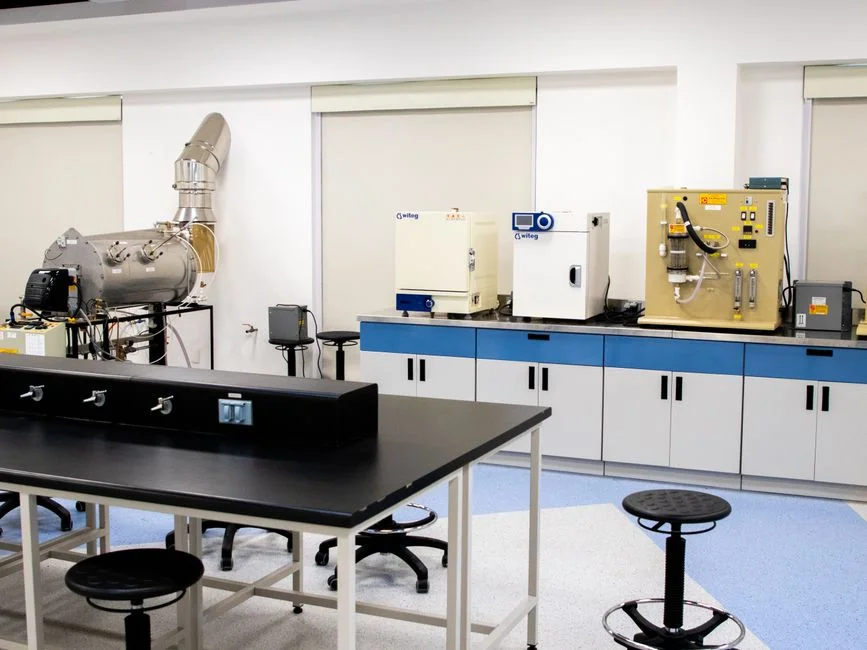
Cooling-water chemistry determines which unit operations can be trusted, and source-specific sampling is required because domestic sewage, process wastewater and cooling blowdown cannot be characterized by the same panel. A laboratory schedule should cover conductivity and TDS, hardness, alkalinity, silica, calcium, suspended solids, pH, temperature and residual treatment chemicals, with additional parameters determined by each stream.
Genesis gives the following cooling-application ranges as a design screen, not as a substitute for Tangier site data: TDS of 500–1,500 mg/L, hardness of 200–400 mg/L as CaCO₃, suspended solids of 10–25 mg/L, pH of 6.5–8.5 and alkalinity of 50–200 mg/L as CaCO₃ (Genesis Water Technologies, 2026). The final limits should be tighter where required by the cooling chemistry, makeup specification and concentration strategy.
Report temperature with every relevant sample. Heated blowdown can change applicable discharge conditions and alter biological and chemical treatment performance. For biological or process streams, add BOD, COD, nutrients, oil and grease and any identified industrial contaminants; cooling-water parameters alone cannot establish whether a stream is suitable for reuse or discharge.
For cooling reuse, give particular attention to silica, calcium carbonate and calcium sulfate. IDE identifies these as sparingly soluble salts that constrain conventional brackish-water reverse osmosis, with conventional BWRO commonly reaching 75–80% recovery before scaling becomes difficult (IDE, 2026). That benchmark is not a Tangier design value; actual recovery depends on feed chemistry, temperature, concentration, membrane configuration and control strategy.
Build a worst-case and seasonal sampling protocol. It should establish normal variability, the highest credible salinity and hardness, short-duration upset loads, the required turndown and the automatic response to an excursion. A membrane system can be evaluated through hollow-fiber UF pretreatment for cooling-water reuse, but pretreatment selection still requires feed data rather than a catalog rating.
| Parameter | Primary concern | Process implication |
|---|---|---|
| TDS and conductivity | Residual salt load and concentrate volume | RO requirement, recovery limit and discharge assessment |
| Hardness, alkalinity and calcium | Carbonate and sulfate scale | Softening, antiscalant, control limits or precipitation |
| Silica | Membrane and heat-transfer scaling | Concentration limit, recovery and antiscalant strategy |
| Suspended solids | Fouling and biological growth | Clarification, DAF or UF pretreatment |
| pH and temperature | Corrosion, reaction rates and discharge conditions | Material selection and treatment controls |
| BOD, COD, nutrients and oil | Organic loading and receiving-water impact | Biological or source-specific treatment |
Match Each Wastewater Stream to the Right Treatment Route
Cooling blowdown treatment should follow the least complex route that satisfies the confirmed outlet and water value. Compare optimized permitted discharge, lower-risk reuse such as washdown or toilet flushing, advanced cooling-make-up reuse and high-recovery treatment. The selection depends on Tangier discharge conditions, freshwater cost, the required water quality and whether residual concentrate can be handled responsibly.
For suspended-solids-rich industrial wastewater, evaluate physical separation. HydropureWater DAF systems cover 4–300 m³/h and are intended to remove suspended solids, oil and grease, colloids and other floatable contaminants. This equipment range is a manufacturer specification, not proof of performance on Tangier wastewater; the required flow and contaminant load must come from site data.
Where solids and microorganisms must be removed before higher-pressure treatment, evaluate hollow-fiber UF pretreatment for cooling-water reuse. HydropureWater specifies 2,000–40,000 L/h throughput, 0.03 μm PVDF membranes, automatic backwash and air scour, and feed turbidity up to 300 ppm. Require confirmation against the measured flow, turbidity, temperature and cleaning strategy.
For dissolved-solids reduction and higher-quality cooling makeup, evaluate an industrial RO system for cooling blowdown reuse. HydropureWater specifies automated PLC operation and recovery rates up to 95%, while IDE reports that conventional BWRO commonly plateaus at 75–80% because of scaling constraints (IDE, 2026). A 95% equipment capability is not a site guarantee: feed chemistry, antiscalant control, concentrate management and cleaning requirements determine achievable performance.
For high-salinity streams, distinguish ordinary RO from controlled salt precipitation. IDE reports an industrial application operating at around 95% recovery and producing permeate silica of about 1 mg/L, but this was not a Tangier data-center installation and must not be presented as local performance (IDE, 2026).
Domestic sewage requires a biological treatment route. Blowdown pretreatment, DAF or UF alone does not establish sewage discharge or reuse compliance. Likewise, RO reject should not be mixed with sewage before the mass balance and permit basis are established, because that decision can remove a potentially recoverable stream while adding contaminants to another route.
| Treatment route | Best-supported application | Key limitation to resolve |
|---|---|---|
| Optimized discharge | Cooling blowdown that meets the permitted outlet | Temperature, contaminants, tariff and water-saving value |
| DAF | Suspended solids, colloids, oil and floatable material | Measured flow and contaminant load |
| UF | Pretreatment before RO or defined reuse treatment | Feed turbidity, temperature and flux behavior |
| RO | Dissolved-solids reduction for cooling make-up | Scaling, recovery, energy and concentrate route |
| Controlled salt precipitation | Scale-prone, high-salinity streams requiring higher recovery | Precipitate handling and demonstrated mass balance |
| Biological treatment | Domestic sewage and qualifying organic wastewater | BOD, COD, nutrients, disinfection and outlet quality |
Compare Reuse and Discharge for Tangier
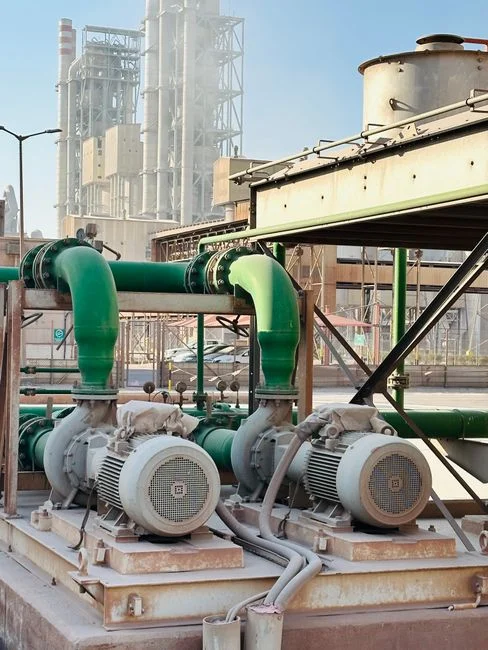
Treatment recovery and freshwater saving are different quantities. A treatment train can recover a high proportion of feed water while the site still loses water through evaporation, rejects concentrate and sends residual wastewater to another destination. The commercial case should therefore be built from the complete site water balance rather than equipment recovery alone.
Genesis recommends a staged sequence: establish measurement and the baseline; optimize the existing cooling system; simplify chemistry where appropriate; treat blowdown for beneficial reuse; then integrate advanced reuse for larger or more capable sites (Genesis Water Technologies, 2026). This sequence is a decision framework, not evidence that a particular treatment system will achieve a fixed Tangier result.
Genesis reports that advanced on-site systems can recover 70–90% of cooling tower blowdown, RO reject and other facility wastewater for cooling reuse, but identifies this as a general range rather than a guaranteed Tangier outcome (Genesis Water Technologies, 2026). Use the range to frame options, not to select equipment.
Compare alternatives against freshwater avoided, discharge volume, residual brine or sludge, footprint, energy, chemicals, operator burden, permit exposure and resilience to source-water variation. For modular installations, Genesis cites 100–300 GPM blowdown systems as a practical scale where hyperscale treatment would be too complex; confirm any selected flow against the measured Tangier water balance (Genesis Water Technologies, 2026).
Residual handling is part of the treatment decision, not an afterthought. Identify where reject brine, sludge, spent media and precipitate will go, whether they can be recovered, and who holds disposal responsibility. A plate-frame filter press may support solids dewatering, while a chlorine-dioxide generator may form part of a disinfection scheme, but neither establishes the complete residual-management or permit route by itself.
| Decision criterion | Question for the Tangier design | Evidence required |
|---|---|---|
| Freshwater value | What cost or restriction does avoided makeup avoid? | Current tariff and site consumption |
| Discharge exposure | Which route has the lowest permitted compliance burden? | Written outlet conditions and residual chemistry |
| Residual handling | How are brine, sludge and precipitate managed? | Mass balance and named receiving route |
| Operations | Can the site team run and maintain the system? | Operator competence and maintenance plan |
| Resilience | How will the train respond to source-water excursions? | Seasonal data, alarms and upset protocol |
Specify and Procure a Modular Tangier Treatment System
Issue a performance-based specification before requesting equipment prices. It should define design and peak flow, source-water chemistry envelope, required permeate or reuse quality, automation, utilities, noise, redundancy, footprint and access. Where reuse is proposed, include the point of use and controls needed to prevent cross-connection or uncontrolled substitution.
Place pretreatment, cleaning, membrane replacement, spare parts, controls, data logging, remote alarming and operator training inside the commercial comparison. A lower equipment price that excludes pretreatment or critical spares will not represent the installed operating scope.
Evaluate total cost of ownership rather than equipment price alone. Include energy, chemicals, membrane replacement, sludge or concentrate handling, monitoring, operator time and disposal. For a high-recovery concept, require a documented water, salt and solids mass balance, including the response to silica, hardness and conductivity excursions. Specify the automatic chemical dosing system by control duty and required feed range rather than by equipment name alone.
Run a pilot or side-stream trial using actual Tangier wastewater before fixing the guaranteed recovery rate or reuse-water specification. The trial should include representative feed chemistry, seasonal limits, upset conditions, membrane cleaning behavior and acceptance sampling. Equipment specifications do not establish discharge compliance or cooling-water suitability.
For controls, valves and filter media, require the supplier to identify critical spares and compatibility with the selected feed chemistry. The water-treatment parts, valves and filter-media scope should include material compatibility, replacement intervals and documented change-control requirements.
Make the performance test conditional on representative feed chemistry and the operator maintaining the stated pretreatment and control limits. Any guarantee that excludes upset conditions should state that exclusion explicitly, along with the corrective action required when an excursion occurs.
| Procurement stage | Required deliverable | Release condition |
|---|---|---|
| Site characterization | Measured water balance and source-by-source chemistry | Representative operating-period data accepted |
| Route selection | Segregation and treatment decision matrix | Reuse, outlet and residual routes identified |
| Vendor solicitation | Performance specification and installed scope | Comparable technical and commercial responses received |
| Pilot | Feed-specific performance and operability report | Acceptance criteria met under representative conditions |
| Final order | Guaranteed flow, quality, recovery and operating obligations | Conditions, exclusions and responsibilities documented |
| Commissioning | Installed verification and operator handover | Site acceptance test and training completed |
Frequently Asked Questions
What wastewater and cooling blowdown treatment does a data center in Tangier, Morocco need?
It needs a treatment train selected by stream and destination: segregation, equalization, source-specific analysis, appropriate treatment, storage, reuse or permitted discharge, and monitoring. Cooling blowdown may require solids control and RO for cooling-makeup reuse; domestic sewage requires biological treatment. Final scope depends on measured flows, chemistry, reuse targets and written Tangier outlet conditions.
What data are needed to size a wastewater treatment system in Tangier?
Request separately measured makeup, blowdown, evaporation, drains, emergency dumps, sewage and process-wastewater flows, plus source-specific chemistry and temperature across representative operating conditions. Include peak credible flow, redundancy, future operating modes, available footprint and utilities. Theoretical blowdown calculations do not replace site metering.
How much will cooling tower blowdown treatment cost?
Request a quotation tied to the measured flow, chemistry envelope, reuse quality, residual-handling route and required guarantees. The supplier should itemize pretreatment, membranes, controls, chemicals, energy, monitoring, maintenance and residual disposal. No reliable price or cost comparison can be made until those inputs and Tangier tariffs or discharge costs are supplied.
How should a supplier be selected without assuming one technology is appropriate?
Require each bidder to demonstrate a source-specific mass balance, treatment route, peak-flow strategy and evidence from comparable feed chemistry. Check whether recovery and reuse-quality guarantees depend on operator control limits, and whether the proposal identifies sludge, concentrate, precipitate and monitoring obligations. Product capability alone does not establish site performance or compliance.
Is cooling tower make-up reuse preferable to discharge in Tangier?
It may be, but the decision depends on confirmed outlet conditions, freshwater tariffs, water restrictions, cooling-system chemistry and residual handling. Compare freshwater avoided against energy, chemicals, operator burden, concentrate disposal and permit exposure. Confirm any cooling reuse with site-specific testing and the cooling-system owner’s acceptance criteria.
Related Equipment
- industrial RO system for cooling blowdown reuse — specifications, capacity range, and technical data