Separate the data center's wastewater streams before selecting equipment
A Volgograd data center must separate sanitary sewage, equipment-wash wastewater, process wastewater, once-through cooling water, and cooling-tower blowdown before selecting treatment equipment. These streams have different contaminants, reuse options, and likely compliance routes, so combining them can produce an oversized or unsuitable plant. Cooling-tower blowdown is the most likely target for recovery because it is concentrated and chemically conditioned, not ordinary cooling water. Genesis Water Technologies reports typical blowdown TDS of 1,200-6,000 mg/L and suspended solids of 10-50 mg/L, but its own note also says quality depends on source water, operating conditions, and treatment chemistry. The supplier and treatment objective should therefore be selected only after the streams and permitted discharge route are documented.
Create a source-by-stream inventory showing origin, flow range, contaminants, destination, and responsible authority. For each stream, decide whether it will be reused onsite, discharged to a permitted receptor, transferred for offsite treatment, or handled under a zero liquid discharge objective. The supplied research does not establish a Volgograd wastewater standard or a numeric local discharge limit, so no concentration threshold should be stated as locally applicable. Request the actual permit, sewer or discharge conditions, and written confirmation of any reuse requirement from the relevant Russian authorities. A location-specific comparison is available in the location-specific data center wastewater treatment guide, while the data center cooling-blowdown treatment framework shows how source, discharge route, and treatment train should be linked.
| Stream | Key distinction | Decision required before treatment selection |
|---|---|---|
| Sanitary sewage | Occupancy-derived wastewater with a distinct collection and acceptance route | Confirm the authorized conveyance and treatment arrangements |
| Equipment-wash wastewater | May contain cleaning residues or contaminants that are not present in cooling water | Identify products, concentrations, segregation, and reuse eligibility |
| Process wastewater | Composition depends on the associated data-center process | Sample the actual process stream rather than assigning it to cooling treatment |
| Once-through cooling water | May contain heat and treatment chemicals but has a different flow and concentration profile from blowdown | Determine whether retention, recovery, or direct discharge is permitted |
| Cooling-tower blowdown | Concentrated, chemically conditioned water that may contain scaling minerals, solids, biocides, corrosion inhibitors, and antiscalants | Select reuse, discharge-compliance, or ZLD treatment based on measured chemistry and permit conditions |
Characterize the water that will actually enter the treatment train
Source-water analysis does not establish the final treatment train unless it is paired with cooling-system chemistry, operating data, and the reuse or discharge specification. For the Volgograd data center water treatment basis, obtain results for TDS, conductivity, hardness, alkalinity, calcium, magnesium, silica, chloride, sulfate, pH, turbidity, suspended solids, and temperature. Add biological indicators appropriate to the selected process, especially where a recovery system could receive biofilm-derived solids or organisms. These measurements establish the scaling, fouling, corrosion, and biological-growth risks that the industrial water-softening system used for makeup treatment must address.
Sample makeup water and cooling-tower blowdown separately, and record the actual cycles of concentration, chemical program, biocide and antiscalant products, corrosion-inhibitor chemistry, and any previous use of chromate or high-phosphate treatment. Genesis Water Technologies explains that treatment chemicals and corrosion products accumulate in blowdown, while source-water chemistry and operating conditions determine treatment and reuse compatibility. Those factors also affect whether recovered permeate can be blended with incoming makeup or returned directly as tower makeup.
Document the cooling architecture and operating profile: open-loop evaporative cooling, closed-loop cooling, hybrid operation, once-through cooling, or a planned transition to dry or closed-loop systems. Each changes the wastewater flow and whether a blowdown-recovery system remains relevant through the facility life. Do not import U.S. consumption examples into a Volgograd design basis. As a scale comparison only, Valicor states that a hyperscale evaporative facility typically consumes 400,000-550,000 gallons daily, whereas a 100 MW closed-loop facility may consume only 8,000 gallons daily.
Cycles of concentration are the ratio of dissolved solids in circulating water to dissolved solids in makeup water. They determine how far treatment chemicals and source-water minerals concentrate in the circulating system.
Choose between reuse, compliant discharge, and zero liquid discharge
The governing treatment objective must be selected before comparing equipment. Genesis Water Technologies identifies cooling-makeup reuse, discharge compliance, and zero liquid discharge as distinct strategies because each requires different water quality, process configuration, and economic justification. The local permit, identified reuse application, and measured blowdown envelope determine which strategy is feasible; a generic preference for one technology is not a defensible basis for procurement.
Cooling-tower blowdown recovery for supplemental cooling makeup normally requires removal or control of suspended solids, scaling potential, and biological content while preserving compatibility with the existing chemical program. Genesis Water Technologies reports typical recovery of 60-85% for this objective. Discharge compliance is a different design: the train may need TDS reduction, biocide control, pH correction, or removal of specifically regulated metals. Applicable limits must come from the authorized local permit, not from an assumed universal threshold.
Zero liquid discharge requires the greatest process chain. Genesis Water Technologies describes mechanical vapor compression as a final concentration step achieving 95-98% recovery from concentrate and producing distillate below 10 mg/L TDS. For a complete ZLD train, it reports 95-99% overall recovery and less than 1% of the original blowdown volume remaining as solid waste, using membrane concentration, thermal evaporation, and crystallization. The same source describes this train as capital- and energy-intensive, so it should not be selected before the residual liquid-disposal route and solid-residue destination are confirmed.
Closed-loop cooling can sharply reduce direct water use, but it transfers more burden to electricity. Valicor cites an industry estimate of roughly 10% lower energy consumption for evaporative cooling than for air-cooled alternatives. That U.S. comparison is not a Volgograd energy design value; local climate, electrical supply, and equipment performance require a project-specific assessment.
| Objective | Treatment emphasis | Evidence from the supplied research |
|---|---|---|
| Cooling-makeup reuse | Control solids, scaling potential, biological content, and chemical compatibility | Genesis Water Technologies reports typical recovery of 60-85% |
| Permitted discharge | Meet the specific permit, potentially through TDS, biocide, pH, or metals control | No Volgograd numeric limit is provided in the supplied research |
| Zero liquid discharge | Membrane concentration, evaporation, crystallization, and managed solid residue | Genesis Water Technologies reports 95-99% overall recovery and less than 1% of original blowdown volume as solid waste |
For a reuse concept, the industrial RO blowdown-recovery system should be evaluated against the required permeate quality, measured feed chemistry, and available concentrate route rather than selected solely because it can reduce TDS.
Build a pretreatment-first treatment train
Membrane selection must follow from the contaminant that controls the treatment objective. Side-stream filtration is the first control where circulating-water solids or biofilm are impairing heat transfer or membrane performance. Genesis Water Technologies recommends filtration capacity equivalent to 1-5% of total circulation flow, depending on system conditions and water-quality objectives. This capacity is tied to the measured cooling circulation flow and must not be transferred directly from a U.S. data center to Volgograd.
Ultrafiltration is appropriate when the principal risks are suspended solids, colloids, bacteria, and biofilm-derived solids, or when UF is required before RO or NF. Genesis Water Technologies reports typical UF recovery of 90-95%. The hollow-fiber UF pretreatment system provides units from 2,000-40,000 L/h, uses 0.03-micron PVDF membranes, and accepts feed turbidity up to 300 ppm. Those specifications support preliminary evaluation, but final selection requires the measured Volgograd feed and recovery duty.
Use RO where low-TDS permeate is required for cooling makeup. Genesis Water Technologies reports typical permeate of 10-50 mg/L TDS and recovery of 50-85%, with recovery limited by scaling and osmotic pressure. Use NF where partial removal of hardness and sulfate is sufficient; the same source reports recovery of 70-85% and permeate TDS typically at 30-50% of feed-water concentration. A high-silica feed may require RO rather than NF, while a feed where hardness is the controlling constraint may make NF adequate.
Protect every membrane stage with feed filtration, antiscalant control, pH adjustment, and a defined cleaning strategy derived from the measured source and blowdown chemistry. Include permeate and concentrate valves, conductivity monitoring, and abnormal-operation handling. Membrane elements and replacement cartridges are consumables rather than incidental equipment, so maintenance and storage requirements belong in the supplier scope. The RO and UF replacement membrane elements should be matched to the selected membrane material and operating envelope.
| Process step | Primary problem addressed | Selection evidence |
|---|---|---|
| Side-stream filtration | Suspended solids, corrosion products, and biofilm accumulation | Genesis Water Technologies recommends capacity equivalent to 1-5% of total circulation flow |
| UF | Solids, colloids, bacteria, and membrane pretreatment | Typical recovery of 90-95% according to Genesis Water Technologies |
| NF | Partial hardness and sulfate removal | Recovery of 70-85% and permeate TDS typically at 30-50% of feed concentration, according to Genesis Water Technologies |
| RO | Broad dissolved-solids reduction for low-TDS makeup | Permeate of 10-50 mg/L TDS and recovery of 50-85%, according to Genesis Water Technologies |
| Evaporation and crystallization | Further concentration and liquid-waste elimination | Applicable to ZLD after membrane concentration |
Size the system from operating data, not headline flow
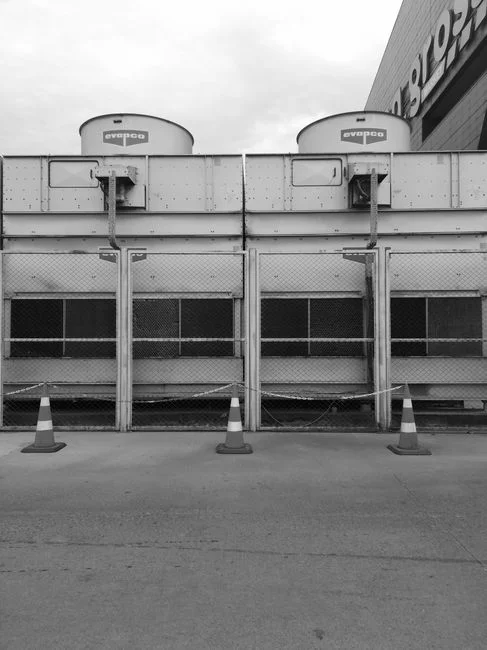
Preliminary sizing must start with the facility's actual water balance. Measure makeup-water demand, evaporation, drift, blowdown, and the operating cycles of concentration rather than applying a generic blowdown percentage. Genesis Water Technologies states that a cooling tower operating at 4 cycles of concentration loses approximately 25-30% of makeup water to blowdown; its worked example gives 2.5-3 million gallons of monthly blowdown from 10 million gallons of monthly facility use. That example is an illustration, not a Volgograd flow input.
Calculate each candidate stream's present flow, peak flow, seasonal profile, and future design case. Then select treatment capacity from the required treatment flow, the owner's engineering design margin, the worse credible feed condition, expected recovery, fouling rate, cleaning frequency, and required permeate or discharge quality. These inputs must be requested before requesting a firm quotation. Where the cooling tower operates across changing cycles of concentration, the equipment basis should show how the train responds to both low- and high-blowdown operation.
Size concentrate storage and disposal as part of the equipment package. A membrane system that meets permeate requirements but has no viable route for concentrate has not solved the wastewater problem. Include utilities, chemical storage, waste storage, access, drainage, and the future expansion envelope in the site plan.
Check for oil, grease, or floatable contaminants in any stream entering the cooling-water recovery train. If measured, evaluate dissolved air flotation before the recovery process; do not add DAF solely because the site is a data center. The DAF pretreatment machine is relevant only when characterization demonstrates a contaminant or separation duty that justifies it. Chemical demands should be linked to the automatic chemical dosing system only after membrane compatibility and the cooling program are established.
Build permit, commissioning, and supplier-selection checks into the project
The Russian regulatory interface must be resolved before the process train is frozen. Confirm the authorized discharge route, applicable technical standards, monitoring requirements, receiving-water constraints, and the evidence required for any reuse claim with the relevant Russian authorities. Because the supplied research contains no Volgograd-specific permit or numeric discharge standard, treatment acceptance criteria remain provisional until those documents are obtained.
Specify automatic controls for feed flow, differential pressure, conductivity, permeate quality, concentrate diversion, chemical dosing, and abnormal shutdown. Require suppliers to define membrane compatibility, expected flux and recovery across the measured feed-water envelope, cleaning requirements, chemical consumption, and the spare-parts strategy. The factory and site acceptance plan should verify controls, interlocks, permeate quality, concentrate handling, cleaning, alarms, and stable operation before final acceptance.
Establish a monitoring plan from the first operating period. Include flow, TDS or conductivity, pH, temperature, turbidity, suspended solids, biocide residuals, and reused-water quality. This baseline allows the operator to demonstrate actual consumption, recovery, discharge performance, and membrane condition rather than relying only on design calculations.
Corporate or investment reporting may add another evidence requirement. Valicor cites CDP responses from 4,815 companies in 2023 and describes a shift toward quantitative water targets, site-level monitoring, and stakeholder engagement. A Volgograd operator may need similar evidence for customer, investor, or ESG reporting even where it is not the legal acceptance criterion. This reporting framework should be separated from the permit, not used as a substitute for it.
Frequently Asked Questions
How should UF and RO be sized for a data-center blowdown stream without a generic flow?
Start with measured makeup demand, evaporation, drift, operating cycles of concentration, and the resulting blowdown flow. Then select UF and RO capacity using the peak treatment duty, design margin, expected recovery, measured fouling rate, cleaning frequency, and required permeate quality. Do not size from the 400,000-550,000-gallon-daily U.S. evaporative benchmark or the 50,000 GPD RO installation example in the supplied research; neither establishes a Volgograd duty.
When is DAF relevant to a data-center wastewater treatment train?
DAF is relevant when analysis of the actual stream demonstrates oil, grease, or other floatable contaminants that interfere with collection, cooling reuse, or downstream treatment. It is unnecessary for a clean cooling-blowdown stream merely because the facility is a data center. Request oil-and-greene, suspended-solids, and contaminant-speciation results before adding a flotation stage to the quotation.
How should a supplier demonstrate membrane recovery and fouling performance?
Require a guarantee or calculation using the measured Volgograd feed-water envelope, including worst credible TDS, hardness, silica, temperature, suspended solids, antiscalant conditions, and expected chemical carryover. The proposal should state recovery, permeate quality, expected flux, cleaning triggers, cleaning chemicals, membrane life assumptions, and how deviations from the design feed will be managed. A catalog recovery range alone does not demonstrate site performance.
What are the cost and compliance risks of selecting reuse or ZLD before confirming the permit and water analysis?
Selecting the concept first can produce an untreatable feed, unusable permeate quality, or a concentrate stream with no lawful destination. Request itemized capital and operating quotations for membrane replacement, chemicals, energy, concentrate management, and residual handling, together with the permit requirements that determine the design basis. The supplied research contains no Volgograd-specific quotation or disposal price, so a defensible budget cannot be stated until those inputs are obtained.