What Water Streams a Khartoum North Data Center Must Treat
A data center in Khartoum North needs two coordinated treatment paths: one for sanitary and process wastewater, and one for cooling blowdown. Blowdown should first be characterized for conductivity, pH, suspended solids, temperature, residual treatment chemicals and site-specific contaminants, then treated for its intended route—controlled discharge, reuse for non-critical services, or advanced recovery toward cooling makeup. Cooling-blowdown control and filtration should precede capital-intensive reuse. The final design must use Khartoum-specific water data, discharge rules and receiving-environment constraints rather than assume that a generic data-center treatment package is sufficient.
The treatment boundary begins with a complete water map, not a single wastewater flow estimate. Domestic sewage, cooling-tower makeup, cooling-tower blowdown, process wastewater, equipment washwater, stormwater and construction-phase wastewater should each be identified, measured and assigned an owner. Cooling blowdown must remain separate from sanitary sewage during the concept phase: evaporation concentrates salts and residual biocides or anti-scalants in the blowdown, and warm-water discharge can also create a thermal-pollution concern. The North Carolina State University article “America’s Data Center Boom Puts New Pressure on Local Water Resources” (September 2026) explains the same mechanism for data centers generally: blowdown can elevate salinity, carry chemical additives and create thermal pollution when discharged to waterways.
Local industrial residues and sludge behavior should be characterized rather than transferred from another jurisdiction. The International Journal of Advanced Research source “Sludge Characterization of Khartoum Petroleum Refining Wastewater Treatment Plant—Khartoum, Sudan” provides a local reason to examine sludge and process residues, but the supplied research does not establish the composition or handling requirements for a Khartoum North data-center site. That is a site-data gap to close, not a basis for importing refinery assumptions.
| Stream or source | Engineering question | Required site evidence |
|---|---|---|
| Domestic sewage | Is a separate sanitary treatment and disposal route required? | Flow, loading, sewer access and applicable pretreatment requirements |
| Cooling makeup and blowdown | Can blowdown be controlled, recovered or discharged? | Source, quality, reliability, seasonal availability, water balance, discharge route and flood exposure |
| Process wastewater and equipment washwater | Which contaminants require dedicated treatment? | Stream composition, chemicals used, batch flows and cleaning frequency |
| Stormwater and construction wastewater | Could discharge affect drainage or receiving water? | Drainage map, rainfall exposure, sediment and construction-chemical sources |
Request the site data before selecting a process: water-source quality and reliability, seasonal availability, sewer or drainage access, flood exposure and the prospective discharge route. DC Deployed’s Khartoum site-selection material (2026) lists power, network connectivity, skilled labor, local regulations and environmental considerations, but it does not establish the water-specific values needed for treatment design. For broader comparison, see the data-center wastewater treatment framework for a water-stressed city and the cooling-blowdown treatment design for a smaller data center.
Build the Cooling-Tower Water Balance Before Selecting Equipment
The cooling-tower water balance determines whether blowdown recovery is a material project or a small operating adjustment. Measure makeup-water flow, blowdown flow, evaporation, drift, leakage, operating days and seasonal variation before fixing equipment capacity. Genesis Water Technologies defines cycles of concentration as the ratio of dissolved-solids concentration in circulating water to that in makeup water. Conductivity monitoring provides the operating signal for that concentration relationship, while measured flow data determines the actual recoverable volume.
The source’s worked relationship is important. At 4 cycles of concentration, blowdown equals 25% of makeup-water volume; at 6 cycles, it equals 20%, using the formula 1 divided by cycles minus 1. Moving from 4 to 6 cycles therefore reduces blowdown by 5 percentage points, or 20%, not 50%. Genesis Water Technologies also warns that biological and scaling risks increase above 5–6 cycles without advanced treatment, so the water balance must be paired with a chemistry and fouling-control assessment rather than used as a stand-alone optimization target.
| Concentration condition | Blowdown relationship | Interpretation |
|---|---|---|
| 4 cycles | Blowdown = 25% of makeup-water volume | Higher blowdown volume; lower dissolved-solids concentration in circulating water |
| 6 cycles | Blowdown = 20% of makeup-water volume | Five-percentage-point, or 20%, reduction in blowdown relative to 4 cycles |
Genesis gives a 10 MW facility as an illustration of scale: at 4 cycles, it estimates 15 million gallons of monthly intake and 3.75 million gallons of monthly recoverable blowdown. Those figures are not a Khartoum North design assumption. They show why metering and a project-specific balance are necessary before a supplier selects a flow rate.
Record conductivity, pH and suspended solids as the minimum baseline identified by the Genesis framework. Add temperature, scaling indices, corrosion indicators, microbiological activity and chemical residuals according to the cooling program and the intended reuse route. The distinction is practical: a discharge-oriented balance may focus on temperature, dissolved solids and residual chemistry, while cooling-makeup reuse must also demonstrate stable permeate quality and compatibility with the loop’s concentration strategy. A related assessment of cooling-water recovery and treatment considerations can support the balance, but it does not replace Khartoum measurements.
Choose the Discharge and Reuse Route Before the Treatment Train
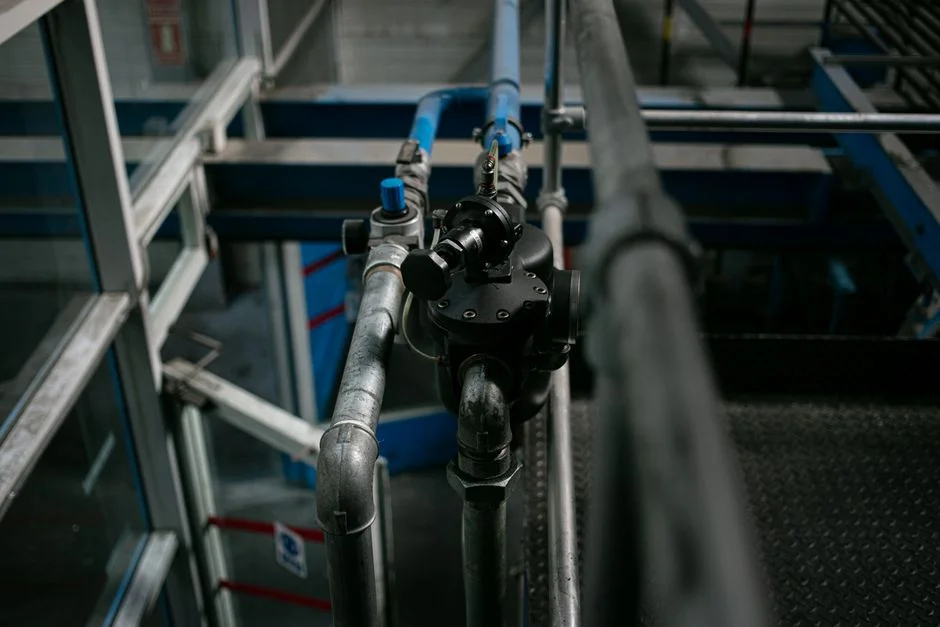
The destination of the treated water determines the required treatment quality, and that decision must precede equipment selection. Review four options: controlled discharge, reuse for toilet flushing or washdown, reuse for non-critical process needs, and advanced treatment for cooling makeup. Each option has a different evidence requirement, and the supplied research does not establish which route is legally or technically available in Khartoum North.
For physical separation, the Genesis framework identifies media filtration and dissolved air flotation as possible first-stage technologies, followed by treatment targeting contaminants that remain. That sequence suits a route where suspended solids must be removed before discharge or non-critical reuse. A DAF system for cooling-blowdown solids removal should be evaluated against the measured oil-and-grease, colloid and suspended-solids profile—not selected because the equipment appears in a generic treatment train.
| Destination | Decision basis | Indicative treatment question |
|---|---|---|
| Controlled discharge | Legal route, receiving environment, temperature, dissolved solids, residuals and pretreatment rules | Which contaminants must be reduced before discharge? |
| Toilet flushing or washdown | Reliability, hygiene, storage and distribution requirements | Is a simpler physical-treatment route sufficient? |
| Non-critical process reuse | Process-water quality and continuous demand | Which additional polishing is required? |
| Cooling makeup | Permeate reliability, water chemistry and concentration strategy | Do recovery, energy and maintenance benefits justify advanced treatment? |
For a very low liquid-discharge objective, Saltworks Technologies describes modular evaporator-crystallizers with self-cleaning, self-diagnosis and advanced automation. That is not equivalent to a filtration package. Energy demand, brine handling, solids management, operator capability and the receiving or disposal route for concentrated residues must be evaluated before selection. Likewise, cooling-blowdown recovery and blowdown-to-makeup reuse should not be assumed viable from the initial analysis: the first requires sufficiently reliable permeate quality and ongoing water-quality control, while the second requires a clear match to cooling chemistry and concentration strategy.
The business case should include avoided water and wastewater costs, chemical consumption, downstream treatment or disposal, energy, labor, maintenance and recovered-water value. Verify the legal discharge route, temperature limit, dissolved-solids or salinity conditions, residual biocide and anti-scalant limits, treatment requirements and any sewer pretreatment rules with the responsible Sudanese authority and receiving utility. The regional treatment route comparison is useful as a decision framework, not as evidence of Khartoum North requirements.
Design a Modular Pretreatment and Polishing System
A modular treatment train is appropriate only after each stream and its destination are defined. For raw or clarified blowdown, a multi-media filter can provide solids removal before downstream membranes and improve suspended-solids control. DAF should be considered where suspended solids, oil and grease, or colloidal material are relevant. The supplied framework places physical separation first and targeted contaminant treatment second, which helps prevent a high-cost polishing stage from receiving an untreated feed.
The DAF catalog describes micro-bubble flotation, automatic skimming and capacity from 4 to 300 m³/h across 13 standard models. A DAF system for cooling-blowdown solids removal can be compared on feed quality, required removal, footprint, utilities and controls, but the catalog capacity is not a Khartoum North flow recommendation. No site flow has been supplied.
Where fine solids, colloids and bacteria must be removed without chemical cleaning, the supplied ultrafiltration catalog specifies 0.03-micron PVDF membranes, flow from 2,000 to 40,000 L/h, automatic backwash and air scour, and feed turbidity up to 300 ppm. A UF system for fine solids and microbial control still requires feed-specific validation, including the effect of cooling chemicals, temperature and pretreatment.
| Equipment stage | Supplied catalog basis | Selection condition |
|---|---|---|
| Multi-media filter | Solids-removal stage for raw or clarified water | Protect downstream polishing and control suspended solids |
| DAF | 4–300 m³/h; 13 models; micro-bubble flotation and automatic skimming | Measured suspended solids, oil and grease or colloids justify flotation |
| UF | 0.03-micron PVDF; 2,000–40,000 L/h; automatic backwash and air scour; feed turbidity up to 300 ppm | Fine solids, colloids or bacteria must be removed without chemical cleaning |
| Industrial RO | Catalog states recovery rates up to 95% | Permeate quality and recovery justify capital, energy, pretreatment and operator burden |
| Chlorine dioxide | Eight configurations; 50–20,000 g/h | Microbial control is suitable for the industrial cooling or process route |
Use industrial RO only when the required permeate quality and recovery justify the capital, energy, pretreatment and operator burden; the catalog’s recovery figure does not establish site economics. The supplied industrial RO system description should be treated as equipment evidence, not a guaranteed Khartoum North outcome. Likewise, the chlorine dioxide generator range does not replace a site-specific residual-demand calculation or safety review.
Keep sanitary sewage and industrial cooling-blowdown trains hydraulically and operationally separate until a combined design is justified by confirmed flow and quality data. A shared final polishing stage may be sensible, but combining upstream biological, physical and chemical duties can increase chemical demand, control complexity and failure impact.
Plan Commissioning, Monitoring and Operational Control

Commissioning should prove the water balance, treatment performance and recovered-water route under representative operating conditions. Perform baseline and trial sampling before finalizing the process train, with the sampling plan tied to each stream and its intended reuse or discharge destination. Use the measured results to update the business case and confirm that the selected process can handle the actual variability.
Instrument makeup flow, blowdown flow, conductivity, pH, suspended solids, temperature and chemical residual. Genesis identifies conductivity, pH and suspended solids as core baseline measurements; the additional parameters depend on the cooling chemistry, reuse target and discharge rules. Include automatic controls, alarms, backwash, membrane cleaning, cartridge replacement, dosing verification and safe chemical-storage provisions in the commissioning protocol. A treatment train that meets laboratory results but cannot maintain them during startup, peak load or chemical-dosing changes has not been accepted.
Compare measured recovered-water volume and actual water and chemical savings with the business case rather than validating equipment only on permeate quality. Schedule media and membrane maintenance against site water quality and operating hours; do not transfer service intervals from another jurisdiction without supporting data. The treatment parts, valves and media scope should be checked for maintainability, spares and compatible replacement materials before the quotation is accepted.
Questions to Resolve Before Ordering a Treatment System
A comparable supplier scope begins with a guaranteed design flow, treated-water quality, recovery objective, operating-availability target, footprint, utilities demand and complete system boundary. Ask each supplier to identify which performance parameters are guaranteed, which depend on incoming water quality, and where responsibility moves between treatment, storage, pumping, reuse and disposal. A supplier should not hide a receiving sewer, storage tank or reuse distribution network inside an equipment quotation.
| Information to request | Why it matters before order |
|---|---|
| Guaranteed flow, treated-water quality and recovery | Creates testable performance boundaries |
| Footprint, utilities, controls and fail-safe operation | Reveals integration and operating risks |
| Operator training, spares, remote monitoring and local service | Tests long-term maintainability |
| Compliance matrix | Identifies the approval, authority, sampling method and outstanding client conditions |
| Lifecycle-cost inputs | Allows comparison using site-specific water, wastewater, chemical, energy, labor and disposal costs |
Require evidence covering automatic controls, operator training, spare parts, remote monitoring, maintenance access and local service support. The compliance matrix should identify the permit or approval relied upon, the responsible Sudanese authority, sampling methods and any client-side conditions still outstanding. Compare total lifecycle cost rather than purchase price alone. A broader procurement boundary is illustrated in the plant-acquisition wastewater requirements, but it does not establish Sudanese legal requirements.
Frequently Asked Questions
What is the cheapest practical cooling-blowdown treatment route for a small Khartoum North data center?
There is no defensible price or universal minimum route from the supplied research. Start with metering, leak control, optimized blowdown and physical treatment where measured suspended solids justify filtration or flotation. Request quotations using actual makeup and blowdown flows, recovered-water quality, destination, utilities and maintenance inputs; do not compare a filtration package with an RO or evaporator price without including the full scope.
Should sanitary sewage and cooling blowdown be treated in one plant?
Keep the upstream trains separate until measured flows and quality confirm that combination is justified. Sewage requires a sanitary treatment basis, while blowdown carries concentrated dissolved solids, residual cooling chemicals, temperature and possible oil or colloids. A common downstream polishing or reuse connection may be appropriate, but it should not obscure separate pretreatment, controls and permit obligations.
What flow rate should the blowdown treatment system be sized for?
Size it from measured peak blowdown flow, operating variability, the selected recovery route and the equipment supplier’s confirmed design basis—not from the facility’s IT load alone. The 10 MW example in Genesis Water Technologies is illustrative and does not establish a Khartoum North flow. Request the current water balance, seasonal operating profile, recovery target and minimum storage or equalization requirement before selecting capacity.
When is RO or evaporation justified instead of filtration and flotation?
RO becomes relevant when the required water quality, cooling-makeup compatibility or dissolved-solids reduction cannot be met by physical treatment and targeted polishing. Evaporation is relevant to a very low liquid-discharge objective, but Saltworks Technologies describes it as a modular evaporator-crystallizer with self-cleaning, self-diagnosis and advanced automation; buyers must also assess energy, brine and solids management. For either route, request a site-specific mass balance and lifecycle-cost comparison.
Which Sudan-specific approvals and discharge evidence should the supplier receive before quotation?
Request the applicable permit or approval, responsible Sudanese authority, receiving utility requirements, discharge limits, sampling methods, sewer pretreatment rules and unresolved client conditions. The supplied research does not establish a Khartoum North permit, temperature limit or salinity standard, so the supplier should identify assumptions and obtain written clarification before pricing. The effluent-treatment procurement guide can structure the information request, but it is not evidence of Sudan-specific compliance.