What Streams Does a Perm Data Center Need to Treat?
The data-center wastewater inventory should separate cooling tower blowdown from sanitary sewage, washdown, process wastewater, stormwater, and direct liquid- or immersion-cooling streams because their treatment objectives and acceptance criteria differ. Cooling blowdown is generally the primary reuse candidate, but its design basis must come from the installed cooling configuration, circulating flow, makeup-water source, cycles of concentration, chemical program, purge frequency, operating load, and expansion plan. Direct liquid and immersion cooling requires an additional coolant review because refrigerants, PFAS-containing fluids, or other regulated constituents may require specialized handling, according to Commercial Water Lab in June 2026. The treatment scope should not be based on generic water-consumption figures: IDE Tech states that a 100 MW facility can use up to 2 million liters per day, but the actual Perm demand must be calculated from the site’s cooling design and operating profile.
For each stream, identify whether it is continuous, intermittent, seasonal, or produced during maintenance. This prevents a blowdown treatment skid from being incorrectly sized for washdown or sanitary flows, while ensuring that streams with incompatible chemistry are not blended prematurely. The data-center blowdown treatment methodology provides a useful sequence: segregate the streams, establish their water balances, and then select treatment objectives. A similar engineering approach is used in the data-center wastewater treatment guide.
| Stream | Design information to obtain | Treatment decision |
|---|---|---|
| Cooling tower blowdown | Cooling topology, circulation flow, makeup source, cycles of concentration, chemical program, purge frequency, load and expansion | Evaluate first for filtration, membrane treatment and cooling make-up reuse |
| Domestic sewage | Fixture discharges, flow, pretreatment requirements and receiving route | Keep separate from blowdown; use the applicable sanitary treatment route |
| Equipment and floor washdown | Cleaning chemicals, episodic flow, floor drainage and discharge point | Characterize contaminants before combining with other streams |
| Process wastewater | Production or testing chemicals, batch frequency, temperature and volume | Use a dedicated treatment or controlled equalization route where chemistry is incompatible |
| Stormwater | Site drainage, contaminated hardscape areas and discharge route | Assess segregation and treatment needs separately |
| Direct liquid or immersion cooling | Coolant type, refrigerant or PFAS constituents, concentration, and disposal method | Determine whether specialized handling is required |
How Should Perm Operators Characterize Cooling Blowdown?
Blowdown characterization should be based on representative operating conditions and a complete chemistry review, not on one grab sample. Sampling during both hot and cold conditions is important because temperature, evaporation, blowdown frequency, makeup-water chemistry, and the cooling tower’s cycles of concentration affect the resulting water quality. Genesis Water Technology reports that typical blowdown TDS is 1,200–6,000 mg/L, corresponding to 4–8 times makeup-water TDS, with suspended solids commonly at 10–50 mg/L despite basin filtration. The same source identifies calcium, magnesium, silica, alkalinity, treatment chemicals, biological material, legacy chromate, and high-phosphate programs as important reuse and discharge considerations.
For a Perm project, request a complete combined water analysis covering conductivity or TDS, hardness, alkalinity, silica, calcium, sulfate, chloride, sodium, suspended solids, pH, temperature, residual oxidizing and non-oxidizing biocides, corrosion-inhibitor residuals, and organic carbon. Then review those results against the actual makeup-water chemistry and the operating cycles of concentration. Calcium carbonate, calcium sulfate, and silica should be evaluated as separate scaling risks because a generic TDS value does not establish membrane recovery or reuse limits.
At least one complete analysis and cooling-chemistry review should precede the recovery target, membrane selection, or chemical dose. This is also the point to check whether the existing biocide, antiscalant, and corrosion-control program is compatible with the proposed reuse train. The replacement RO and UF membrane elements and treatment parts, valves, and filter media should be specified only after these feed-water and reuse-compatibility checks are complete.
| Parameter | Why it affects the treatment decision | Perm design input |
|---|---|---|
| TDS or conductivity | Indicates the dissolved-solids load entering RO, NF, blending, or concentrate management | Makeup analysis plus hot- and cold-season blowdown samples |
| Calcium, alkalinity, sulfate and silica | Defines precipitation risk and the need for controlled antiscalant dosing or salt rejection | Complete combined analysis and saturation review at the proposed recovery |
| Suspended solids and organic carbon | Indicates filtration, UF, and membrane-fouling demand | Basin condition, filtration performance, and biological-control review |
| Biocide and corrosion-inhibitor residuals | Can affect membrane compatibility, reuse chemistry, biological control, and discharge acceptability | Current chemical program, safety data sheets, and residual concentrations |
| pH and temperature | Influence membrane operation, chemical dosing, scaling, and biological activity | Operating envelope across representative seasonal conditions |
Which Treatment Train Fits the Perm Site?
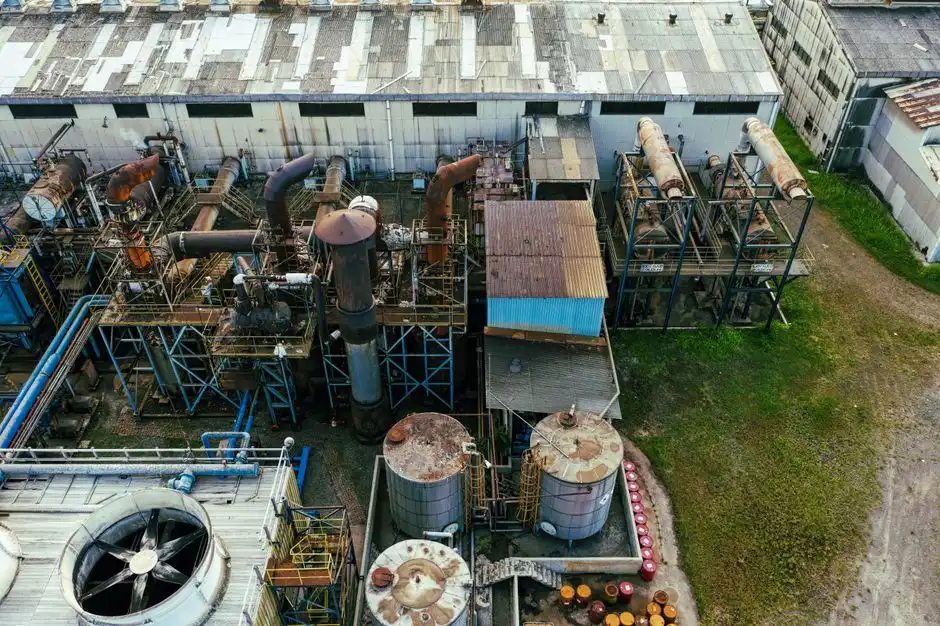
The appropriate Perm treatment train begins with source control and cooling chemistry, then adds filtration, membrane treatment where needed, and controlled return or blending as cooling make-up water. A practical reuse sequence is cooling-water optimization, side-stream or dedicated filtration, UF where membrane protection or biological control is required, RO or NF for dissolved-solids reduction, and finally controlled blending or return to the cooling loop. Genesis Water Technology reports that UF removes suspended solids, bacteria, viruses, and high-molecular-weight organics, operates at 10–30 psi, and typically achieves 90–95% recovery, but it does not remove dissolved salts. The same source reports RO permeate at 10–50 mg/L TDS, operating pressure of 150–400 psi, and 50–85% recovery for blowdown applications.
For RO, feed water should be filtered below 10–15 microns. A multi-media pretreatment filter can control suspended solids before the membranes, while hollow-fiber ultrafiltration pretreatment provides a stronger biological and colloid barrier where required. NF may be more appropriate when hardness and sulfate, rather than total dissolved solids, limit reuse. Genesis Water Technology reports NF pressure of 75–150 psi, recovery of 70–85%, and permeate TDS at typically 30–50% of feed concentration.
Chemical dosing should be automatic and conditional, but the selected pH-adjustment, antiscalant, and biocide-control strategy must be compatible with the membranes, the receiving cooling system, and the discharge route. An automatic chemical dosing skid should therefore be tied to verified feed chemistry and an operating philosophy rather than a nominal dose.
Where the site cannot accept the concentrate, compare MVC, brine concentration, and crystallization. Genesis Water Technology reports 95–98% MVC recovery, distillate below 10 mg/L TDS, and energy consumption of 15–25 kWh per 1,000 US gallons of distillate. Where conventional RO cannot handle scaling salts, evaluate a high-recovery architecture with controlled salt precipitation. IDE Tech reports one MAXH₂O installation operating at around 95% recovery with about 1 mg/L permeate silica.
| Option | Reported performance | Main feed limitation | Concentrate destination | Information required | Procurement consequence |
|---|---|---|---|---|---|
| Filtration and side-stream control | Supports higher cycles of concentration and cleaner blowdown | Does not remove dissolved salts | Filter backwash or sludge | Circulation flow, solids loading, basin condition | Good first-stage or no-regret pretreatment option |
| UF | 90–95% typical recovery; removes solids, bacteria, viruses, and high-molecular-weight organics; 10–30 psi | Dissolved salts remain; membrane compatibility matters | Usually returned to the blowdown stream | Suspended solids, organic carbon, biology, and required barrier | Choose when biological control or membrane protection is central |
| RO | 50–85% recovery for blowdown; 10–50 mg/L permeate TDS; 150–400 psi | Silica, hardness, sulfate, antiscalant compatibility, and fouling | Brine to an approved discharge or concentration route | Complete chemistry, antiscalant study, and disposal capacity | Require a guaranteed recovery envelope and concentrate quality |
| NF | 70–85% recovery; permeate TDS typically 30–50% of feed; 75–150 psi | Residual dissolved solids and sulfate removal limits | Concentrate, often smaller in volume than RO concentrate | Hardness, sulfate, chloride, and reuse target | Use when partial demineralization is sufficient |
| MVC or brine concentration | MVC: 95–98% recovery, distillate below 10 mg/L TDS, 15–25 kWh per 1,000 US gallons | Feed concentration, heat integration, electrical capacity, and solids handling | Concentrated brine and residual solids | Waste heat, power, winter heat demand, brine analysis | High-complexity option requiring utility and winter-operation guarantees |
| High-recovery salt precipitation | IDE Tech reports an installation at around 95% recovery and about 1 mg/L permeate silica | Specific scaling chemistry and controlled precipitation requirements | Solid pellets plus residual brine | Full scaling analysis, solids handling, and brine route | Consider only with a demonstrated chemistry and solids-disposal basis |
What Perm-Specific Risks Must the Design Resolve?
Perm project diligence must establish the applicable Russian approvals rather than importing a US permitting framework. The supplied research describes US NPDES permits and municipal industrial-pretreatment programs, but it does not establish the Russian legal route. A Perm-qualified environmental consultant and the receiving authority should therefore confirm discharge points, water-use approvals, wastewater characterization requirements, monitoring, and any restrictions on reuse or concentrate disposal. The Russian route cannot be inferred from generic international practice.
Cold-climate feasibility should be evaluated using annual operating data rather than peak-summer conditions alone. Freezing, low ambient temperatures, reduced evaporation, and seasonal cooling demand can change blowdown volume, water balance, biological activity, and operating hours. A winterized design also needs to address electrical reliability, membrane and pump protection, antiscalant dosing, controls, instrumentation, and any thermal-concentration stage. The Volgograd data-center blowdown treatment guide provides a related regional check on climate and implementation planning, but it does not replace site-specific Perm verification.
Lifecycle planning must include delivery of membrane elements, pumps, dosing equipment, critical spares, and service access. A remote site or cross-border delivery constraint can change lead time, commissioning support, and operating cost. The tender should also test whether reclaimed or industrial water can reliably replace potable makeup water and whether the cooling system can accept the reclaimed water’s chemistry without increasing corrosion, scaling, or biological risk.
| Risk or decision | Evidence or engineering check | Required project output |
|---|---|---|
| Russian permitting route | Confirm with a Perm-qualified consultant and receiving authority; US NPDES and pretreatment references do not establish Russian requirements | Permit and approval register with basis, holder, schedule, and discharge route |
| Cold weather and seasonal operation | Use annual and representative hot/cold operating profiles | Freeze-protection, winterization, and seasonal water-balance review |
| Power and utility reliability | Check local power quality, redundancy, controls, pumps, dosing, and any thermal stage | Electrical load list, redundancy philosophy, and utility interface |
| Delivery and service | Confirm membrane, pump, dosing, and spare-part logistics | Lead-time, commissioning, and local-service plan |
| Reclaimed-water acceptance | Check cooling chemistry, corrosion, scaling, and biological compatibility | Written reuse acceptance criteria and controlled blend plan |
How Should Recovery, Cost and Compliance Be Compared?
Recovery should be selected through a total-cost model, not by maximizing the headline recovery percentage. The comparison should include freshwater avoided, discharge volume avoided, concentrate management, energy, chemicals, membranes, operator labor, and disposal or transport. Genesis Water Technology cites a US-market example of $1.50–3.00 per thousand gallons for a 50,000 GPD blowdown-RO system, including energy, chemicals, membrane replacement, and maintenance; this is a benchmark, not a Perm quotation. The same source cites $5–15 per thousand gallons for ZLD operation and $3–8 million capital for ZLD systems, which reflects the added complexity of thermal evaporation and crystallization. For MVC, it reports 15–25 kWh per 1,000 US gallons of distillate, so the electricity price and winter heat demand should be evaluated before including MVC in the base case.
Compliance and operating risk should be explicit columns in the comparison. A high recovery rate that creates an unmanageable concentrate stream is not an economic solution if the site has no lawful route for that concentrate. Conversely, a lower recovery train may be preferable where the discharge route is secure, reuse water is valuable, and the pretreatment and control package is reliable.
Request current Perm water tariffs, discharge charges, electricity prices, chemical consumption, labor rates, concentrate-disposal terms, and planned utilization from the project team or suppliers. Use those verified inputs in the commercial model, and present sensitivity cases for load, recovery, chemical cost, power cost, and disposal cost. A staged procurement structure is usually defensible: establish the pretreatment and reuse core, then reserve expansion or concentration options until load, permit limits, and utility costs are confirmed. The high-salinity wastewater treatment engineering guide is useful for framing the recovery and concentrate trade-off.
| Cost or compliance item | Evidence to use | Perm procurement treatment |
|---|---|---|
| RO operation | $1.50–3.00 per thousand gallons in a US 50,000 GPD blowdown-RO example, including energy, chemicals, membrane replacement and maintenance (Genesis Water Technology) | Benchmark only; replace with verified local inputs |
| ZLD operation | $5–15 per thousand gallons in a Genesis Water Technology US-market example | Use as a high-complexity sensitivity case, not a local price |
| ZLD capital | $3–8 million in a Genesis Water Technology US-market example | Request a site-specific capital estimate with capacity and feed basis |
| MVC energy | 15–25 kWh per 1,000 US gallons of distillate (Genesis Water Technology) | Price using verified electricity and seasonal heat demand |
| Concentrate route | Permit status, receiving route, transport and disposal cost | Make the route a priced and risk-allocated tender deliverable |
What Should Be Included in the Perm Equipment Specification?
The Perm equipment specification should define the design flow, operating hours, feed-water envelope, required permeate quality, recovery objective, concentrate destination, utilities, footprint, noise limits, and winterization requirements. Automatic controls should cover feed flow, pressure, conductivity, differential pressure, permeate quality, antiscalant or chemical dosing, flushing, and fault interlocks. The RFQ should identify membrane materials, pressure vessels, instruments, skid arrangement, redundancy, replacement RO and UF membrane elements, spares, local-language HMI, remote alarms, data export, manuals, and commissioning services.
Acceptance testing should use representative site water and address guaranteed permeate flow, permeate quality, recovery, energy consumption, and concentrate quality. Off-spec feed, membrane fouling, chemical incompatibility, power interruptions, low temperatures, and concentrate-disposal constraints should have defined warranty treatment and operator-response actions. A complete water and mass balance for the cooling loop, wastewater treatment, reuse, concentrate, and discharge routes is a prerequisite for acceptance, not an appendix. The treatment parts, valves, and filter media schedule should be tied to those guarantees.
| Specification area | Minimum requirement | Acceptance evidence |
|---|---|---|
| Design basis | Flow, hours, feed envelope, recovery, permeate quality, concentrate destination, utilities, footprint, and winterization | Vendor compliance matrix and process design package |
| Controls | Flow, pressure, conductivity, differential pressure, permeate quality, dosing, flushing, and interlocks | Factory and site functional tests |
| Performance | Guaranteed flow, quality, recovery, energy use, and concentrate quality | Representative-water performance test |
| Materials and maintenance | Membrane materials, vessels, instruments, skids, redundancy, spares, manuals, and commissioning | Approved submittal and spare-parts schedule |
| Exceptions | Defined response to off-spec feed, fouling, incompatibility, power loss, low temperature, and disposal constraints | Warranty exclusions and operating-response procedure |
| Mass balance | Cooling loop, treatment, reuse, concentrate, and discharge routes reconciled | Signed water and mass balance |
Frequently Asked Questions
What treatment system is most economical for a Perm data center with cooling tower blowdown?
There is no defensible universal answer without Perm water tariffs, discharge charges, electricity prices, concentrate-disposal terms, feed chemistry, and required recovery. Use the Genesis Water Technology US-market RO benchmark of $1.50–3.00 per thousand gallons only as a preliminary comparator, then require each bidder to submit a total-cost model using verified local inputs.
Should the project use UF alone, UF plus RO, or a high-recovery brine-treatment system?
Use UF alone when the objective is mainly solids, colloid, and biological control and dissolved salts are acceptable in the reuse water. Use UF plus RO when low-TDS cooling make-up is required; Genesis Water Technology reports RO permeate at 10–50 mg/L TDS and 50–85% typical blowdown recovery. Consider high-recovery brine treatment only when the verified concentrate route, energy availability, and scaling chemistry support it.
How should a data-center operator size treatment capacity for future IT expansion?
Size the base train from current measured blowdown flow, peak and annual operating profiles, makeup-water chemistry, and expansion scenarios. Require the supplier to state the treatment envelope and the effect of higher cycles of concentration, rather than sizing from a generic facility-water-use figure. The IDE Tech example of up to 2 million liters per day for a 100 MW facility is a context point, not a Perm design flow.
What compliance information should be confirmed with a Perm environmental consultant before ordering equipment?
Confirm the applicable Russian water-use and environmental approvals, permitted discharge route, discharge limits, monitoring requirements, reuse conditions, and concentrate-disposal route with a Perm-qualified consultant and the receiving authority. Also obtain the chemical program, coolant constituents, and proposed reuse-water acceptance criteria. The US NPDES and pretreatment frameworks in the research do not establish the Russian legal route.
What operational and maintenance capability does the site need for reclaimed cooling water?
The site needs trained operators for chemistry review, membrane and filter monitoring, chemical dosing, biological control, cleaning, sampling, and alarm response. Before tendering, define membrane-cleaning access, spare-element strategy, remote monitoring, laboratory support, and winter operating procedures. This capability should be included in the operating-cost model rather than treated as an incidental staffing assumption.
Related Equipment
- industrial reverse osmosis system — specifications, capacity range, and technical data